

Short answer: Garachico is my favourite compact old-town-and-volcanic-coast stop in Tenerife. Come for a half-day walk, lava history and El Caletón, but treat swimming as a possibility rather than the promise of the day.
I would not call it the island’s universal best old town. Choose La Laguna for a bigger pedestrian historic city, or La Orotava for grand houses, gardens and valley views.
The useful question is not only what to do in Garachico. It is whether the town fits your day, transport and the Atlantic mood.
The pools can be rough, some interiors can be closed, parking is not magic and a south-coast visitor can lose half a day to the road. Plan it honestly and Garachico is excellent.
My local verdict: is Garachico the best old town in Tenerife?
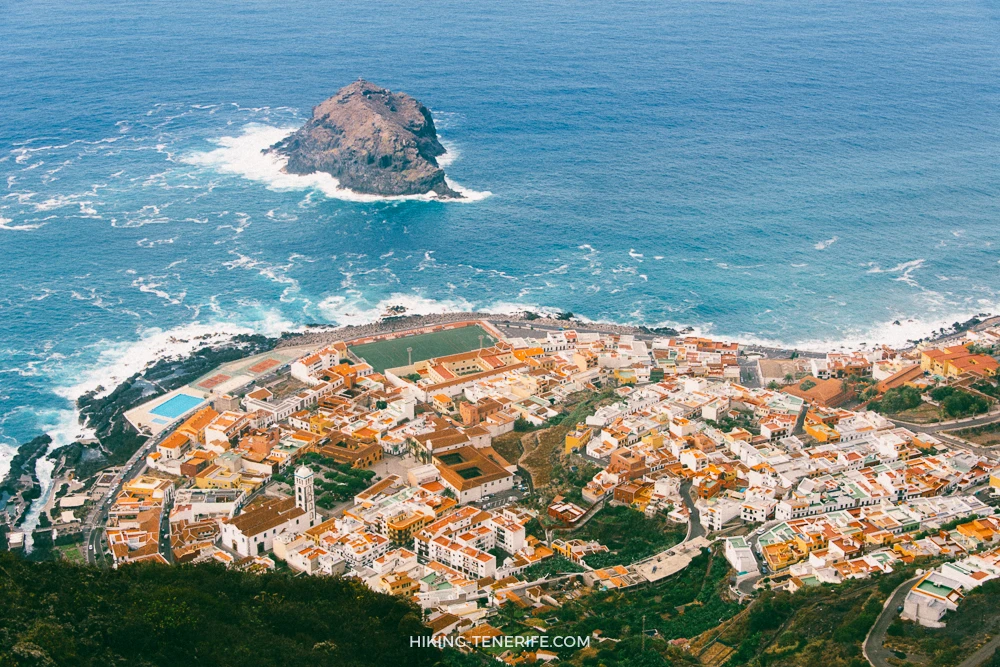
For me, Garachico wins the best compact old town category. In a manageable walk you get a rebuilt historic centre, churches and convent architecture, an old harbour story, a castle on volcanic rock, Puerta de Tierra, the Roque offshore and El Caletón below the road. That is a very good concentration of place.
It does not win every category. La Laguna is the better choice if you want a larger, mostly pedestrian historic city with more urban wandering and easier no-car planning. La Orotava is better for balconies, old houses, gardens and a dramatic valley setting. Garachico is more physical: stone, slopes, sea air, lava and the possibility that your planned swim is cancelled by waves.
| Choose this town | What it does best | The honest catch |
|---|---|---|
| Garachico | Volcanic history, compact walk, coast and pools | Small, weather-dependent and not a guaranteed swim |
| La Laguna | Pedestrian historic streets and a bigger cultural walk; see my La Laguna guide | Less of a coast-and-nature day |
| La Orotava | Historic houses, gardens and a Teide-valley setting; use the La Orotava guide | More spread out and hillier than the photos suggest |
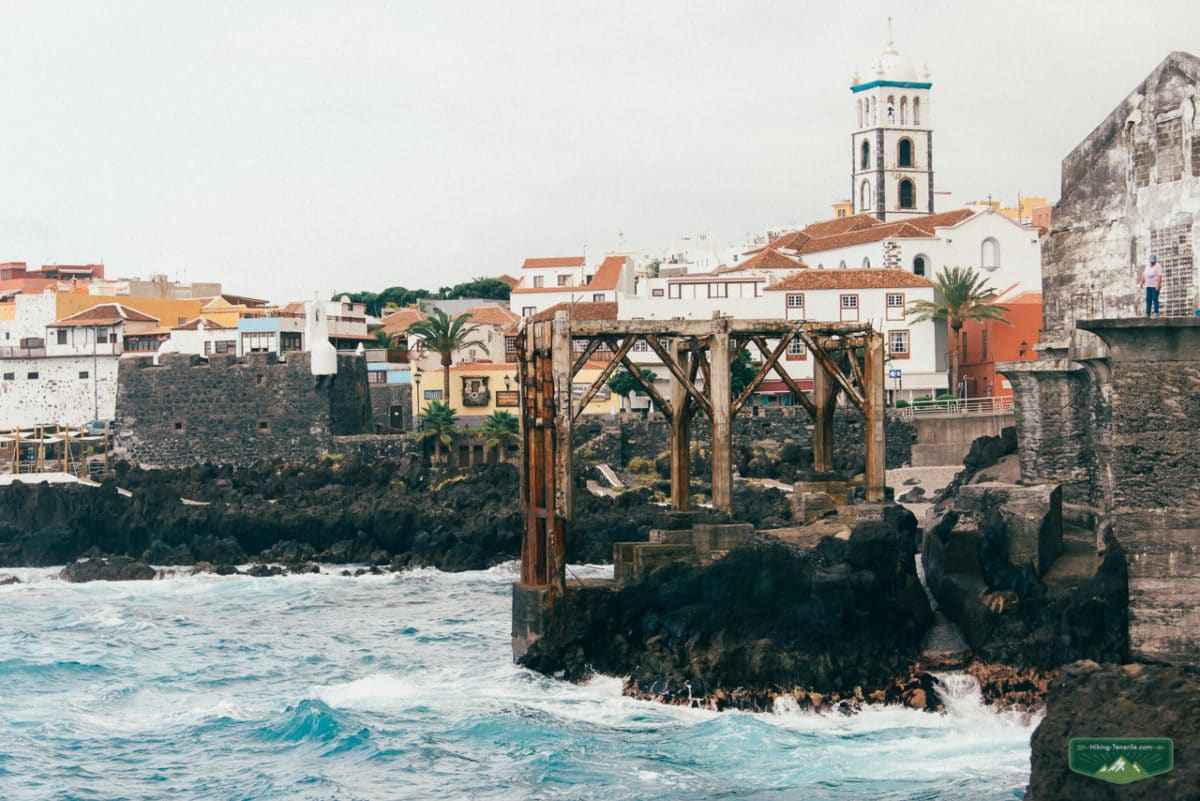
Why Garachico feels different
Garachico grew as a port town after the conquest and became one of Tenerife’s important trading places. The old centre still reads as a town rather than a museum set: houses, churches, small squares, cafés, residents and the sea all sit close together.
The major break in the story was the 1706 eruption associated with Trevejo, also described in official records as the Arenas Negras or Garachico eruption. Lava destroyed the old port and changed the shoreline.
The town’s character now comes partly from that loss. Historic buildings survived in the centre while the coast became a black, angular volcanic edge.
That history is why I prefer walking Garachico slowly. The eruption is not a paragraph you memorise and then forget. You see its consequence in the harbour, the lava shelves, the castle’s position and the way the town turns its back slightly from the water before opening out again.
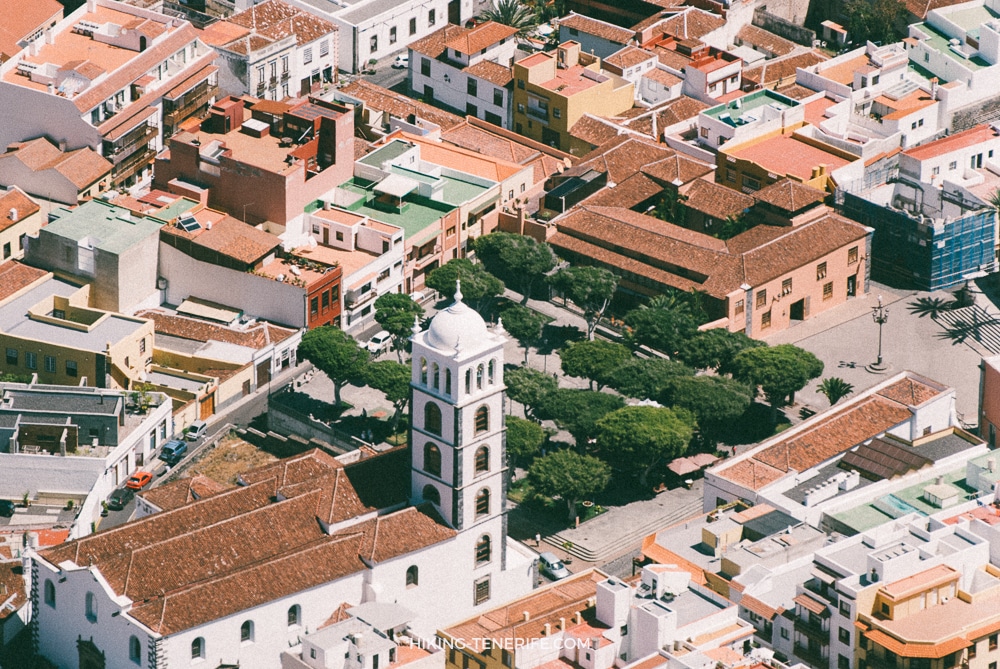
The official heritage route is a useful skeleton: Plaza de la Libertad, Santa Ana, the former San Francisco convent, Casa del Marqués de la Quinta Roja, Castillo de San Miguel and Puerta de Tierra. I use a slightly more practical loop below so you finish near the coast instead of zig-zagging without a plan.
The best self-guided Garachico walking route
Give the old town about 90 minutes to two hours if you like looking at buildings, not just photographing the first square. Add another hour or two for the coast, El Caletón, coffee and a proper meal. The route is short on a map, but stone streets and stops make it slower than a distance calculator suggests.
- 1. Start at the edge of the historic centre. Park where you legally can and walk towards Puerta de Tierra rather than trying to drive through every narrow street.
- 2. Enter the old town through Puerta de Tierra. This surviving harbour gateway makes the former port feel real before you reach the main squares.
- 3. Walk to Plaza de la Libertad and Santa Ana. Look up at the façades, then give the church and square time instead of treating them as a quick pin on a map.
- 4. Continue through the convent and old-house streets. The former San Francisco complex, Casa de los Condes de La Gomera and Quinta Roja area reward a slower architectural look; interiors may have their own opening pattern.
- 5. Drop towards Castillo de San Miguel. The castle is a small but important anchor beside the lava coast. It makes more sense when you have already seen the town behind it.
- 6. Finish at the waterfront and El Caletón. Check the Atlantic before deciding whether the pools are a swimming stop or simply a dramatic place to look at the lava.
Puerta de Tierra, Plaza de la Libertad and Santa Ana
Puerta de Tierra is easy to miss if you arrive thinking only about the pools. Do not. It is one of the details that explains Garachico as a former harbour town, and it gives the walk a satisfying beginning.
Santa Ana is the visual centre of the old town. I like this part best in the morning or later afternoon when the façades have texture rather than flat midday glare. Be respectful during services and do not turn a working church into a loud photo studio.
San Francisco, Quinta Roja and the old houses
The middle of the walk is where Garachico earns its old-town reputation. You are looking at domestic architecture, convent walls, stone details and little changes in street level rather than a single blockbuster attraction.
Opening days and ticket arrangements for churches, convent spaces and small cultural interiors can change. I would treat the exterior route as the reliable plan and any open interior as a bonus, not build the whole day around a door that may be closed.

Castillo de San Miguel, the harbour edge and Roque views
Castillo de San Miguel is modest, but its position is the point. It sits beside the lava coast as a reminder that Garachico’s old prosperity depended on the sea and that the sea was never entirely tame.
The Roque de Garachico is the offshore volcanic landmark you keep seeing from different angles. Admire it from the shore and promenade. Do not confuse a good viewpoint with permission to climb unstable rock or enter rough water.
El Caletón natural pools: beautiful, useful and not guaranteed
El Caletón is Garachico’s famous volcanic pool area, made from lava formations beside the old town. The separate charcos and paths create different pockets of water, which is why the place can look calm from one angle and exposed from another.
Here is the important local rule: the calendar does not decide whether you swim; the Atlantic does. Swell, wind, tide, wave direction, slippery rock, flags, maintenance and official access decisions can change the situation during the same week. A photo of calm water is not a safety report.
If the water is washing over the edges, if people are being knocked around, or if access is closed, the correct plan is to stay out. Garachico is still worth the visit without a swim.

How to check El Caletón today: start with the Garachico municipal safety notices and the AEMET El Caletón forecast. Then obey the access barriers, flags, lifeguards and signs you find at the pools.
Online information can lag behind a sudden swell, maintenance closure or local safety decision. If the entrance is closed or waves are crossing the pool edges, stay out even when an older page says the bathing season is open.
Wear shoes with grip, keep children away from wave-washed edges, leave glass and inflatables at home, and do not jump into water you have not checked from the exit point. If you cannot see how you would get out, you are not choosing a swimming spot; you are choosing a problem.
What to do when the pools are rough or closed
This is where a good Garachico day differs from a brittle itinerary. Walk the harbour and castle, look back at the town from the promenade, stop for coffee, then choose one nearby inland or north-coast addition. Icod’s Drago Milenario is the obvious easy pairing; it gives you a different scale and a more sheltered cultural stop.
Do not trespass around barriers for the photograph. Lava is sharp, wet rock is slippery and a wave can arrive from outside the frame. The coast is scenery first and swimming facility second.
How long do you need in Garachico?
For the old town alone, plan 90 minutes to two hours. For the route, a careful look at the centre, El Caletón, a drink and a meal, I would give it three to four hours. A half-day feels comfortable; a full day works if you add one nearby stop instead of five.
- Quick two-hour version: Puerta de Tierra, Plaza de la Libertad, Santa Ana, castle, harbour look and back to the car.
- Comfortable half-day: the full old-town loop, El Caletón decision, coffee or lunch and time for photos without blocking the pavement.
- Full-day north route: Garachico plus Icod, or Garachico plus Los Silos/Buenavista if the road and weather make sense.
Parking and the road reality
Garachico is easy to reach by road and less easy to park in exactly the spot you imagined. Use the Muelle and waterfront-explanada area as an orientation point, not as a promise that a space will be waiting.
Take the first suitable legal space on the edge of the centre and walk. The municipal accessibility guide identifies adapted spaces around the beach and Muelle areas, but current signs and restrictions always take priority.
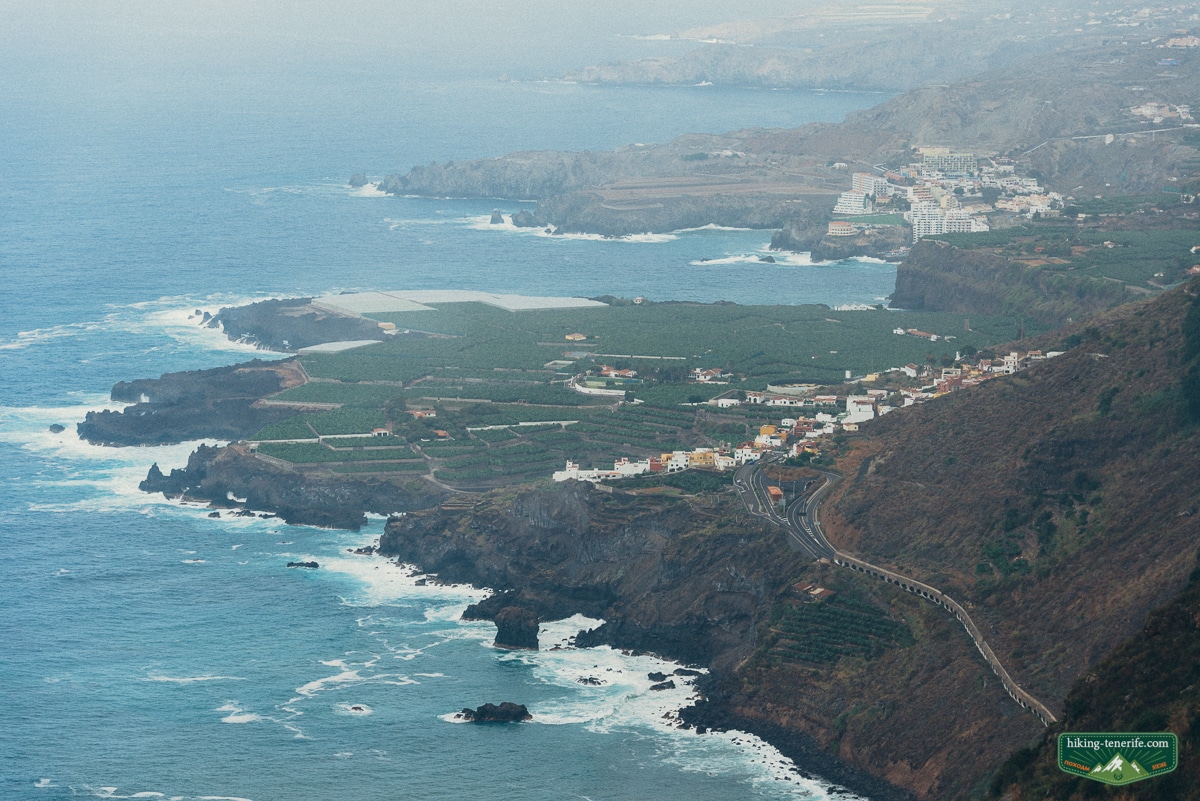
From Puerto de la Cruz or La Orotava, Garachico fits naturally into a north-coast day. From Santa Cruz or La Laguna, the motorway and north-west roads make it possible as a long day. From Los Cristianos or Costa Adeje, it is a much bigger commitment, especially if you want to stop in Icod, Teno or Masca as well.
- Check the route shortly before leaving. Roadworks, landslides, events, weather and one-way arrangements can change a north-coast day.
- Keep the car out of restricted, resident-only or loading spaces even if a local vehicle appears to have found a creative solution.
- Take a light layer and water. The coast can feel fresh or windy when the south is hot, and old-town stone stores heat differently from the seafront.
Planning a north-coast day? Use my free Tenerife map to combine Garachico with one sensible nearby stop, a realistic driving order and a rough-sea backup.
Visiting Garachico without a car
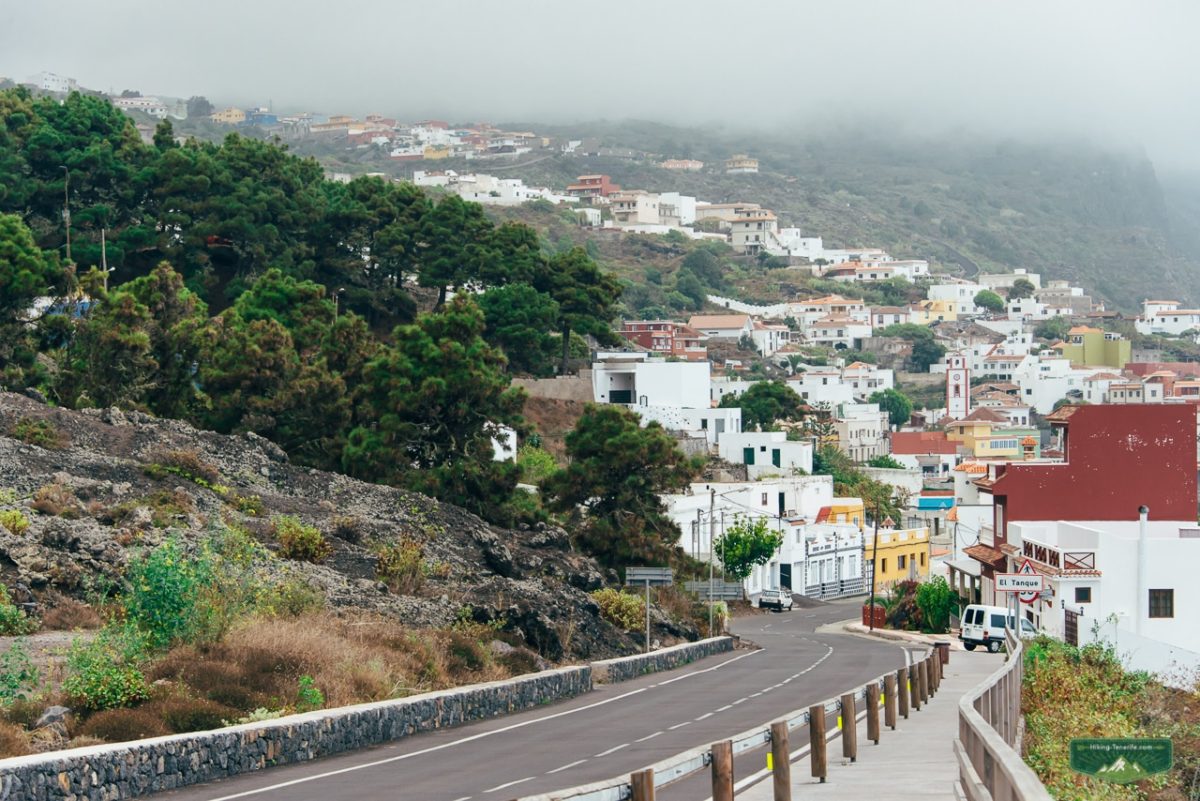
Without a car, Garachico is possible from the north and awkward from the south. TITSA line 363 links Puerto de la Cruz, Icod, Garachico, Los Silos and Buenavista, with the full route listed at about 90 minutes.
Check the current departure, direction and stop before leaving. Road incidents, works and local events can divert line 363 or move Garachico stops, so save the return journey rather than relying on yesterday’s screenshot.
From Santa Cruz or La Laguna, expect a change or a long bus journey. From Los Cristianos and Costa Adeje, public transport usually turns this into a serious transfer day, not a casual old-town outing. If you are staying south and do not drive, compare the time with a guided north-coast outing or choose a closer town.
Puerto de la Cruz is the easiest no-car base for this visit. If you are staying there, use my Puerto de la Cruz guide to build the day around the bus, then keep Garachico as the main event rather than squeezing in a heroic list of villages.
Routes from the main visitor bases
| Starting point | My practical advice |
|---|---|
| Puerto de la Cruz | Best no-car option; line 363 is the route to check, with enough flexibility for a slow town day. |
| La Orotava | Good by car and easy to combine with the old town; compare both through the north Tenerife guide. |
| Santa Cruz or La Laguna | Possible as a full day, but do not pretend it is next door. See La Laguna for a better no-car historic-city alternative. |
| Los Cristianos or Costa Adeje | Drive if Garachico matters; otherwise choose a closer south plan through Tenerife South. |
Where to eat or stop for coffee
I like leaving the food decision until after the walk. Garachico is more enjoyable when you have seen the coast, checked the water and then choose a café or restaurant with your actual mood in mind. Expect local dishes, fish and simple island food rather than a resort-style dining strip.
Do not promise yourself a particular table at a particular hour without checking the current opening pattern. If a meal matters, reserve or keep a second option. For wider island food decisions, my Tenerife restaurant guide is the better place to compare styles; this article is about making Garachico fit your day.
If you want a market-and-food detour, use the live Tenerife markets guide to check which market actually operates on your day. A market is not automatically a sensible add-on just because it appears on a map.
What to combine with Garachico
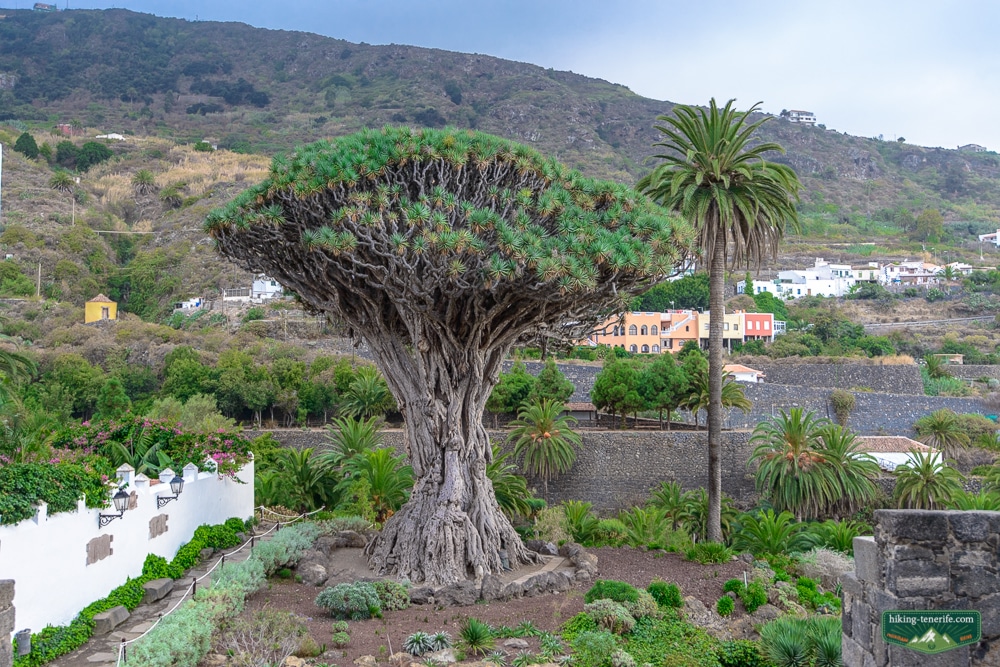
My favourite pairing is Garachico and Icod de los Vinos. The Dragon Tree visit gives you a historic inland town and a famous living landmark, while Garachico supplies the volcanic coast. Keep both at a human pace and you have a strong day.
Teno and Masca are different decisions. The Teno Rural Park is about mountain roads, forest and distance. Masca adds narrow roads, viewpoints and its own parking pressure. I would not force Garachico, Masca, Teno and Teide into one day because a map makes them look connected.
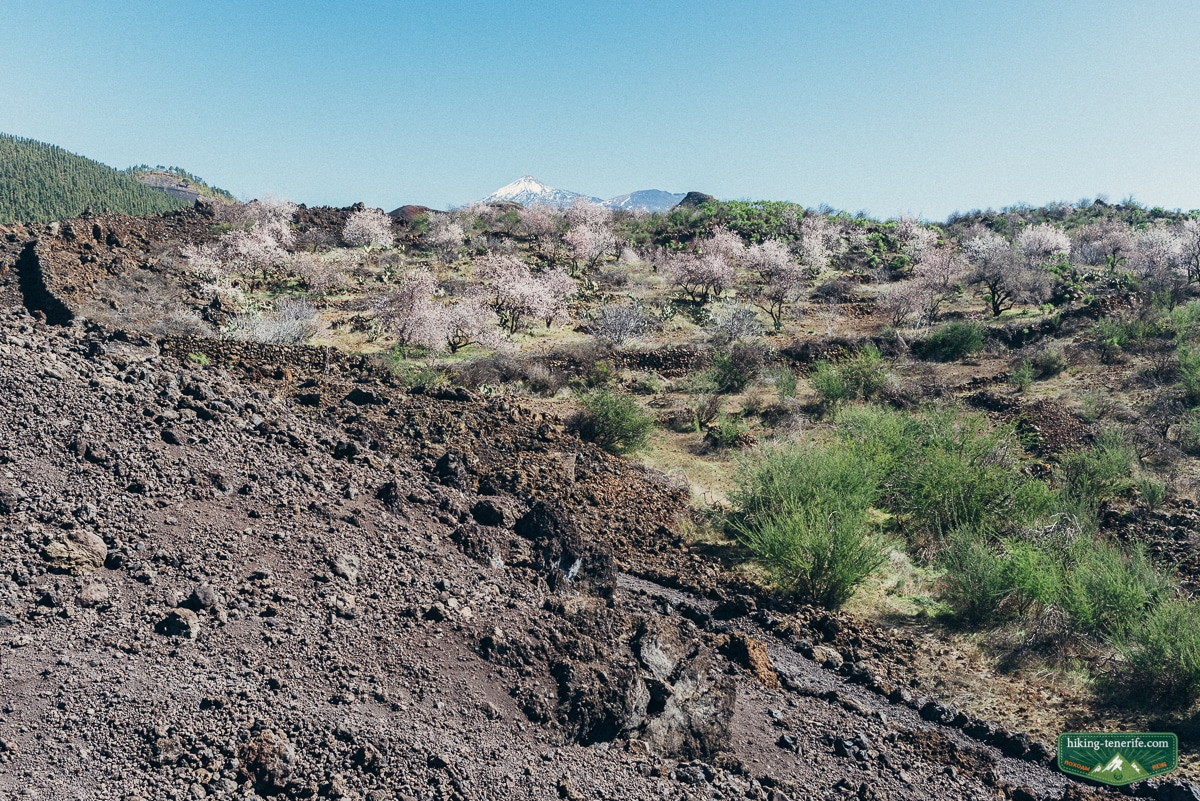
- For a quiet north-west route, add Los Silos or Buenavista and use the broad north Tenerife guide.
- For a historic-town comparison, add La Orotava or make a separate La Laguna day.
- For a resort-base trip, keep the wider things to do in Tenerife guide open and choose one coherent region.
- Do not add Teide National Park as a casual final stop after a long coast day. Teide deserves its own weather, altitude and driving plan.

Garachico by month: when I would go
The north is not the south. Garachico can be sunny while the high cloud sits inland, or grey while the south is bright. For a walking day, a little cloud can be beautiful. For pools, photography and road confidence, check the local forecast and the AEMET El Caletón forecast rather than relying on your resort weather.
- Winter: prioritise the old town and food, then treat El Caletón as a weather-dependent extra. Use the January guide for the north-south weather contrast.
- Spring: longer days suit a Garachico and Icod combination. The April guide explains the island-wide tradeoffs.
- Summer: walk early, expect more visitors and still check the Atlantic. See the July guide for heat and crowd planning.
- Autumn: warm water does not cancel swell risk. Use the October guide for changing-weather context.
In July and August I would start early if the day is hot and busy. In winter I would accept that the coast may be moody and plan the old town, food and an inland backup. The best month is the one in which you leave room for the real weather.
Is Garachico good for families, strollers and limited mobility?
Families can enjoy Garachico when the town walk is the main activity and the pools are treated as optional. Explain the route as a story about the old harbour, lava, castle and sea, not as a guaranteed swimming afternoon.
For wider family decisions, use my Tenerife with kids guide.
A stroller can manage some streets but not every old stone surface or sloping edge comfortably. If someone in your group has limited mobility, check the exact route, toilets, parking and current access before committing. The town is historic, which is another way of saying it was not built around modern step-free circulation.
For visitors who mainly want sand and an easier bathing setup, compare the day with my Tenerife beaches guide. Garachico is a poor substitute for a guaranteed sandy beach, and pretending otherwise helps nobody.
What I would not do in Garachico
- Do not drive from Costa Adeje expecting a quick stop, then add Masca, Teide and three more viewpoints because they are nearby on the map.
- Do not arrive at El Caletón with a towel and no weather backup. Bring shoes, water and the willingness to stay dry.
- Do not judge the town only from the waterfront. The old streets and houses are the reason to come; the pools are an extra chapter.
- Do not assume a church, museum, café, car park or bus follows yesterday’s timetable. Verify the part of the day that matters to you.
- Do not leave rubbish, climb fragile lava or block residents’ doorways for a photograph. Garachico is lived in, not staged for us.
Useful links for the rest of your Tenerife plan
If you are based in the south, compare this detour with El Médano, Los Cristianos and Playa de las Américas before committing to the drive. If wind sports are the point, go straight to the kitesurfing guide instead of asking Garachico to be a different kind of day.
If you are staying in the north, Garachico sits naturally beside Puerto de la Cruz, La Orotava and Icod. If your alternative is an east-side nature day, compare it with Anaga Rural Park; both are beautiful, but the roads, weather and walking experience are not interchangeable. Around December, use the separate Christmas in Tenerife guide for current festive planning.
Garachico Tenerife FAQ
Is Garachico Tenerife worth visiting?
Yes, if you enjoy historic streets, volcanic landscapes, small-town atmosphere and a flexible coast day. I would skip it as a rushed south-to-north photo mission or if your only goal is guaranteed sand and swimming.
Is Garachico the best old town in Tenerife?
It is my favourite compact old-town-and-lava-coast combination, not an objective winner. La Laguna is better for a larger pedestrian historic city; La Orotava is better for grand architecture and gardens.
Can you swim in the Garachico natural pools?
Sometimes, when conditions and official access allow it. El Caletón is exposed to Atlantic swell, so check flags, signs, waves and local conditions on the day. Never treat a calm photograph or a summer date as permission.
How long should you spend in Garachico?
Allow 90 minutes to two hours for a deliberate old-town walk, or three to four hours for the walk, coast, pool decision, coffee and food. A full day is useful only when you add one nearby stop at a sensible pace.
Do you need a car for Garachico?
No, but a car makes the visit much easier from most of the island. From Puerto de la Cruz, TITSA line 363 is the practical public-transport route to check. From the south, a bus day is possible but usually long and transfer-heavy.
What if El Caletón is closed or the sea is rough?
Keep the old-town route, castle, harbour, food and Roque views, then add Icod or another sensible north-coast stop. A rough sea does not cancel Garachico; it cancels one part of Garachico.
My final answer is simple: go to Garachico for the whole place, not only the pools. Walk the town, understand the eruption, look at the sea before entering it, and leave enough time for the day to be slightly imperfect. That is when Garachico feels best.

