

Short answer: choose south Tenerife for better winter-sun odds, selected managed beaches, resort services, nightlife, boat trips, and simpler logistics.
Choose north Tenerife for old towns, Anaga, black sand, local food, hiking, greenery, and less resort polish.
A split stay can work well with at least a week, a car, and genuine interest in both sides. For a shorter, no-car, toddler-heavy, or luggage-heavy trip, one smart base usually wins.
Almost every first-time Tenerife plan eventually becomes the same small domestic drama: one person wants warm sun and an easy beach, the other wants black sand, cliffs, forests, and old Canarian towns.
The good news is that nobody needs to lose. Tenerife is small enough to combine both moods.
It is not small enough to ignore weather, roads, parking, sea state, or luggage. That is how a romantic island plan becomes a spreadsheet with sunburn.

Quick verdict: north, south, or split?
If you want the lowest-friction answer for a normal first Tenerife holiday, stay in the south or southwest and visit the north on a planned day.
If you want Tenerife as an island, not only a beach break, give the north proper time too.
The honest answer is not “north is better” or “south is better”. The real answer is what kind of inconvenience you are willing to accept.
| Your priority | Best choice | Why it works | The catch |
|---|---|---|---|
| Winter sun and easier swimming logistics | South or southwest | Better sun odds, selected managed beaches, more resort services | More touristy and less local-feeling |
| Old towns, greenery, and character | North | La Laguna, Puerto de la Cruz, La Orotava, Anaga, Garachico, black coast | Cloud, humidity, rough sea, hills, and cooler evenings can matter more |
| First trip with a car and 7 nights | Split 3/4 or 4/3 | You get beach comfort and the north’s real personality | Packing twice is annoying, especially with children |
| First trip without a car | South, or Puerto/Santa Cruz if you prefer towns | South is easier for beaches and tours; north cities work for culture | Wild beaches, Anaga, and viewpoints become harder without a car |
| Families with younger kids | South first | Selected sheltered beaches, pools, shade, toilets, promenades, shorter transfers | The trip can become too resort-only unless you plan one or two real island days |
| Hikers and active travelers | North, or split | Anaga, greener valleys, old paths, rough coast, Teide access from both sides | Weather can rewrite your route, especially in winter |
| Nightlife and young-adult energy | Las Americas / Los Cristianos / Costa Adeje | More bars, clubs, shows, late food, taxis, and social noise | Do not confuse nightlife districts with the whole south |
| Long stay or remote work | North if you want local life; south if you want sun | North has towns and a lower-key rhythm; south has stronger winter-sun odds and resort services | Check heating, damp, desk quality, parking, and evening noise before booking |
My local verdict: if winter sunshine is the emotional reason for the trip, base yourself in the south or southwest. That gives you better odds, not a weather guarantee.
Then give the north proper time as a day trip or split stay. Anaga and the old towns are not optional decorations if you want to understand Tenerife.
Still comparing too many places? Open my free Tenerife map to connect possible bases with beaches, towns, viewpoints and realistic route days before you book.
What people really mean by north and south Tenerife
North and south are useful words. They are also a little lazy.
Costa Adeje, Los Cristianos, Las Americas, El Medano, Playa San Juan, and Golf del Sur do not feel identical just because they are all southern-ish.
The same is true in the north. Puerto de la Cruz, La Laguna, Santa Cruz, Anaga, La Orotava, Garachico, and Icod de los Vinos can all give you a different holiday.
Local rule: do not choose a coast. Choose the daily life you want outside your hotel door.
When I say south in this guide, I mostly mean the south and southwest visitor belt.
That includes Costa Adeje, Fanabe, Torviscas, El Duque, Los Cristianos, Playa de las Americas, La Caleta, Playa Paraiso, Alcala, Playa San Juan, Puerto Santiago, and the easier access to Los Gigantes and boat trips.
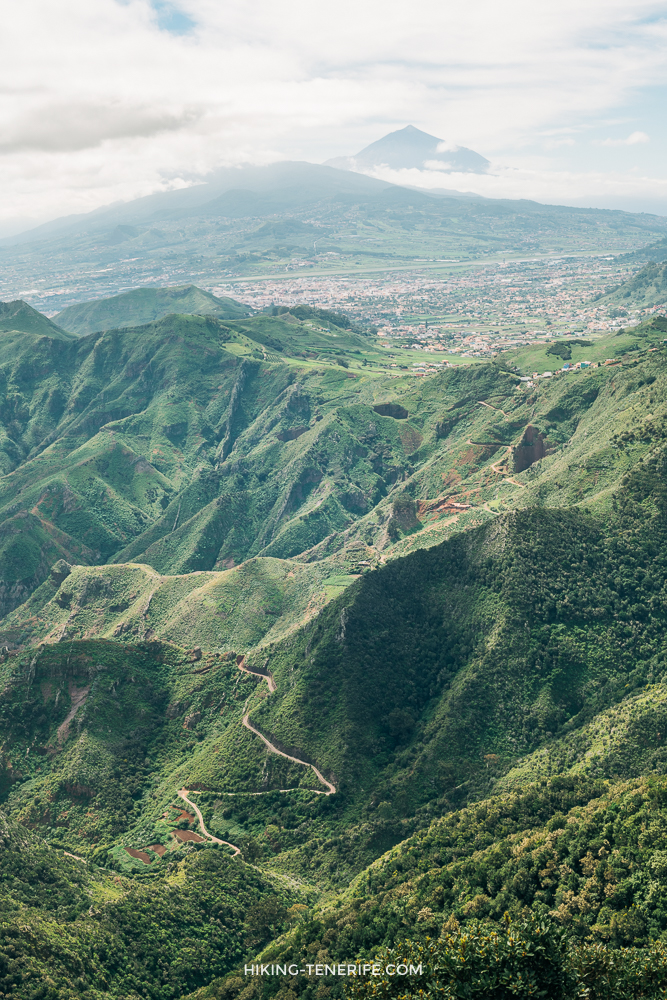
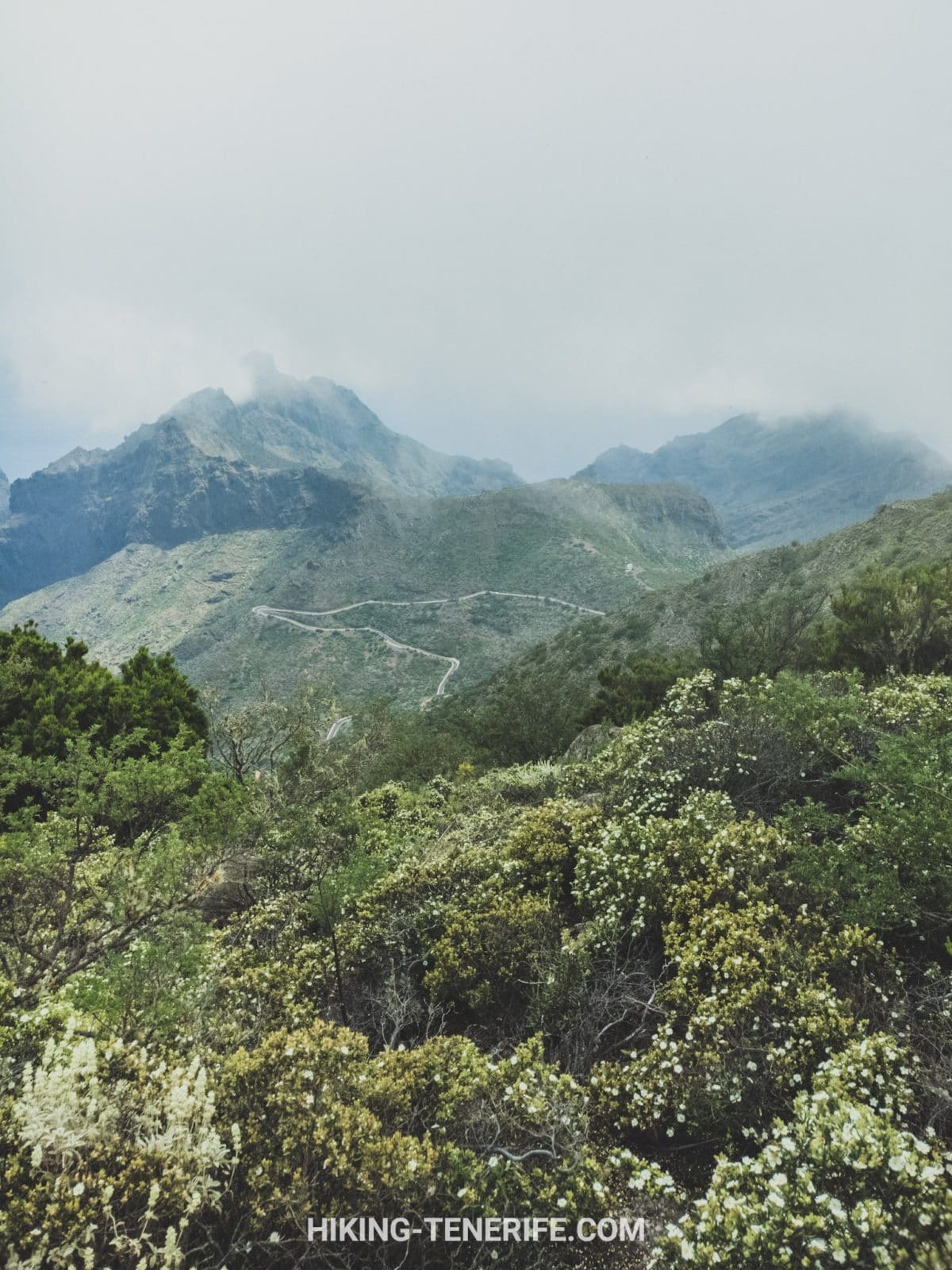
When I say north, I mean the greener side of the island.
That means Puerto de la Cruz, La Orotava, La Laguna, Santa Cruz, Anaga, Garachico, Icod, Bajamar, Punta del Hidalgo, and the black-sand or volcanic-pool coast. It is beautiful, but not always gentle.
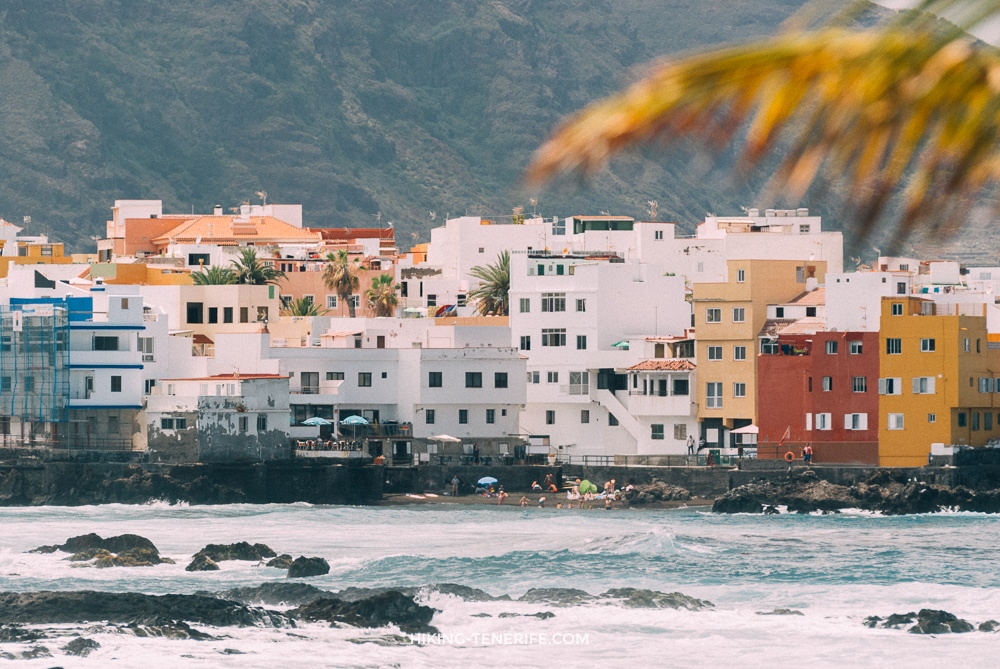
Important distinction: Santa Cruz and La Laguna are in the north-east, but they are not beach-resort bases. Puerto de la Cruz is the easiest classic north holiday base.
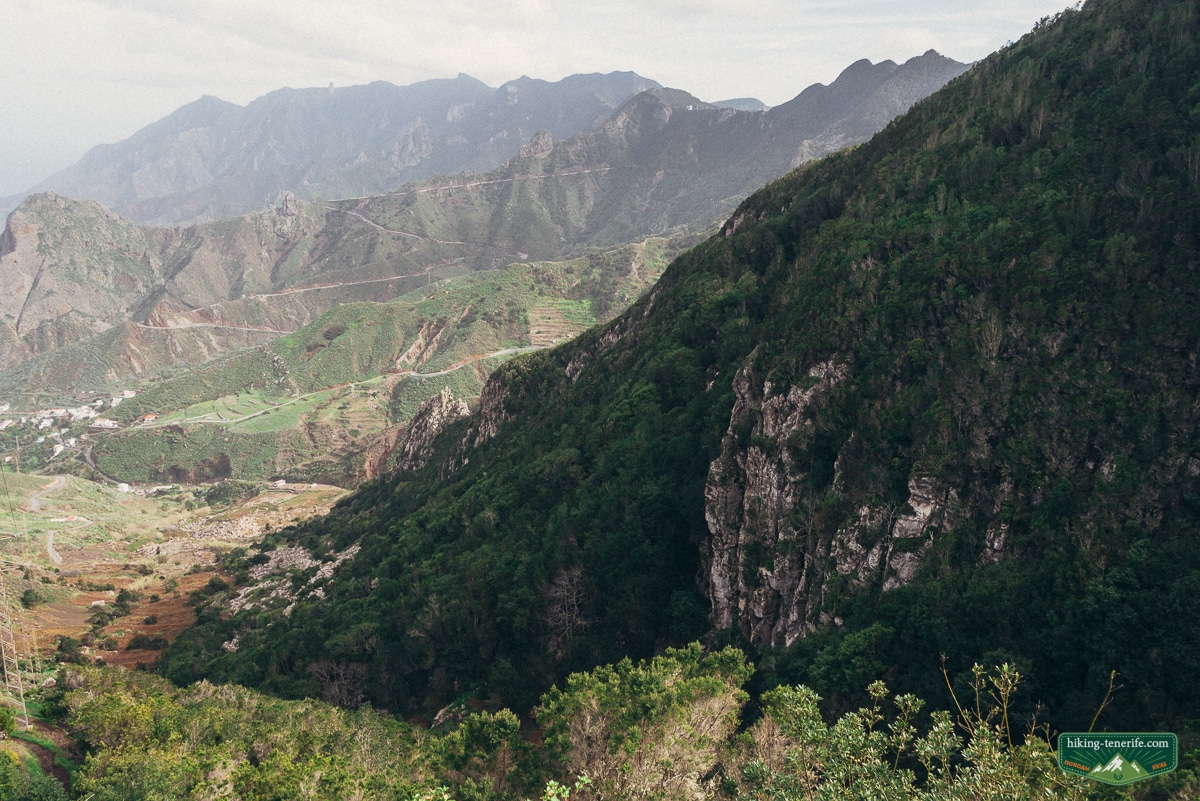
Anaga is a landscape, not one simple accommodation zone. I would not casually tell a first-timer to sleep there unless they know exactly why.
Weather: the biggest north vs south difference
The south is usually warmer, sunnier, drier, and more predictable, especially from November to March. This is why most winter-sun visitors end up around Costa Adeje, Los Cristianos, Las Americas, and the southwest coast.
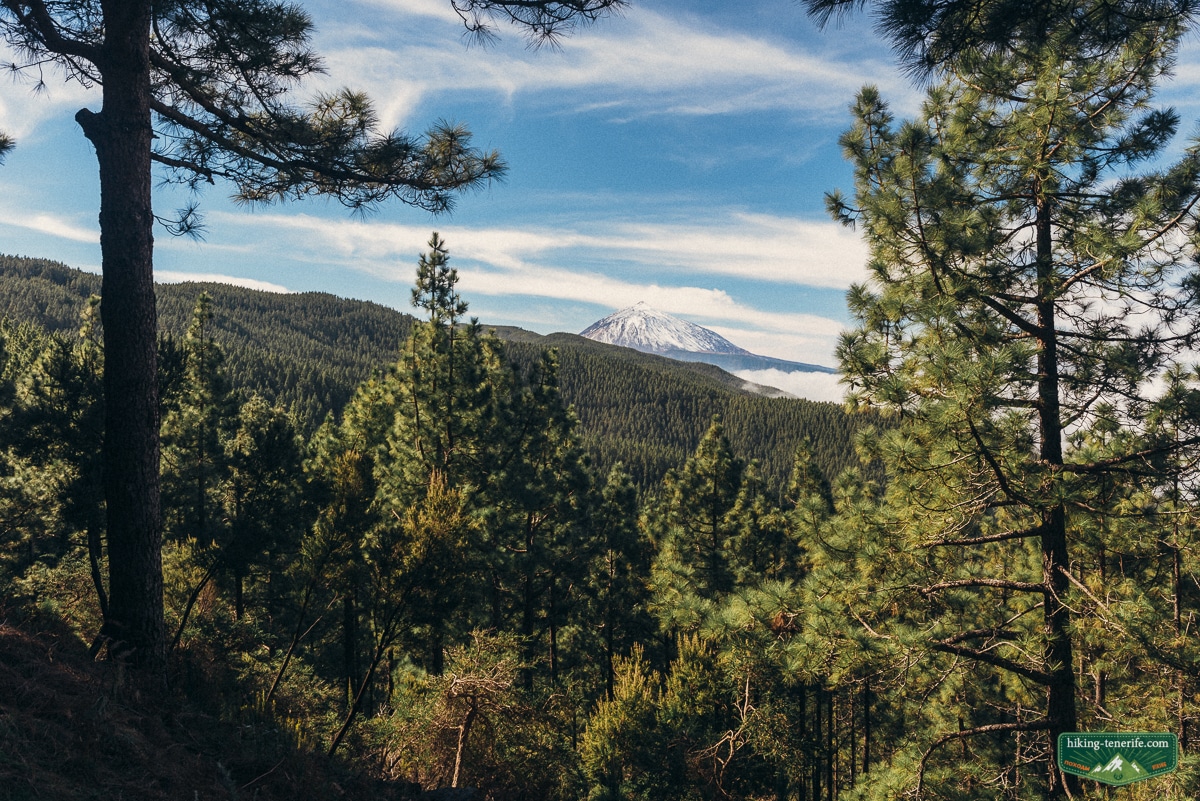
The north is greener because it gets more cloud and humidity. That is the magic and the problem.
You get laurel forest, banana plantations, lush valleys, dramatic black coast, and old towns that feel alive. You also get mornings where your balcony says “tea and socks” while someone in Costa Adeje is choosing sunglasses for lunch.
| Season | South reality | North reality | Best planning move |
|---|---|---|---|
| December to February | Best odds for warmth and beach time | Cooler, cloudier, wetter, and apartments can feel cold | Stay south if sun is essential; day-trip or split if you have a car |
| March to May | Usually comfortable, still easier beach logistics | Often beautiful, green, and active, with changing mountain weather | Good time to split or base north if you are not beach-obsessed |
| June to September | Hotter, drier, sometimes windy or dusty | Often more comfortable for towns, walking, and greenery | North becomes more attractive if you dislike resort heat |
| October and November | Good beach odds, but still check sea and wind | Can be excellent, but weather starts changing more | Keep one flexible day and check microclimates by area |
Microclimate rule: never trust one island-wide forecast icon. Check the exact place: Costa Adeje, El Medano, Puerto de la Cruz, La Laguna, Anaga, Teide, or Santa Cruz. They can disagree with each other like relatives at a wedding.
Also remember altitude. A north apartment above the motorway can feel much colder and damper in winter than a seafront place in Puerto de la Cruz.
A charming rural house becomes less charming when the heating plan is “extra blanket and optimism”.
Weather rule: the south and southwest usually offer better winter-sun odds. The north is stronger for greenery, atmosphere, and old-town days, but exact coast and altitude matter.
For month-specific temperatures and rainfall, use the Tenerife weather by month guide. Airport climate stations help explain the contrast, but Tenerife North Airport sits at 632 metres and does not represent every northern beach town.
Beaches and swimming: south is easier, north is more dramatic
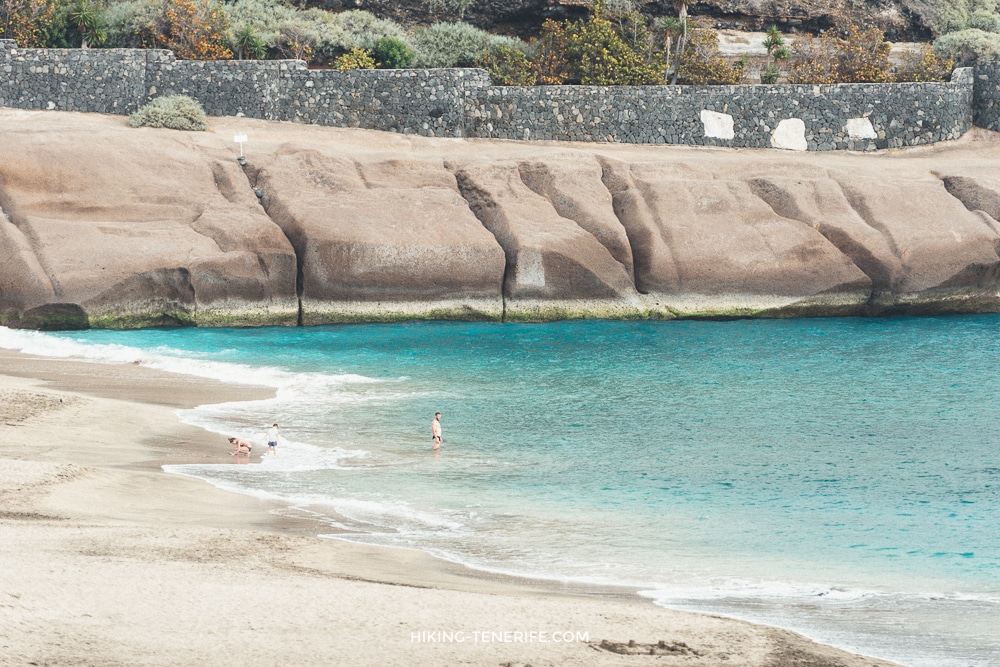
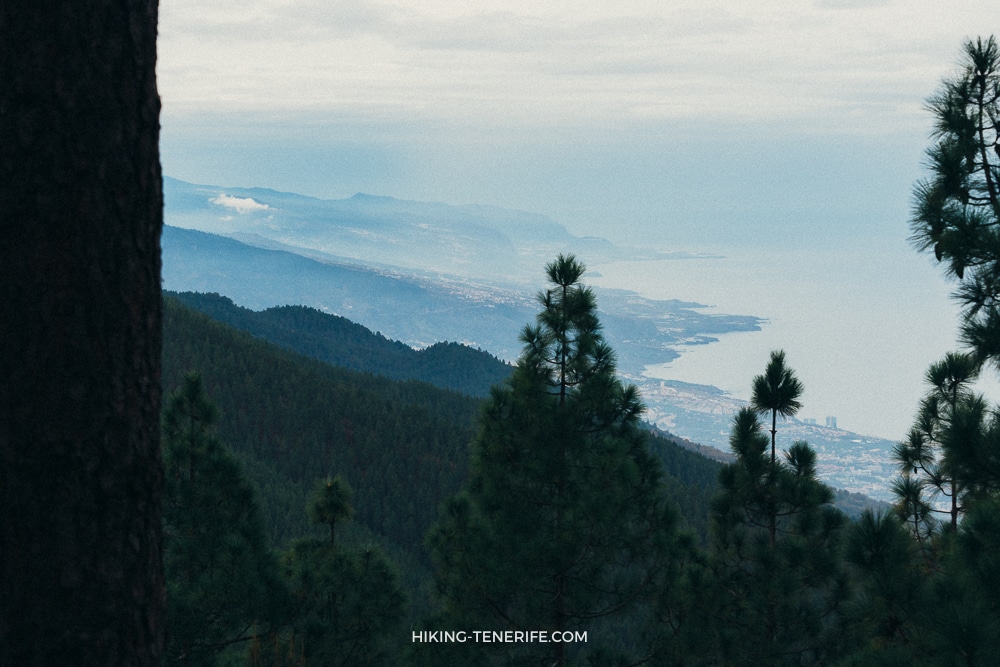
If your dream holiday is swimming most days, selected resort beaches in the south and southwest usually make the logistics easier.
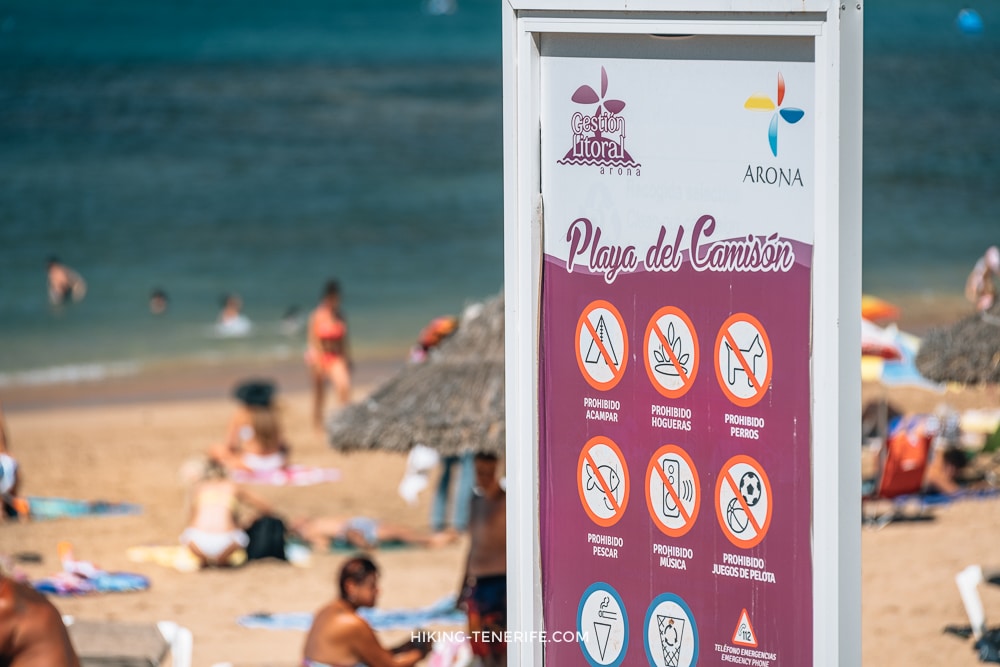
Many have showers, toilets, cafes, sunbeds, nearby food and lifeguards during published service hours. That does not make every southern beach sheltered or safe, and El Medano or La Tejita can be windy and exposed.
Good south beach areas include El Camison, Las Vistas, Fanabe, Torviscas, El Duque, La Caleta, Abama, Playa San Juan, Alcala, and Los Cristianos.
Choose these if you want food, taxis, promenades, showers, and an easy way home when everyone is sandy and done.
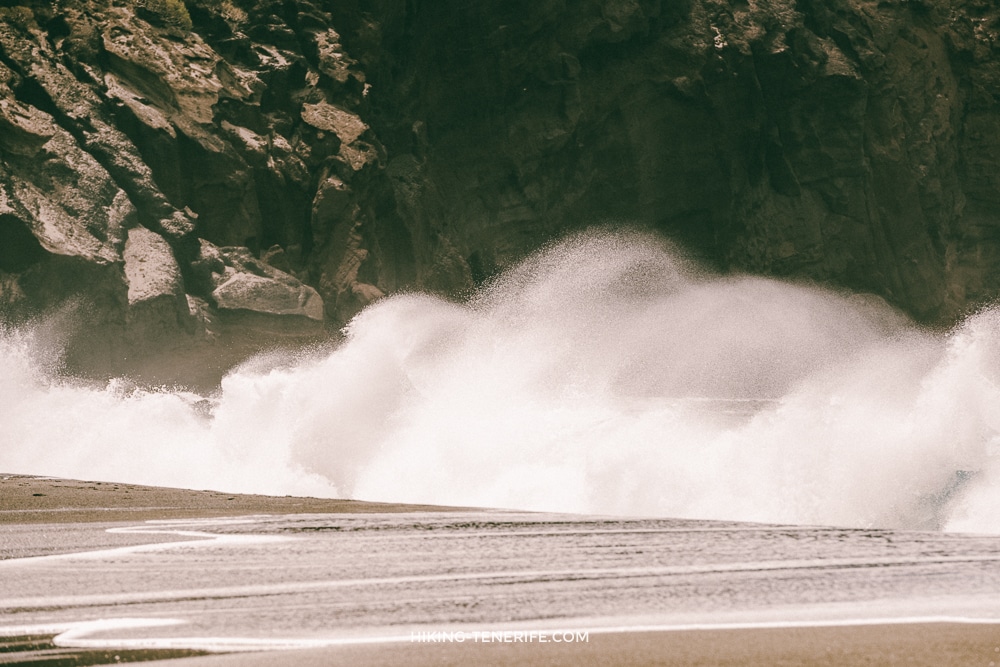
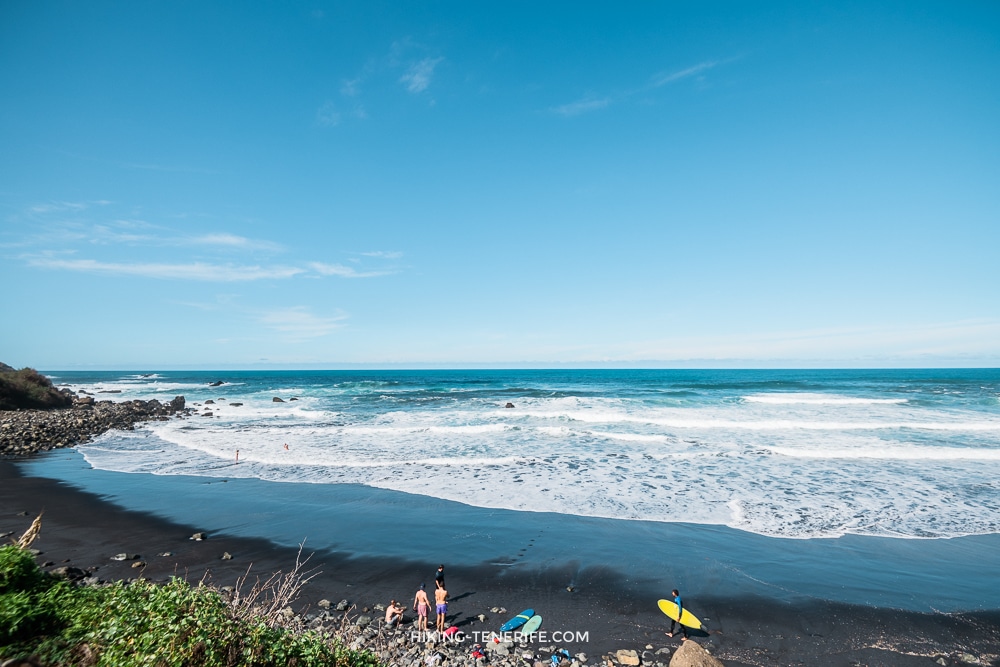
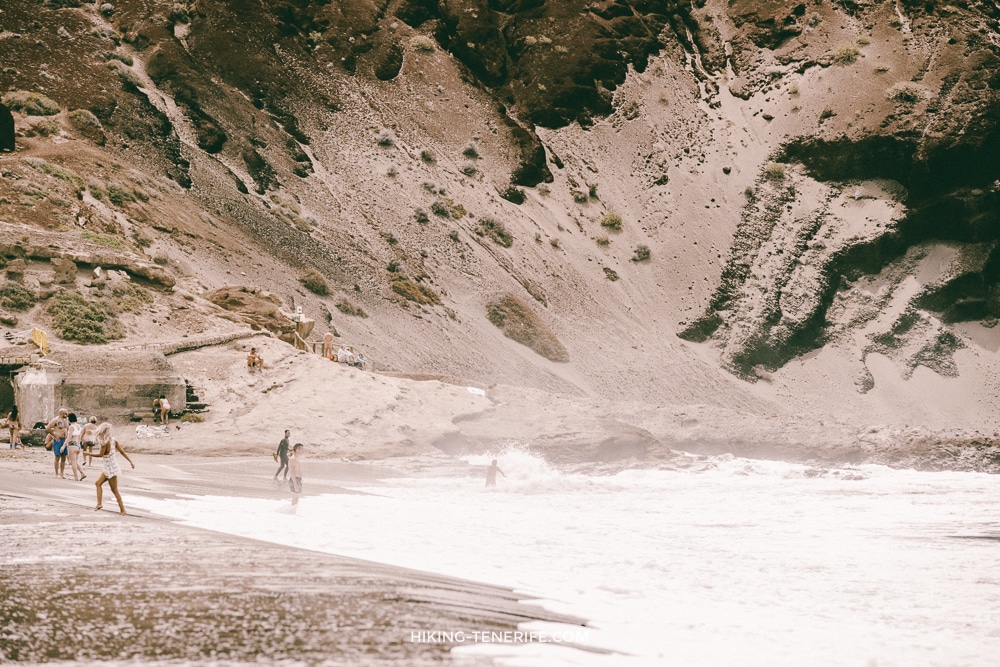
The north has more mood. Black sand, cliffs, rough Atlantic water, volcanic pools, and green slopes sit behind many beaches.
Some places make your camera feel very pleased with itself. But many northern beaches are seasonal swimming beaches, not guaranteed swimming beaches.
In summer and calm conditions, the north can be wonderful. In winter or rough sea, some northern beaches and natural pools are better for watching, walking, and respecting the ocean from a sensible distance.
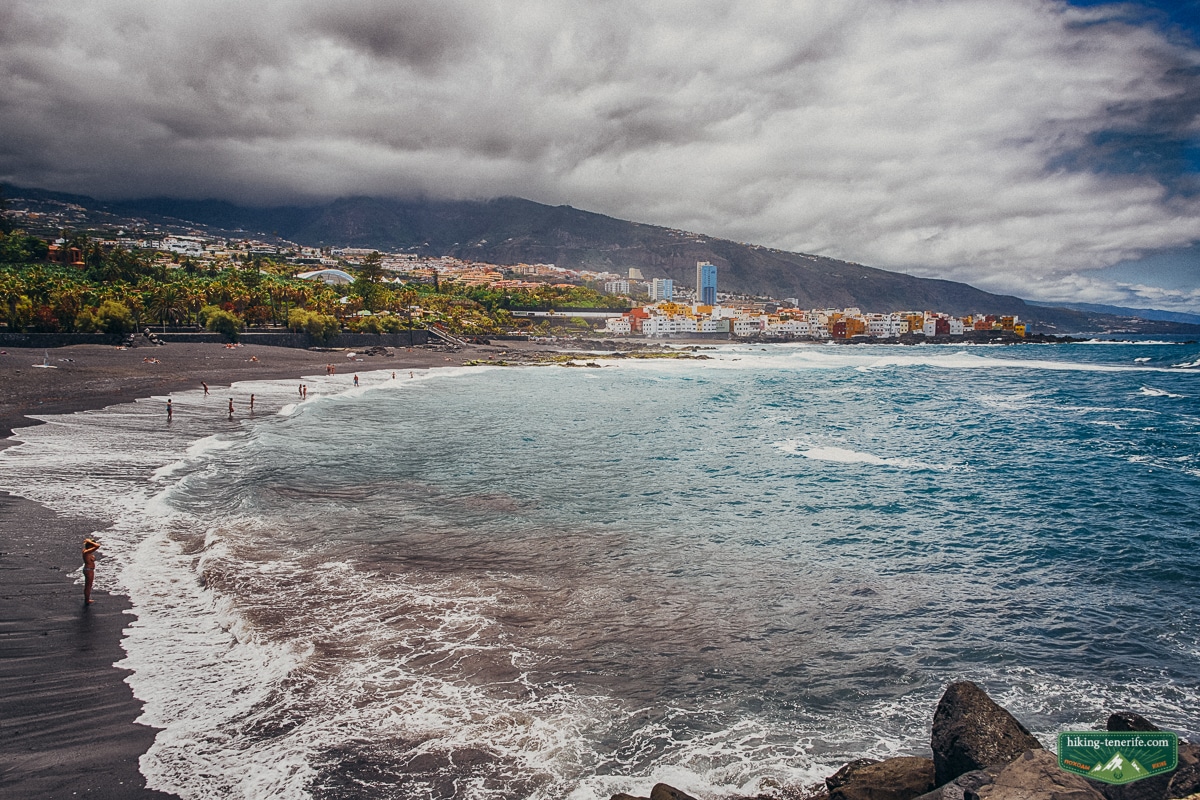
Sea safety rule: warm air does not make rough water safe. Check flags, waves, currents, lifeguards, and local warnings. Natural pools are not magic swimming permission slips; they are only good when the sea behaves.
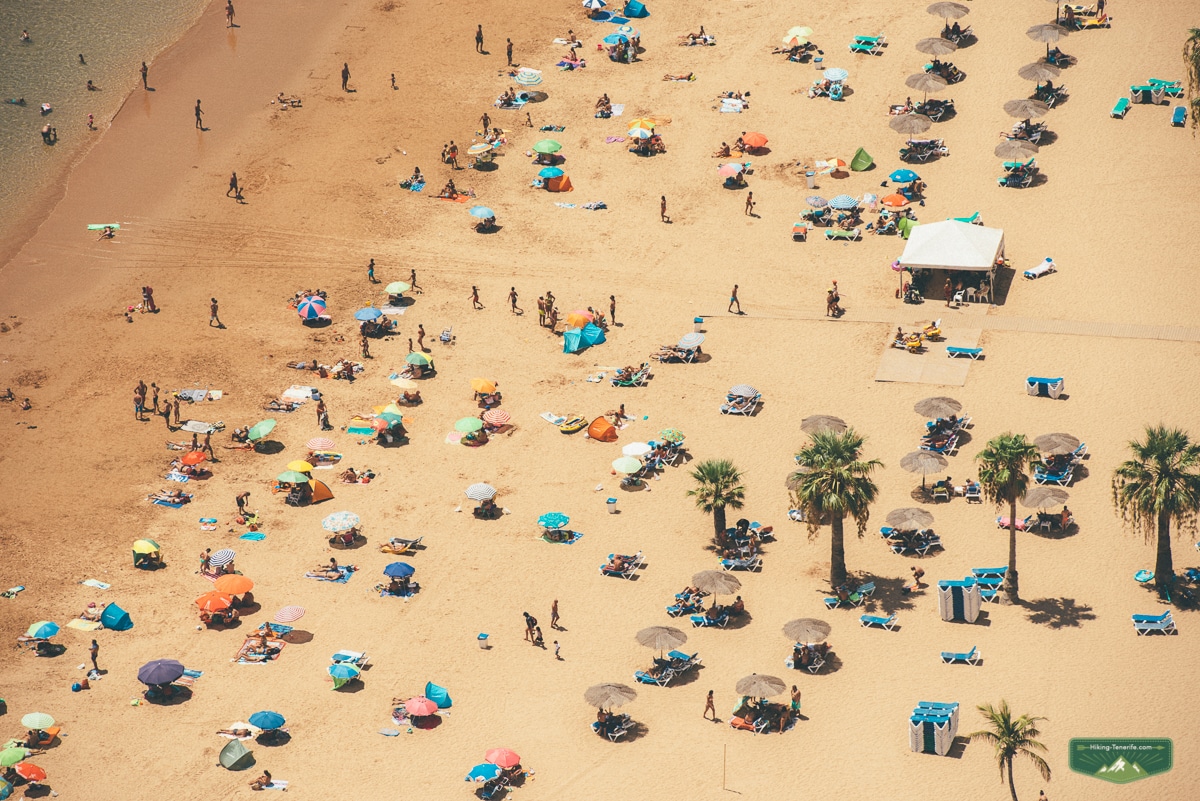
Las Teresitas is the north-east exception many families love. It has golden sand, calm water on many days, food nearby, and easy access from Santa Cruz.
It is not wild and secret. It is useful, and useful is a beautiful word when someone in your group needs toilets now.
Hotels, apartments, and bases
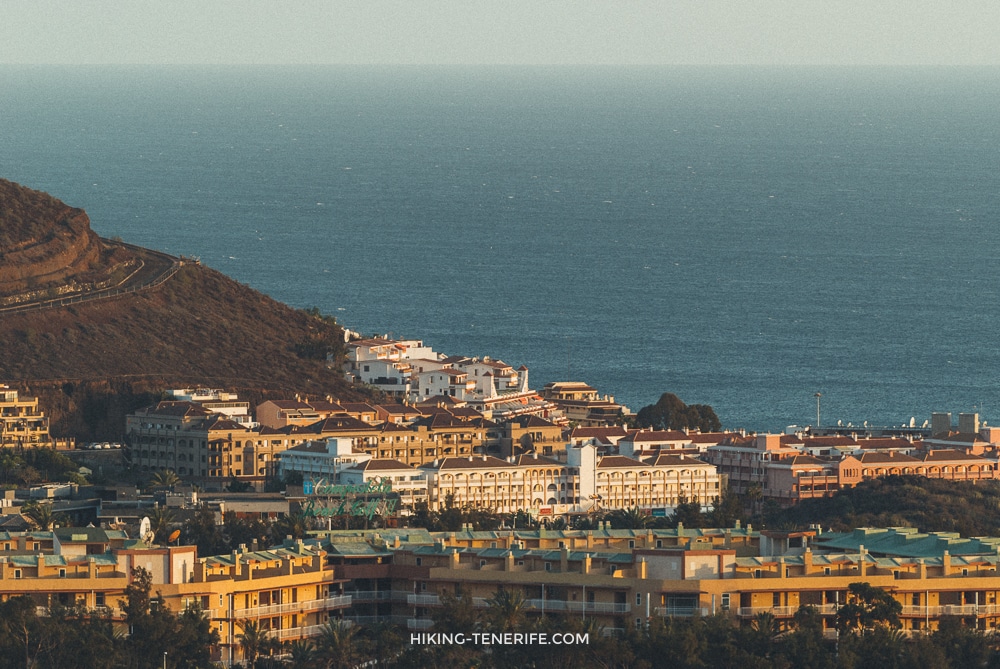
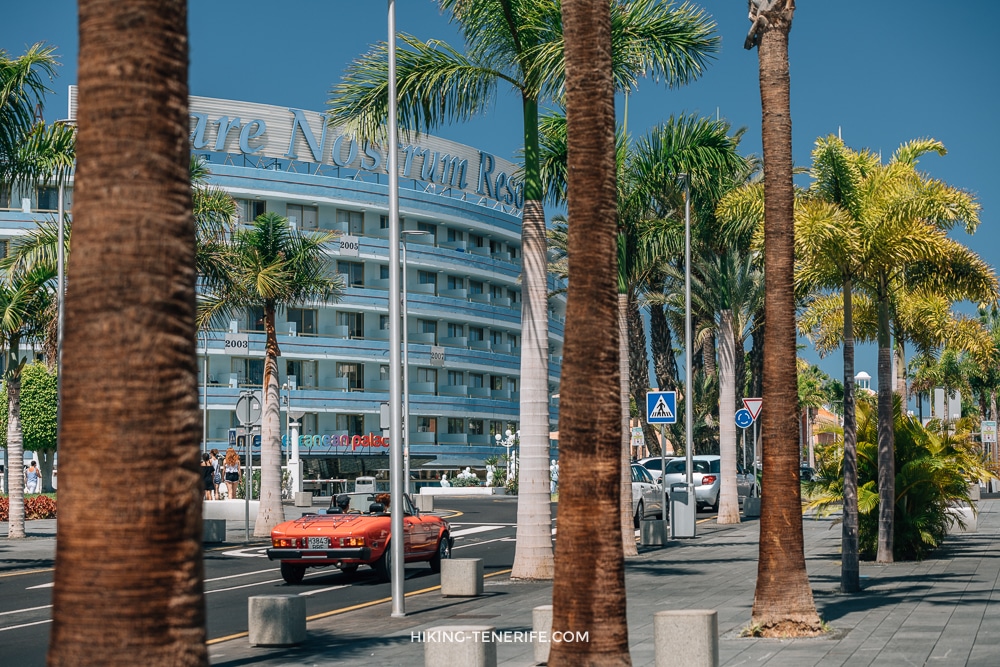
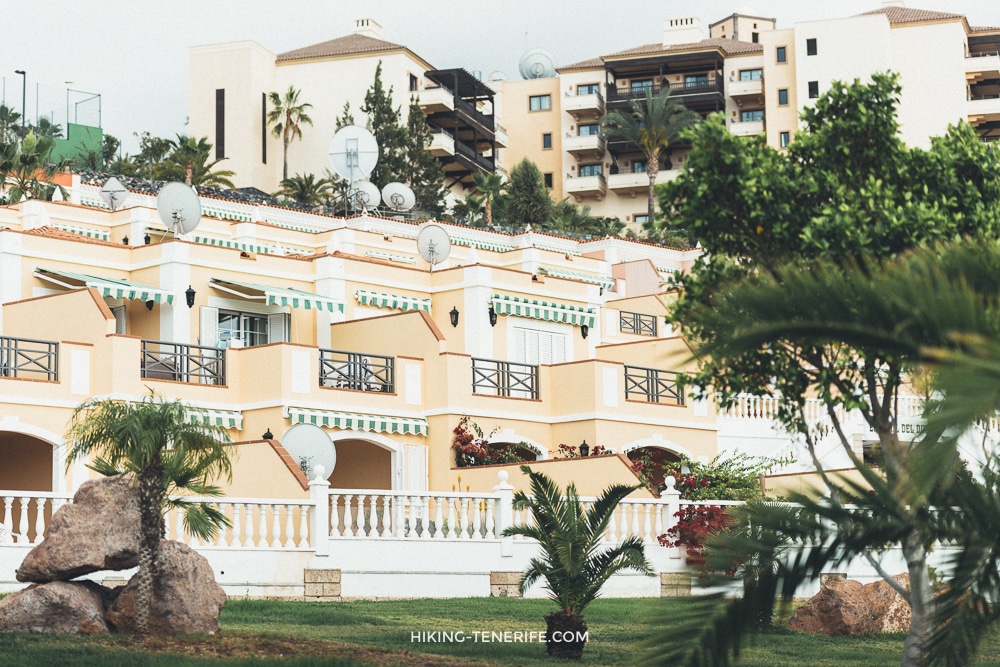
The south has more hotels, larger resorts, more all-inclusive and half-board options, more pools, more family infrastructure, more English-speaking services, and more accommodation close to managed beaches.
The north has more small hotels, apartments, town stays, older buildings, greener views, and local rhythm. This can be charming.
It can also mean hills, damp winter rooms, no heating, older furniture, or parking that depends heavily on the exact property and street.
For exact resorts, towns and accommodation tradeoffs, continue to the where to stay in Tenerife guide.
| Base | Best for | Avoid if | My note |
|---|---|---|---|
| Costa Adeje / Fanabe / Torviscas | First-timers, families, winter sun, easy restaurants, beach logistics | You hate resort areas and polished promenades | Very practical. Use it as a base, then leave it for real route days. |
| Los Cristianos | No-car visitors, ferries, beaches, older resort rhythm, restaurants | You want quiet luxury or wild scenery at the door | Convenient and not glamorous, which is sometimes exactly what works. |
| Playa de las Americas | Nightlife, young adults, late food, bars, social energy | You want peaceful evenings or local village life | Good for party intent. Terrible if you booked it by accident. |
| La Caleta / Playa San Juan / Alcala | Couples, quieter south-west bases, food, sunsets, car-based trips | You need huge resort choice or nightlife outside the door | Good compromise if you want south weather without the loudest resort feel. |
| El Medano | Wind sports, younger energy, independent mood, airport convenience | You want calm swimming every day | Wonderful when the wind is the point. Less wonderful when you wanted a calm hat. |
| Puerto de la Cruz | North base, old tourism charm, gardens, restaurants, black coast, buses | You require winter sun and calm sea daily | The easiest north answer for many curious visitors. |
| La Laguna | Culture, no-car city days, food, old streets, Anaga access | You want a beach holiday | Beautiful for a few nights if you know it is a city, not a resort. |
| Santa Cruz | Capital, shopping, tram, Las Teresitas, practical transport | You want a romantic holiday base | Useful, lively, and functional. I prefer it as a city day or short stay. |
| La Orotava / Icod / Garachico | Slow north, history, food, car-based exploring, long stays | You need easy beaches, nightlife, or no-car simplicity | Wonderful visits. More selective as bases. |
Use the specialist guides for Costa Adeje, Los Cristianos, Playa de las Americas, Puerto de la Cruz, and La Laguna once this comparison has narrowed your base.
Common mistake: booking a pretty northern rural apartment in February because the photos show flowers, then discovering that the room is cold and dinner requires a drive.
Check heating, the exact parking situation, evening food, road access, and whether the nearest beach suits swimming in your season.
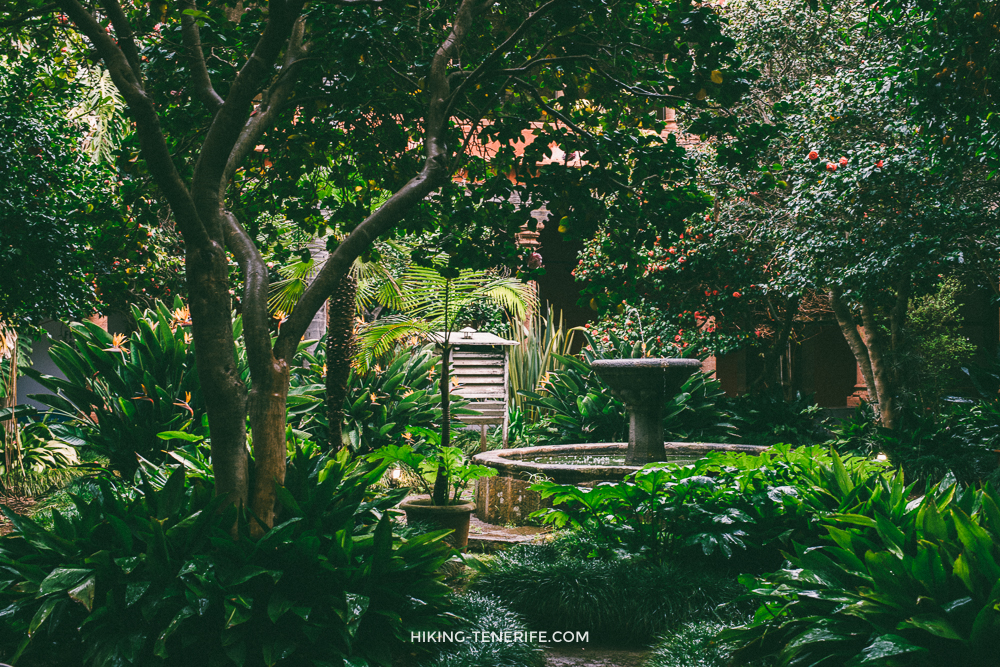
Transport, parking, and the no-car reality
With a car, Tenerife becomes much easier to combine. You can stay south and do Anaga or Puerto de la Cruz as a proper day.
You can stay north and move a flexible beach day south when local forecasts differ. With enough nights, you can split the trip without losing half the holiday to logistics.
Without a car, choose your exact base more carefully. Los Cristianos and coastal Costa Adeje are usually simpler for beaches, boat trips, nightlife and transfers from Tenerife South Airport.
Puerto de la Cruz, Santa Cruz and La Laguna can work for town-based trips, with official airport and intercity services. Remote coast, viewpoints and many trailheads still need more planning.
Check current routes with Aena for Tenerife South Airport and Aena for Tenerife North Airport. Timetables and fares can change.
The north can still work without a car if you choose Puerto de la Cruz, Santa Cruz, or La Laguna and accept a slower, more selective trip.
You will see towns, gardens, food, beaches like Las Teresitas, and some linked transport routes. You will not use the best remote viewpoints and wild coast as easily.
Map note: Tenerife distances lie politely. The map shows kilometres. Your day feels parking, bends, lunch stops, clouds, viewpoints, and one person who suddenly needs coffee.
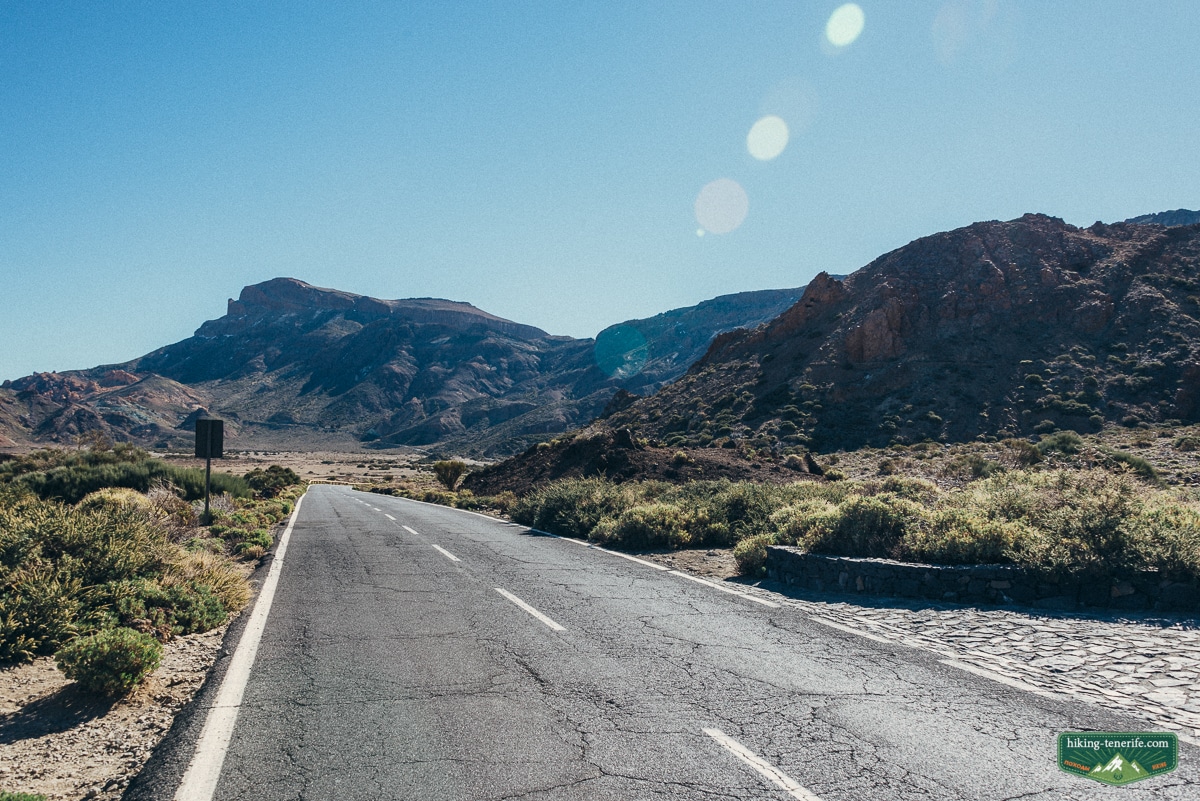
Driving note: the island looks small, but mountain roads, parking, food stops, viewpoints, weather, and tired passengers make days bigger.
Do not plan Anaga, Masca, Teide, Garachico, and a beach sunset as if your rental car has teleportation installed.
Who should choose south Tenerife?
Choose the south if the trip has one clear job: make daily life easy.
This is especially useful for winter-sun trips, families, short holidays, no-car visitors, nightlife, and people who become emotionally fragile when the word “cloudy” appears on a forecast.
For detailed activity planning after you choose that base, use the things to do in south Tenerife guide.
South Tenerife is not only one loud resort strip. It has layers.
Costa Adeje is comfortable and polished. Los Cristianos is practical and busy. Las Americas is nightlife and energy.
La Caleta is slower and better for food or sunset walks. El Medano is windy, sporty, and more independent. Playa San Juan and Alcala can be quieter car-based south-west options.
| South is best if… | Choose this area first | Why |
|---|---|---|
| You have children and want easy beach days | Costa Adeje, Fanabe, Torviscas, Las Vistas, Los Cristianos | Facilities, food, taxis, promenades, pools, and calmer swimming options |
| You want nightlife | Playa de las Americas, Los Cristianos | Bars, clubs, shows, late food, and easy transport home |
| You want quieter south comfort | La Caleta, Playa San Juan, Alcala, Abama area | South-west weather with less full-resort intensity |
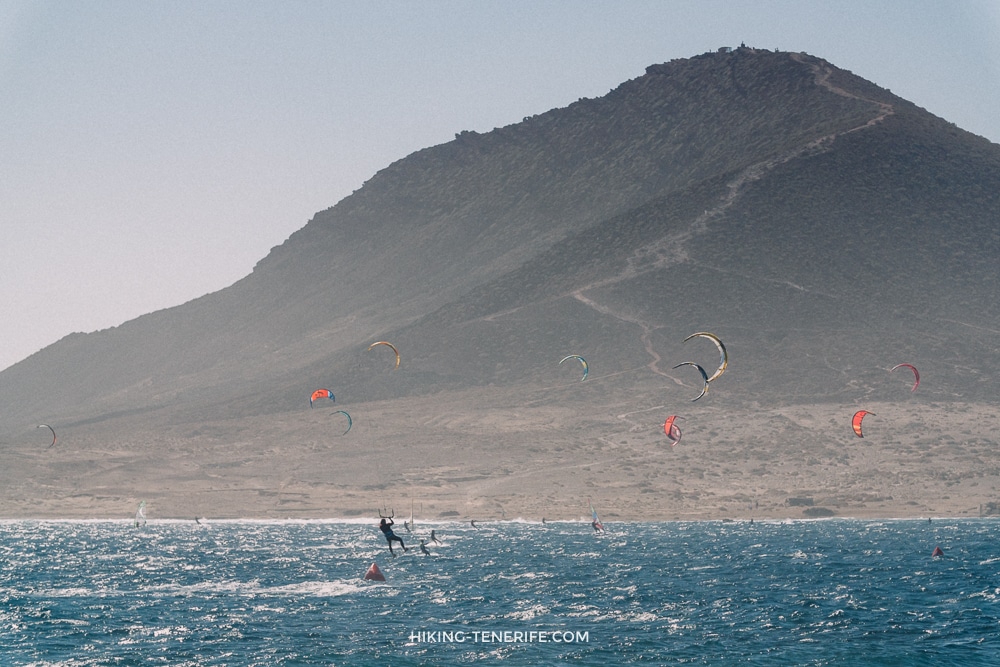
| You want wind sports or independent energy | El Medano | Surf, kite, beach bars, local-ish feel, airport convenience |
| You want boat trips and cliffs | Los Gigantes, Puerto Santiago, Costa Adeje as base | Whale watching, west coast, Masca viewpoints, sunset options |
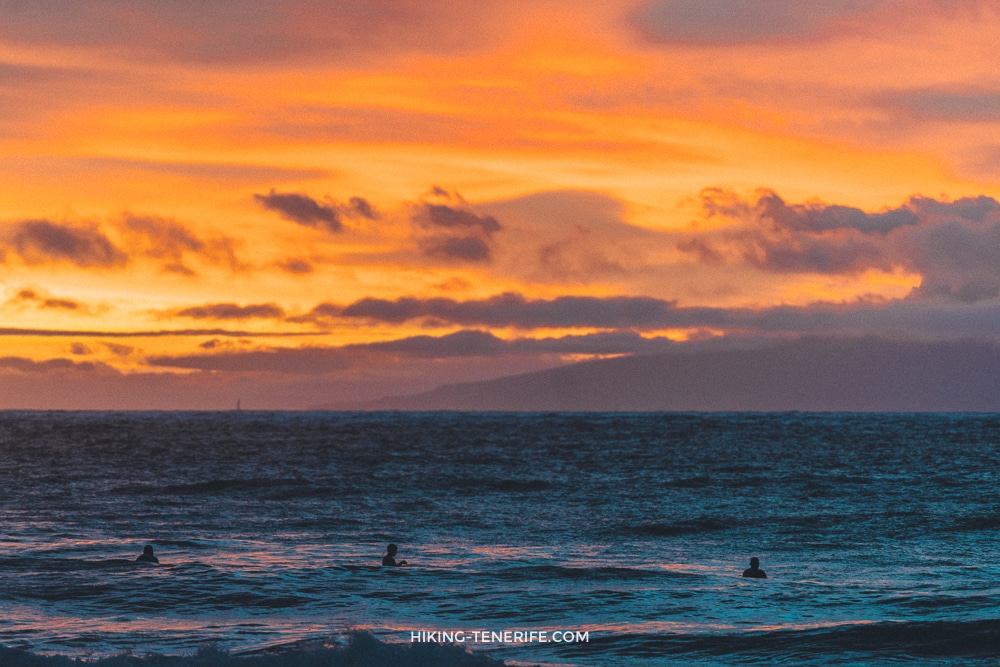
My south rule: choose the south without guilt when comfort is the point. Then promise yourself one proper north or Teide day, because Tenerife is too interesting to spend the whole week inside the same rectangle of pool, buffet, and sunbed.
Who should choose north Tenerife?
Choose the north if your best holiday memories usually involve streets, food, landscapes, weather with a personality, and the feeling that you are somewhere people actually live.
The north is where Tenerife becomes greener, older, moodier, and more varied.
La Laguna gives you colonial streets and food. Anaga gives you laurel forest and mountain roads. Puerto de la Cruz gives you the easiest north base.
La Orotava, Garachico, and Icod give you old-town rhythm and slow-route rewards.
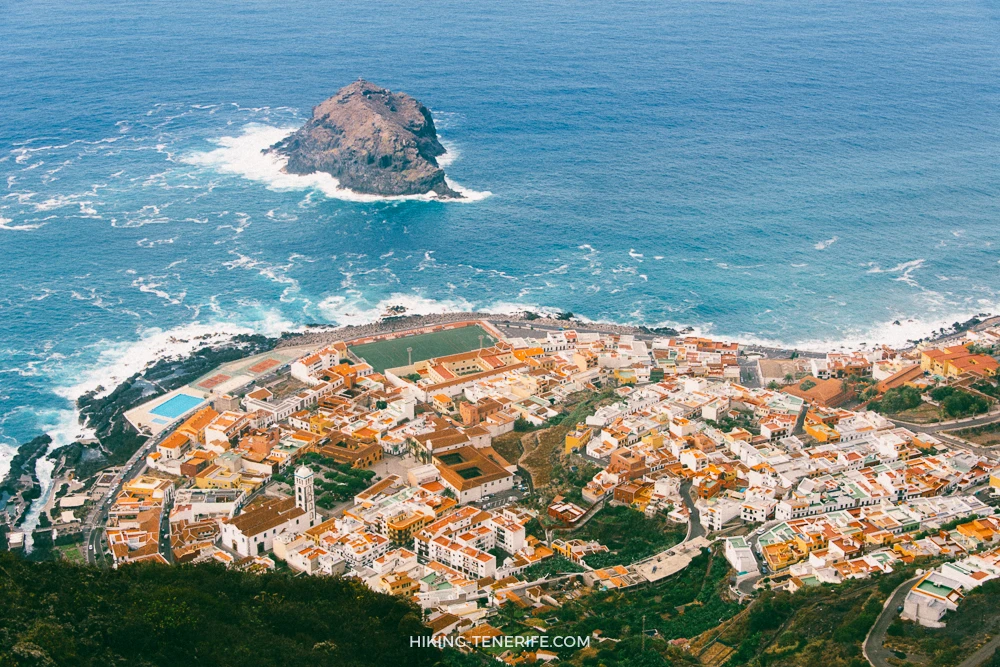
If you are choosing the north, do not pretend it is one simple resort zone. Anaga and La Laguna are one kind of trip. Puerto de la Cruz and La Orotava are another. Garachico, Icod, and the north-west are slower and more car-dependent.
For the detailed route version, use the Things To Do In North Tenerife guide.
This comparison page is here to decide whether the north should be your base, your split stay, or your best day trip from the south.

| North is best if… | Choose this base first | Why |
|---|---|---|
| You want the easiest north holiday base | Puerto de la Cruz | Restaurants, shops, gardens, black coast, buses, day-trip access |
| You want culture and old streets | La Laguna | Food, architecture, tram, Anaga access, weather-proof wandering |
| You want a city and Las Teresitas access | Santa Cruz | Capital services, tram, shopping, market, beach day to the east |
| You want slow north with a car | La Orotava, Icod, Garachico | History, views, wine, old streets, north-west routes |
| You want hiking and green mountains | Puerto, La Laguna, or a careful rural stay | Anaga, north slopes, route access, varied landscapes |
North mistake: choosing a tiny pretty village as your first Tenerife base because the photos look authentic.
Visit small towns, love them, photograph doors, drink coffee, and buy something local. Sleep there only if parking, dinner, heating, road access, and local weather fit your trip.
Should you split the trip?
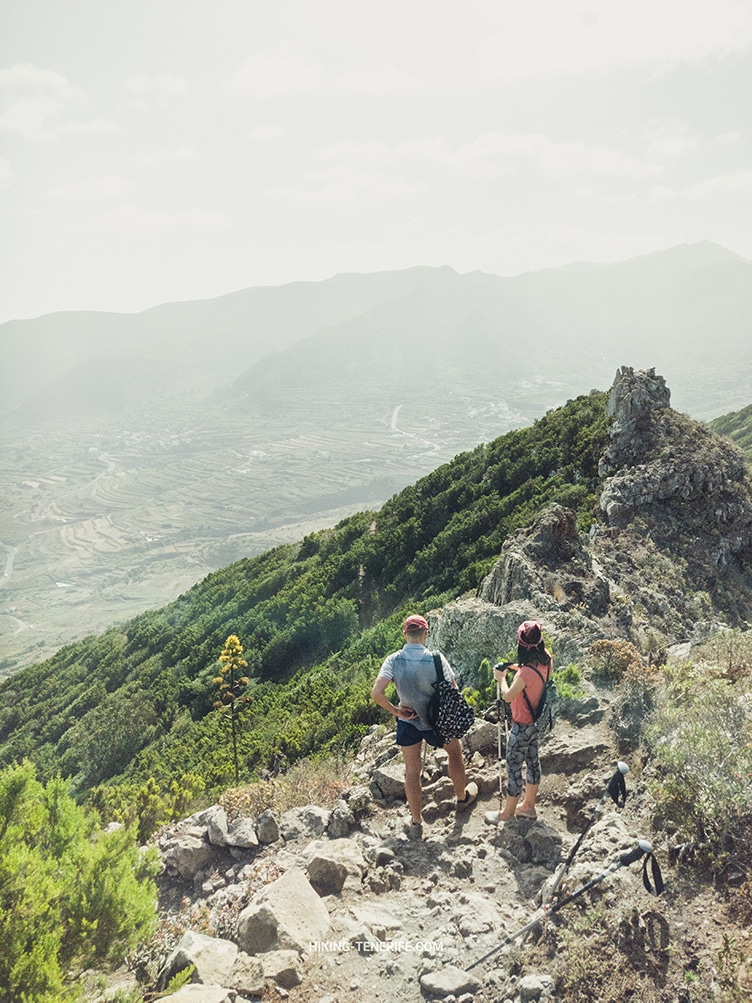
If you have seven nights or more and a car, splitting the trip is often the best answer. It gives the south its job and the north its job, instead of asking one base to do everything.
For a first trip, I like 4 nights south and 3 nights north in winter. If you are more active and less worried about clouds, 3 nights south and 4 nights north can work.
In summer, the north becomes more comfortable for many travelers. The split can lean north if beaches are not the whole point.
| Trip length | Best base strategy | Why | What to avoid |
|---|---|---|---|
| 3-4 nights | One base | Moving eats too much time | Trying to see the whole island |
| 5-6 nights | One base, maybe one long day trip | You can add Teide and one north/south contrast day | Changing hotels unless you love logistics |
| 7 nights | Split 4/3 or 3/4 if you have a car | Enough time for both coast moods | Splitting with tiny children if everyone needs routine |
| 10+ nights | Split, or use two bases plus slower days | You can include Teide, Anaga, west coast, towns, beach, rest | Planning every day before seeing weather |
The order depends on arrival airport and emotional strategy. If you land at Tenerife South and arrive tired, start south.
If you land at Tenerife North and want to avoid a late drive, start north. If someone is desperate for sun, put the south first so nobody spends two days accusing a cloud of ruining the relationship.
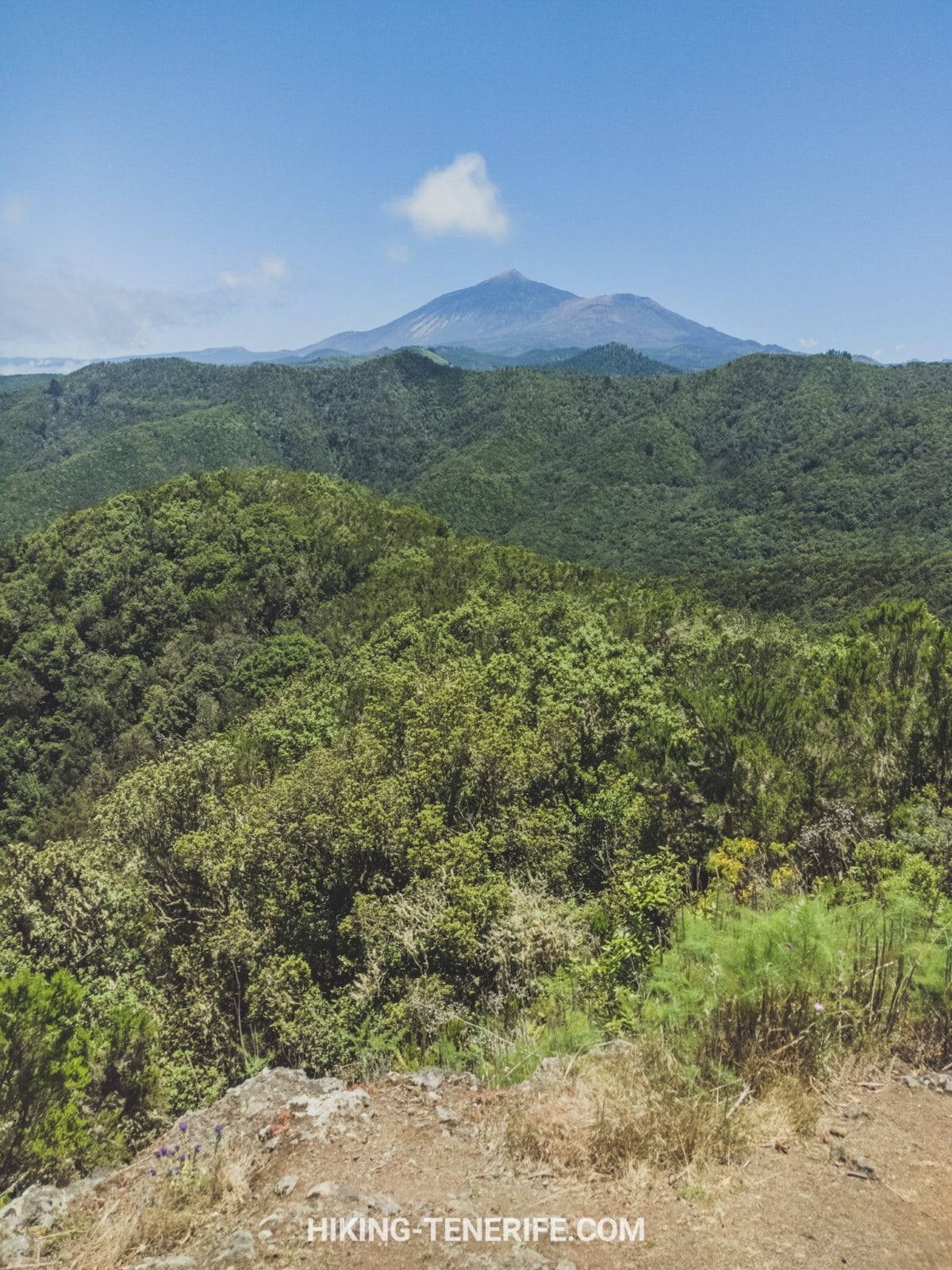
My split-trip rule: do not split by geography alone. Split by job. South days can focus on easier beach logistics, whale trips, sunsets, family comfort and nightlife.
North days can focus on Anaga, La Laguna, Puerto de la Cruz, La Orotava, Garachico, black coast, food and slower old-town wandering.
Want the route order after choosing your base? Use my handcrafted Tenerife guides to connect Teide, coast, towns, weather, parking and quieter timing without turning the week into random pins.
Best choice by traveler type
Here is the fast version I would give a friend before they book.
| Traveler | Choose | Why | Extra note |
|---|---|---|---|
| First-timer who wants a classic holiday | South base, north day trip | Lower friction, easier beach logistics, better winter-sun odds | Add Teide and Anaga so you actually meet Tenerife |
| First-timer who wants the real island | Split | South gives comfort; north gives character | Do not split with fewer than 7 nights unless you love logistics |
| Families with toddlers | South | Shade, toilets, pools, food, short walks, calmer beaches | Use the family guide before building long route days |
| Families with older children | South or split | Older kids can handle Teide, towns, Anaga, and moving base better | Keep one lazy day after big road days |
| Couples | Depends on mood | South for comfort and sunsets; north for towns and atmosphere | La Caleta plus Puerto/La Laguna split can be lovely |
| Hikers | North or split | Anaga, forests, greener slopes, more varied walking | Still check trail access and weather before committing |
| Beach seekers | South | More managed beaches and better winter swimming odds | Visit north black-sand beaches for scenery, not guaranteed swimming |
| Nightlife visitors | Las Americas / Los Cristianos | Bars, clubs, shows, late food, taxis | Stay near the energy if you want it; far from it if you do not |
| Remote workers and long stays | North for local rhythm, south for sun | North feels more lived-in; south has weather and services | Check desk, noise, damp, heating, parking, and local shops |
| Budget travelers | North can help, but compare carefully | Some exact stays and meals may cost less away from resort strips | Transport and car costs can erase savings |
For family-specific planning, use the Things To Do In Tenerife With Kids guide. The north/south answer changes with child age, sea state, nap tolerance, and whether everyone still likes each other after a mountain road.
Can you stay on one coast and visit the other?
Yes, and for many travelers this is the best compromise. Stay in the south if you want reliable comfort. Visit the north with intention, not as a rushed afterthought between breakfast and the pool.
A good south-to-north day is Anaga plus La Laguna, or Puerto de la Cruz plus La Orotava, or Garachico/Icod if you are doing the north-west with enough time. Do not combine all three routes unless your hobby is turning beauty into errands.
A good north-to-south day is a managed beach, whale watching from the southwest, Los Gigantes, La Caleta sunset, or a south-coast food and swim day when the north weather is not cooperating.
If this is your first Tenerife planning layer, start with the broader Things To Do In Tenerife guide. It helps you decide which island experiences belong in the week before you argue about hotel locations.
What changes by season?
In winter, the south becomes more valuable. Not because the north is bad, but because sun, dry air, and warmer evenings matter more when your holiday is supposed to rescue you from northern-European weather.
In summer, the north becomes easier to recommend. The extra cloud and greenery can feel like relief, old towns are more comfortable to wander, and you may not need the absolute warmest coast every day.
Spring and autumn are the flexible seasons. They are often excellent for split trips, hiking, Teide routes, towns, and beach days.
Still check the exact place and sea state. Tenerife is generous, not obedient.
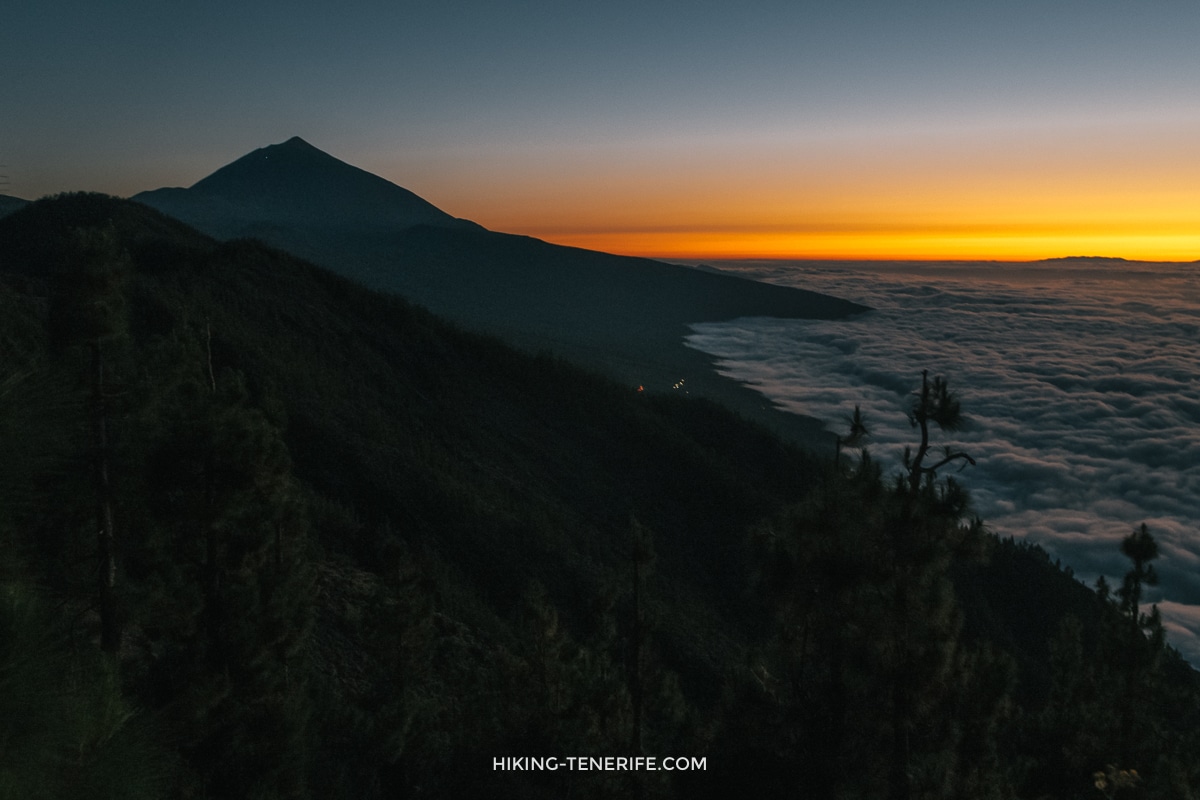
Season rule: winter pushes most first-timers south. Summer makes the north easier to love.
My honest north vs south recommendation
If this is your first Tenerife holiday in winter, I would usually book the south or southwest as the main base, especially with children, no car, or a strong need for sun.
Then I would plan one proper north day and one proper Teide or west-coast day.
If you have a week, a car, and curiosity, I would split. Four nights south and three nights north is my lower-friction winter version.
Three nights south and four nights north is the version for people who care more about towns, routes, and landscapes than maximum beach time.
If you already know you dislike resort areas, choose the north or a quieter south-west base like La Caleta, Playa San Juan, Alcala, or Puerto Santiago.
But do not choose a base only because it sounds less touristy. A bad base with a nice ideology is still a bad base.
Local verdict: the south is usually the easier holiday. The north often gives the richer old-town and green-landscape contrast.
The best base depends on season, transport, children, beach expectations, and your tolerance for weather that has opinions.
FAQ: Tenerife north or south
Here are the quick answers I would give before someone books the wrong coast for the wrong reason.
Is north or south Tenerife better for a first trip?
For most first trips, the south is easier. It has better winter-sun odds, more resort hotels, selected managed beaches, concentrated nightlife, and simpler no-car logistics.
If your idea of a good trip includes old towns, green mountains, black sand, and food stops, give the north real time or split the trip.
Is Tenerife south warmer than Tenerife north?
Usually, especially at comparable coastal elevations in winter. The south and southwest generally have better sun and lower-rainfall odds.
The north is greener and often cooler, cloudier, and more humid. The difference gets bigger between coast, towns, and higher areas.
Should I split my Tenerife trip between north and south?
Split if you have at least seven nights, a car, and genuine interest in both beach weather and northern scenery.
Do not split a short trip just because the map looks small. You will spend too much emotional energy checking out, checking in, and wondering who packed the charger.
Which side of Tenerife is better for families?
The south is usually easier for families who want selected managed beaches, pools, shade, toilets, food, short walks, water parks, and better winter-sun odds.
The north can be wonderful with older children or curious families. Rough sea, rain, hills, parking, and longer route days need more planning.
Which side is better without a car?
The south resort belt is usually easier without a car for beaches, boat trips, nightlife, restaurants and visitor services.
Puerto de la Cruz, Santa Cruz and La Laguna can work for towns and culture. Remote northern coast, viewpoints and many trailheads remain harder to use well.

Is Puerto de la Cruz a good base?
Yes, Puerto de la Cruz is the easiest north base for many visitors. It has restaurants, shops, gardens, black-sand beaches, buses, and access to La Orotava, Garachico, Anaga, and Teide routes.
It is not the best base if your main requirement is winter sun and calm swimming every day.
Is Costa Adeje too touristy?
Costa Adeje is touristy, but that is why it works for many first-timers. Beaches, hotels, restaurants, taxis, promenades, and family services are close together.
Use it as comfort, then leave for Teide, Anaga, La Laguna, the west coast, or a quieter local route.
Which side is better for hiking?
The north and north-east offer strong hiking access through Anaga, laurel forest, greener slopes and old paths. The south also has excellent volcanic and high-altitude routes.
If hiking is the main reason for your trip, choose by the actual trail plan and check current access on Tenerife ON. Do not assume one coast puts every route nearby.

