

Almond blossom in Tenerife is worth a special detour, not a whole holiday built around one exact pink week. When the timing works, Santiago del Teide gives you something Tenerife does very well: flowers, dark lava, old terraces and a proper excuse to leave the resort road behind.
I would plan it as one flexible west-side day in late winter.
If the trees are having a quiet year, you still have a mountain town, volcanic landscape and other walks nearby. That is much healthier than chasing one Instagram pin into somebody’s field.
Short answer: the most reliable area to consider is around Santiago del Teide, usually from late January into March. February is often the useful month, but rain, warm spells, wind and altitude decide what is actually open, pink or already finished.
My practical verdict: plan for flowers, but keep the rest of the day useful if the trees disagree.
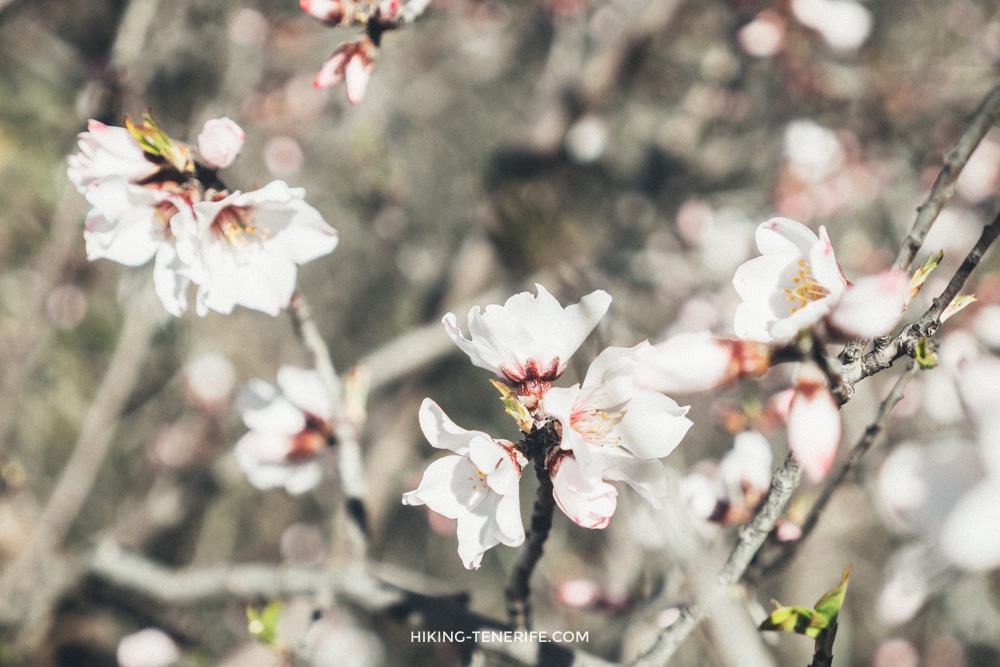
Is Almond Blossom In Tenerife Worth Planning Around?
Yes, for photographers, flower lovers, gentle walkers and anyone who prefers a real rural landscape to another polished resort promenade. No, if you need a guaranteed peak, easy roadside parking beside a perfect tree, or a full day with no weather decisions.
This is a working landscape with almond trees in and around villages, terraces and volcanic ground. It is not one giant blossom park. That is exactly why it can feel special, provided you arrive with manners and a backup plan.
When many trees are open, bees and a sweet almond scent make an ordinary rural road feel briefly ridiculous in the best way. Some trees are white, some pink, and not every slope looks equally dramatic.
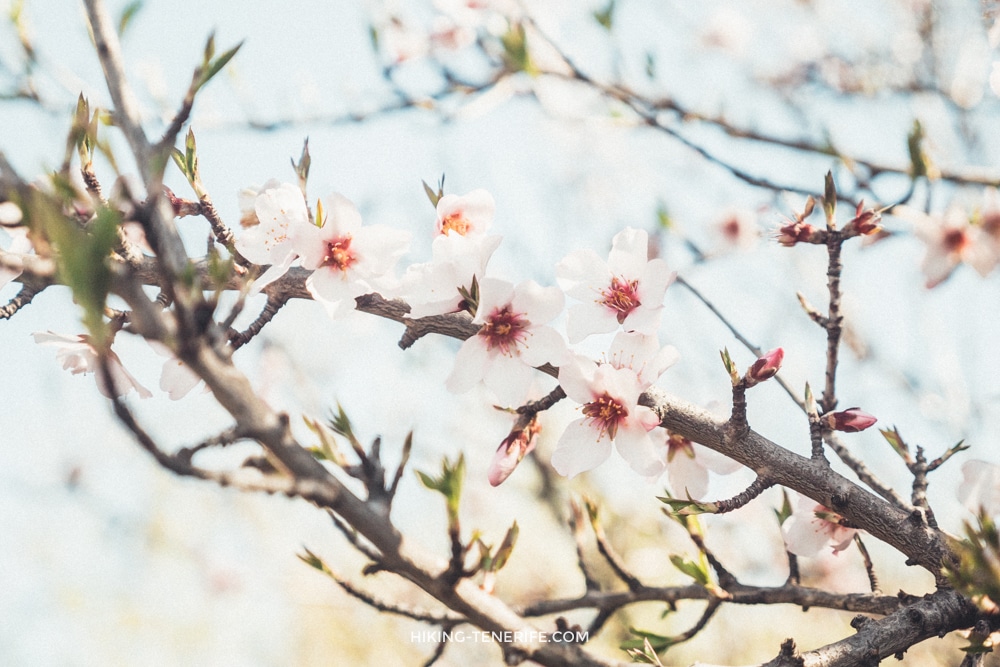
My verdict: make blossom the reason for a flexible day, not the only reason for your flight.
When Do Almond Trees Bloom In Tenerife?
Use a late-January-to-March window for the Santiago del Teide area. The big display often falls in February, but there is no island-wide switch and no honest person can sell you one fixed peak date.
| When | What it can mean | How I would plan it |
|---|---|---|
| Late January | Early colour can appear in the west-side midlands. | Treat it as a pleasant chance, not a promise. |
| February | Usually the strongest blossom possibility around Santiago del Teide. | Keep one or two days flexible and check locally. |
| March | Some trees may still be good; others may have moved on. | Choose the route for landscape and walking as well. |
| April | You may still notice scattered trees in other, cooler places. | Do not travel only for a full almond display. |
The broader February weather guide is for choosing your whole trip. This page is for the narrower question: should you give one day to the flowers?
Is The Almond Blossom Festival On?
Santiago del Teide runs a seasonal almond-blossom campaign with walks, food and cultural activities in some years. The 2026 campaign ran from 24 January to 22 February and is now finished; the next programme had not been announced when this guide was checked.
Check before booking: use the Santiago del Teide municipal announcement as the official programme trail, then look for a newer edition. Event dates organize activities; they do not guarantee peak bloom.
February is a good bet. It is not a booking guarantee.
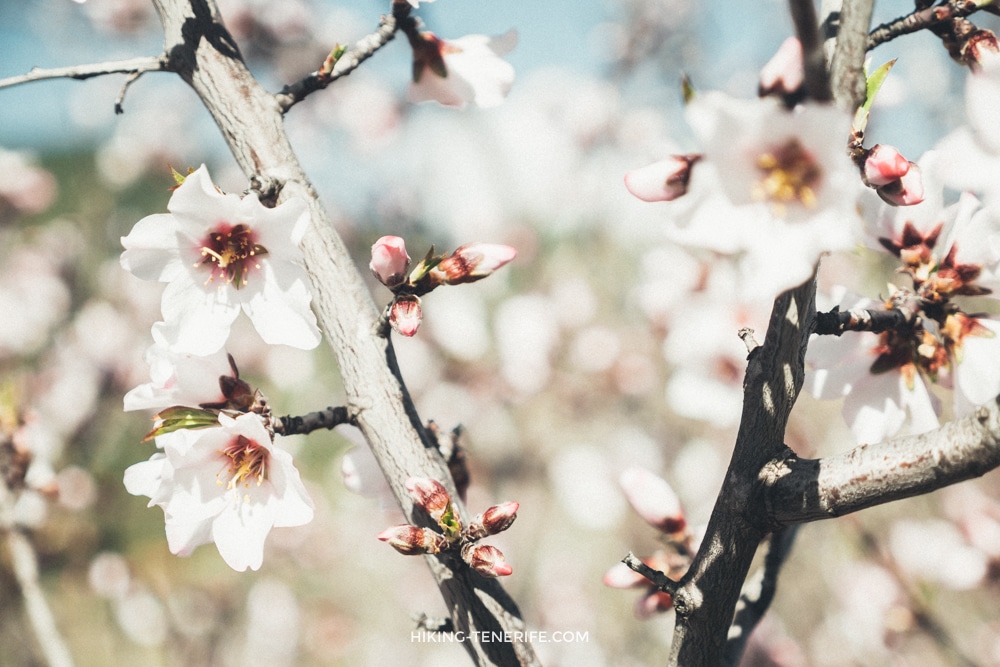
If wind, rain or low cloud changes the plan, let it. A flower day has no prize for stubbornness.
The Santiago del Teide Almond Route: What It Really Is
The recognized route is SL-TF 60 Santiago del Teide to Arguayo. It begins by the town plaza and church area, follows Calle La Placeta and Camino del Cementerio, passes signed rural junctions and finishes at Centro Alfarero Cha Domitila in Arguayo.
| SL-TF 60 fact | What to plan for |
|---|---|
| Type | Linear, not circular |
| Distance | 9.12 km |
| Estimated time | About 4 hours, longer with photo and food stops |
| Ascent and descent | 405 m ascent and 419 m descent |
| Difficulty | Medium, on uneven volcanic and rural ground |
| Waymarking | Signed SL route with directional arrows and junction signs |
| Start and finish | Santiago del Teide to Arguayo |
This is not a ten-minute flower stroll. Wear proper walking shoes, carry water and layers, and leave enough daylight for a slower finish than the official estimate.
Map note: SL-TF 60 shares and meets other signed routes, including paths toward Valle de Arriba, Las Manchas and Chinyero. Follow the SL-TF 60 signs rather than assuming every volcanic track reaches Arguayo.
Check the live route and incident status on Tenerife ON before leaving. Official control work, fire risk or storm damage can temporarily close a normally open trail.
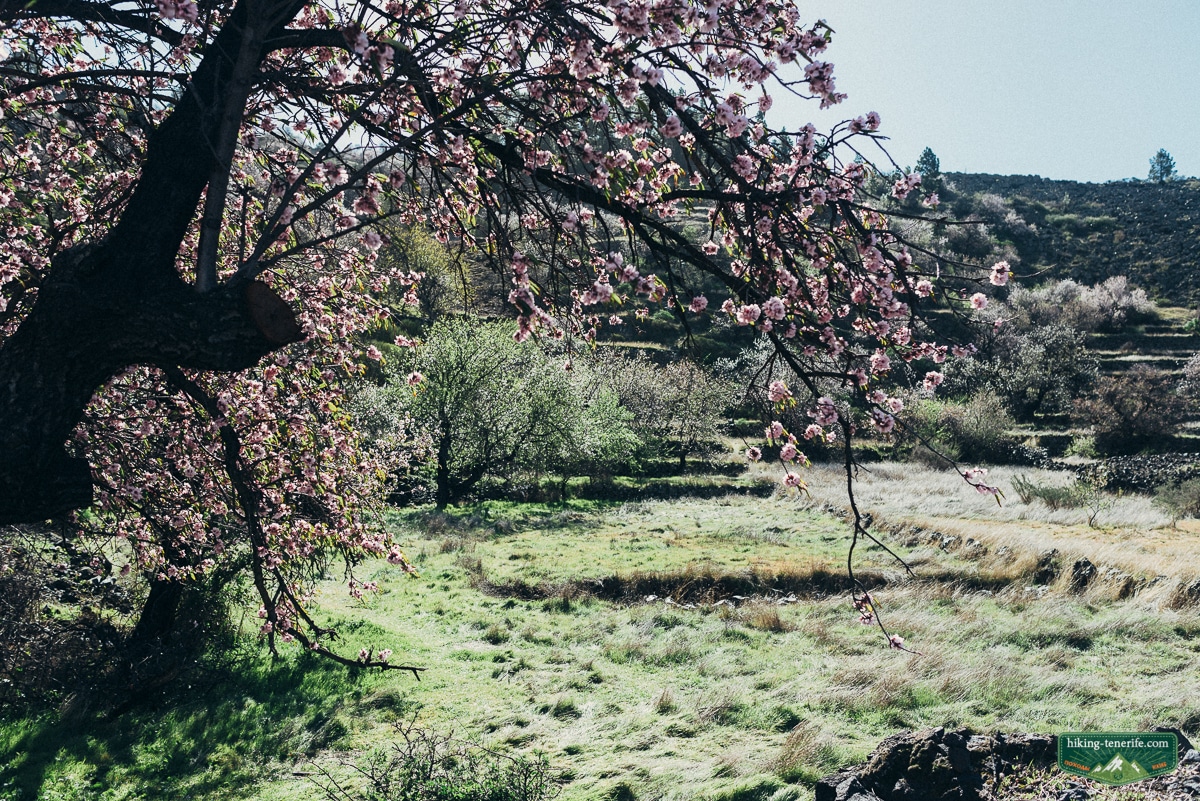
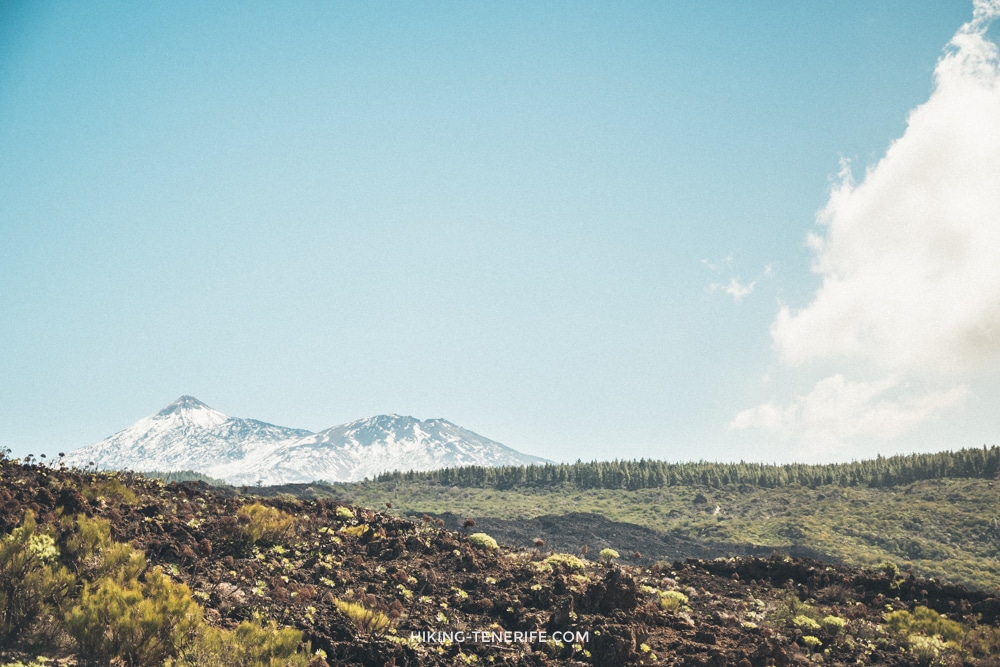
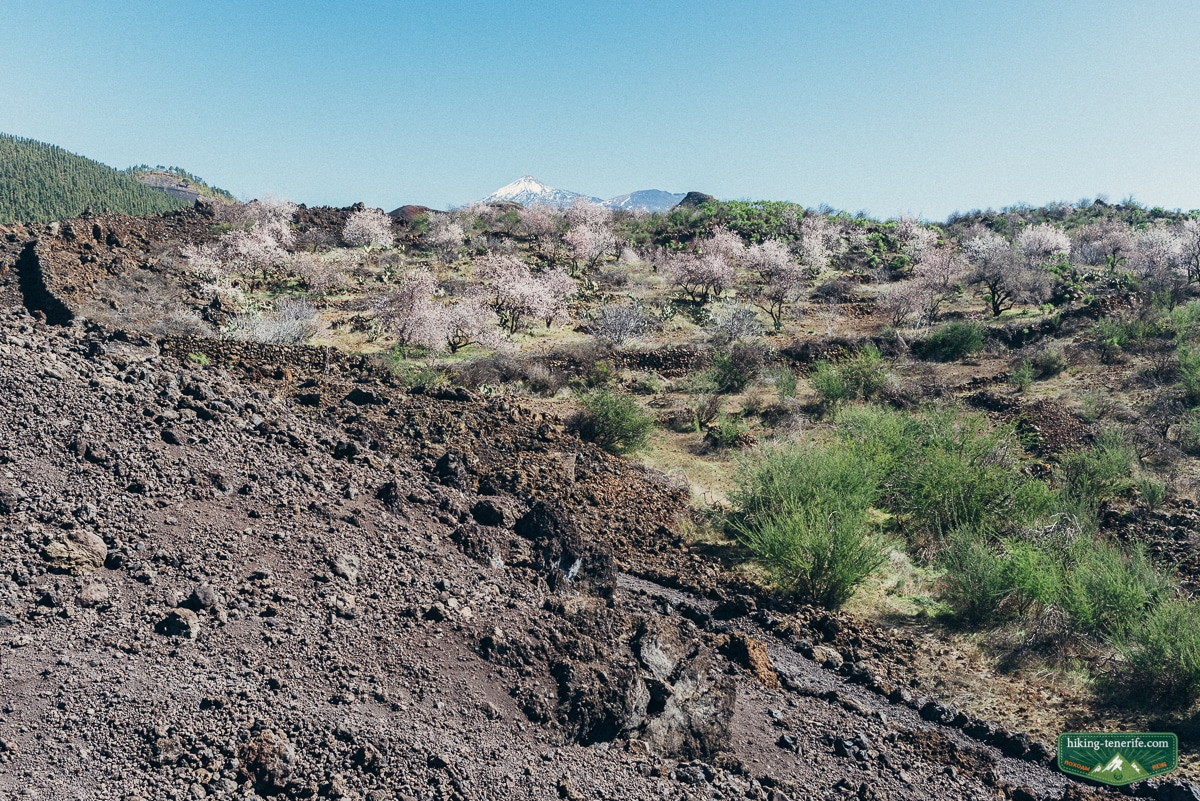
On a clear day, the Teide view can be part of the payoff. On a cloudy or windy day, it may disappear completely. Beautiful idea. Tenerife weather gets a vote.
Do the whole route only if your legs, daylight and return transport make sense. Flowers do not make a point-to-point walk magically circular.
Car, Parking And No-Car Reality
A car makes this day easier. You can react to bloom, weather and appetite without turning one rural walk into a transport puzzle.
A south or west-coast base can work well. Leave the afternoon open. My Tenerife car-hire guide covers the practical trade-offs before you book.
Do not use a field entrance, a narrow road edge or somebody’s gate as your private flower parking. Park only where it is legal and safe, keep access clear, then walk the last part properly.
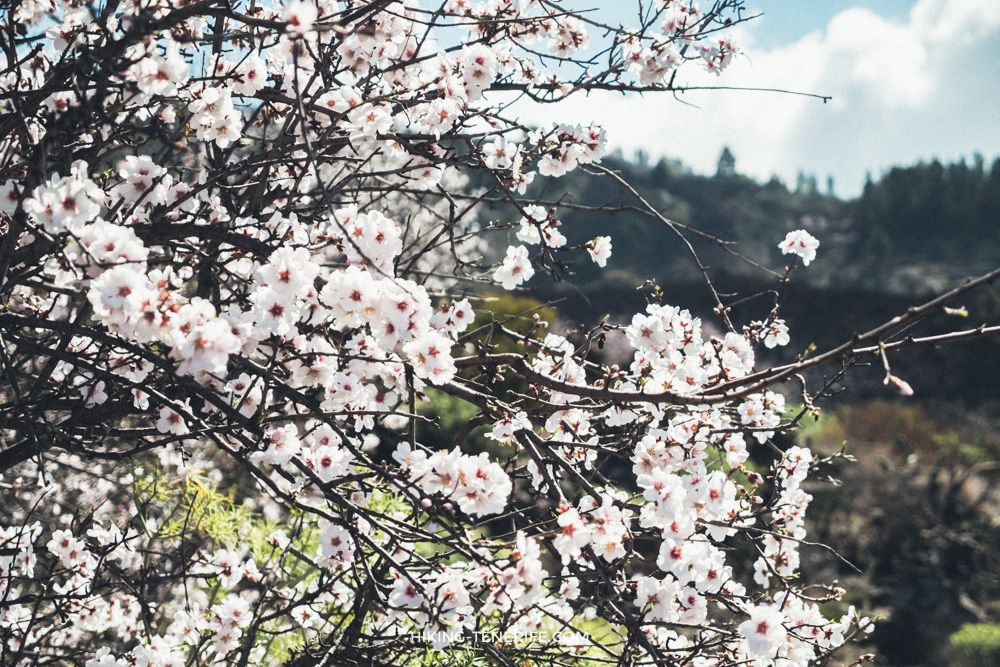
Plan like this: TITSA line 461 serves Arguayo, Las Manchas and Santiago del Teide, but the published service is sparse and mainly weekday-based. Confirm the exact direction, stop and last practical return on the day; never treat it as a guaranteed hiking shuttle.
A bus can get you there. It does not remove the return-journey problem.
For a no-car visitor, I would choose either a current guided seasonal walk or a shorter town-and-flowers visit. That is more realistic than pretending every beautiful rural route is easy public transport.
No official source I checked promises a dedicated trail car park. Use legal signed parking in town, keep gates and farm tracks clear, and expect to walk from the car rather than stopping beside the prettiest tree.
Road safety: the route begins through village streets and meets rural road interfaces. Keep children close, follow the signed crossing and route direction, and cross only where drivers can see you.
How To See The Flowers Without Ruining Them
The flowers sit among rural land and volcanic terrain, not inside a photo studio. Stay on public roads and marked paths, do not climb terraces, pick flowers or nuts, lean on branches, move stones, or make a new track for a better angle.
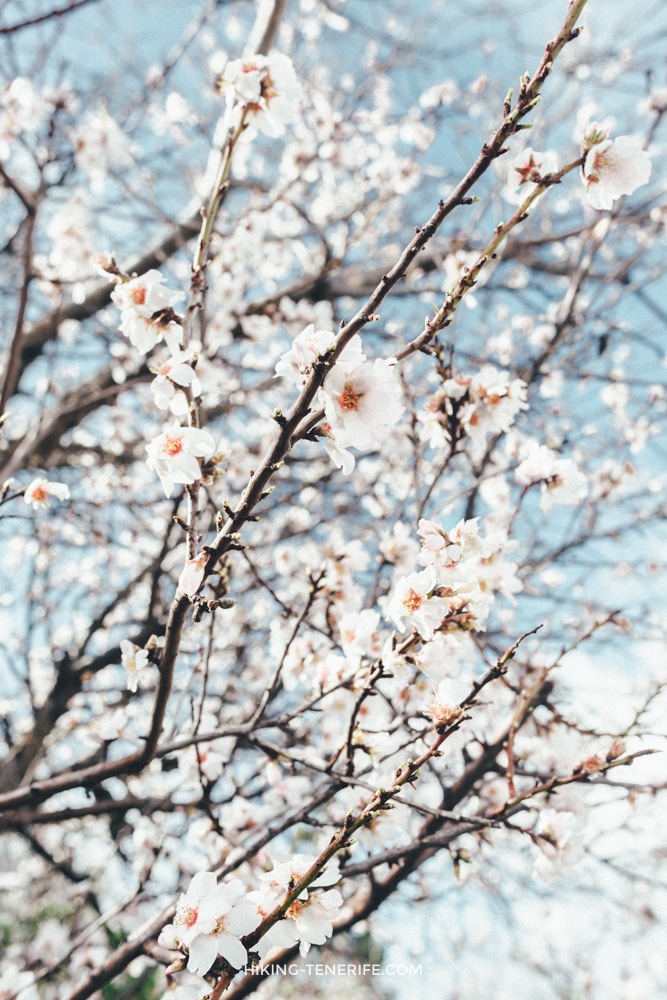
Safety rule: keep children, tripods and bags out of the road; never stop where another car cannot pass. If a tree is clearly on private land, photograph it from the public side and leave it alone.
Bees are doing their work. Give them the same calm space you want for your own photograph.
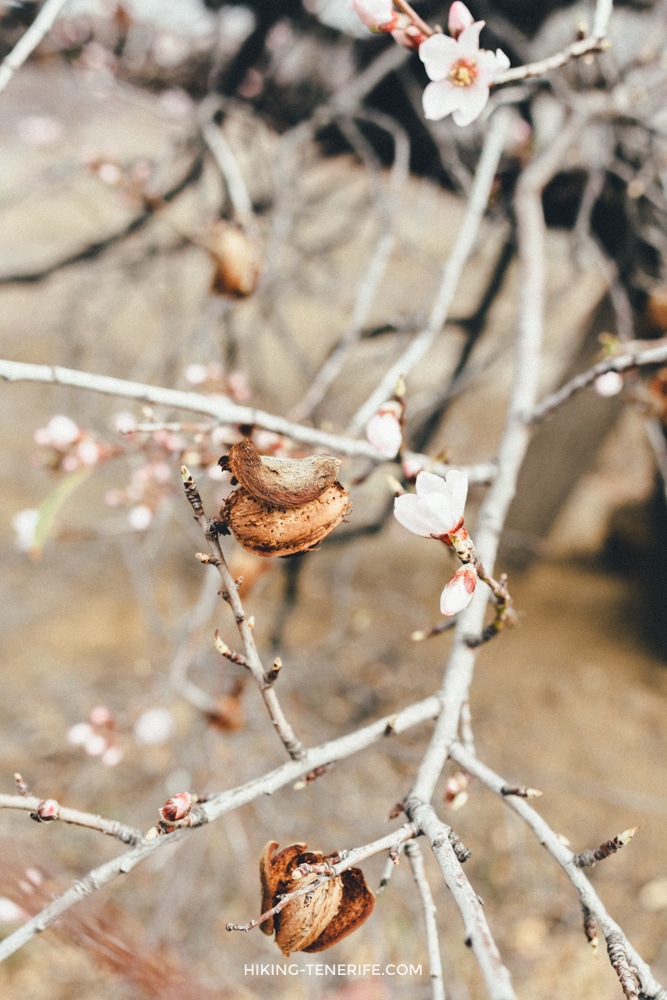
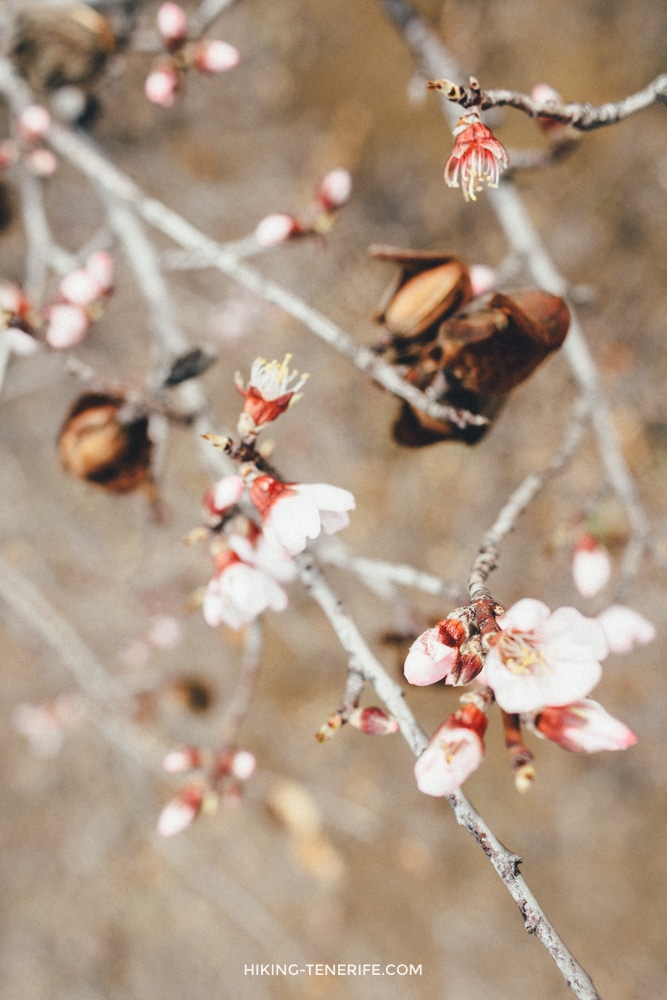
A leftover shell beside new flowers is a quiet reminder that an almond does not tidy itself. I admire that labour from a respectful distance.
Photography Without The Pink-Paradise Fiction
The photographs are best when you show the contrast: a branch, an old shell, lava, terraces or a clear Teide day.
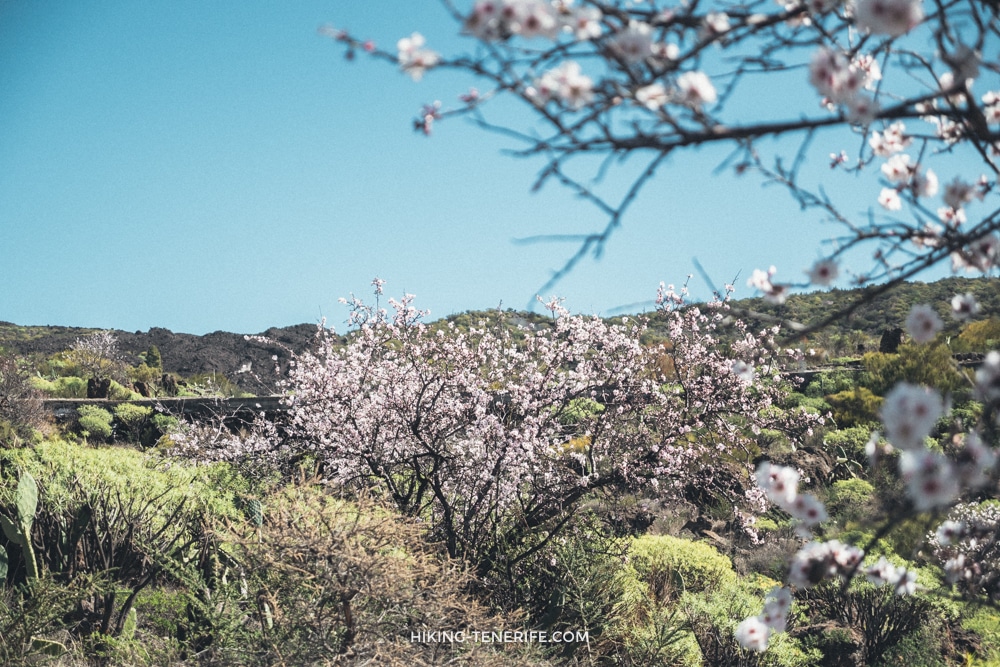
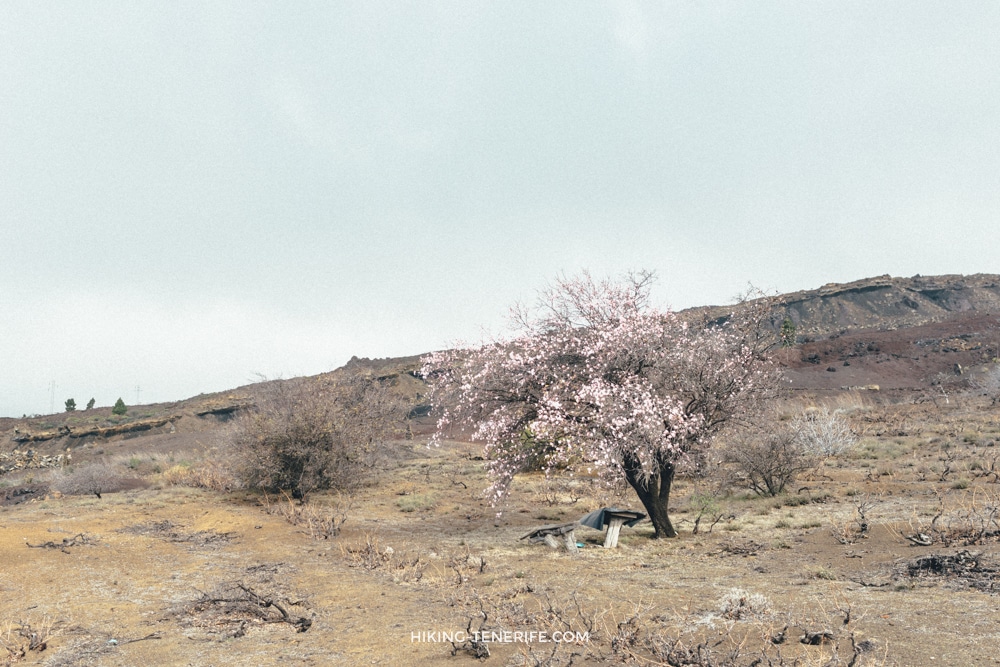
A single flowering tree against volcanic ground can be stronger than trying to manufacture a whole pink forest.
Go early for quieter light and fewer cars, but do not treat quiet as guaranteed. Festival activity, weekends and good bloom all bring visitors.
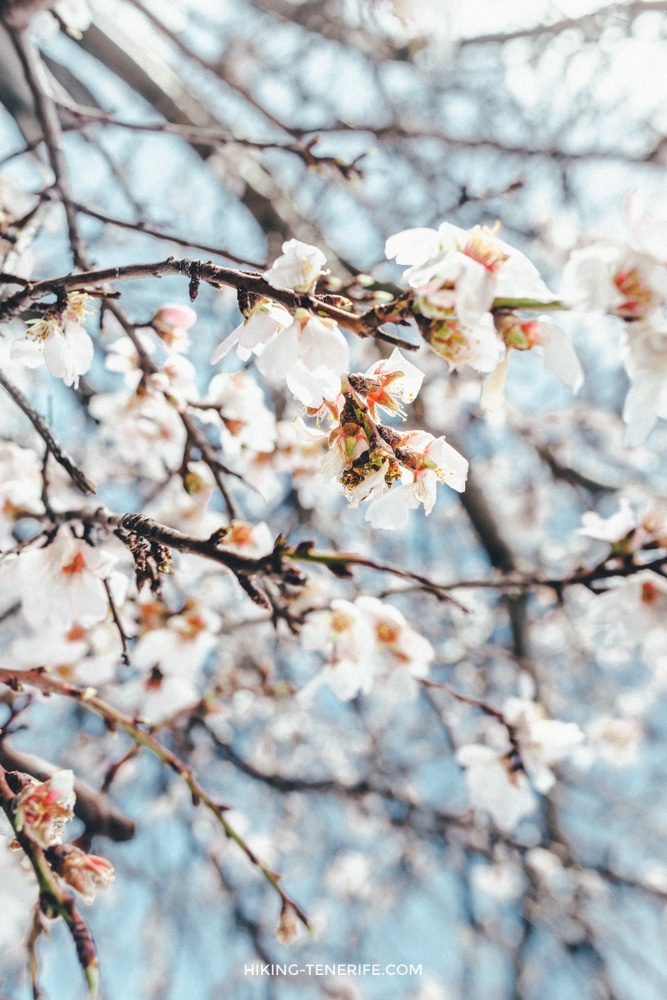
Common mistake: walking into a planted plot because the branch looks better from there. The better photograph is the one that does not ask a farmer, a tree or another driver to pay for it.
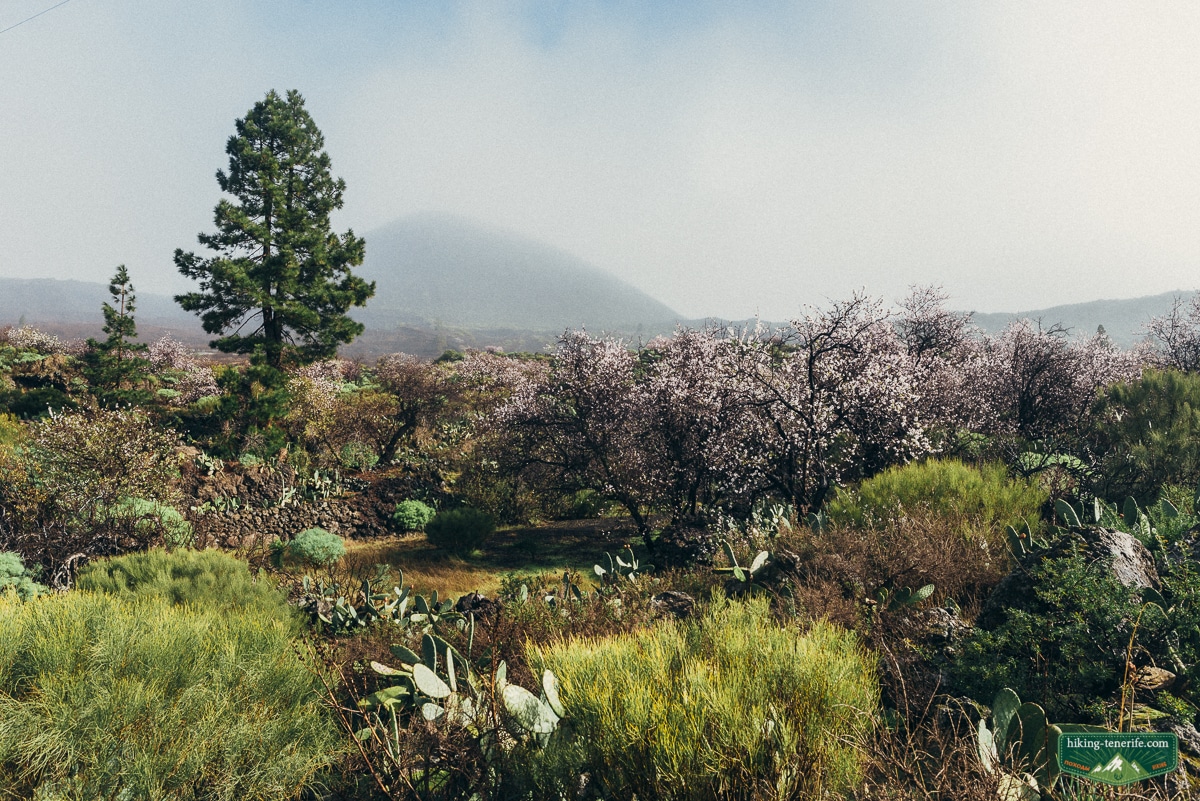
How To Build A Good Blossom Day
Keep the day local. Start in Santiago del Teide, decide whether conditions justify the route, then choose one nearby second act: a slower village meal, a volcanic walk, or a clear-weather drive that you have checked on the day.
If you want a full spring itinerary rather than one seasonal walk, use my spring hiking guide. It separates Chinyero, Teide, Teno and flower season instead of pretending they all fit into a relaxed afternoon.
Choose the Chinyero volcano guide when lava and a proper volcanic hike are the main goal. For the later high-altitude flower season, use the flowering tajinaste guide instead.
Still deciding where this fits? Use the free Tenerife map to compare the almond route with the island’s other landscapes before you commit a day.
I would not bolt Masca onto this route just because it is nearby on the map. That road, parking and timing deserve their own decision. The same goes for Teide: use the Teide National Park guide when the volcano is the main plan rather than a distant snow-capped bonus.
Who Should Go, And Who Should Skip It
This is excellent for a couple with a car, careful photographers and first-time visitors who want one rural counterweight to a south-coast stay.
For families, the full 9.12 km route suits children who already manage uneven four-hour walks and have a confirmed return. It is not a stroller route. Younger children and limited-mobility visitors are better served by a short town-and-flowers visit on public paths.
Do not assume one dog rule covers the whole alignment. Check the current official trail and protected-area information. Where dogs are permitted, keep them on a short lead, carry water and waste bags, and avoid livestock or wildlife disturbance.
- Go for it if: you can keep a weather backup, walk on uneven ground and enjoy a place that is beautiful without being manicured.
- Choose a shorter version if: you have young children, limited mobility, a late bus return or only a narrow energy window.
- Skip the blossom mission if: your trip dates cannot move, you dislike rural roads, or you would resent a good landscape with only scattered flowers.
In plain English: this is a lovely bonus day, not a weather-proof attraction.
The island has plenty of other strong winter days. The wider Things To Do in Tenerife guide helps when your weather, car or mood points somewhere else.
What To Check Before You Go
The day before, look for a current bloom update from Santiago del Teide, then check route information, weather, road notices and any official alert. Re-check public transport on the day itself if you are not driving.
Local detail: a disappointing blossom forecast is not a failed Tenerife day. It is often the permission you need to choose a coast, town or volcano plan that fits the actual island in front of you.
Almond Blossom In Tenerife FAQ
Is February the best month for almond blossom in Tenerife?
It is often the most useful month around Santiago del Teide, but it is not guaranteed. Keep a late-January-to-March window in mind and check current municipal bloom updates close to your visit.
What is the official Santiago del Teide almond route?
SL-TF 60 is a signed, linear 9.12 km route from Santiago del Teide to Arguayo. Allow about four hours, expect 405 m of ascent and arrange the return before starting.
Do I need a car to see the almond trees?
A car makes a flexible blossom day easier, but it does not solve the return from a point-to-point walk. Without one, check TITSA line 461 and all connecting services on the day, or choose a guided or shorter visit.
Is the almond route suitable for children?
The full route suits children already comfortable with uneven four-hour walks and a confirmed return. It is not a stroller route. A short town-and-flowers visit is the better family option for younger children.
Can I take a dog on the almond route?
Do not assume a single dog rule covers the whole route. Check current official trail and protected-area information. Where dogs are permitted, keep them controlled on a short lead and prevent livestock or wildlife disturbance.
When is the Santiago del Teide almond festival?
The programme changes every year. The 2026 campaign ran from 24 January to 22 February and is finished. Check Santiago del Teide’s current municipal announcement before planning, and remember that event dates do not guarantee peak bloom.

