

Semana Santa is the Holy Week before Easter, and in Tenerife it is not just a date in the hotel calendar. The island changes rhythm: more people arrive, local plans move around the week, and La Laguna becomes the place where you can actually see what the celebration means.
I first went to photograph it in La Laguna with a camera, a barraquito and the optimistic idea that a 50 mm lens would somehow find empty space. It did not. That was part of the lesson.

This is a guide for visitors who want to watch with interest and respect, but also need the unromantic answers: where to base yourself, whether to drive, what to do with children, how not to block a procession, and when to stop pretending that an old online timetable is a plan.
Quick answer: is Semana Santa a good time to visit Tenerife?
Yes, if you want a Tenerife trip with local religious culture in it. No, if your perfect week means spontaneous cheap bookings, empty roads, and moving from beach to beach without checking what is happening.
The sensible version is simple: choose your beach base for the holiday you want, then make La Laguna a deliberate Holy Week day. Do not turn every day into a procession hunt.
Short answer: La Laguna is the best first choice for culture-focused visitors; the south remains the easier base for beach-first families and no-car resort days; and a current local programme decides the exact evening, route and transport plan.
| If you are… | My honest Semana Santa plan |
|---|---|
| A first-time visitor | Stay where your holiday works, then give La Laguna one unhurried culture day. |
| Based in the south | Go north for the experience; do not squeeze it between a beach morning and Teide. |
| A photographer | Choose one procession, arrive early, keep your position and forget the perfect 50 mm gap. |
| Travelling with children | Pick a shorter, earlier viewing window with an easy exit and a snack plan. |
| Not religious | Watch quietly as a guest. The craft, music, streets and shared attention are still worth understanding. |
Why La Laguna is the meaningful place to start
The old source called La Laguna the cultural capital of Tenerife. I would still make it the first answer, but not because it offers a fixed tourist show. Its historic streets, churches and brotherhood traditions give the week its proper setting.
The municipal tourism office describes La Laguna’s Holy Week as sober and reflective rather than an imitation of Andalusia. That is a useful expectation to bring: the atmosphere can be beautiful, but it is not there to entertain impatient spectators.
Read my La Laguna guide before you go. It helps you use the town as a real day rather than a blurry procession photo followed by a frantic drive away.
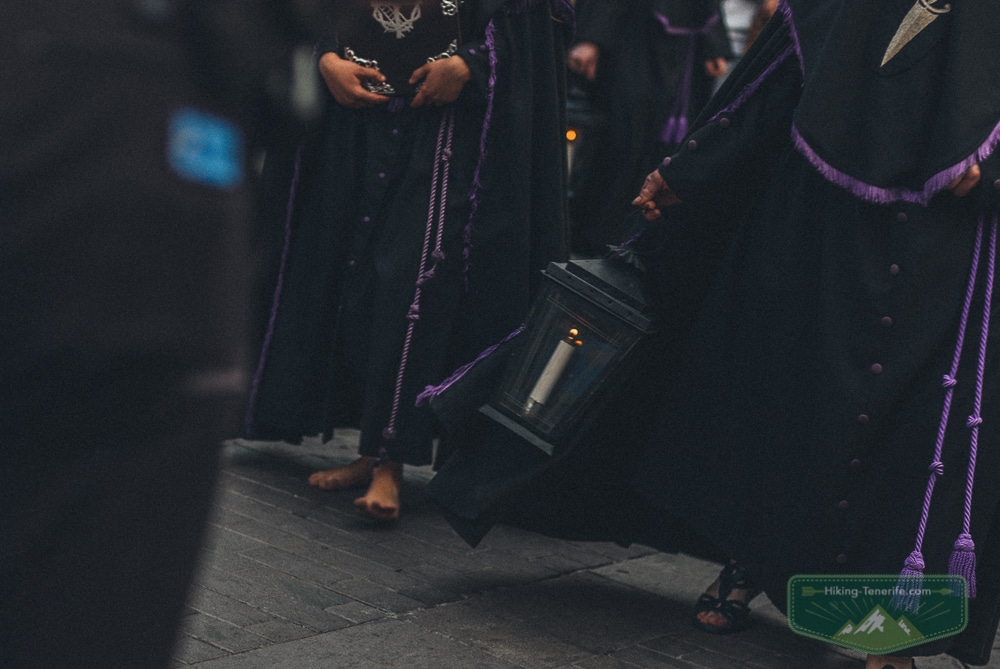
The old streets do not need a special effect. The procession is enough.
La Laguna’s own tourism information highlights processional traditions around Maundy Thursday and Good Friday, including the Dawn Procession, the Magna procession and the Silence procession. Treat those as cultural context, not your timetable: check the current municipal programme and the La Laguna brotherhoods’ page shortly before you travel.
That one small check matters. In 2026 the council also published specific traffic alterations for processions in the historic centre. The pattern is durable; the streets, hours and restrictions are not.
What you are looking at: pasos, nazarenos and capirotes
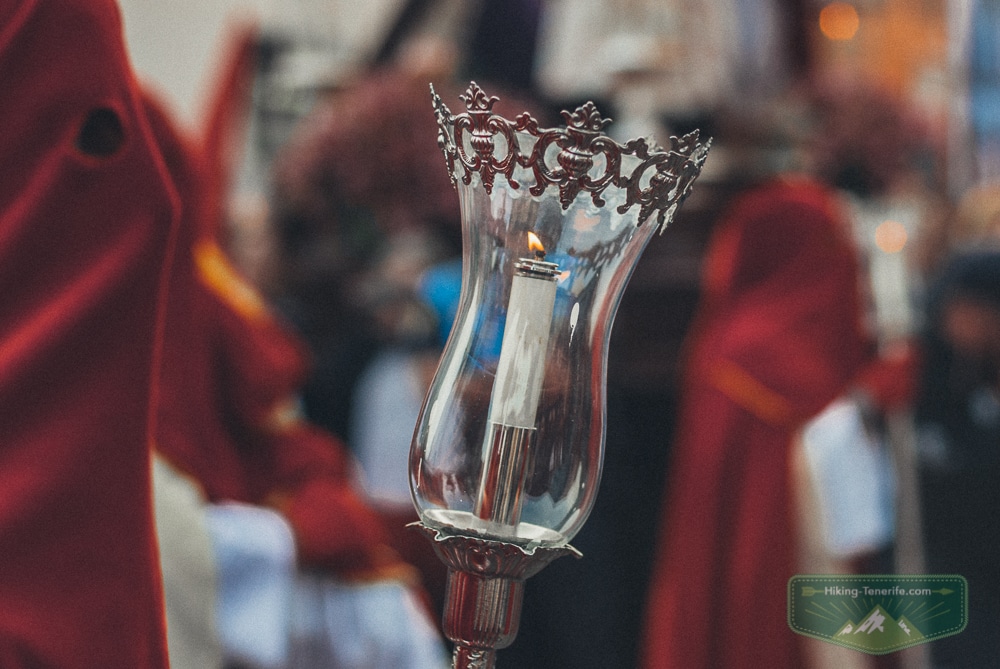
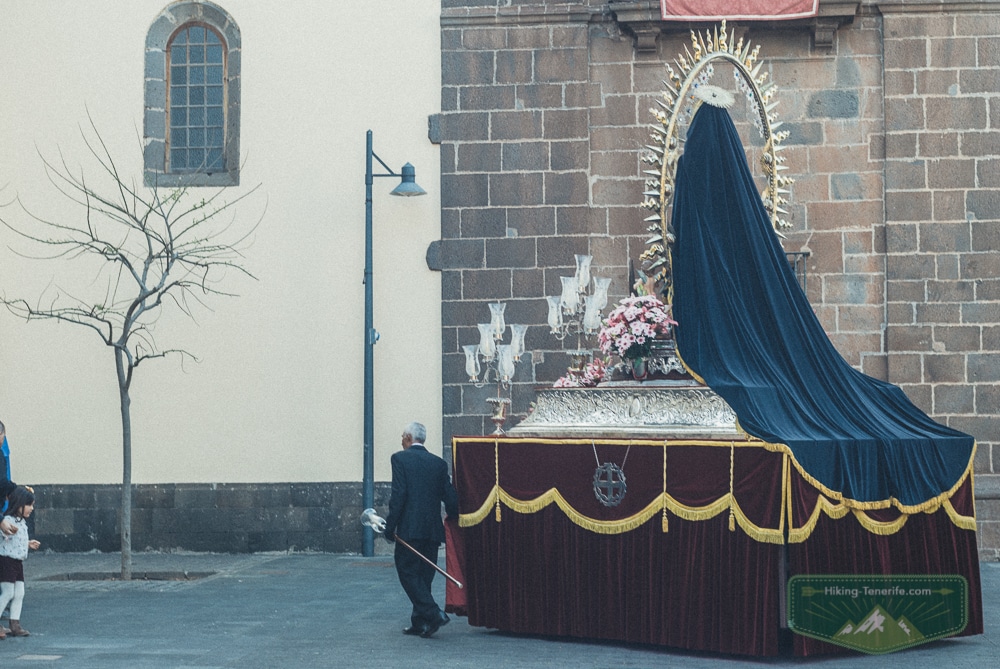
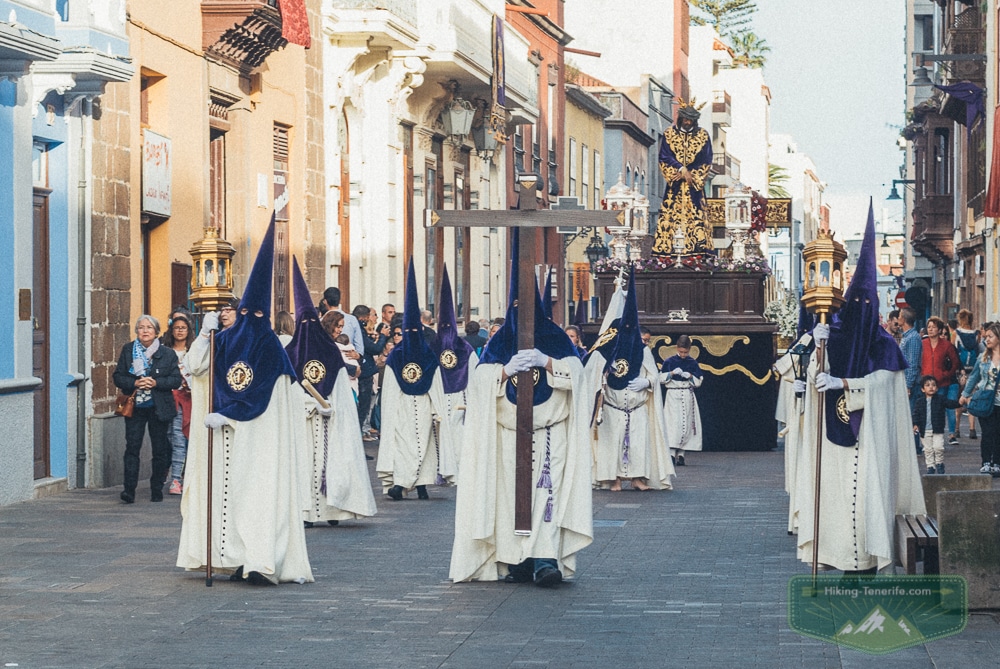
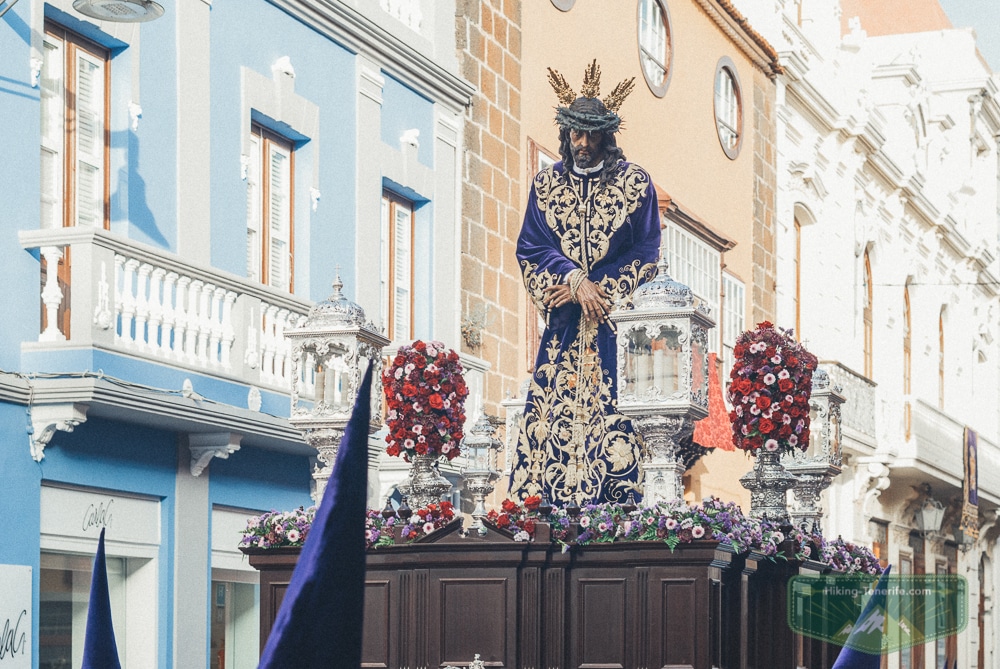
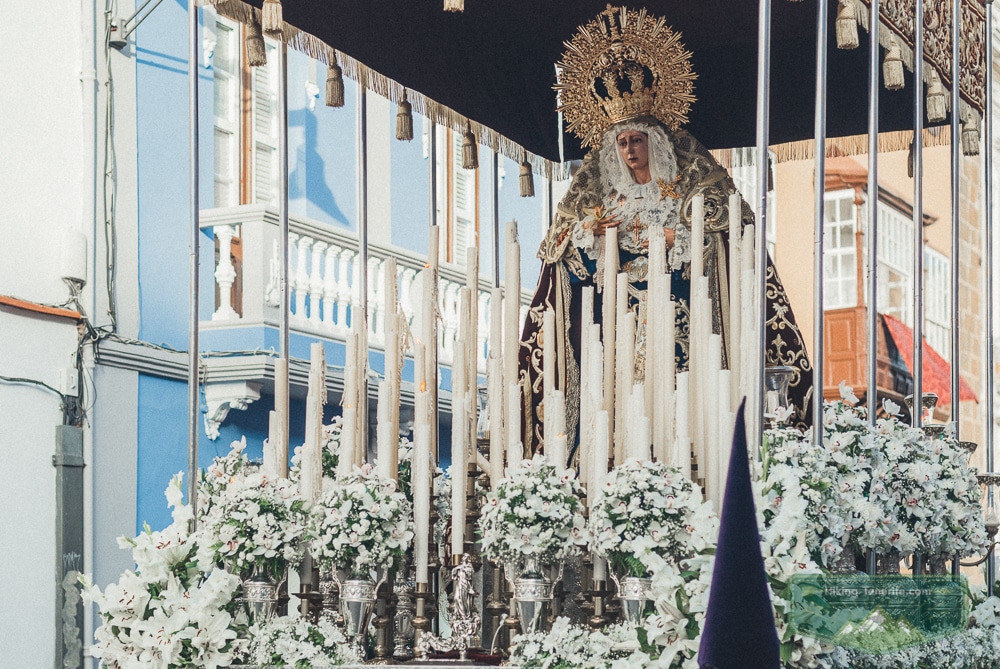
A procession is a religious act moving through public streets. You may see pasos, the decorated platforms carrying sacred images, accompanied by brotherhoods and bands. The silverwork, flowers and candles are not random decoration; they are part of the visual language of the week.
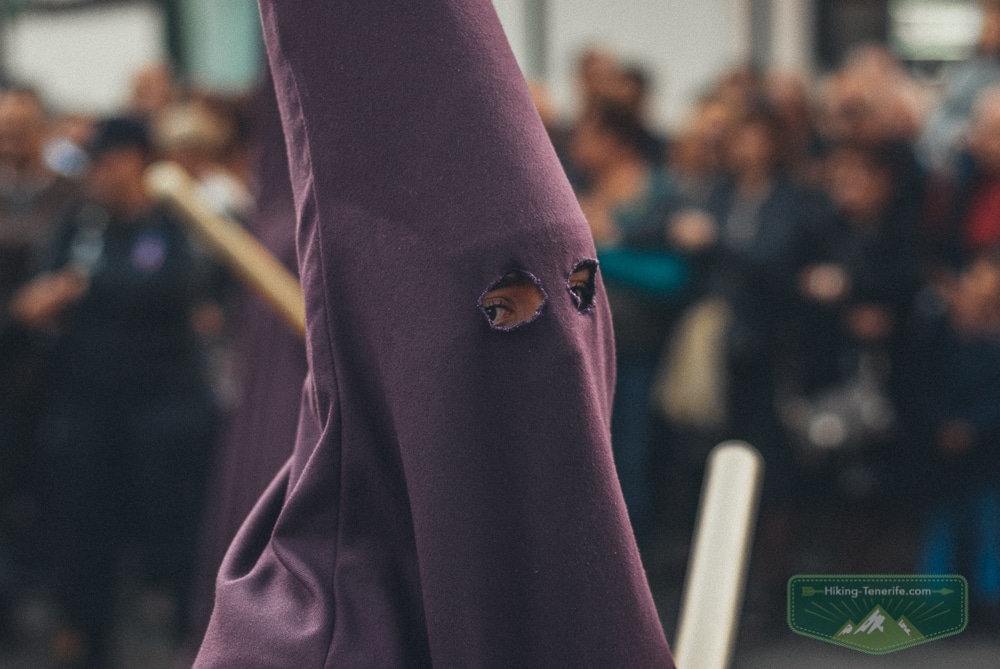
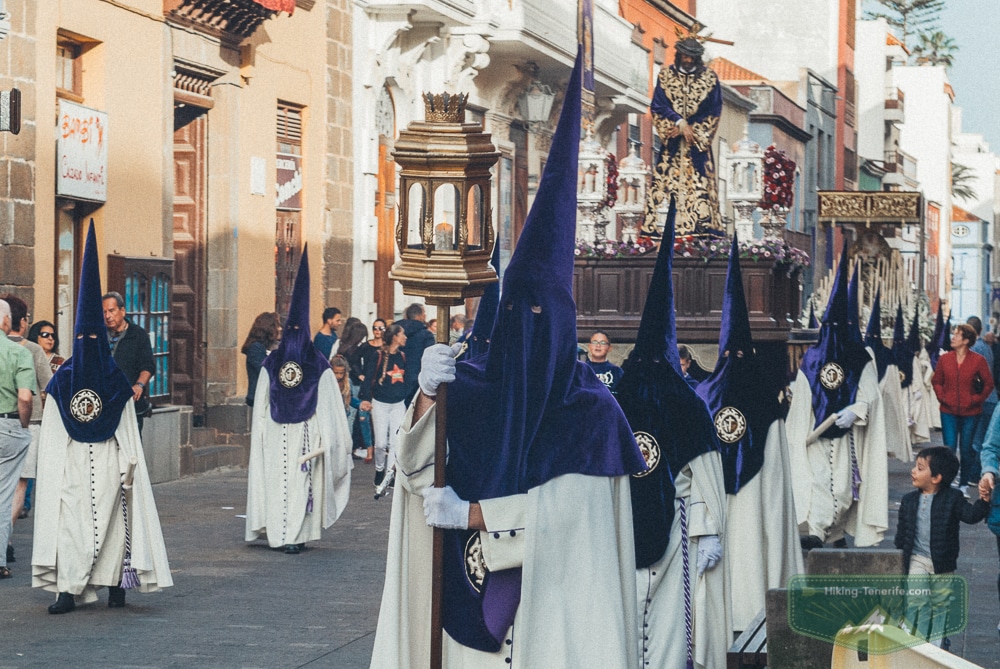
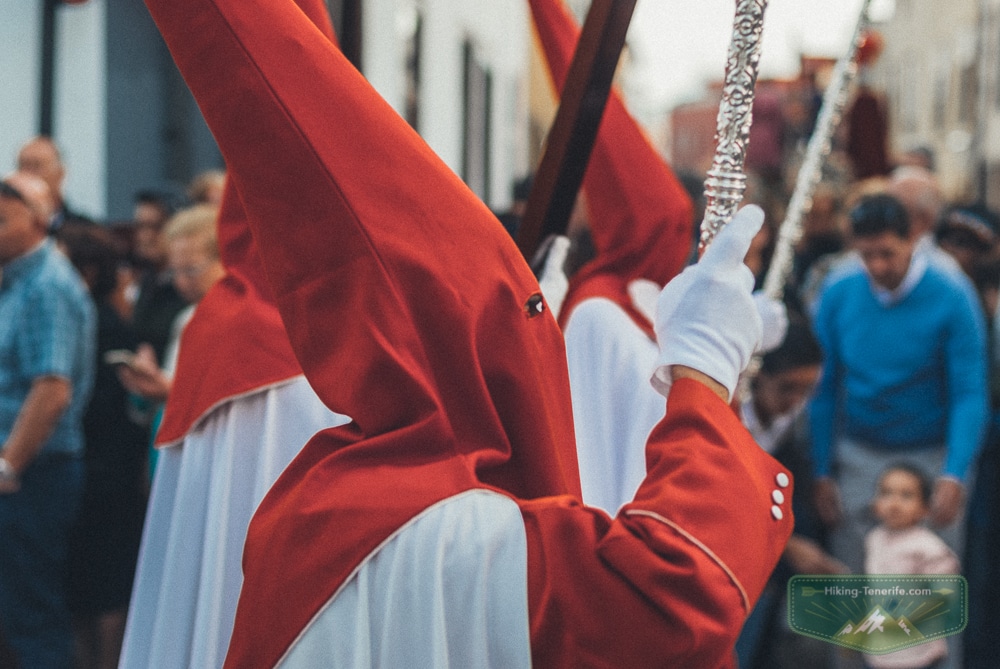
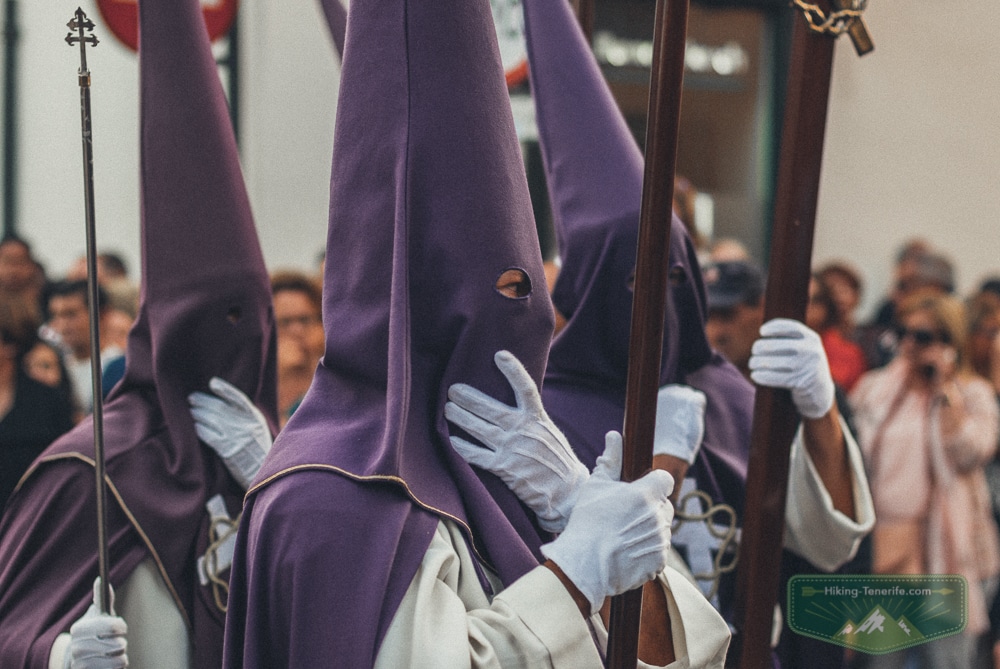
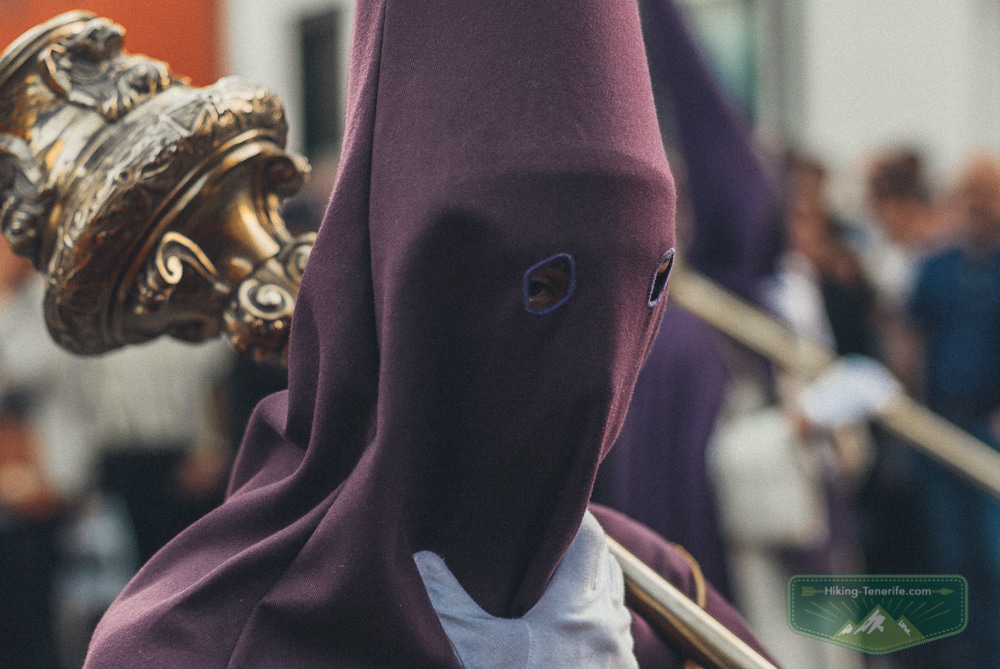
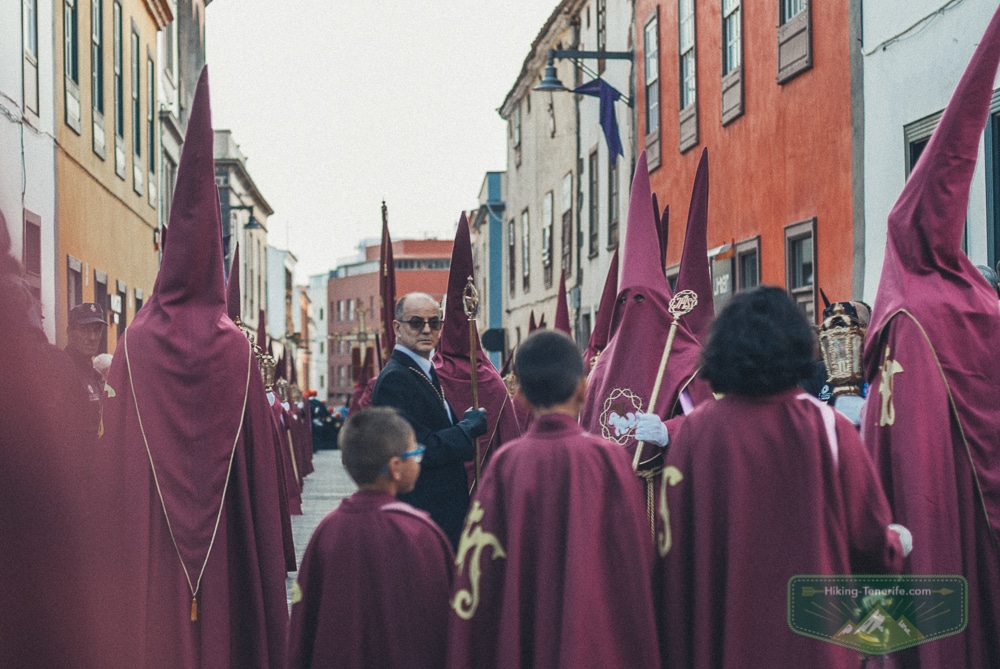
You may also see nazarenos in robes and pointed hoods called capirotes. For a visitor who has never seen a Spanish Holy Week procession, the shape can be startling. In this setting it belongs to a penitential religious tradition, so do not turn it into a costume joke or a prop for a clever social post.
The old article was right about one thing: it is an unusual sight. That does not make it a themed parade. Stay behind the line of movement, keep children close, and wait until the moment has passed before crossing.
The official La Laguna tourism page is useful background if you want the names and religious context in English. Read it before you arrive, then let the actual programme for your year tell you what is happening.
Watch first. Photograph second. The order changes the whole experience.
Respectful viewing: the small rules that matter
You do not need to be Catholic to be welcome at a public procession. You do need to behave as though other people are participating in something meaningful to them, because they are.
- Do not step into the route for a portrait, a selfie or a last-second lens change.
- Keep your voice down when the street goes quiet, especially during a solemn section.
- Do not use flash, drones or a raised tablet that blocks the people behind you.
- Ask before taking a close portrait of a participant away from the moving route.
- Use a café, church doorway or narrow pavement with care. A good view is not permission to stop everyone else moving.
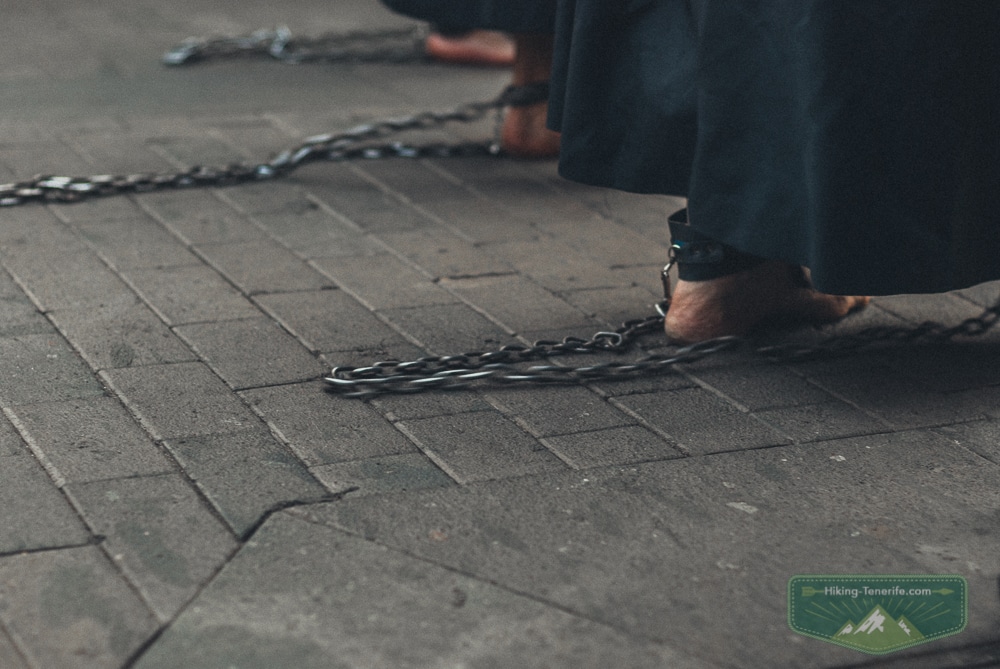
Photography rule: the source photos show why a close frame is tempting. The crowd also shows why the better frame is usually the one you wait for, rather than the one you force.
If you enter a church, follow the local instructions, dress normally and quietly, and remember that a service is not an attraction with a pause button. If a place feels full or private, leave it alone.
Booking, crowds and the beach reality
The original post remembers the island being very busy around Holy Week: beaches full one day, then suddenly quieter after the holiday. That is a good local observation, but not a promise that repeats in the same way every year.
For a booking decision, treat Semana Santa as a potentially busy travel week. Price your flights and accommodation early, keep a sensible cancellation option where you can, and do not assume a resort, rental car or favourite restaurant will behave like an ordinary April week.
If beach time is the main point, do not cancel the holiday because a procession exists. Stay south, use the South Tenerife guide for the easy days, and choose one culture day properly.
If April weather is the question behind the question, read Tenerife in April separately. This page is about the week changing the rhythm of the trip, not pretending one local forecast will cover the whole island.
South, north and no-car plans
Visitors based in Los Cristianos or Playa de las Américas can absolutely go to La Laguna. Just call it what it is: a proper north-side day, not a tiny diversion after breakfast.
From the south, leave early enough to enjoy the town before the event. From the north or Santa Cruz side, you have more flexibility, which is exactly why a later programme can be less stressful.
| Your base | Best practical move |
|---|---|
| Los Cristianos | Keep the beach days local, then use Los Cristianos planning to protect one full La Laguna day. |
| Playa de las Américas | Do the same. The Las Américas guide is for resort rhythm; Holy Week culture needs a different day. |
| North Tenerife | La Laguna fits naturally. Use the North Tenerife guide for the wider route, not a rushed coast-town mash-up. |
| No car | Choose La Laguna as the cultural target, confirm the current return before you leave, and avoid building the evening around a bus you have not checked. |
| A long island trip | Pair La Laguna with another north town on a different day, such as La Orotava. They deserve different moods and daylight. |
A car helps with island freedom, but it does not turn the historic centre into a private parking space. Use a legal public space, accept a walk, and do not circle the centre while everyone else is trying to get home.
Public transport can work well for the city part, but live service, diversions and your final return are all date-specific. Check the current operator information and the programme on the same day you finalise the plan.
Families, photographers, food and clothing
Families can enjoy Semana Santa when they choose the gentle version: one visible moment, a snack, a toilet stop nearby and permission to leave before the crowd becomes a negotiation. A late, packed procession is not automatically the right cultural lesson for a tired child.
For photographers, the old lesson still stands: a 50 mm lens and a crowd are not natural friends. Arrive early, pick one angle, use a modest lens, and let the procession come to you. No flash, no stepping into the route, no argument with the people who were there before you.
La Laguna can feel cooler, damper and more evening-like than a south-coast terrace, even when your hotel day began in sun. Bring a light layer and comfortable shoes. Sacred cobbles, standing still and damp air are a bad combination for beach flip-flops.
Food is part of the evening, but do not assume every kitchen keeps ordinary hours during a busy religious week. Confirm the place you actually want to use, and keep a small amount of flexibility rather than making one dinner reservation decide the whole route.
A barraquito is an excellent pause. It is not a transport strategy.
A realistic Holy Week plan for Tenerife
If culture is the point, stay in or near La Laguna for the relevant night and let the town be the whole plan. Churches, streets, an early meal and one procession are plenty.
If the south is the point, keep it as your base. Choose one La Laguna day, then return to your beach rhythm instead of trying to combine an evening procession with Teide, Anaga and a sunset drink. Tenerife is small only on the map.
If the north-east is your point, do not use an old surf-trip story as an access guarantee. The source remembers Friday traffic towards Benijo and Almáciga; today, sea state, weather, road conditions and parking decide whether that is a smart alternative. Read the Anaga guide and have a town fallback.
Keep Teide for a separate day. Holy Week does not make altitude, weather or daylight less real. It only makes a rushed itinerary more impressive in the wrong way.
Free Tenerife map
Need the rest of the week to make geographical sense?
Use my free Tenerife map to group beach, town, mountain and north-side days without spending half the holiday driving back and forth across the island.
Semana Santa in Tenerife FAQ
These are the questions that change a real trip, not the ones that merely decorate a search result.
Semana Santa gives Tenerife a different sort of beautiful: incense, stone streets, slow movement and a crowd that is there for more than the weather. Go with curiosity, check the current programme, make room for the town, and it can become the part of an April trip you remember most.


