

Puerto de la Cruz is the best Tenerife base for travelers who want the island to feel like a real place, not just a resort strip. It has old streets, black-sand coast, gardens, buses, cheap cafes, Atlantic weather, locals doing normal errands, and enough tourist infrastructure that you are not playing survival mode after dinner.
It is also not the answer for everyone. If your Tenerife dream is guaranteed winter sun, calm hotel-pool weather, golden beaches, and zero decisions, Puerto will annoy you.
The north is greener because it gets more cloud. The sea is prettier when you respect it. Some beaches are better for looking than swimming. That is not a bug in Puerto de la Cruz. It is the whole local contract.

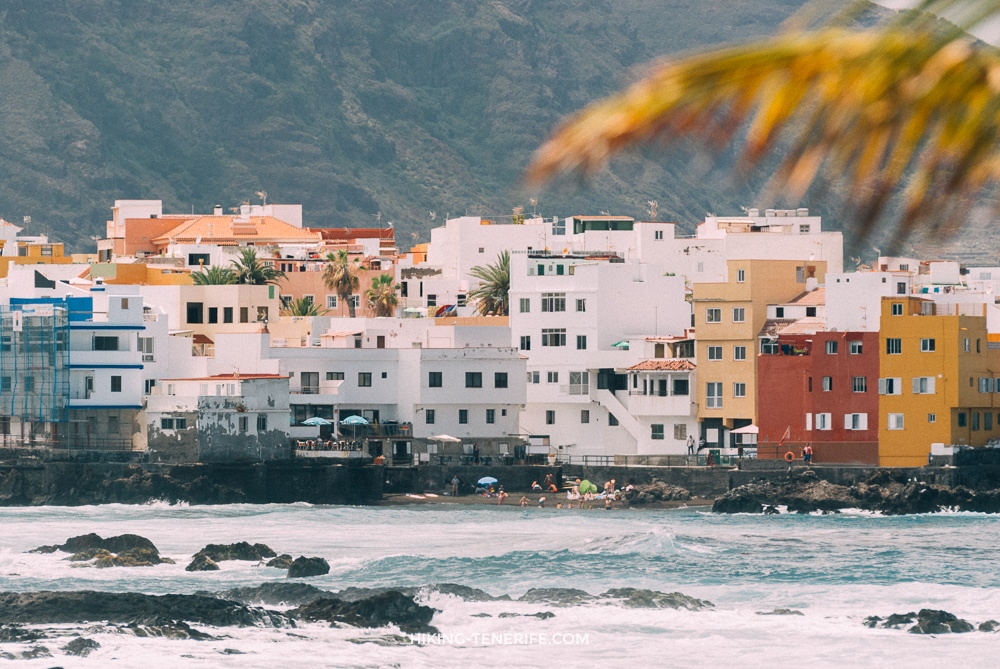
This guide answers the useful question: what should you actually do in Puerto de la Cruz, and should you stay there? I will cover the old town, La Ranilla, San Telmo, Lago Martianez, Playa Jardin, La Paz, the Botanical Garden, Taoro Park, Loro Parque, buses, parking, families, weather, day trips, and what I would skip.
If you want the whole-island version, start with my things to do in Tenerife guide. Use this article as the north-city chapter.
Short answer: Puerto de la Cruz is worth it if you want a real north Tenerife town with walks, gardens, food, buses, and day trips. It is weaker for beach-only holidays, winter-sun certainty, late-night party trips, and anyone who panics when the forecast shows a cloud icon.
Come for Puerto as it is: green, local, coastal, imperfect, and useful.

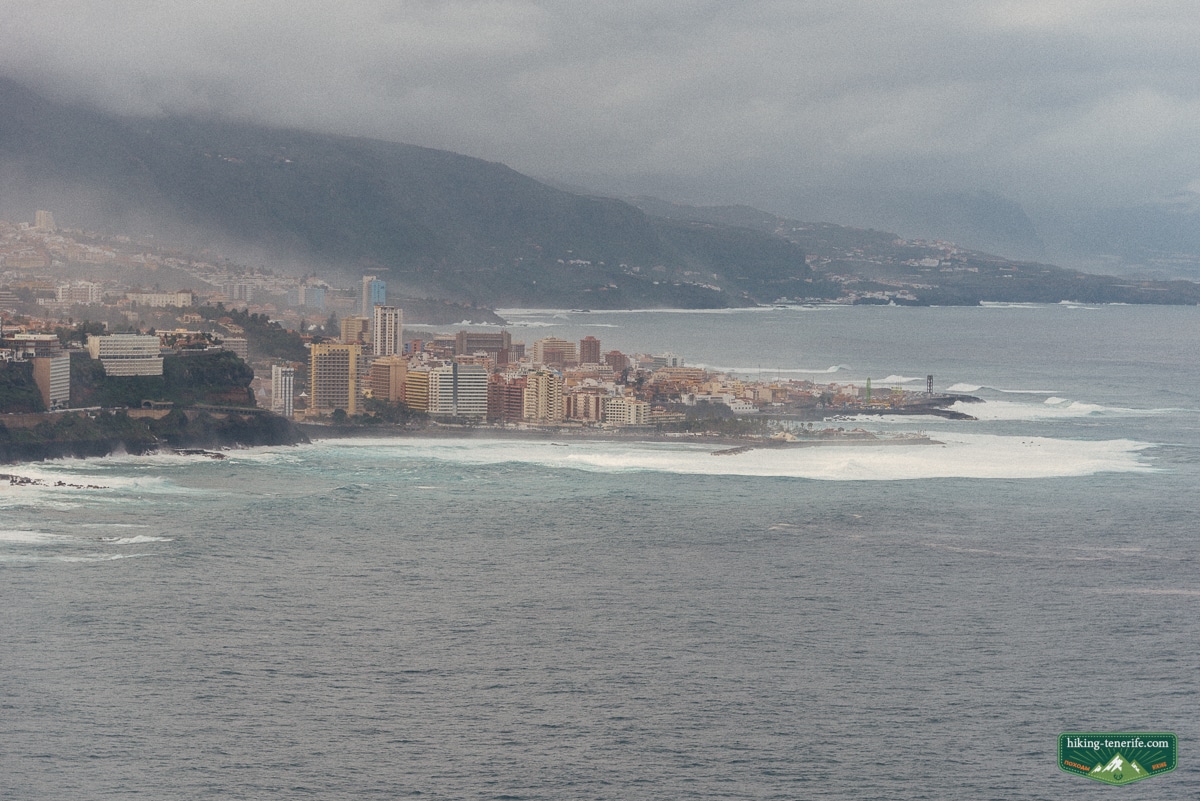
Quick Verdict: Is Puerto De La Cruz Worth It?
Yes, Puerto de la Cruz is worth visiting if you want north Tenerife with practical edges. It is not the island’s prettiest village, and it is not the easiest beach resort, but it is one of the best places to base yourself if you want restaurants, buses, coastal walks, gardens, nearby towns, and a sense of normal Tenerife life around the tourist layer.
The mistake is treating Puerto as a list of attractions. Puerto works more like a base and a walking town. You wander the old center, cut through La Ranilla, sit by the harbour, check the ocean at San Telmo, use Lago Martianez if you want managed saltwater swimming, take Playa Jardin seriously but cautiously, then build day trips into La Orotava, Icod, Garachico, La Laguna, Anaga, or Teide depending on weather.
Local verdict: Puerto de la Cruz is not the polished resort answer. It is the practical north-base answer. Choose it when you want atmosphere and route logic more than guaranteed beach laziness.
| Best for | Think twice if |
|---|---|
| You want a real town with restaurants, buses, and evening life | You need reliable winter beach weather every day |
| You like walking, gardens, viewpoints, cafes, and old streets | You want calm, easy swimming without checking conditions |
| You are comparing north Tenerife bases | You want south-resort polish and package-holiday simplicity |
| You want day trips without moving hotel every night | You plan to drive into the old center at peak evening times |
Beautiful, yes. Effortless, no. Puerto rewards people who plan lightly and look around.
If you are deciding between Puerto and the south, read my Tenerife north or south comparison before booking. That one decision shapes the whole trip more than any individual attraction.

Should You Stay In Puerto De La Cruz?
Stay in Puerto de la Cruz if you want a north Tenerife base that still functions after sunset. Many beautiful northern villages are better as day trips than bases.
Puerto has hotels, apartments, restaurants, pharmacies, supermarkets, a bus station, taxis, coastal walks, and enough evening life that you do not feel stranded after a cloudy day.
Plan like this: stay central on a first Puerto trip unless you already know the hills. Old town, La Ranilla, and San Telmo make dinner and evening walks easy. La Paz is calmer, but it asks more from your legs.
The best areas are not the same for every traveler. Old town and Plaza del Charco are easiest for wandering and dinner. La Ranilla feels more local and arty. San Telmo and the Martianez side work for sea walks and Lago Martianez. La Paz is calmer but uphill. Punta Brava can work for Loro Parque families if walking distances are clear.
| Area | Best for | Caveat |
|---|---|---|
| Old town / Plaza del Charco | First-time visitors, restaurants, evening strolls | Can be noisy and harder for parking |
| La Ranilla | Street art, cafes, less polished local feel | Not as resort-smooth as the Martianez side |
| San Telmo / Martianez | Sea walks, Lago Martianez, easy promenade rhythm | Waves and wind can change the mood fast |
| La Paz | Quieter stays, Botanical Garden, older travelers | Uphill from the center |
| Playa Jardin / Punta Brava | Loro Parque access, black-sand scenery | Do not assume swimming is always available |

My local-style choice is simple: stay central if this is your first Puerto trip, choose La Paz only if you like quiet and do not mind the hill, and do not book far from the center just because the hotel photo shows a pool. Puerto is walkable, but hills and one-way streets can make “only 900 meters” feel less cute in July with luggage.
Common mistake: booking a cheaper hill hotel, then discovering every dinner needs a climb home. Check slopes, lift access, parking, and real walking routes before you book Puerto de la Cruz accommodation.
Free Tenerife map
Still comparing Puerto, La Laguna, La Orotava, and the south?
Open my free Tenerife map before you save twenty random pins. It helps you group north towns, viewpoints, beaches, parking logic, and route order so Puerto becomes a base, not a guessing game.

How Puerto De La Cruz Works
Puerto de la Cruz is easier when you think in zones instead of attractions. The old town gives you plazas, churches, little streets, and everyday restaurants. La Ranilla gives you murals, cafes, smaller bars, and the better wandering texture.
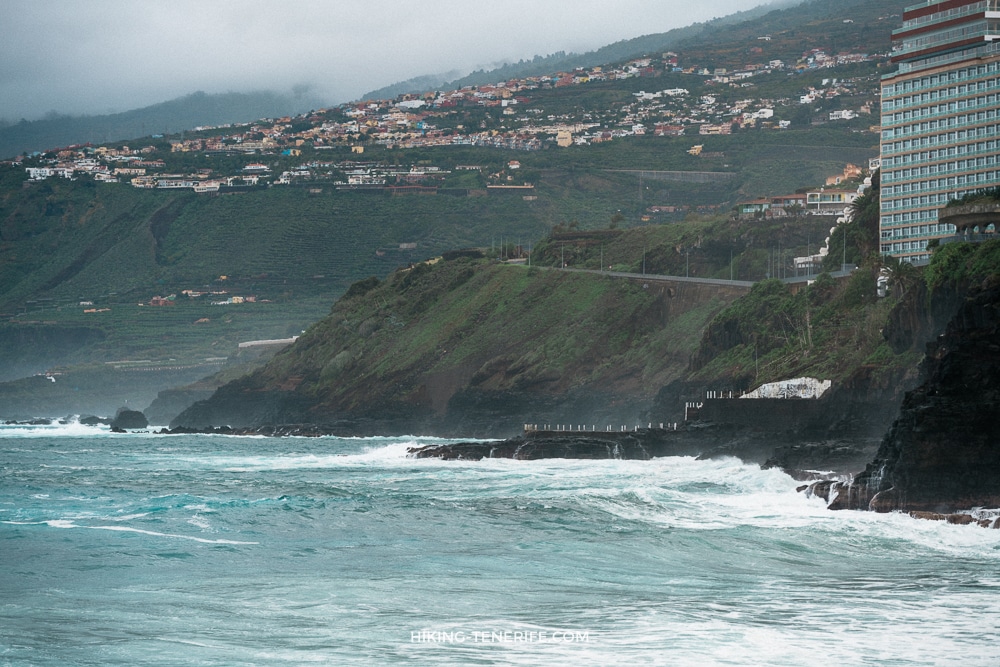
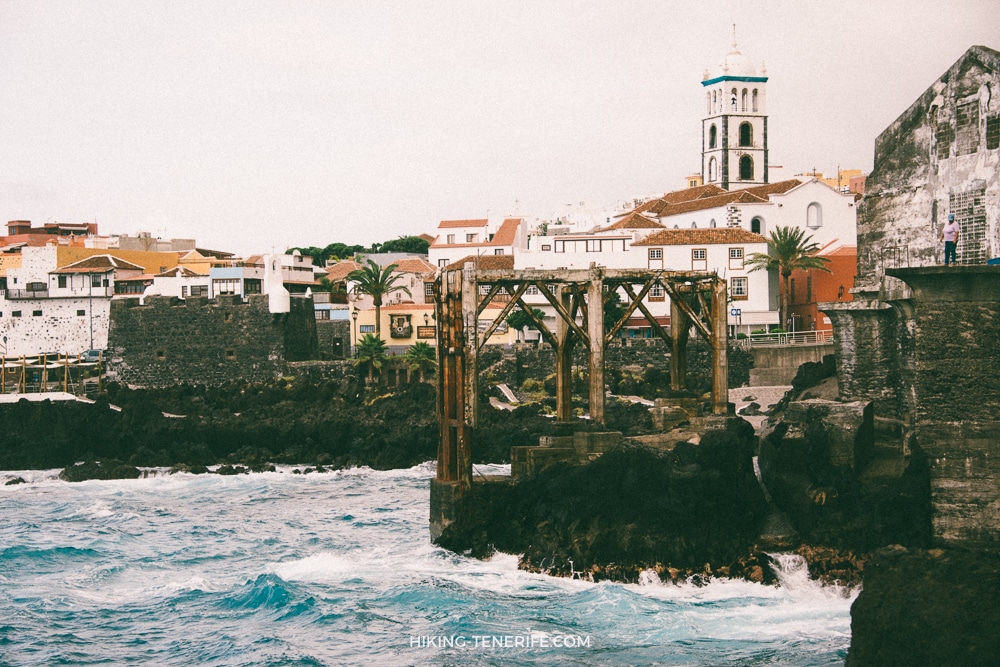
San Telmo and Martianez give you the open Atlantic, wave drama, surf energy, and Lago Martianez. Playa Jardin gives you black sand, gardens, and Punta Brava, but with a serious swimming caveat. La Paz and the Botanical Garden sit above the center. Taoro Park gives you height, shade, and views.
That geography matters because Puerto is not flat everywhere. You can stroll the coast gently, then suddenly discover your accommodation is uphill and your “quick walk back” is a small fitness program. This is fine if you know it. It is less fine when you booked a hill hotel for an older parent and only noticed after check-in.
- For a first walk: Plaza del Charco, harbour, old town, La Ranilla, San Telmo, then Martianez.
- For an easier family day: Lago Martianez, a short old-town loop, ice cream, and a careful look at Playa Jardin rather than a forced beach marathon.
- For a quieter morning: La Paz, the Botanical Garden, then downhill into town.
- For views: Taoro Park and the higher streets, but save them for cooler hours.
Map note: Puerto looks compact on a map, but the useful town is layered. Coast walks are gentle. La Paz and Taoro add height. Choose your hotel by daily rhythm, not just distance in meters.
This is why Puerto makes more sense as a two or three-night base than as a frantic half-day stop. You can see the old center quickly, yes, but the good part is how the town changes between coffee, coast, evening light, and a cloudy morning that pushes you into gardens instead of the beach.
Puerto is not one sight. It is a rhythm: coast, coffee, garden, dinner, repeat.
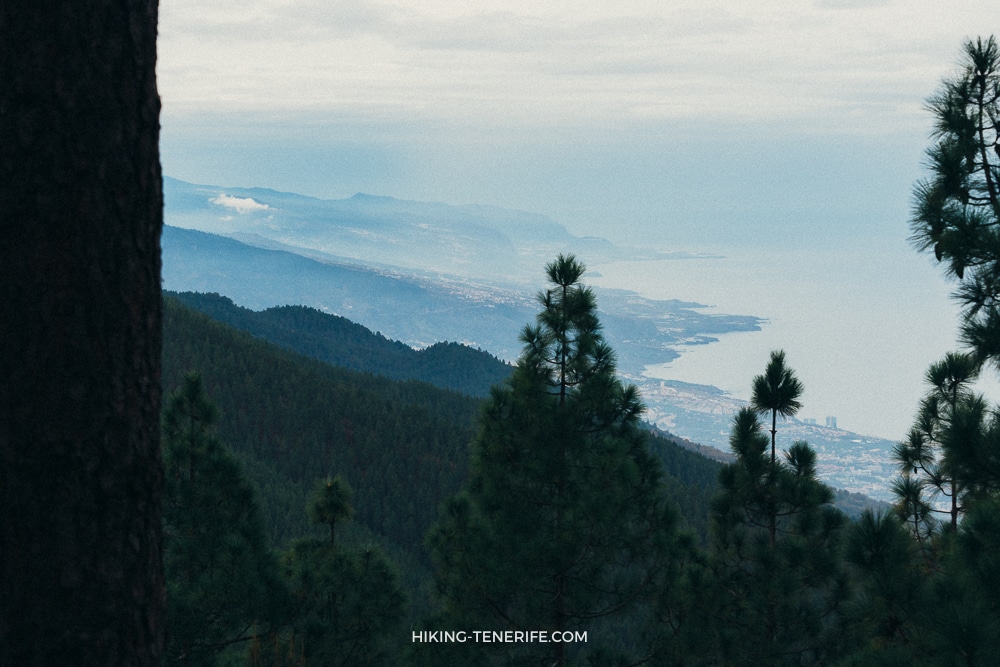
Best Things To Do In Puerto De La Cruz
The best things to do in Puerto de la Cruz are not all ticketed. Some are ordinary: walking the old town early, watching waves at San Telmo, letting La Ranilla pull you into side streets, using Lago Martianez when the sea is unfriendly, choosing one good cafe instead of chasing every viewpoint, and leaving town at the right time for La Orotava or Garachico.
The best Puerto days usually have fewer stops and better pauses.
Start with the old town and harbour. Plaza del Charco is touristy, but it is also useful: central, lively, shaded in parts, and easy for orientation. From there, wander towards the harbour, the church area, and the small streets around the center. Do it in the morning or before dinner, not only at the hottest part of the day when everyone is dragging themselves between menus.
Then go to La Ranilla. This old fishing quarter is where Puerto becomes more interesting than a generic resort. You get murals, smaller restaurants, street corners, bars with personality, and the kind of low-pressure wandering that makes the town work. It is not a museum quarter. It is better than that: a real area with tourist attention layered on top.

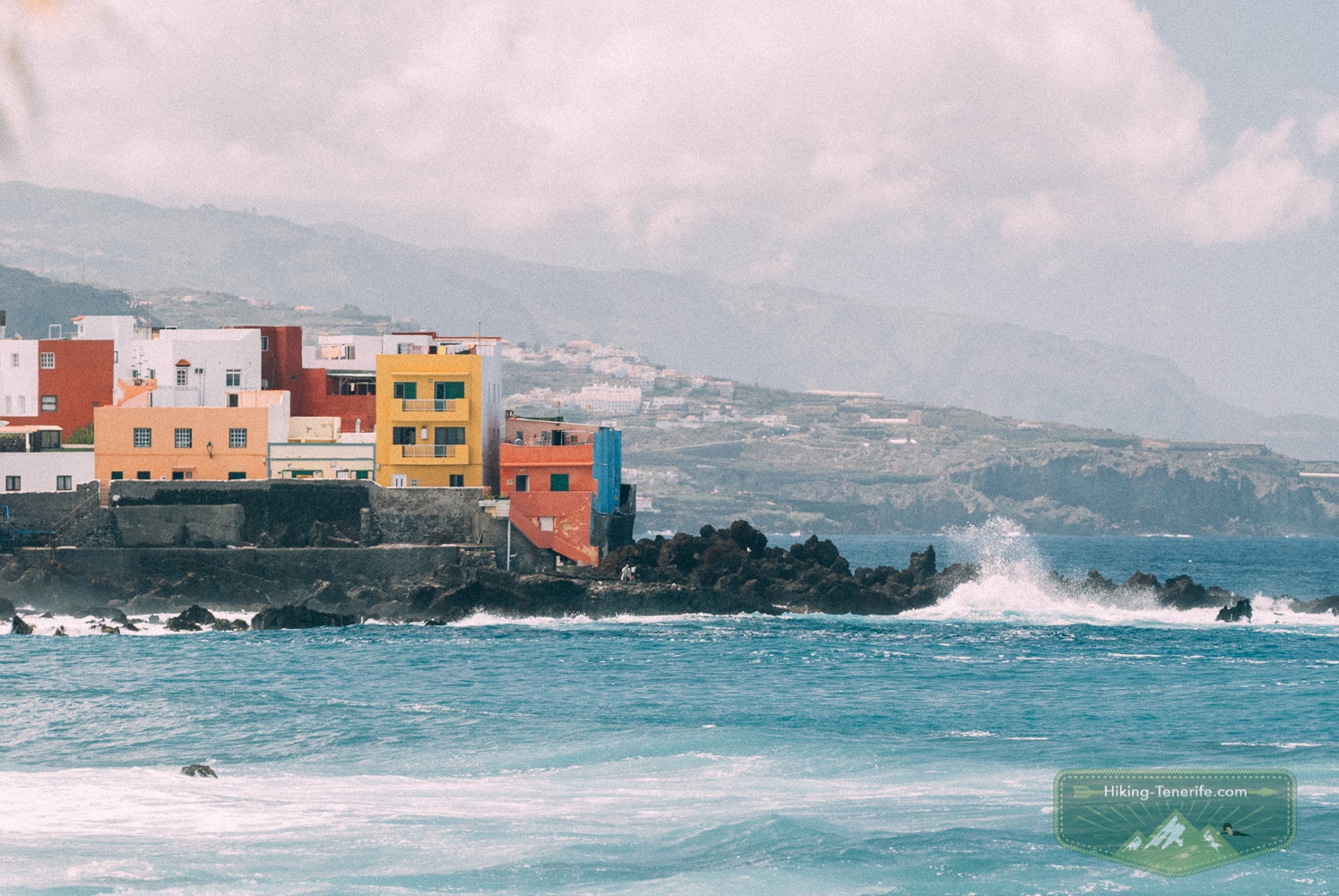
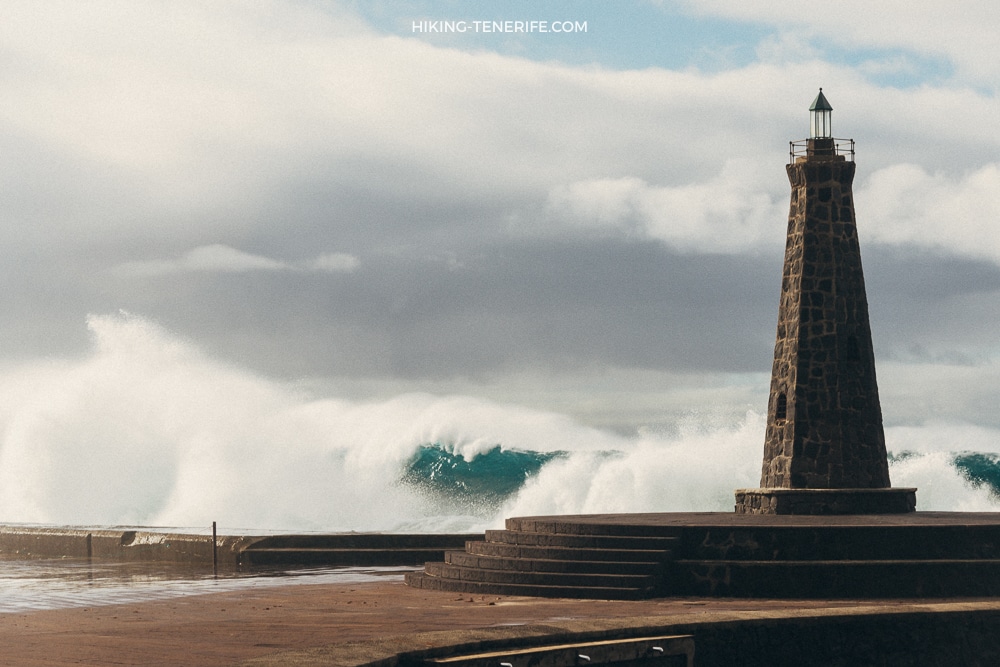
San Telmo is the classic coast section. It is good for a short walk, photos, wave watching, and understanding why the north coast needs respect. In calm conditions, locals may use protected spots around the rocks, but this is not a place to copy strangers just because the water looks dramatic and Instagram has been whispering foolish things in your ear.
Safety rule: if the rocks are wet, waves are reaching the promenade, or locals are only watching, do not turn San Telmo into a swimming plan. The north coast gives warnings before it gives accidents.
Lago Martianez is the practical answer when you want seawater, sunbeds, controlled access, and Manrique-designed space instead of gambling on the Atlantic. The official Puerto tourism site describes Costa Martianez as a 65,000 square meter open-air swimming pool, garden, and open-air museum complex linked to Cesar Manrique, with the first pools opened in 1971 and the wider complex completed in 1977. I would use it as Puerto’s managed-swimming option, especially when the sea is not kind.
Checked 5 July 2026: I verified the Costa Martianez background through Visit Puerto de la Cruz. I am not listing exact prices or hours here because those change. Check the official current page or the entrance before building a day around it.

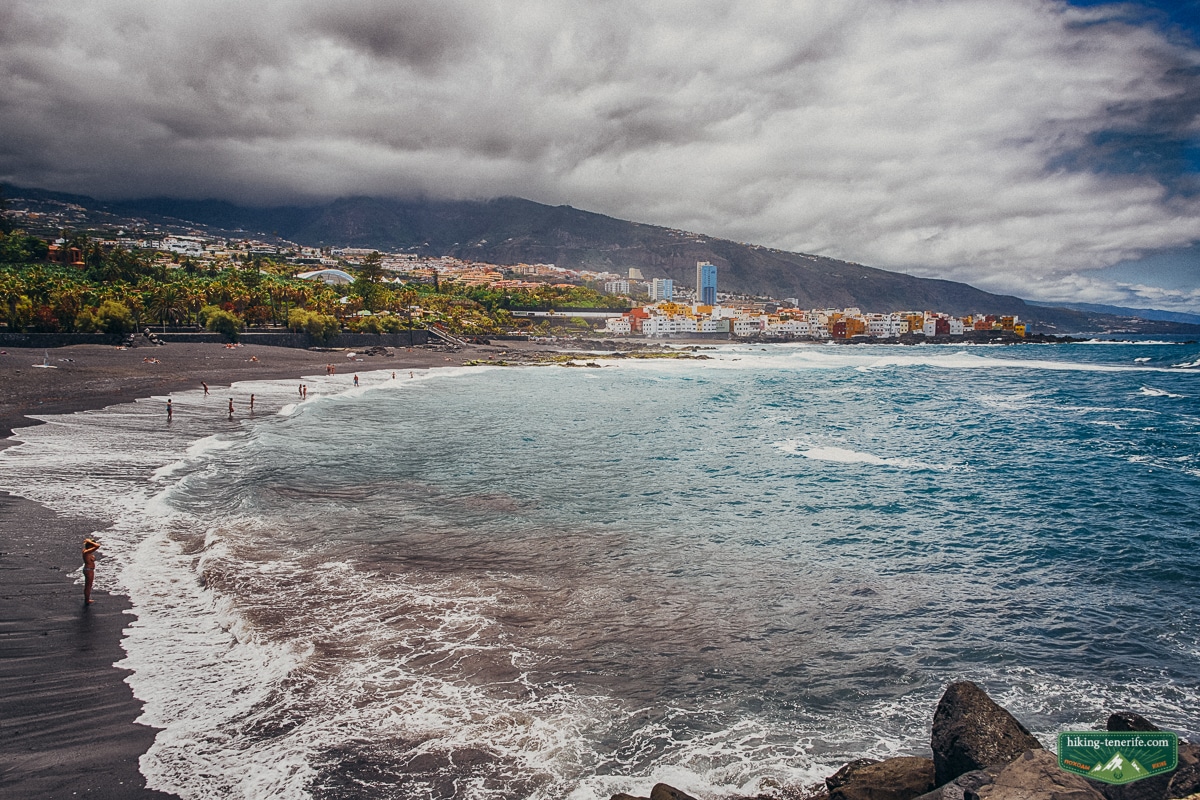
Playa Jardin is the beach everyone wants Puerto to be. It has black sand, palms, gardens, views, and a proper north-coast mood. It is also the beach where you should be most careful about current bathing status. Recent local reporting has covered closures and water-quality problems at Playa Jardin, so do not treat it as guaranteed swimming just because it looks beautiful in photos. Use it for walking, atmosphere, sunset, and only swim when local signs, lifeguards, and flags clearly say it is fine.
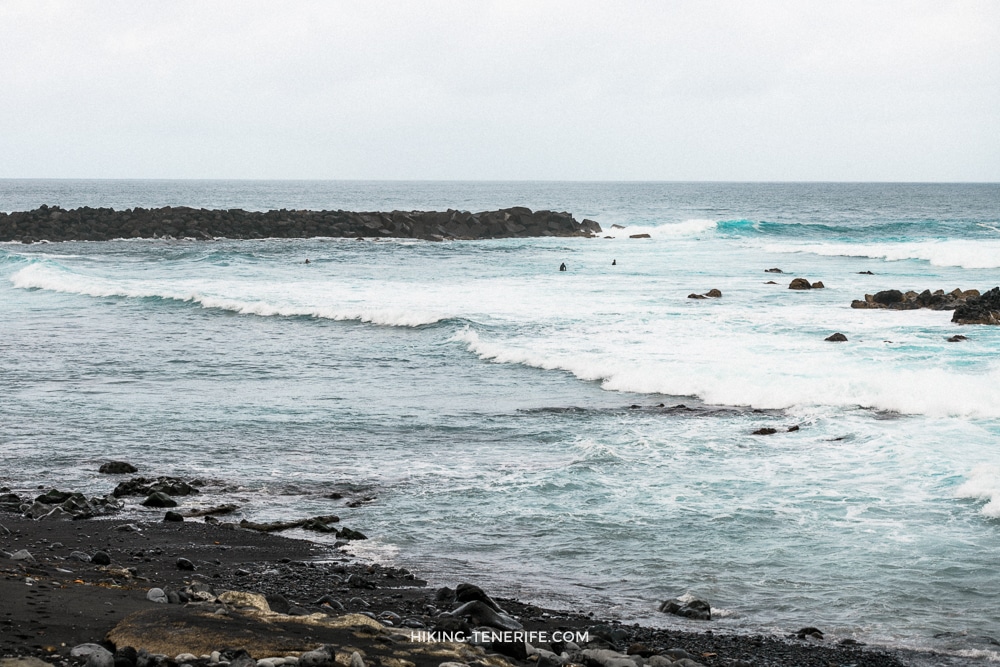
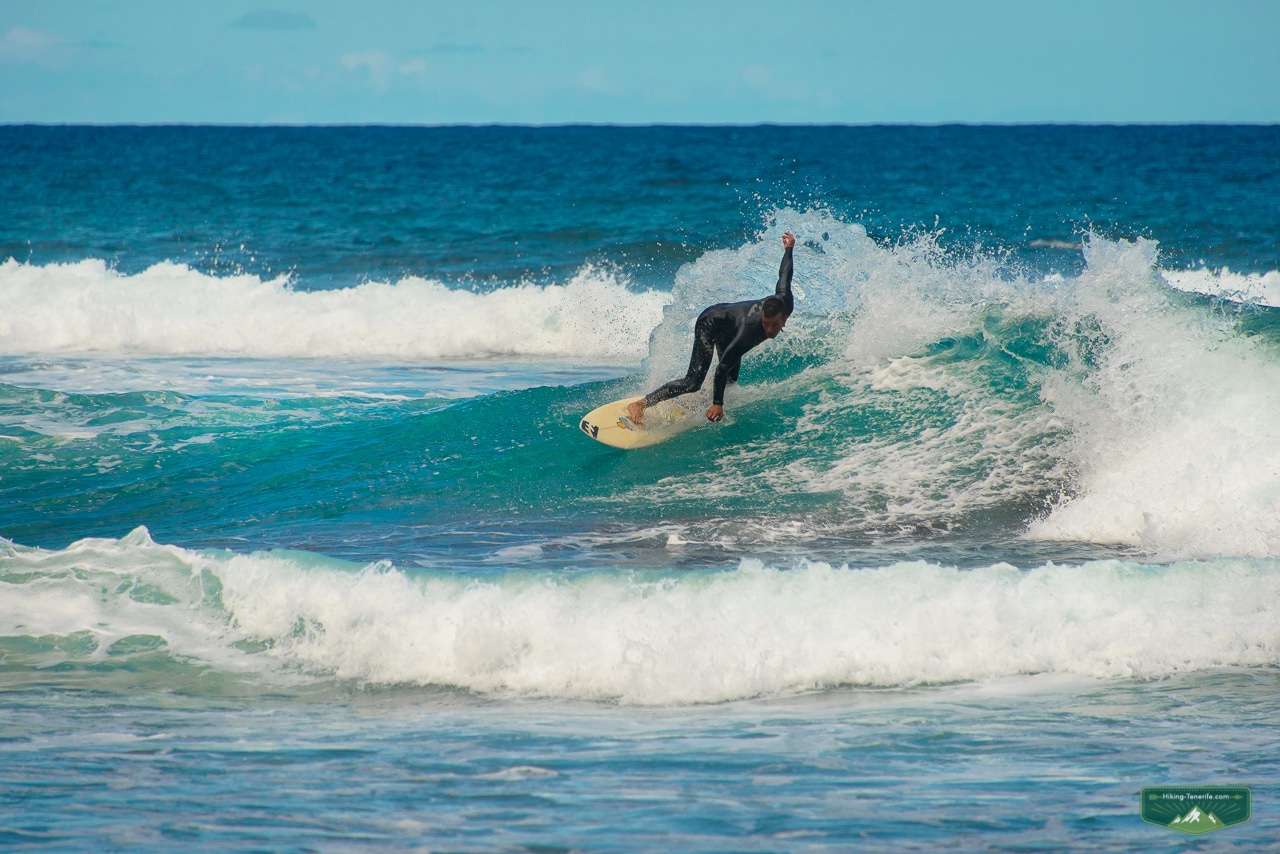
Playa Martianez is a different animal: more exposed, surfier, and often better for watching waves and surfers than for a relaxed family swim. If you want easy bathing, do not force Martianez to become Las Vistas. That is how people turn a good north-coast day into a sulk.
The Botanical Garden in La Paz is a strong Puerto choice, especially when the weather is cloudy, the sea is rough, or you need a slower morning. The official Puerto tourism site describes the Jardin de Aclimatacion de La Orotava as a historic garden created under Carlos III at the end of the 18th century, covering about 20,000 square meters and holding more than 4,000 plant species. In normal traveler terms: it is not filler. It is one of the better calm things to do in Puerto.

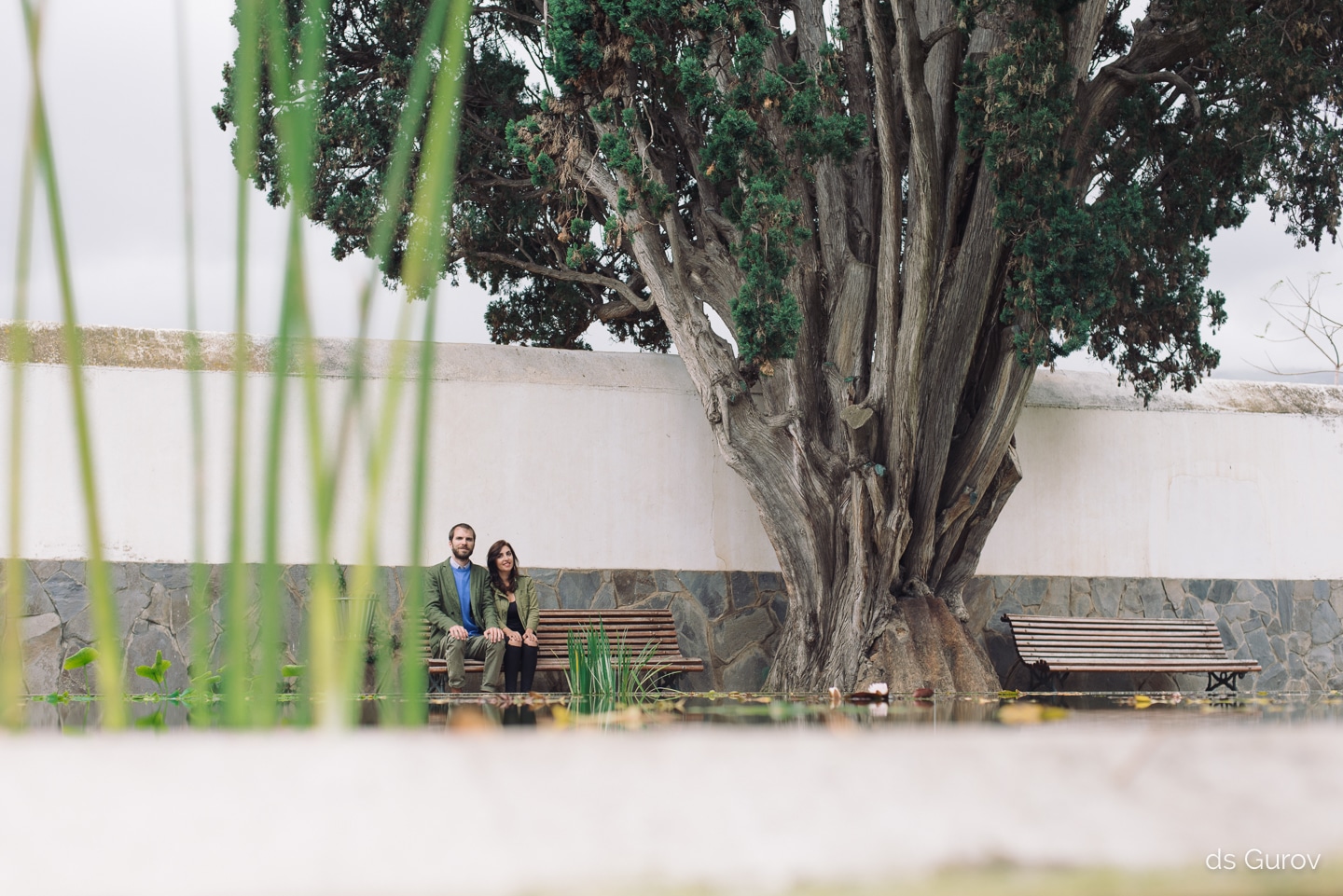
Taoro Park is for views, shade, and a change of pace. It is not a must-see in the same way as the old town or coast, but it becomes very useful if you are staying nearby, want a morning walk, or need a quiet hour away from the densest tourist streets. The climb is real enough that I would not casually add it at the end of a long beach day with tired children.
Loro Parque is the big complicated attraction. It is famous, heavily marketed, close to Puerto, and very convenient for families. The official site promotes animal presentations, conservation work, and more than 400 animal species. The caveat is equally real: if dolphin and orca shows are not something you want to support, do not let convenience make the decision for you. I would research the ethical side before going, especially because Puerto has enough other things to do that Loro Parque does not need to carry the whole trip.
Local verdict: Loro Parque is not compulsory Puerto de la Cruz homework. Go if it fits your family and values. Skip it without guilt if animal shows make the day feel wrong.
For food and coffee, my advice is boring because it is true: walk one street away from the most obvious picture-menu places. La Ranilla and the old town both have better choices if you do not sit down at the first laminated board shouting paella, pizza, sangria, and burgers in six languages. Puerto is good for casual eating, but it rewards the person who takes one lap before committing.
Beaches, Natural Pools, And Swimming
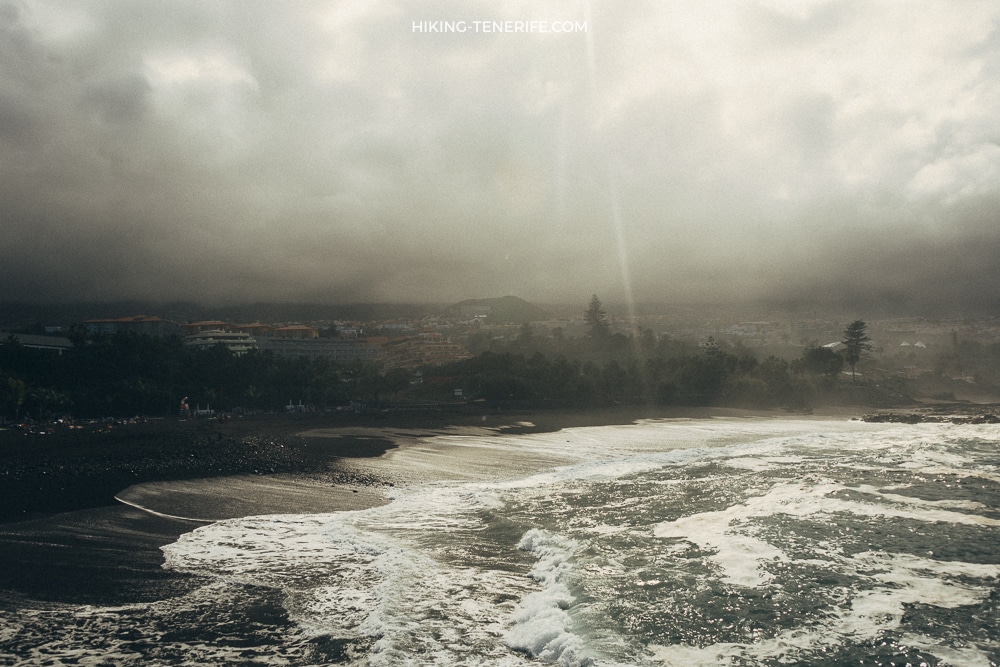
Puerto de la Cruz is a coastal town, not an easy beach resort. That distinction saves holidays. The north coast can be rough, currents can be serious, and black-sand beaches can change character quickly with swell, wind, and water-quality notices. I like Puerto’s coast more when I stop demanding that every pretty place must also be a swimming pool.
Safety rule: treat beach flags, lifeguards, closed access, and local signs as the plan. Not as decoration. If the ocean is loud, let it be scenery.
For controlled swimming, Lago Martianez is the simplest answer. For beach atmosphere, Playa Jardin is the classic answer, but check current bathing signs. For wave watching and surf energy, Martianez and San Telmo are better. For natural pools, think beyond Puerto and consider places like Garachico only when sea conditions are calm and local access is open.
| Place | Best for | Local caveat |
|---|---|---|
| Lago Martianez | Managed saltwater pools, sunbeds, easier families | Check current opening times and prices before going |
| Playa Jardin | Black-sand scenery, gardens, walking, photos | Check current bathing status, flags, and local signs |
| San Telmo coast | Waves, short walks, atmosphere | Do not copy locals into rough water |
| Playa Martianez | Surf watching, open-coast mood | Often too exposed for casual swimming |
| Garachico natural pools | A better natural-pool day trip | Only when the Atlantic is calm |
A pretty north-coast beach can still be a bad swimming idea.
If you want a full beach holiday, read my best beaches in Tenerife guide and be honest about whether Puerto is your base or just one north-coast day. Puerto can be lovely, but it is not the south coast wearing a green jacket.
Puerto De La Cruz Without A Car
Puerto de la Cruz is one of the better Tenerife bases without a car because it has a real bus station, a walkable center, taxis, day-trip possibilities, and enough local life that you do not need to escape every morning. That does not mean every route is easy. It means the no-car version is realistic if you choose days carefully.
For airports and long-distance buses, check current TITSA timetables before you book around a specific connection. Lines and timings can change by season, roadworks, and service updates. As a planning idea, Puerto is much easier from Tenerife North Airport than from Tenerife South Airport, but South Airport is still possible if you are patient and the current timetable lines up.
Map note: Puerto is one of the better Tenerife without a car bases, but it is not magic. Use buses for sensible town-to-town days. Use a car, taxi, or guide for Teide, Anaga, Masca, and complicated loops.
Without a car, I would use Puerto like this: one full walking day in town, one La Orotava day by bus or taxi, one Icod or Garachico day if the connection is reasonable, and one guided or carefully planned bigger day for Teide, Anaga, or a west-coast route. Do not try to replicate a car itinerary by bus stop for stop. That becomes a spreadsheet with sunscreen.
- Easy without a car: old town, La Ranilla, San Telmo, Lago Martianez, Playa Jardin, Botanical Garden, Taoro Park if hills are okay.
- Good with a bus or taxi: La Orotava, Icod, parts of the north coast, La Laguna if you plan the timetable.
- Better with a car or guide: Teide route days, Anaga forest-and-coast loops, Garachico plus Teno, Masca and west-coast combinations.
- Not worth forcing: too many small villages in one day by bus, or a south-coast beach day unless there is a strong reason.
A good no-car Puerto trip is simpler, slower, and much happier.
The bus station sits west of the densest center, which is good to know when choosing accommodation. If you are staying high in La Paz or far towards Punta Brava, build that extra local transfer into your day. Puerto is walkable, but walkable does not mean every tired evening needs one more hill.
Driving, Parking, And Road Access
Driving to Puerto de la Cruz is easy enough. Parking in the exact place you imagined is the usual comedy. The TF-5 connects Puerto with La Laguna, Santa Cruz, and the north motorway, but traffic around commuter hours can be slow. Inside Puerto, the old center is not where I would joy-drive for pleasure.
If you have a car, choose accommodation with parking or accept that you may use paid parking, public lots, or a longer walk. Do not book a central apartment and assume “we will just park outside” unless the listing gives you very specific instructions. This is especially true in high season, weekends, and event periods.
Common mistake: renting a car for Puerto, then using it for tiny town movements. Park once, walk the center, and save the car for La Orotava, Teide, Garachico, Anaga, or the west.

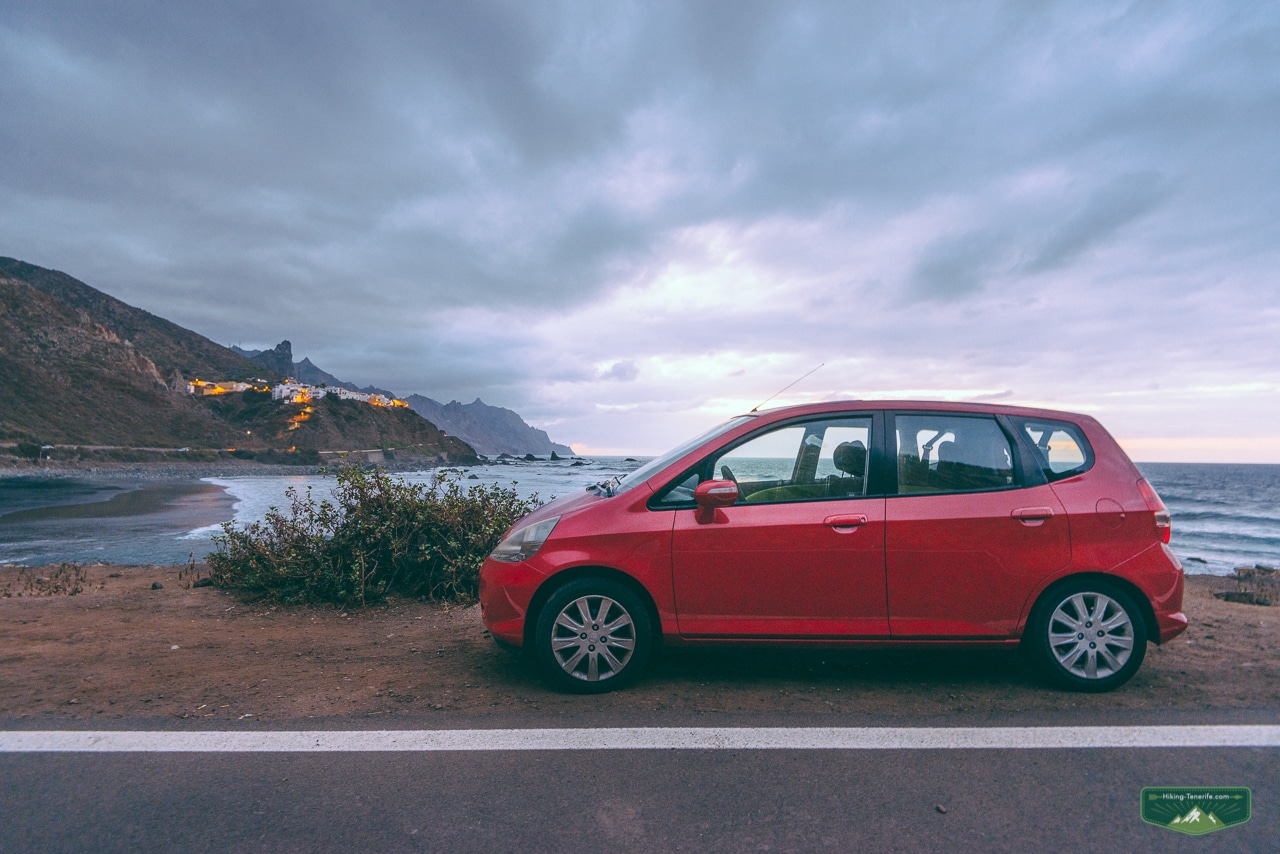
My rule: use the car for leaving Puerto, not for moving around Puerto. Walk the center. Drive to La Orotava, Garachico, Teide, Anaga, or the west coast. If you are staying centrally for two nights and your plans are mostly town-based, you may not need a car every day. If your plan includes Teide, Teno, and Anaga, a car or guided route becomes much more useful.
For more detailed island driving decisions, use my Tenerife car hire guide. Puerto is one of those places where the right answer is not “always rent” or “never rent”; it depends on whether you are using it as a town break, a north base, or a launchpad for complicated route days.
Families, Older Travelers, And Slow Travelers
Puerto can be excellent for families, but not in the same way as a south resort. The win is variety: old town, ice cream, Lago Martianez, gardens, easy dinners, a promenade, Loro Parque if it fits your values, and short trips to La Orotava. The weak point is beach simplicity. If your children need calm sand-and-swim days every day, Puerto asks for too much checking.
Plan like this: families usually do better with two short wins than one huge Puerto day. Try a town walk, ice cream, Lago Martianez, or the Botanical Garden before everyone is tired.
For older travelers, Puerto is good if accommodation is chosen carefully. Central areas are practical, La Paz is calmer but uphill, and Taoro views come with climbing. Check lift access, slopes, parking, and distance to restaurants. Puerto has many comfortable stays, but a pretty hill hotel can become annoying if every dinner turns into a descent and return climb.
| Traveler | Puerto works when | Watch out for |
|---|---|---|
| Families | You use Lago Martianez, gardens, short walks, and realistic beach checks | Expecting every beach to be calm and clean for swimming |
| Older travelers | You choose central or well-connected accommodation | Hills, steps, and vague hotel-location descriptions |
| Couples | You want dinners, walks, gardens, and day trips | Expecting south-coast weather reliability |
| Slow travelers | You enjoy cafes, markets, buses, and repeat walks | Overplanning every day like a checklist |
If you are planning Tenerife with children, pair this with my things to do in Tenerife with kids guide. Puerto can be part of a family trip, but the family version should be built around energy, nap exits, shade, and sea conditions, not adult fantasy itineraries.
Weather, Clouds, And Rainy-Day Plans
Puerto de la Cruz is in north Tenerife, which means greener slopes, more cloud, more Atlantic mood, and less guaranteed sun than the south. In winter, this difference matters. In summer, it can be a blessing when the south feels dry, hot, and overcooked. The same cloud that ruins one person’s beach plan saves another person’s walking day.
Local detail: a cloudy Puerto morning is not automatically a ruined day. Check Teide, La Orotava, and the south separately. Tenerife weather is local, not one island-wide mood.
The best rainy or cloudy Puerto plans are not sad leftovers. Botanical Garden, La Orotava, old-town cafes, a short harbour walk between showers, La Ranilla restaurants, Taoro Park if the ground is not slippery, and a careful museum or shopping pause can all work. If the coast is rough, do not keep returning to the water hoping your itinerary can negotiate with waves.
For bigger route days, use the forecast by zone, not just “Tenerife weather.” Puerto can be cloudy while Teide is bright, or the south can be sunny while the north is under a lid. That is why Puerto rewards flexible travelers. The island is small on a map and not small in weather behavior.
In Puerto, clouds are information. Use them to choose the day.

Handcrafted Tenerife guide
Want the route order without juggling forecast tabs?
Puerto works beautifully when north weather, Teide timing, Anaga cloud, beach flags, parking, buses, and dinner towns are ordered properly. Use my handcrafted Tenerife guide when you want the day to feel designed, not assembled from random tabs.
Best Day Trips From Puerto De La Cruz
The best day trips from Puerto de la Cruz are not the ones with the longest list of stops. They are the ones that respect geography. Puerto is strongest for La Orotava, Icod, Garachico, parts of the north coast, Teide from the north, La Laguna, Anaga with planning, and occasionally Santa Cruz or Las Teresitas. It is weaker for casual south-coast hopping unless you are happy with long transfers.
Plan like this: choose one direction per day from Puerto de la Cruz. East for La Laguna and Anaga. West for Icod and Garachico. Up for Teide. Do not stitch all three together.
La Orotava is the easiest win. It is close, beautiful, useful in mixed weather, and better with slow streets than rushed photo stops. Go in the morning, walk the historic center, look at balconies and courtyards, then decide whether you are returning to Puerto for the coast or continuing into the valley.
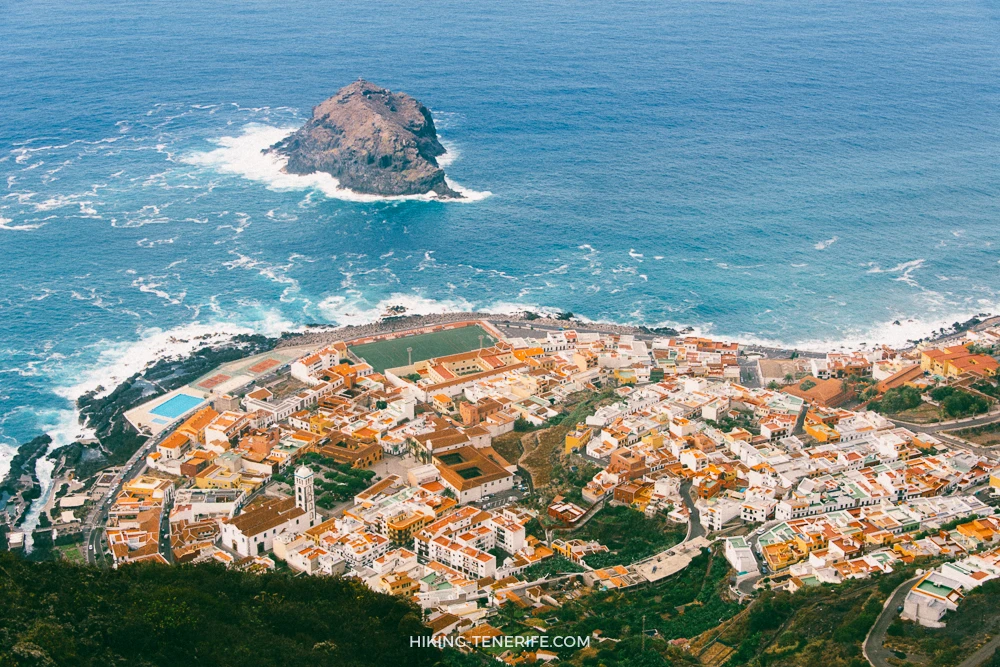
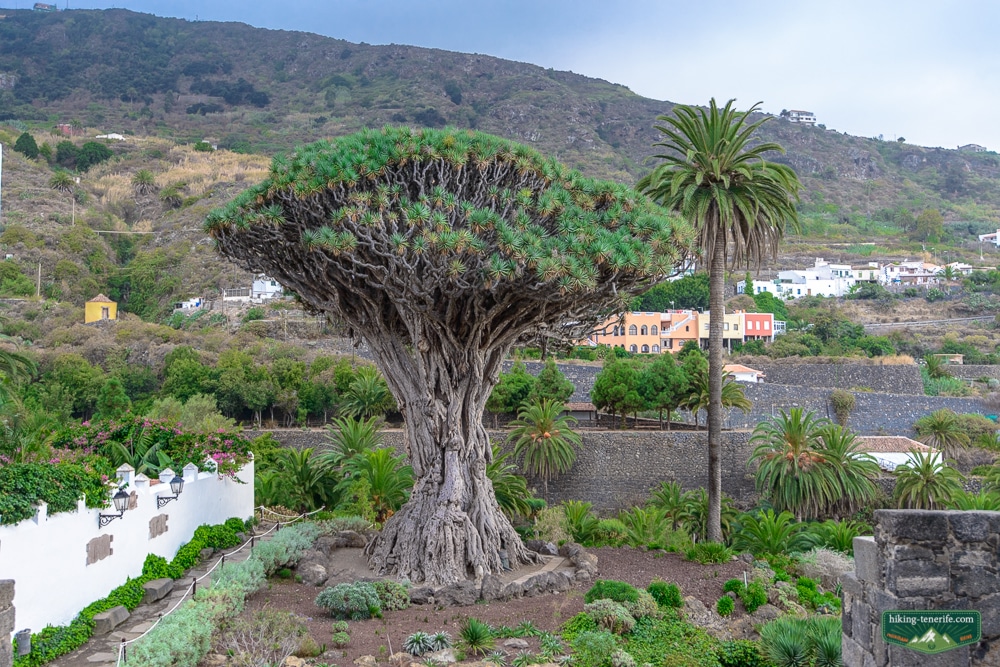
Icod and Garachico work best together if you have a car and do not overstuff the day. Icod is useful for the Drago area, wine, and town texture, but I would not build a whole heroic day around one tree. Garachico is the stronger emotional stop: old town, lava coast, natural pools when safe, and a slower north-west feel.
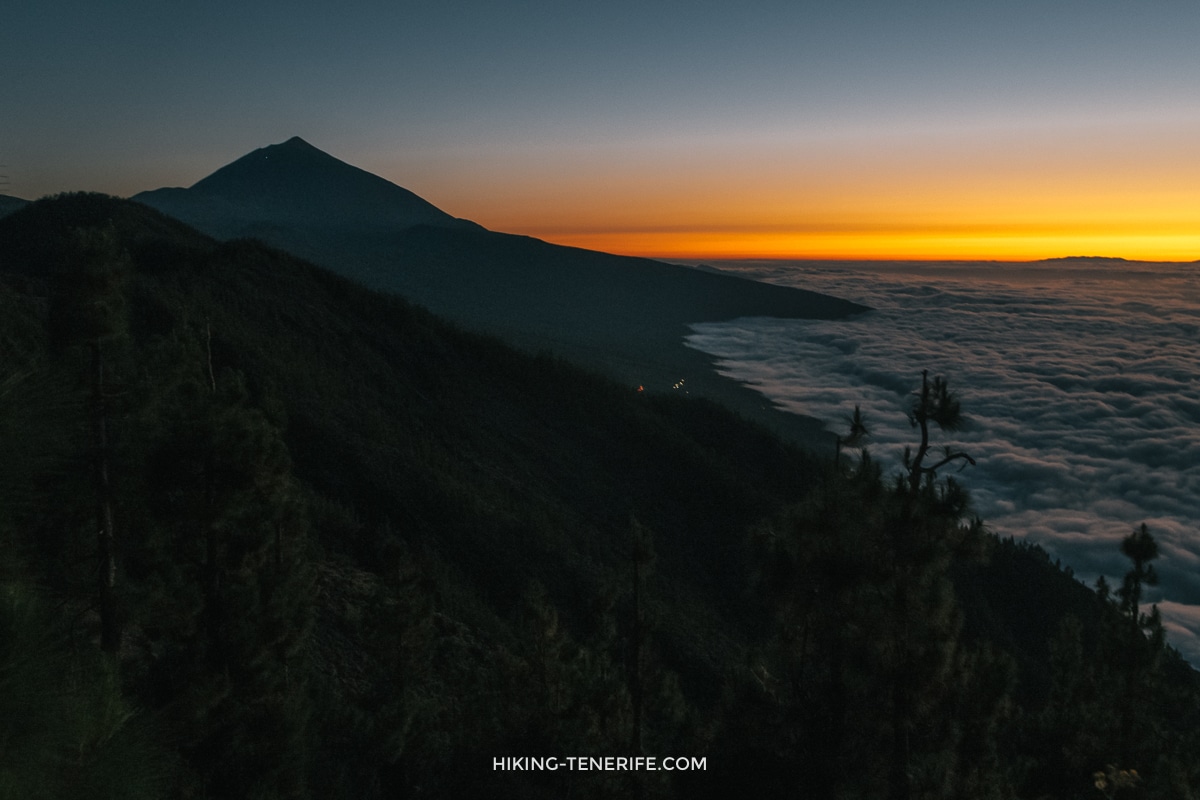
Teide from Puerto is possible and often excellent, but start early. The north route gives you forest, changing climate, and a more dramatic sense of climbing through layers. It also means you should not add five extra villages afterwards unless you enjoy turning a good day into logistics soup.
La Laguna and Anaga are better paired with each other than with a Puerto old-town morning. La Laguna gives historic streets, food, and a different urban rhythm. Anaga gives forest, ridges, and serious route decisions. Together they can be a brilliant day, but only if you accept that Anaga is not a quick viewpoint detour.
Los Gigantes and Masca are possible from Puerto, but they are not “near.” If you want cliffs, whales, or the west-coast drama, read my Los Gigantes and Masca village and road guides first. From Puerto, that side of the island needs an early start and disciplined routing.


| Day trip | Best with | My verdict |
|---|---|---|
| La Orotava | Bus, taxi, or car | Easiest and most natural Puerto escape |
| Icod + Garachico | Car, or patient bus planning | Excellent if you do not rush it |
| Teide north route | Car or guided route | Start early and keep the day clean |
| La Laguna + Anaga | Car or careful bus plan | Worth it, but not a tiny detour |
| Santa Cruz + Las Teresitas | Car or bus | Good city/beach contrast, not mandatory |
| Los Gigantes / Masca | Car or guided route | Beautiful, but far from Puerto |
Choose one strong route. Do not collect villages like stamps.
For a broader north route, use my things to do in north Tenerife guide. This Puerto article is the base guide; the north article is where to fit Puerto among the wider north-coast and inland stops.
One-Day And Three-Day Puerto Plans
If you only have one day in Puerto de la Cruz, do not try to see everything. Start in the old town and Plaza del Charco, walk to the harbour, loop through La Ranilla, continue along San Telmo, look at Lago Martianez, and then choose either a managed swim at Lago Martianez or a slower walk towards Playa Jardin. Add Taoro Park or the Botanical Garden only if your legs, weather, and timing make sense.
For a better one-day walking route, I would do this: coffee in the old town, La Ranilla murals before lunch, San Telmo coast, Lago Martianez or Martianez beach for the Atlantic mood, late afternoon at Playa Jardin if local signs are good, then dinner back near La Ranilla or Plaza del Charco. This gives you Puerto’s real texture without pretending it is a theme park.
With two days, keep day one for Puerto itself and use day two for La Orotava plus either Botanical Garden or Taoro Park. With three days, add Icod and Garachico, or Teide if the weather is clean and you have a car. That is already a full north-Tenerife taste without sleeping in a different town every night.
- One day: old town, La Ranilla, San Telmo, Lago Martianez, Playa Jardin, dinner in town.
- Two days: day one Puerto, day two La Orotava plus Botanical Garden or Taoro Park.
- Three days: add Garachico and Icod, or a clean Teide north-route day.
- Four or more days: Puerto becomes a real base for Anaga, La Laguna, north coast, and slow repeats.
Map note: a three-day Puerto plan should not look like a full-island race. Keep one day in town, one valley or coast day, and one weather-dependent bigger route.
If you are on a no-car trip, make the three-day version simpler: one town day, one La Orotava day, one carefully chosen bus or guided day. Do not build a no-car plan that depends on four perfect connections and heroic patience. That is how holiday spreadsheets learn to bite.
What To Skip Or Treat Carefully
Skip the idea that Puerto is only Lago Martianez and Loro Parque. Those are useful for the right person, but they do not explain why Puerto is worth staying in. The town is better when you use it as a base with old streets, gardens, food, coast, and north-route access.
Local verdict: the most overrated Puerto plan is the one that ignores Puerto. Do fewer day trips. Let the town do some of the work.
Treat Playa Jardin carefully. I love the look of it, but I would not write “go swim there” without checking current local signs, flags, lifeguards, and water-quality status. This is not overcautious blog language. It is the difference between good local advice and postcard advice.
Treat Loro Parque as a values decision, not just a convenience decision. If you are comfortable with it after researching the animal-show questions, it can be an easy family day. If you are not, Puerto still has enough to fill a trip. Do not let a glossy brochure make a moral decision on your behalf.
Skip tourist restaurants that try to be every cuisine at once from a laminated board. Skip driving inside the old center unless your accommodation instructions are clear. Skip booking uphill accommodation if mobility matters. And skip the fantasy that Puerto is a south-coast resort with better architecture. It is north Tenerife. Let it be north Tenerife.
The most common planning mistake is too many day trips. Puerto is good because it lets you leave town easily, but if every day is Teide, Anaga, Garachico, Masca, Santa Cruz, and back, you never actually get Puerto. Choose two bigger routes, keep one flexible cloudy-day backup, and leave room for the town to work.
The point of staying in Puerto is not escaping Puerto every morning.

FAQ
What are the best things to do in Puerto de la Cruz?
The best things to do are the old town and harbour walk, La Ranilla, San Telmo coast, Lago Martianez, Playa Jardin with current-status checks, the Botanical Garden, Taoro Park, and day trips to La Orotava, Icod, Garachico, Teide, La Laguna, or Anaga.
Is Puerto de la Cruz worth visiting?
Yes, if you want a real north Tenerife town with coast, gardens, restaurants, buses, and day-trip access. It is less ideal if your main goal is guaranteed winter sun and easy beach swimming every day.
Should I stay in Puerto de la Cruz or just visit?
Stay if you want a practical north base for several days. Visit if you are based elsewhere and only want a taste of the old town, coast, Lago Martianez, and Playa Jardin.
Can you swim in Puerto de la Cruz?
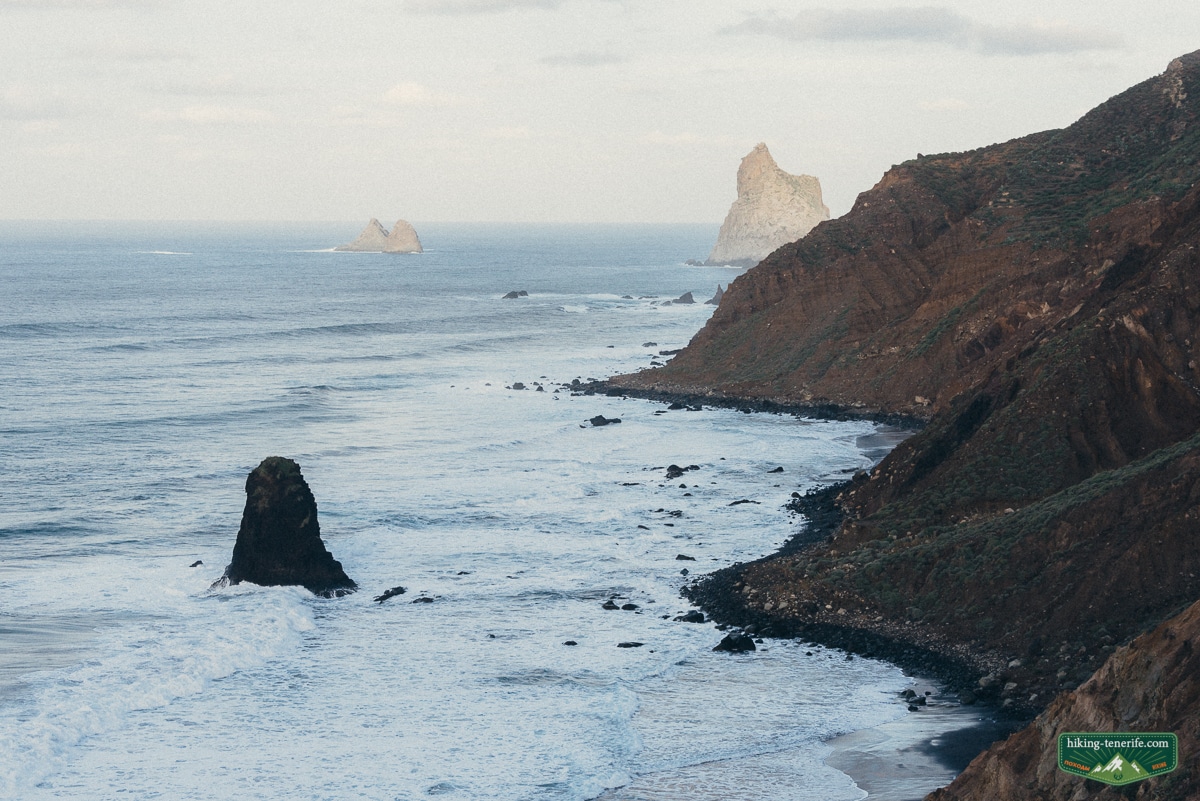
Sometimes, but do not assume every beach is safe or open for swimming. Lago Martianez is the easiest managed option. For beaches and rocky spots, check flags, lifeguards, swell, local signs, and current water-quality notices.
Is Puerto de la Cruz good without a car?
Yes, compared with many Tenerife bases. The center is walkable and the bus station gives useful connections. Still, Teide, Anaga, Garachico, Masca, and complicated route days are easier with a car, taxi, or guide.
Which airport is best for Puerto de la Cruz?
Tenerife North Airport is usually more convenient. Tenerife South Airport can work, but the transfer is longer, so check current TITSA timetables, taxi costs, or private transfer options before booking flights purely on price.

Is Puerto de la Cruz good for families?
Yes, if your family likes variety: Lago Martianez, old-town walks, gardens, cafes, short routes, and possibly Loro Parque after an ethical check. If your children need calm beach swimming every day, the south may be easier.
How many days do you need in Puerto de la Cruz?
One day is enough for a quick town walk. Two or three days are much better if you want Puerto plus La Orotava, Botanical Garden, Garachico, Icod, or a Teide day. A week works if you like slow travel and north-weather flexibility.
Is Puerto de la Cruz better than the south of Tenerife?
It is better for real-town atmosphere, greenery, walking, buses, and north day trips. The south is better for reliable sun, easier beaches, resort polish, and many family package holidays. The right answer depends on the trip you actually want.
Is Loro Parque worth it?
It depends on your values. It is convenient, famous, and heavily promoted, but animal shows are a real ethical caveat. Research before going and do not treat it as compulsory.
Puerto works best when you stop asking it to behave like somewhere else.
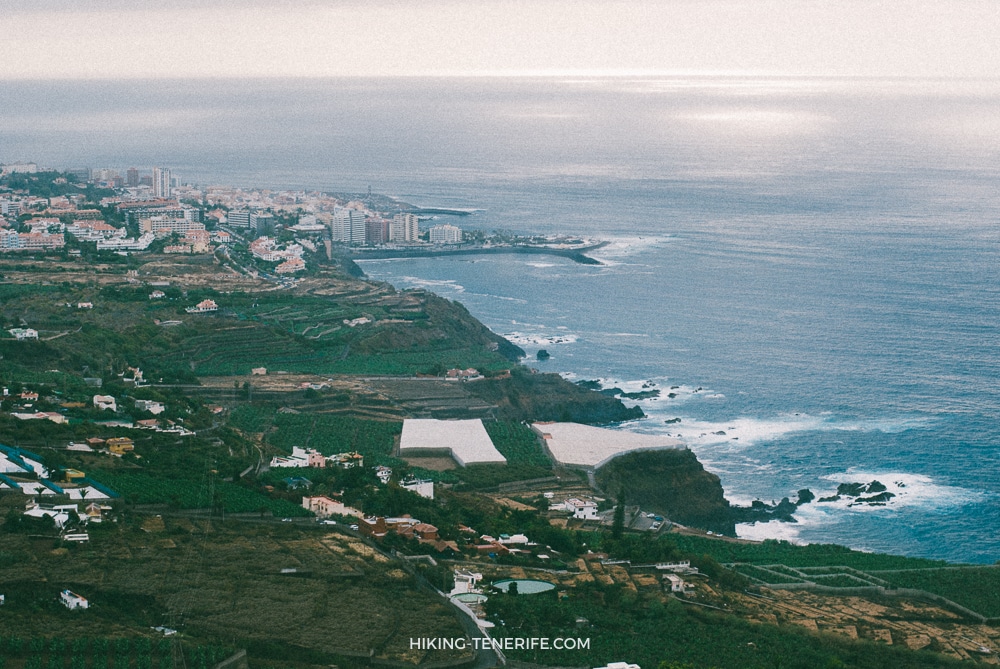
My final verdict: Puerto de la Cruz is one of Tenerife’s best bases when you want the island to feel lived-in, green, practical, and a little moody. It asks more judgement than a south resort, but it gives more back if you enjoy towns, gardens, coast walks, and route logic. Go for Puerto, not for a fantasy of Puerto. That is when it works.


