

Yes, Tenerife is good for surfing if you choose the right coast, the right day, and the right level. It is not a soft tropical beginner factory. It is a volcanic Atlantic island with real swell, sharp lava, wind, crowds, and a few very convenient places where a normal visitor can learn without turning the holiday into a medical episode.
For most first-timers, the practical answer is simple: book a lesson in Playa de Las Americas, let a school choose the peak, and do not walk onto a reef break because it looked friendly from the promenade. Tenerife will smile at you. The reef will not.
For improving surfers and intermediates, Tenerife is more interesting. Las Americas gives the easiest south-base logistics, El Socorro brings the north-coast power, and Punta del Hidalgo, Bajamar, Anaga, Punta Blanca, El Confital, Las Galletas, and other corners open only when conditions and ability match.

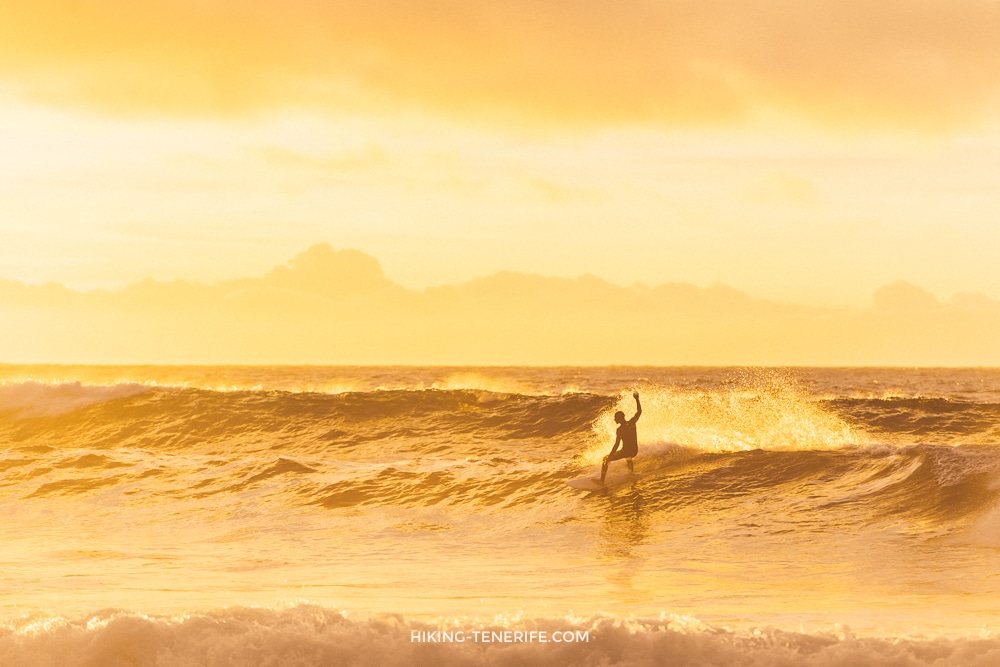
Use this guide to decide where surfing in Tenerife actually makes sense for your trip. Not every beach is a surf beach. Not every wave is a lesson wave. And not every sunny day is a safe day to paddle out.
Short answer: beginners should usually start with a surf school in Las Americas. Intermediates can use Tenerife as a varied surf trip. Advanced surfers will find serious reef and north-coast waves. Families and non-surfers should choose watchable areas with promenades, cafes, and an easy retreat plan.
Quick Facts
Tenerife has waves all year, but that sentence hides all the useful information. The island has different coasts, different swell windows, and very different consequences when you make a bad choice.
The south is usually easier for visitors because Las Americas is close to hotels, schools, rentals, promenades, food, taxis, and buses. The north is more beautiful, wilder, and often more powerful. It also asks for more judgement.
| Question | Useful answer |
|---|---|
| Best beginner base | Playa de Las Americas, mainly because schools, rentals, transport, cafes, and several peaks sit close together. |
| Best season | Autumn and winter are strongest for Atlantic swell. Shoulder seasons can be excellent. Summer is more selective. |
| Water temperature | Usually mild by European standards, but most visitors still prefer a wetsuit, especially in winter, wind, or long lessons. |
| Best first lesson | A licensed school with softboards, wetsuits, insurance, clear ratios, and a weather-cancellation policy. |
| Biggest mistake | Confusing a pretty beach with a suitable surf beach. |
| Main danger | Reef, rocks, currents, shorebreak, crowds, and confidence arriving before skill. |
| No-car option | Las Americas is easiest. North and Anaga trips are simpler with school transport or a car. |
| Wind-sports boundary | Kitesurfing, windsurfing, and wing foiling are mostly a separate El Medano conversation. |
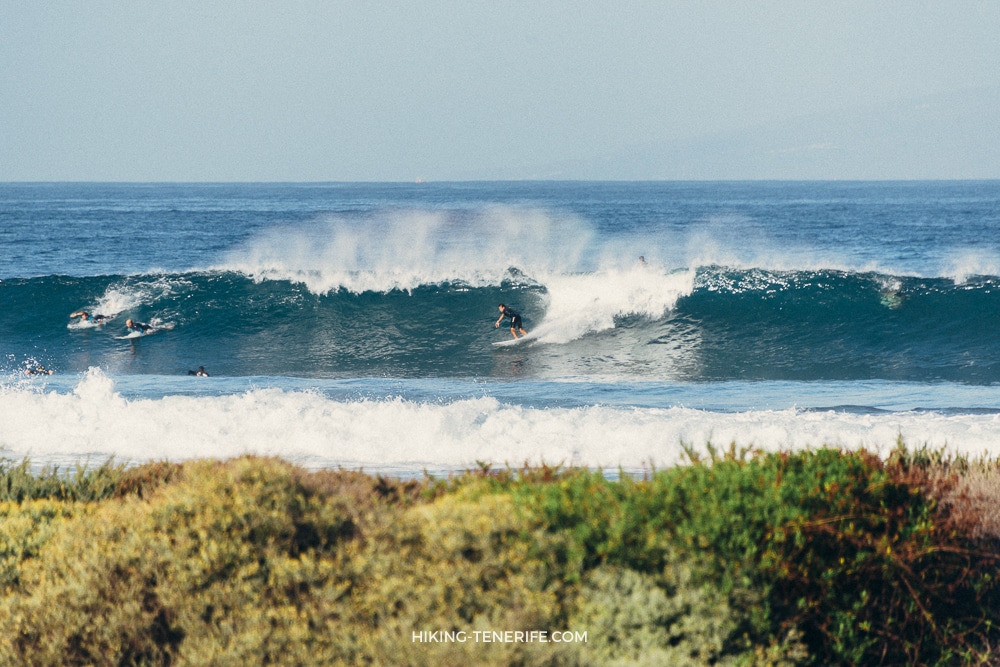
Local rule: Tenerife has waves almost everywhere, almost all year. Beginners can surf safely in far fewer places. This is the part the Instagram caption usually forgets.
Who Tenerife Surfing Is Good For
Tenerife works best for people who can accept conditions instead of demanding a brochure. You may get a clean small lesson wave. You may get wind, shorebreak, or a flat south coast while the north is too strong. The island is generous, but it is not your employee.
Complete beginners can have a great first lesson if they use a school. Improving beginners can progress if they stay humble, check the spot, and avoid paddling into reef waves that are working for faster surfers. Intermediates get the most freedom because they can move between south, north, and west windows.
Advanced surfers already know the deal: Tenerife has real reef waves, crowded line-ups, and local surfers who do not need a visiting hero on the inside. Respect gets you further than confidence.
| Traveler | Best approach | Avoid |
|---|---|---|
| First lesson | Las Americas school, softboard, instructor-led peak choice. | Renting alone and guessing the entry. |
| Improving beginner | Small El Medio-style conditions, coach feedback, early or quieter sessions. | Spanish Left, Punta Blanca, big El Socorro. |
| Intermediate | Use forecasts and move between south, north, and west. | Assuming yesterday’s spot works today. |
| Advanced | Reef and north-coast windows with local etiquette. | Dropping in, crowding, and treating warning signs as decoration. |
| Family with teens | A lesson plus promenade/cafe backup. | Remote beaches with shorebreak and no easy exit. |
| Non-surfer | Watchable Las Americas, Puerto de la Cruz, El Socorro from safe distance. | Standing on rocks during swell. |
| No-car visitor | Las Americas, school transport, taxis for short hops. | Carrying boards across half the island by bus. |
| South-based visitor | Las Americas first; El Medano only for very specific regular-surf conditions. | Booking El Medano because you saw windsurf photos. |
| North-based visitor | Martianez, El Socorro, Punta del Hidalgo only when conditions match. | Assuming north beauty means beginner ease. |
Local verdict: choose your surf beach by traveler type first, not by the prettiest photo. A good Tenerife surf day starts with level, transport, tide, wind, and who is waiting on land.
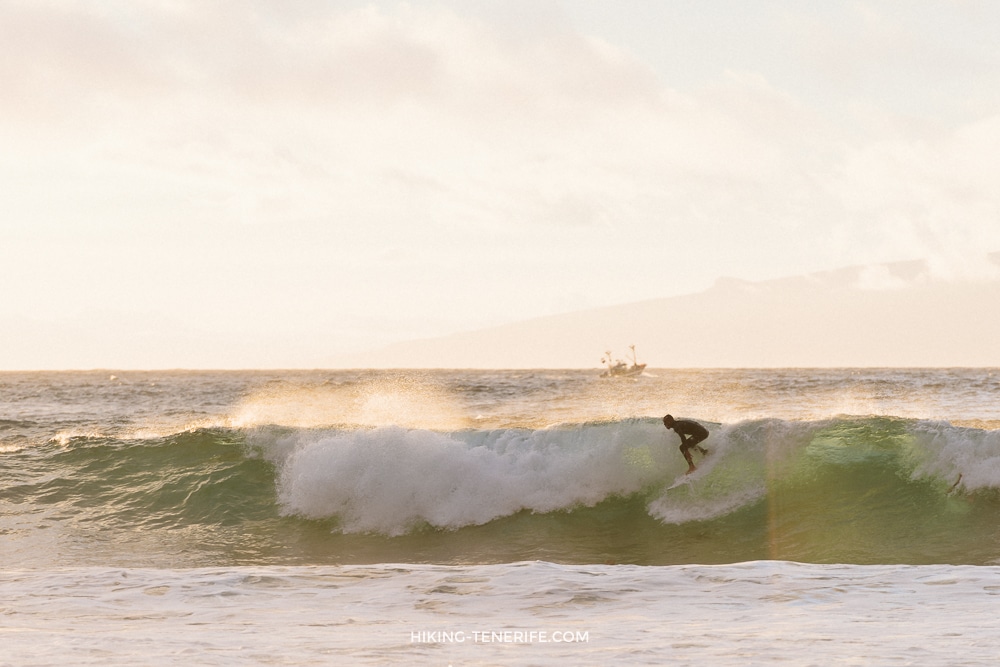
Surfing Vs Wind Sports
Regular surfing means you paddle into waves on a surfboard. Kitesurfing, windsurfing, and wing foiling use wind. This sounds obvious until someone books El Medano for “surfing” and discovers that half the bay is speaking fluent wind.
El Medano is brilliant for windsurfing and kitesurfing. For regular board surfing it is a side note: possible on some days, useful for first soft-board feelings, but not the main reason to choose Tenerife as a surf destination.
If your dream has a sail, kite, or wing in it, start with my kitesurfing and windsurfing in Tenerife guide. My El Medano guide helps with the town itself. This page stays with ordinary surfing: waves, boards, lessons, spots, safety, and realistic surf days.
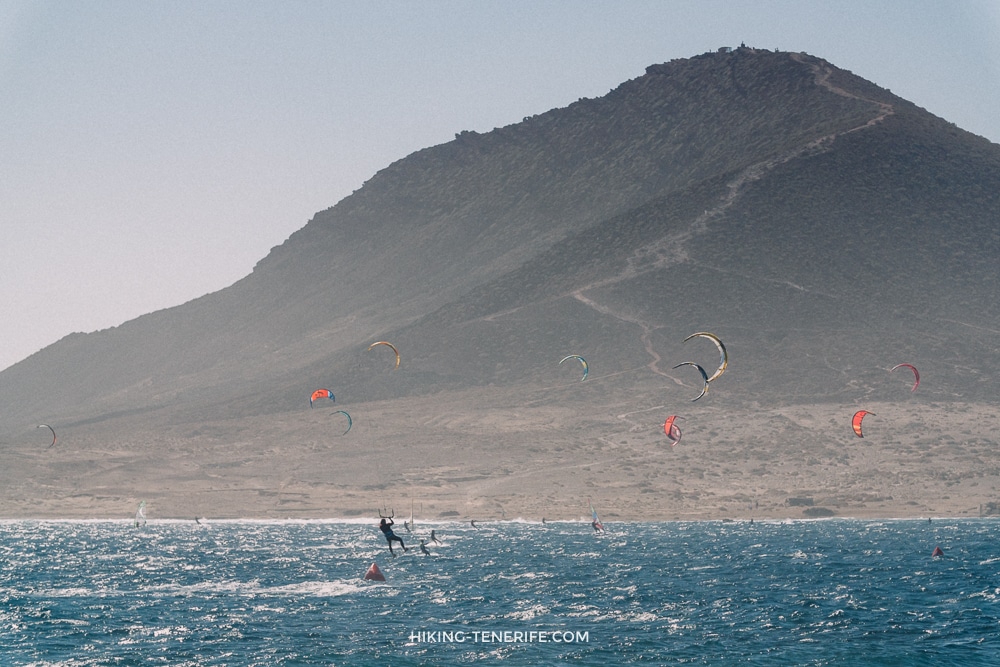
Local rule: if the beach is full of kites, you are probably reading the wrong article. Surfing and wind sports share water, not always logic.
Best Season For Surfing In Tenerife
The cleanest simple version: autumn and winter bring the most reliable Atlantic swell. September, October, November, December, January, and often February are the months I look at first for Las Americas and many quality waves.
If you are coming in winter, also read my Tenerife in January guide. If El Medano is on your shortlist, use the El Medano winter weather guide too. It explains why sun, wind, and surf are not the same thing.


Spring can still work. Summer can work too, but it becomes more selective. You may depend on south swells, north-coast windows, or small playful days rather than consistent proper waves. Tenerife is not Bali with papas arrugadas.
The south and north behave differently. Las Americas likes west and northwest swell windows for many classic peaks. Some south-coast spots wake up with southern swell. The north takes more Atlantic energy and can become too large, windy, or messy for beginners in winter.
Wind matters. A forecast that looks good for beach weather can be useless for surf. Calima can change the mood, visibility, heat, and comfort. Strong wind can make a small day ugly, and a beautiful sunny promenade does not mean the reef entry is kind.

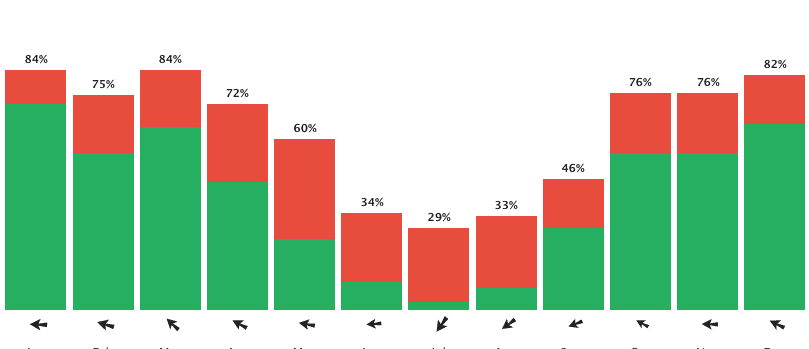
Sea temperature is mild compared with much of Europe, roughly in the comfortable-but-not-bathtub category through the year. Most surf schools will put beginners in wetsuits. In winter, on windy days, and during long sessions, that is not overcautious. It is civilized.
Before planning a session, check a surf forecast, tide, wind direction, swell size, swell period, local beach flags where available, and official weather or coastal warnings. Puertos del Estado provides Spanish marine forecast data, and AEMET is the sensible place to check official weather and coastal warnings. Do not outsource your bones to a single app icon.
Safety rule: check surf forecast and beach conditions separately. Good beach weather can still mean bad surf, ugly wind, exposed reef, or a red-flag day.
| Season | What to expect | Best for |
|---|---|---|
| Autumn | Often the nicest balance: swell returns, water still comfortable, crowds not yet at Christmas intensity. | Lessons, improving surfers, Las Americas trips. |
| Winter | Most powerful and consistent, especially for Atlantic swell. Also the season where mistakes get louder. | Intermediates, advanced surfers, careful school days. |
| Spring | Mixed, sometimes excellent, sometimes fussy. Good if you are flexible. | Visitors who can adapt plans. |
| Summer | Less consistent for classic swell, but still possible in the right spots. | Soft first lessons, south-swell hunting, patient surfers. |
Where To Surf By Traveler Type
Do not ask only “where is the best surf spot in Tenerife?” Ask “where is the best surf spot for me, today, with my transport, my skill, and the people who must still like me at dinner?” That is a better question.
For most travelers, the decision tree starts with Las Americas. It is not always the best wave, but it is often the best combination of waves, lessons, rentals, transport, food, and easy retreat.
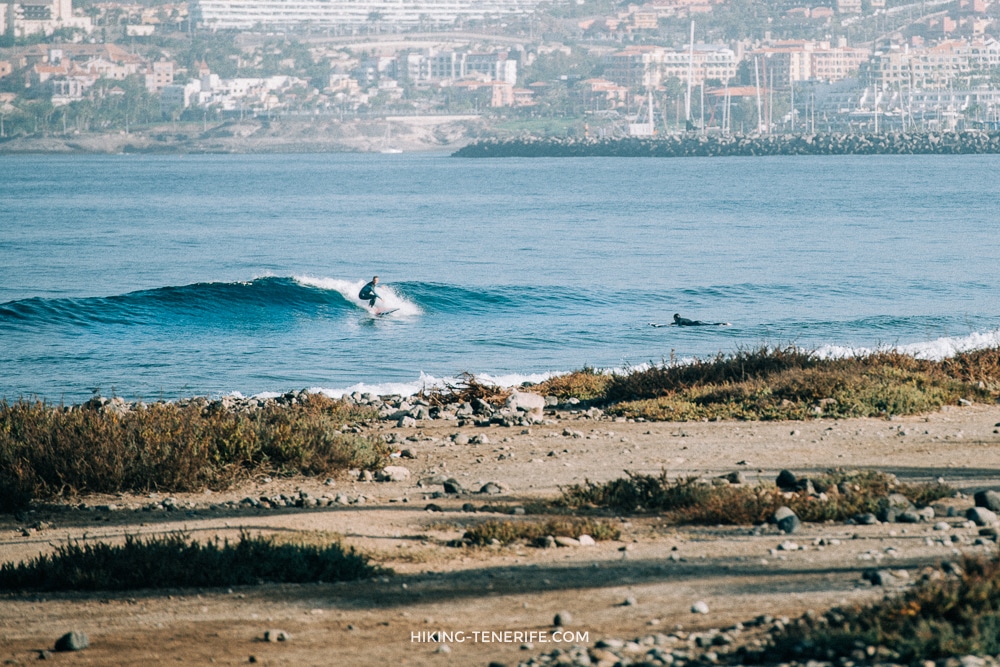
| You are… | Start here | Why |
|---|---|---|
| A complete beginner | Las Americas surf school | Several nearby peaks, instructors, softboards, wetsuits, promenade backup. |
| An improving beginner | Las Americas on smaller days; possibly Las Galletas with guidance | Enough structure without pretending reef is sand. |
| Intermediate | Las Americas, El Socorro, Martianez, selected north/south windows | You can move with conditions and still find food after. |
| Advanced | Spanish Left, Punta Blanca, El Confital, selected Anaga and reef days | Serious waves, serious consequences. |
| A spectator | Las Americas promenade, Puerto de la Cruz/Martianez, El Socorro viewpoint area | You can watch without standing where waves eat tourists. |
| A family | Las Americas lesson plus cafe/promenade, or Puerto de la Cruz if conditions are watchable | Better toilets, food, and exits. |
| No car | Las Americas, school transport, taxi-supported short plans | Carrying boards by public transport is an acquired misery. |
| South based | Las Americas first; Las Galletas or El Medano only with right conditions | Short logistics and more lesson choice. |
| North based | Martianez, El Socorro, Punta del Hidalgo with caution | Good waves, but less beginner forgiveness. |
Local verdict: the right Tenerife surf spot is the one that matches your day. The famous one can wait.
Beginner Lessons
If you are new, take a lesson. This is not because surfing schools are magic. It is because a good instructor chooses the least bad place to fall, keeps you out of someone’s line, gives you the right board, and knows when conditions are no longer cute.
Your first lesson should usually be in Las Americas. Not because every wave there is easy. They are not. It works because schools operate daily when conditions allow, there are softboards and wetsuits, and the promenade makes logistics painless.
Ask what is included before booking: wetsuit, softboard, insurance, instructor ratio, language, transport, meeting point, lesson length, what happens if the sea is unsafe, and whether they actually move or cancel when conditions are wrong.
Plan like this: book the first lesson early in the trip. If the sea cancels it, you still have time to move the session instead of turning the final morning into panic.
- Good sign: the school talks about conditions before selling you a slot.
- Good sign: they explain board control, leash use, entry/exit, and who has priority.
- Good sign: they use softboards for first-timers and keep groups manageable.
- Red flag: exact progress promises. Nobody owes you a clean green wave after 90 minutes.
- Red flag: no clear insurance, no wetsuit discussion, no cancellation/weather policy.
- Red flag: the cheapest offer is the only reason you chose it.
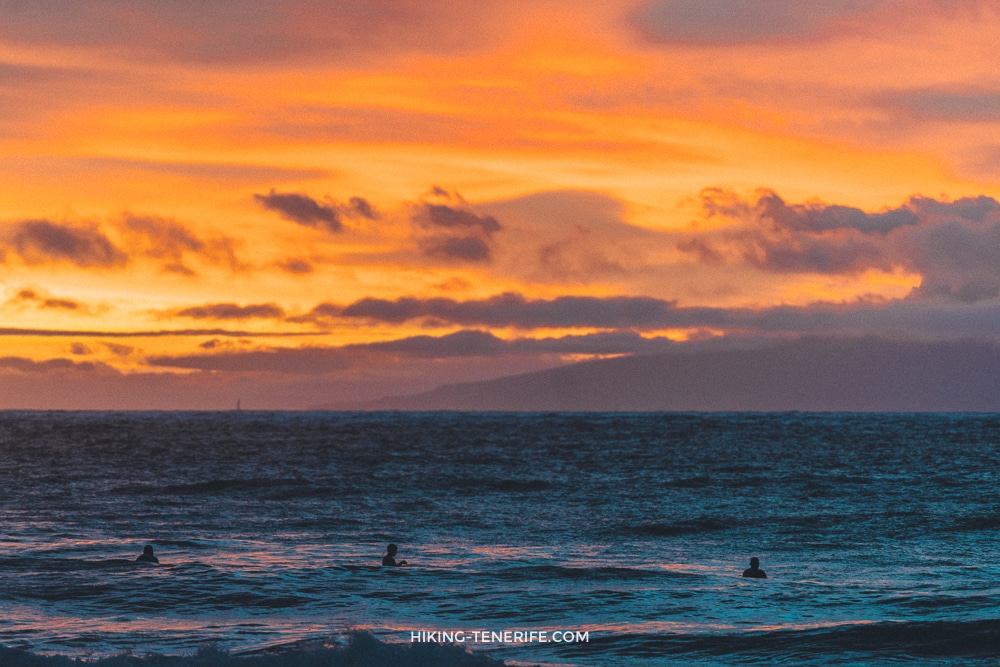
A realistic first lesson is not “I learned to surf.” It is “I understood how hard this is, stood up a few times, swallowed part of the Atlantic, and now respect every surfer I used to casually judge.” That is a good day.
Lesson truth: a good instructor is not there to make you brave. A good instructor is there to stop brave becoming stupid.
Surf Schools And Rentals
I am not listing fixed lesson prices here because prices, availability, languages, and lesson options change. If a guide gives you a perfect price forever, it is probably lying politely.
Book before arrival in busy periods if your dates are fixed, especially around holidays and winter. If you are flexible, ask several schools what conditions they expect and listen for honesty rather than sales music.
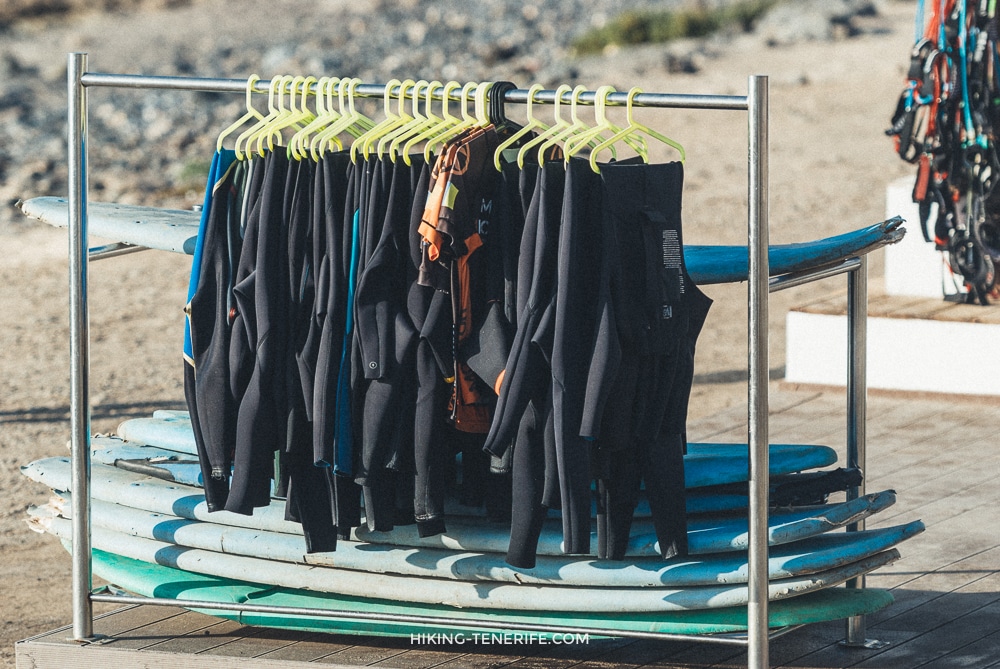
Renting alone makes sense only if you already know how to read conditions, control the board, enter and exit over rocks, and respect the line-up. If you are asking whether you are ready, the answer is probably “take another coached session.”
Common mistake: choosing a surf school only by price. A cheaper lesson is not better if the group is too big, the instructor ignores conditions, or nobody explains the reef entry.

| Ask before booking | Why it matters |
|---|---|
| Where will the lesson run today? | A real school chooses the spot by conditions, not by brochure. |
| How many students per instructor? | Crowded groups become chaos quickly. |
| Is equipment included? | Wetsuit, board, leash, and sometimes booties matter. |
| Is insurance included? | You are entering the ocean with a large floating object. |
| What language does the instructor speak? | Safety instructions are not a vocabulary test. |
| What if conditions are unsafe? | Cancellation is a safety feature, not bad service. |
| Can you transport students? | Useful for no-car visitors and north/south changes. |
Playa De Las Americas Surf Zone
Las Americas is the practical heart of visitor surfing in Tenerife. It is also reefy, crowded, and not as soft as its hotel geography suggests. The main surf zone sits around the promenade near McDonald’s and the old Benetton reference point, with several named peaks packed close together.
The important names are El Medio, La Izquierda or Spanish Left, Derecha del Cartel, El Conquistador, La Fitenia, and nearby peaks sometimes labelled slightly differently by schools and locals. Arona has also been adding surf-zone information signs around La Izquierda, El Medio, La Derecha, El Dedo, and Fitenia with maps, wave notes, tide QR information, emergency contacts, and etiquette rules.
That signage is useful because this coast needs explanation. One small area can hold beginners, schools, intermediates, advanced surfers, bodyboarders, spectators, rocks, reef, wind changes, and people who believe a GoPro makes them immortal. It does not.
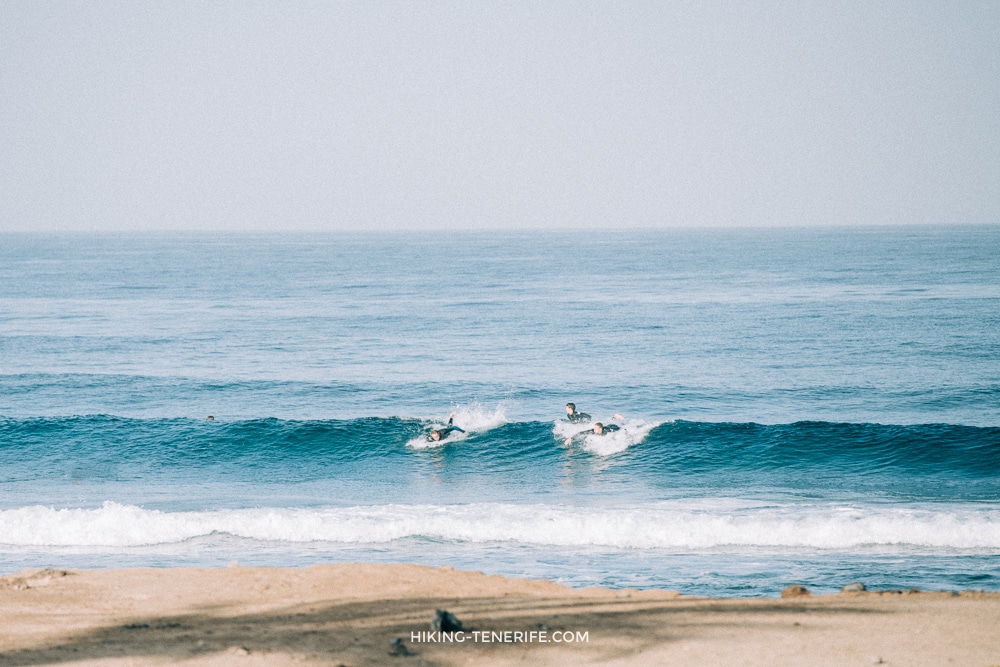
Local verdict: Las Americas is convenient. Convenient does not mean gentle.
El Medio
El Medio is the classic lesson and beginner meeting point in Las Americas. On many small-to-medium days it is where schools bring students. That is both the advantage and the problem.
From around mid-morning, it can become a softboard traffic system. If you already surf, early morning or sunset can be calmer. If you are a beginner, this crowd is exactly why an instructor matters.
The bottom is reef and rock, not forgiving sand. Entry and exit can be slippery. Low tide can expose the ugly parts. Reef booties are not glamorous, but glamour is less useful than skin.
La Izquierda, Spanish Left
La Izquierda is the famous left. It can give long, fast rides and proper power. It is also one of the places where a beginner should stand on the promenade and enjoy the show with a coffee.
Crowds and localism can be real. The wave is not there for your first heroic turn. If you are not sure whether you belong, assume you do not belong yet. This is not rude. It is efficient.

Derecha Del Cartel
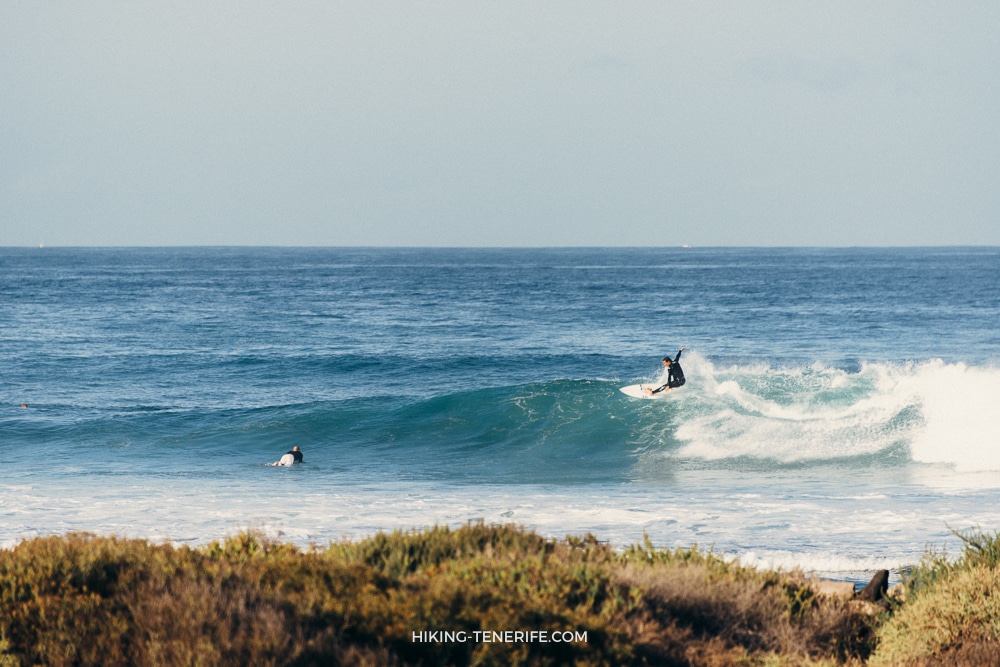
Derecha del Cartel is the right-hand wave near the famous Las Americas surf area. In the right conditions it can produce good barrels and longer rides than many visitors expect from the resort coast.
It is still reef. It still needs ability. It is friendlier in atmosphere than some peaks at times, but that does not turn it into a beginner beach.
El Conquistador And La Fitenia
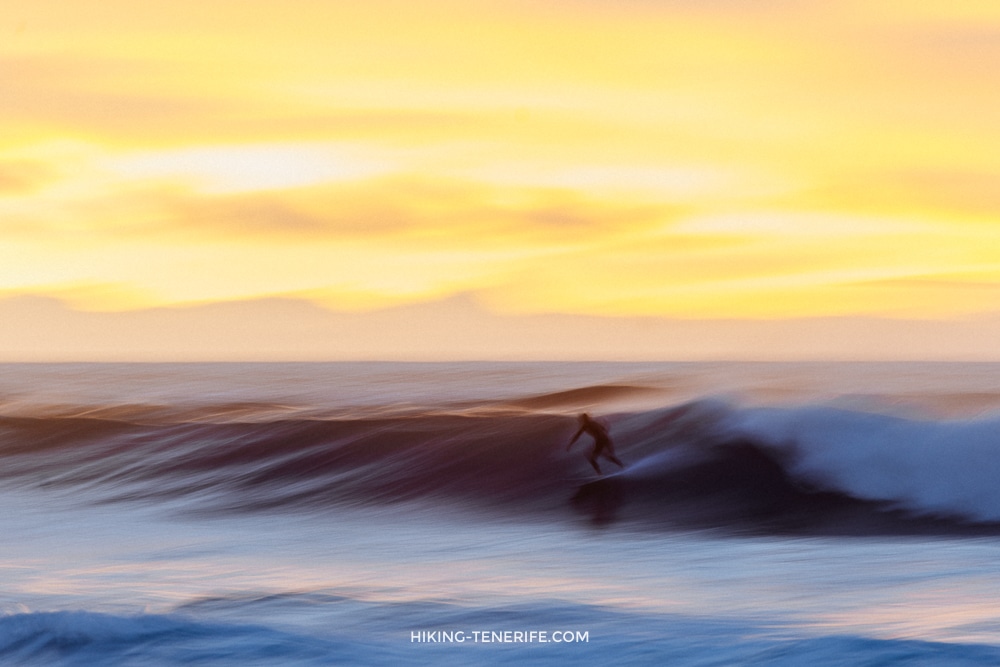
El Conquistador sits near the hotel zone and can look more approachable, especially when smaller. It can also get busy because everyone else has eyes. The left often works better, and south swells can wake it up.
La Fitenia is another popular Las Americas option, especially when other waves are not working. Rights often shine, crowds appear quickly, and the local mood depends on whether everyone behaves like adults. A rare condition, but beautiful when it happens.
If you are staying nearby, the Los Cristianos guide helps with easy food, walking, and no-car base logic around the surf zone.
North Coast Surf Spots
The north coast is the reason many surfers take Tenerife seriously beyond Las Americas. It is greener, stronger, moodier, and less convenient. In winter it can be excellent. It can also be too big, too messy, or too unforgiving for visitors who only brought enthusiasm.
Do not use north-coast beauty as a safety signal. Some of the best-looking beaches are bad places to learn. If a beach has cliffs, strong shorebreak, currents, and no obvious beginner zone, it is giving you information.
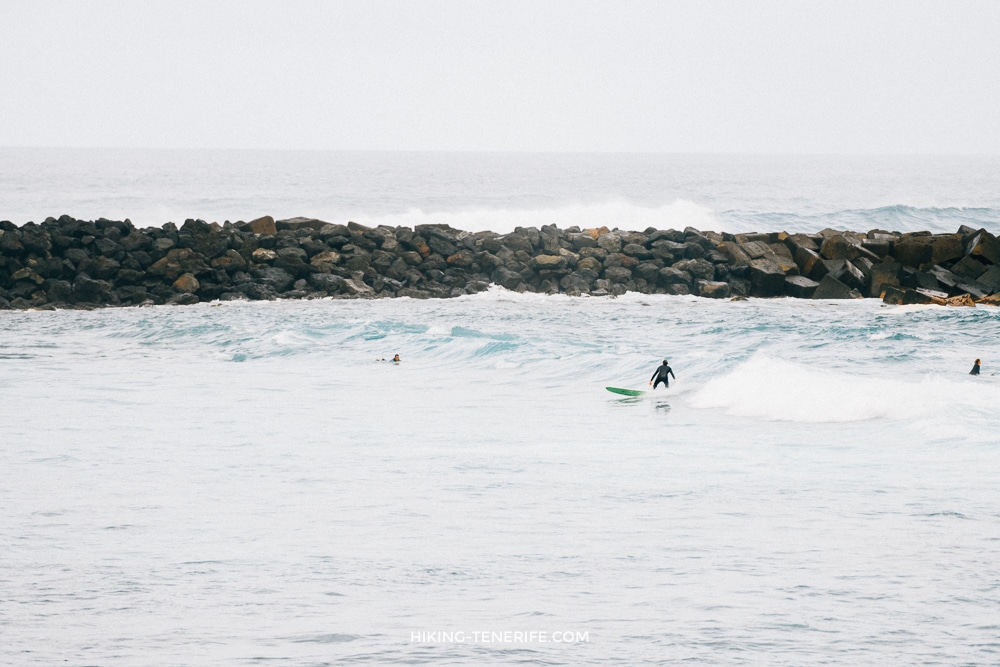
Local verdict: the north is where Tenerife gets serious. That is the appeal. It is also the warning.
Martianez And Puerto De La Cruz
Martianez in Puerto de la Cruz can be a useful urban north option, especially when large northern swell wraps into the bay and makes softer whitewater-style practice possible. Schools sometimes use it, and the setting is easy for spectators.
The beach is not a perfect sandy training pool. There are rocks, wind, changing conditions, and days when it simply does not work. Puerto is good for watching, coffee, and combining surf interest with a north-town day. It is less good for pretending the ocean is predictable.
For a broader town day, combine this with my Puerto de la Cruz guide.
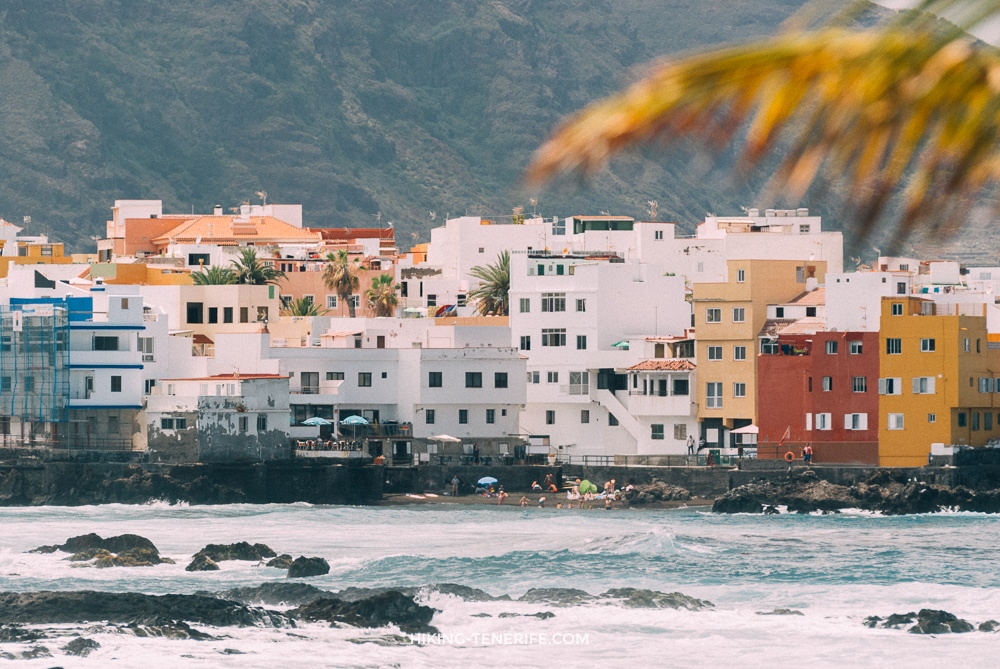
El Socorro
El Socorro near Los Realejos is one of the island’s most beautiful and respected surf beaches. It is a proper north-facing Atlantic spot. In summer it can be more manageable. In winter it can become powerful, chaotic, and not remotely beginner-friendly.
The wave can hold size, currents can be strong, and paddling can become the day’s main activity. There are events here for a reason. There are also days when the best plan is to watch from land and keep your lunch dry.
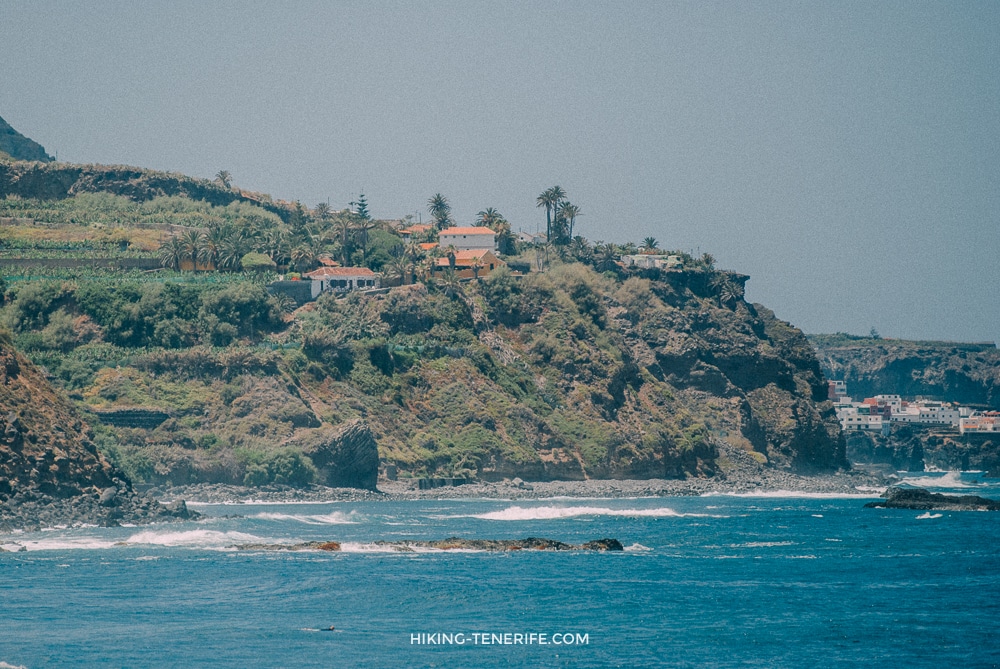
Parking can fill early on good days. Families can enjoy the view, but swimming and playing near shorebreak must follow flags and local conditions. A lifeguard tower does not mean “do whatever you wanted anyway.”
Safety rule: at El Socorro, watch several sets before walking close to the water. The beach can look friendly between waves and change its mind fast.
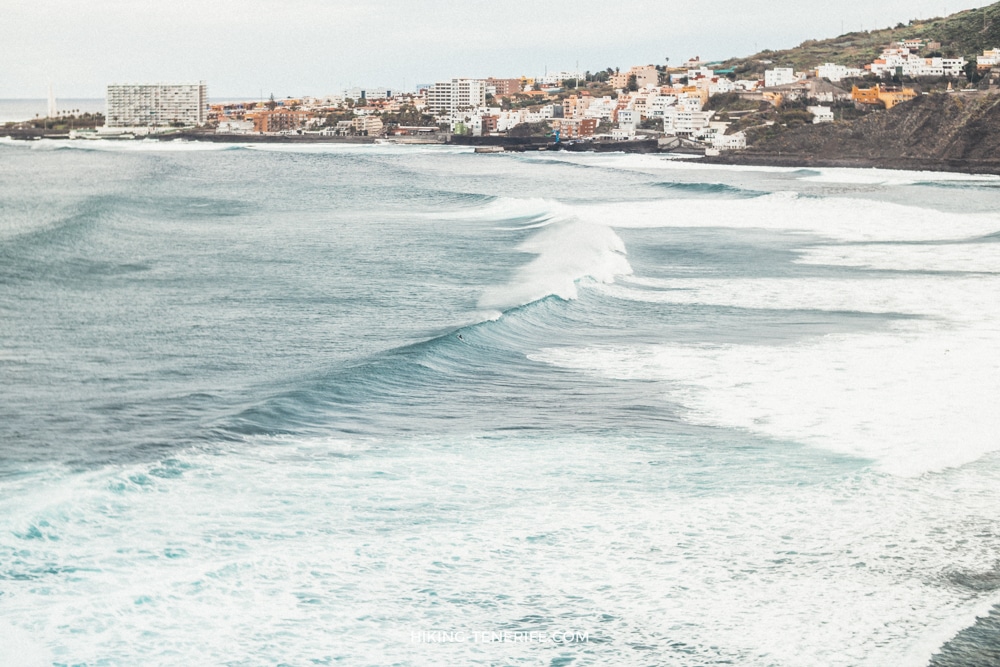
Bajamar And Punta Del Hidalgo
Bajamar and Punta del Hidalgo have several surf options, and most are not beginner material. The coast is dramatic and local. It feels very different from Las Americas, which is exactly the point.
El Callado is often mentioned as one of the gentler options because the bay receives less direct energy, but “gentler” here does not mean “first-day holiday wave.” Access, tides, rocks, and changing swell still matter.
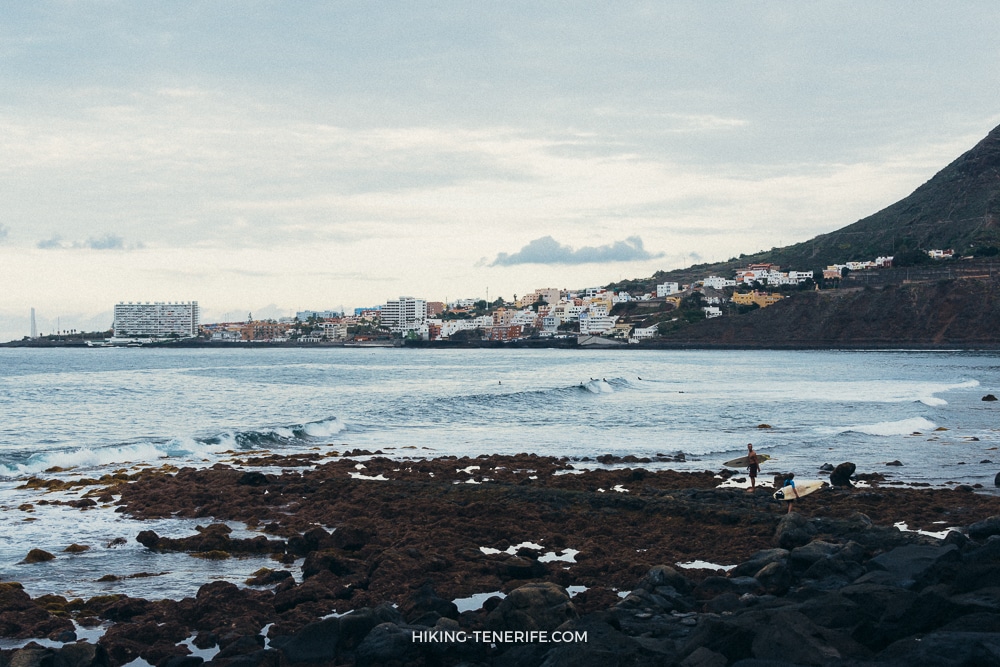
Taganana, Almaciga And The Anaga Coast
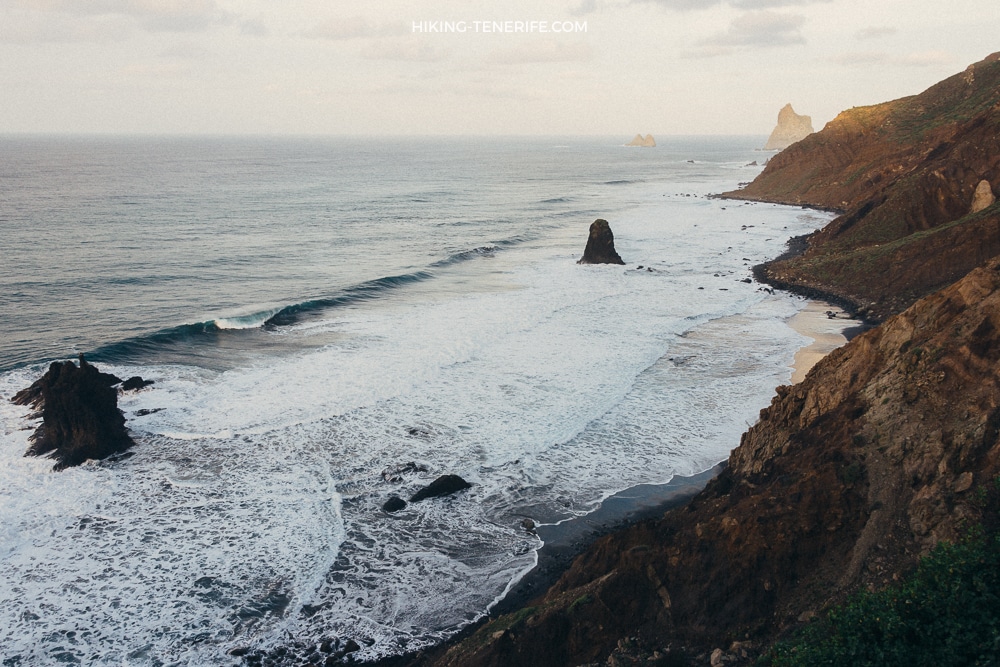
Taganana, Almaciga, Benijo, and the Anaga coast look like someone designed a surf poster after three coffees. Mountains, black sand, wild water, and that cinematic feeling that makes people underestimate consequences.
Surf schools may bring students here by bus on suitable days, but that does not make Anaga an easy beginner zone. Shorebreak, current, raw ocean energy, seasonal lifeguard coverage, limited facilities, and a long drive all matter.

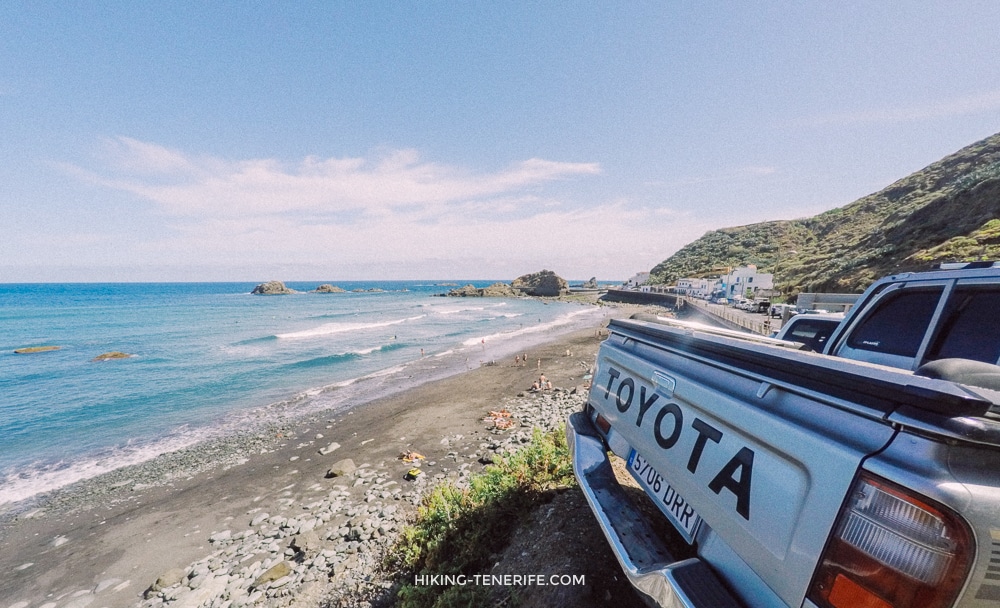
Anaga is also protected landscape and living coastline, not a disposable playground. Stay on paths, respect signs, do not trample dunes or vegetation, and do not treat remote beaches as private property just because you brought a rental car and a towel.
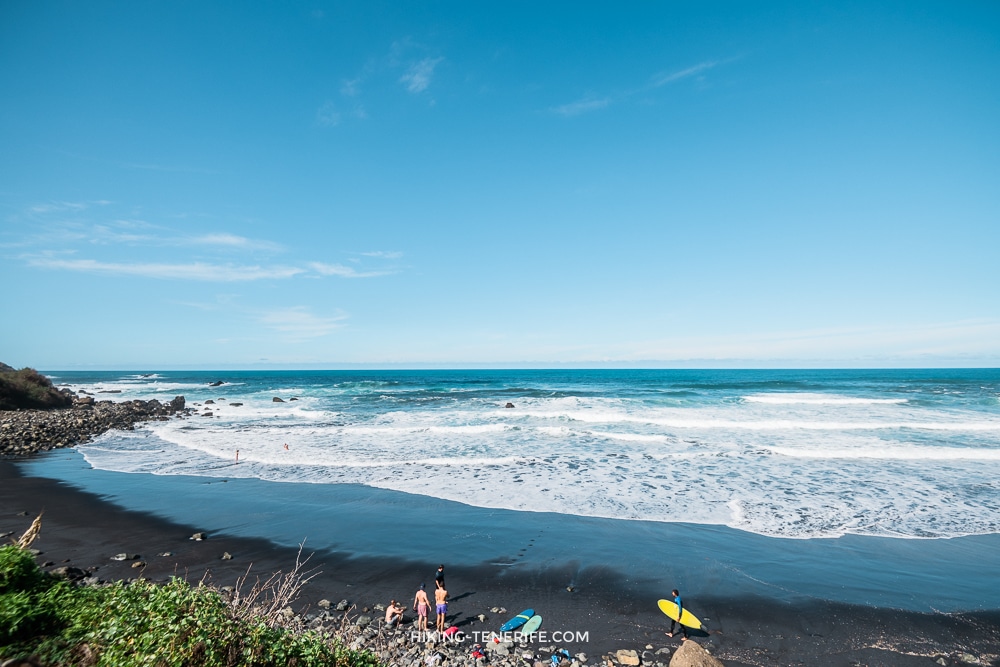
The best Anaga surf plan for many visitors is a guided or school-led trip on a suitable day, or simply a scenic north-coast route where surfing becomes something you watch and respect. No shame. Dry clothes are underrated.

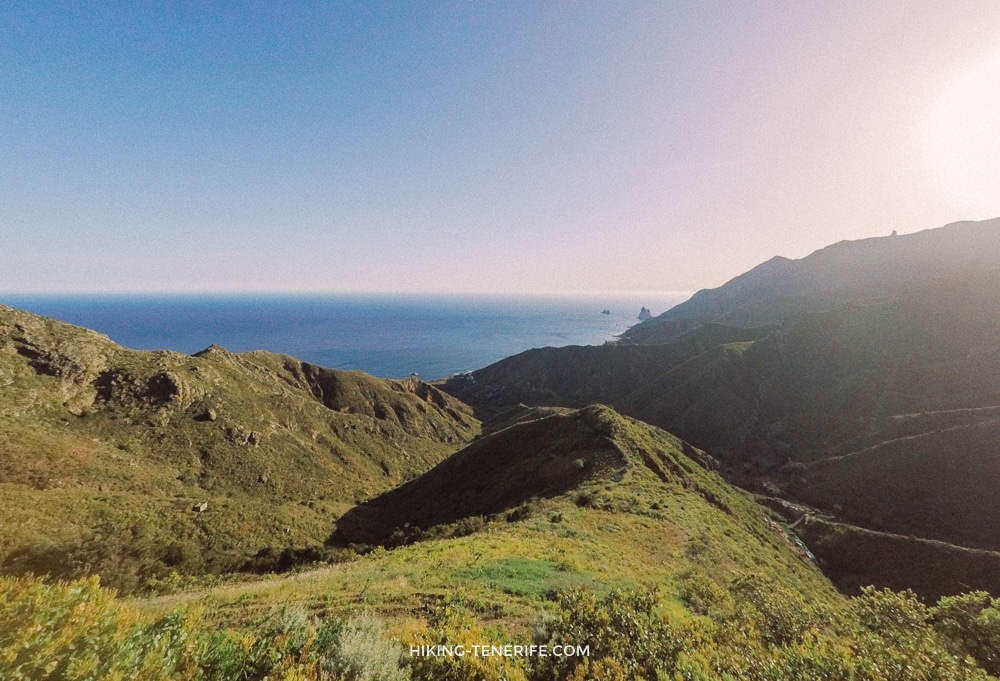
Map note: Anaga looks small on the map, but the road, weather, shorebreak, and parking make it a real day. Do not add it as a casual after-lunch surf detour.
South And West Spots
Away from the Las Americas lesson belt, the south and west have waves that can work very well in specific swell windows. They are also easier to misunderstand because they may sit near tourist areas, ports, or pretty beaches.
Pretty does not mean easy. Quiet does not mean safe. Empty sometimes means everyone sensible went somewhere else.
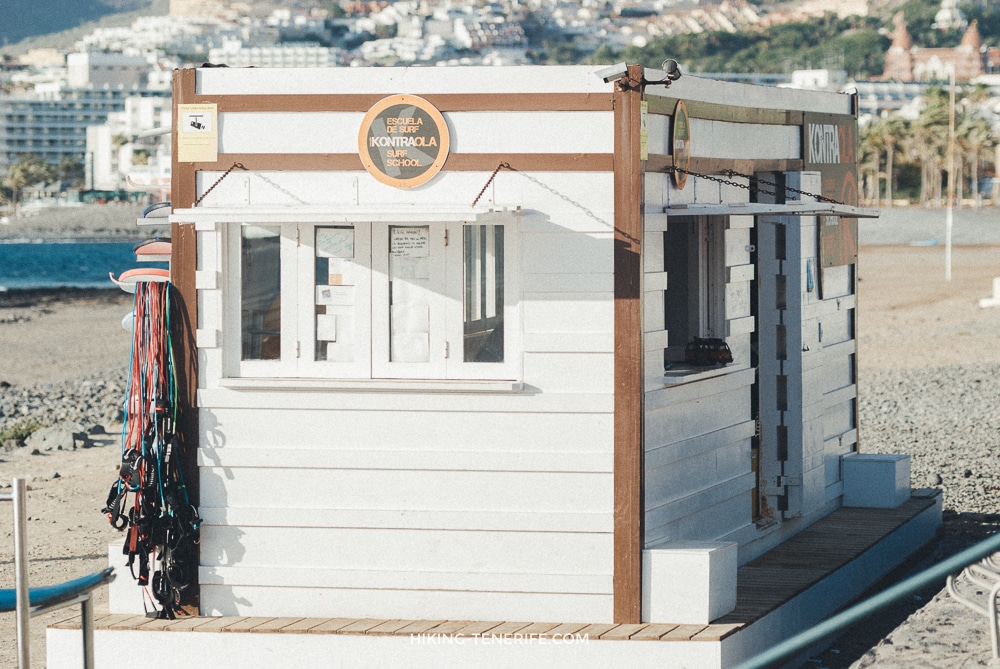
Las Galletas
Las Galletas can be softer than the famous reefs and may suit improving surfers or longboard/bodyboard moods in the right south swell. It is still rocky. Entry and exit need attention, and crowds can appear when other south waves are quiet.
This is the kind of place where local guidance helps. If you are a beginner, ask a school. If you are intermediate, check tide, swell, and where people are actually entering before copying the wrong person.
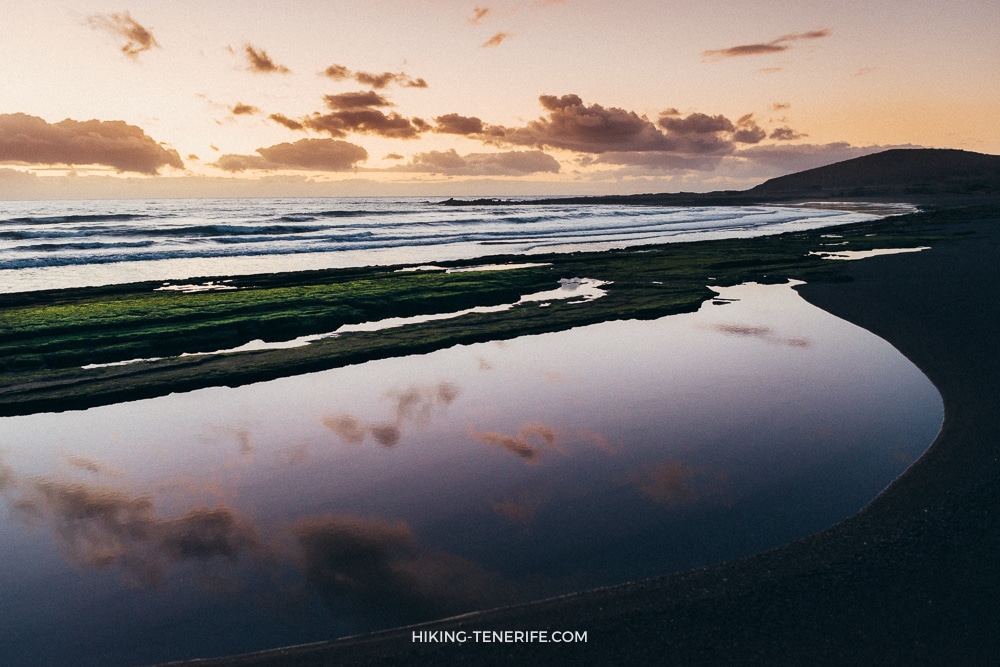
El Confital, La Tejita And El Medano
El Confital near the south airport and Montaña Roja can produce fast, serious waves with south swell and the right wind. It is not a casual holiday recommendation. Experienced surfers and bodyboarders may know when to look. Beginners should keep walking.

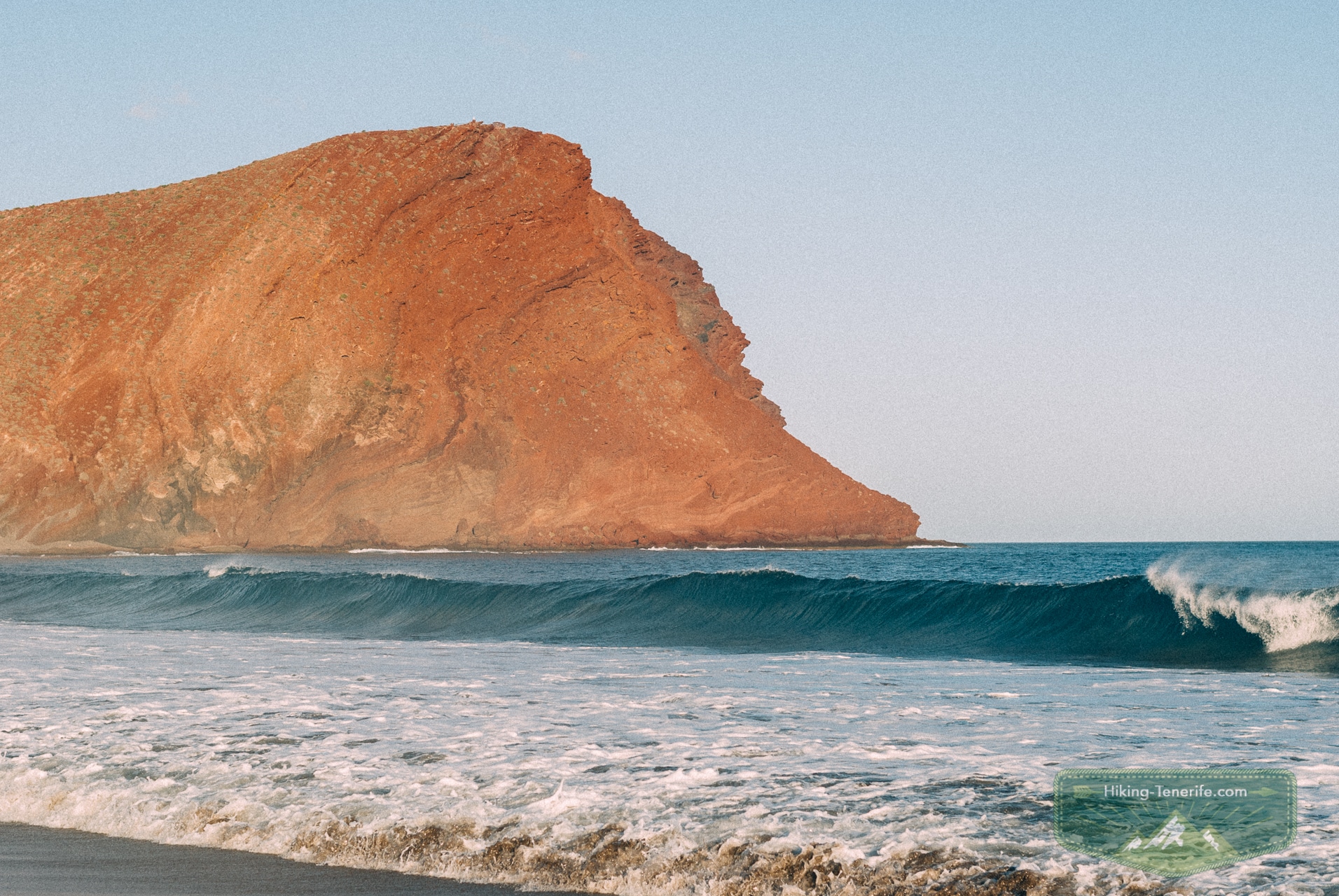
La Tejita and El Medano belong more to the wind-sports chapter of Tenerife. You can sometimes get regular surf, and El Medano can be useful for first soft-board feelings because the bottom is easier than reef. But wind waves can teach strange habits: you walk more than you paddle, and suddenly you think you surf. Beautiful illusion. Short-lived.
If your day is really about La Tejita, Montaña Roja, or kites in the sky, use the El Medano guide and the El Medano winter weather guide instead of forcing this surf article to do two jobs.
Local verdict: El Medano is not a bad place. It is a different question.
Punta Blanca And Las Conchas
Punta Blanca, sometimes tied to the K16 area between Alcala and Los Gigantes, is expert water. Fast, shallow, powerful, reefy, and often bodyboard-heavy. It is a place for people who already know why they are there.
Las Conchas and other west-coast reef waves also sit in the experienced-surfer category. They can be excellent. They can also be fast, barreling, and punishing. This is not a “maybe I will try surfing today” landscape.
Safety And Etiquette
Surf safety in Tenerife starts before you touch the water. Check swell size, period, direction, tide, wind, beach flags, local signs, and whether anyone of your level is actually surfing. If only strong locals are out, that is not your invitation card.
Use a leash. Control your board. Do not ditch it into people. Do not paddle straight through the take-off zone. Do not drop in. Do not snake. If you do not know these words, take a lesson before entering a crowded peak.
Reef and rocks are the main Tenerife tax. Shorebreak and currents are the second tax. Sun, wind chill, theft from cars, parking stress, and crowds are the small print.
- Never surf alone as a beginner.
- Do not enter during red flags, coastal alerts, or clearly dangerous conditions.
- Avoid piers, breakwaters, and natural pools during strong swell.
- Watch the entry and exit for several sets before going in.
- Respect locals and instructors managing groups.
- Keep clear of swimmers, children, and bodyboarders.
- Do not leave valuables visible in the car.
- Protect volcanic coast, dunes, protected vegetation, and access paths.
The most useful safety habit is boring: if in doubt, do not go out. Tenerife has cafes, viewpoints, old towns, hikes, and beaches. The island offers many ways to enjoy a bad surf day without becoming a rescue statistic.
If the sea is wrong, use the day for the best beaches in Tenerife that fit walking, photos, or safer swimming instead of forcing a surf session.
Families And Spectators
Surfing is easier to add to a family trip when the non-surfers get a nice day too. That usually means promenades, toilets, cafes, shade options, safe viewing points, and a beach where everyone can retreat without negotiating with a cliff.
Las Americas works well for this. One person takes a lesson, others watch from the promenade, drink coffee, walk towards Los Cristianos or Costa Adeje, and pretend they are not filming every fall. Families are supportive like that.

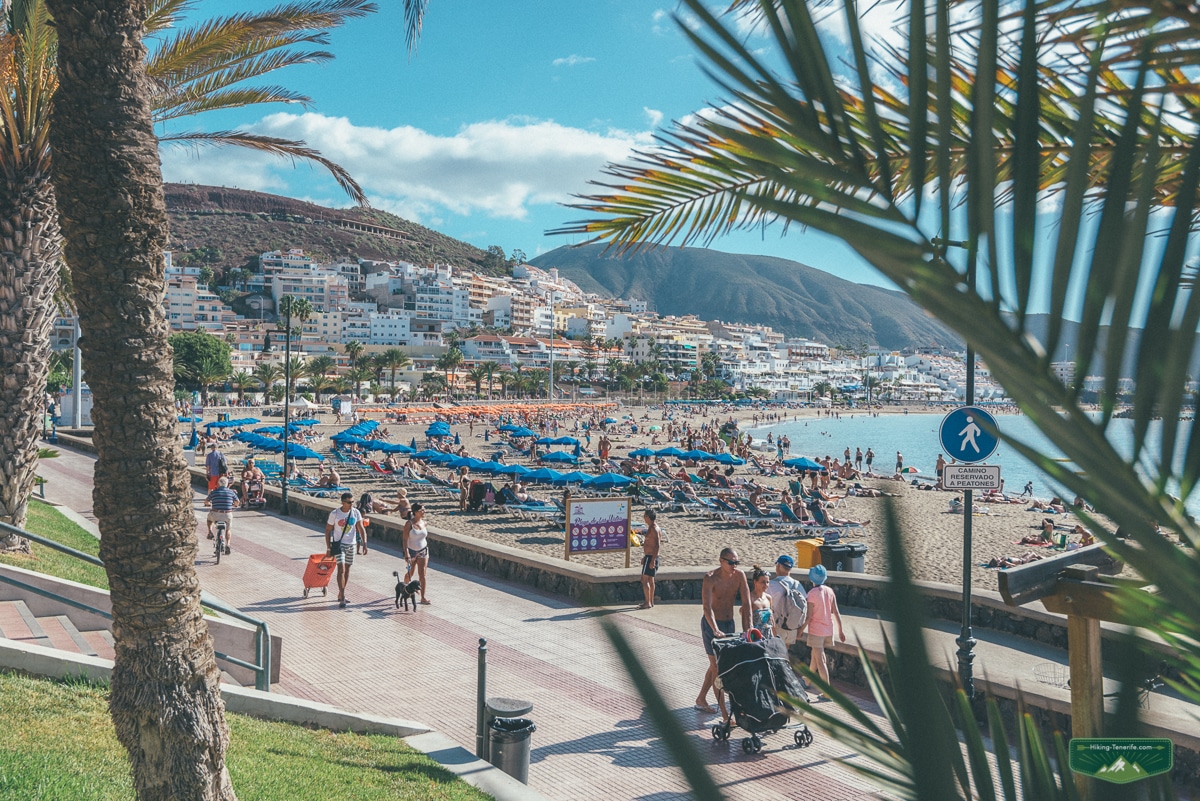
Puerto de la Cruz and Martianez can also be good spectator territory when conditions are manageable. El Socorro is beautiful for watching from a safe place, but families must respect shorebreak and flags. Anaga beaches are scenic, but they are not family convenience machines.
With teens, a first lesson can be a memorable holiday day. With small children, make surf a short watchable stop, not the foundation of the itinerary. Nobody enjoys a two-hour lecture about swell period while holding a sandy toddler.
For a wider family plan, use this with my Tenerife with kids guide. Surf is easier when the rest of the day still works.
Family rule: the best surf spot is sometimes the one with coffee, toilets, and an easy exit.
Surfing Without A Car
Without a car, Las Americas is the easiest surf choice. You can stay in or near Los Cristianos, Las Americas, Costa Adeje, or nearby south resorts and reach schools by walking, taxi, or short bus/taxi combinations.
The north is harder without a car, especially if you are carrying equipment. Public transport can work for town access, but a surfboard changes the whole mood. School transport is often simpler for beginners and no-car visitors.
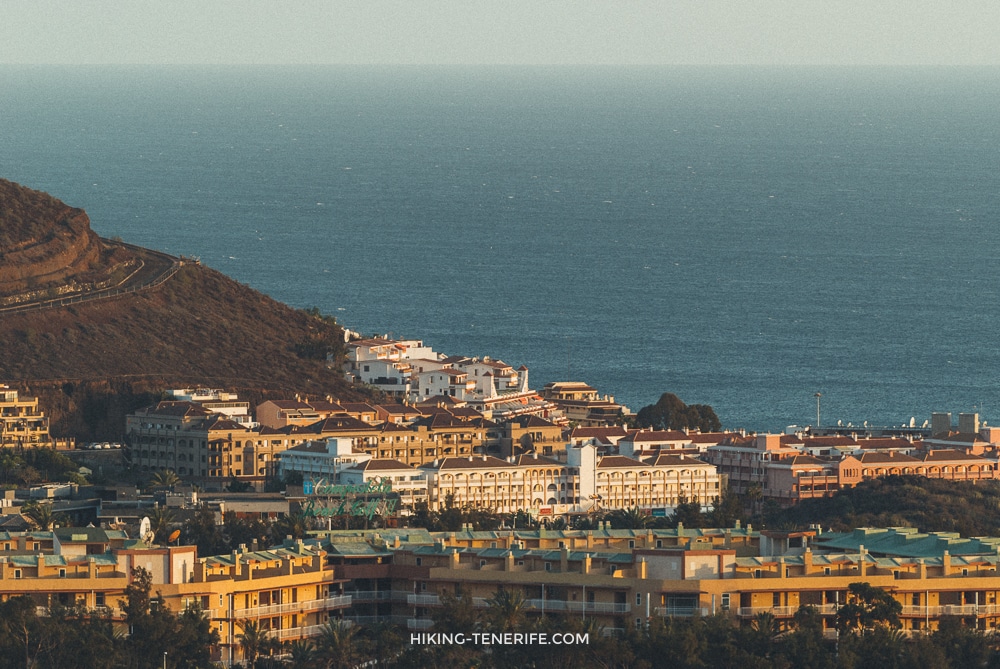
Puerto de la Cruz is a reasonable no-car base if your trip is more north-town travel plus surf watching or occasional coached sessions. El Socorro, Anaga, Punta del Hidalgo, and scattered reef spots are much easier with a car, a school van, or a local who knows the day.
If your Tenerife trip is no-car by design, read this together with where to stay in Tenerife and the north or south Tenerife guide. Surf logistics should influence your base if lessons matter.
Map note: Las Americas and Los Cristianos look like one easy zone because they almost are. The north coast is different. Without a car, school transport can save the day.
North Vs South
South Tenerife is easier for visitor surfing because of Las Americas. You get more schools, more rentals, more accommodation, more transport, and more places where non-surfers can still have a pleasant day.
North Tenerife is more interesting for scenery, power, and local surf culture, but less forgiving. Weather can be cloudier, the ocean can be stronger, and beginner-friendly days are more selective.
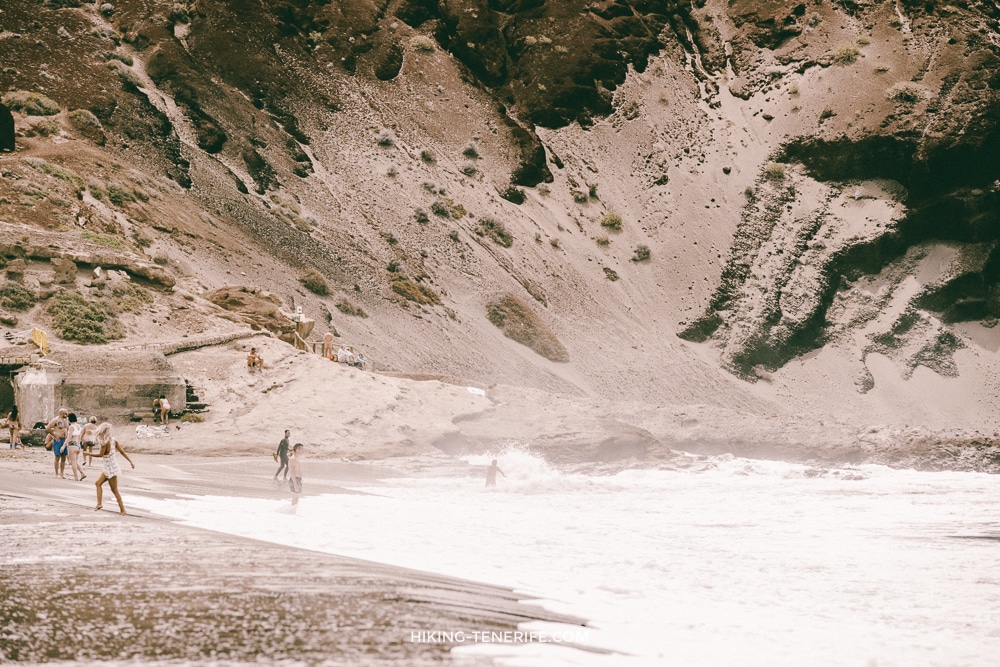
If your holiday priority is one or two beginner lessons, stay south. If you already surf and want to explore, the north deserves time. If your group includes non-surfers, build in fallback plans: Puerto de la Cruz, La Laguna, Anaga viewpoints, beach walks, or food stops.
For broader base decisions, use the South Tenerife guide, North Tenerife guide, and things to do in Tenerife.
Local verdict: stay south for easy first lessons. Add the north only when you want wilder scenery, stronger waves, and more planning.
Common Mistakes
Most surfing mistakes in Tenerife are not original. This is comforting, unless you are currently making one.
- Choosing Tenerife for easy tropical waves. It is Atlantic, volcanic, and often reefy.
- Going alone as a beginner. Take a lesson. The ocean is not impressed by YouTube research.
- Ignoring reef and rocks. Many south spots are not sandy beach breaks.
- Confusing surf forecast with beach weather. Sunshine and clean waves are different departments.
- Choosing a school only by price. The cheapest lesson can become expensive in new and creative ways.
- Surfing during unsafe flags or coastal alerts. This is not adventurous. It is paperwork for someone else.
- Underestimating winter swell. Winter is often the best season and the least forgiving one.
- Treating protected coast casually. Stay on paths, respect signs, and leave the coastline better than your parking skills.
A less obvious mistake is planning surf as if every day must include it. Tenerife rewards flexible travelers. If the ocean is wrong, go hiking, eat well, watch waves from a safe place, or explore the island. You can still have a better day than the person forcing a session into bad conditions.
Common mistake: treating a beautiful beach as proof that surfing there is a good idea. Tenerife is very good at making bad ideas photogenic.
Practical Mini-Plans
Here are realistic surfing plans that do not pretend the island is a private training resort.
| Plan | How to do it |
|---|---|
| First surf lesson day | Stay south, book Las Americas, meet early, take the lesson, eat nearby, and do not schedule Teide after swallowing half the Atlantic. |
| Three-day beginner plan | Day 1 lesson. Day 2 rest/watch/short coached practice if conditions are good. Day 3 second lesson or easy surf trip with the school. |
| Intermediate surf trip | Base south or split north/south, check forecast daily, keep Las Americas for convenience, use north windows only when suitable. |
| Family/spectator half-day | Las Americas lesson plus promenade, cafe, beach walk, and a backup plan for wind or crowds. |
| No-car surf plan | Book a school that meets near your base or provides transport. Do not design the day around carrying a board by bus. |
| Bad-weather fallback | Puerto de la Cruz, La Laguna, Anaga viewpoints, south-coast food, or the free map for a route that keeps everyone dry. |
Better fallback: if the waves are wrong, do not waste the day waiting on the promenade. Use my Discover Teide Volcano Magic guide for a calm volcano route with timing, stops, and fewer silly detours.

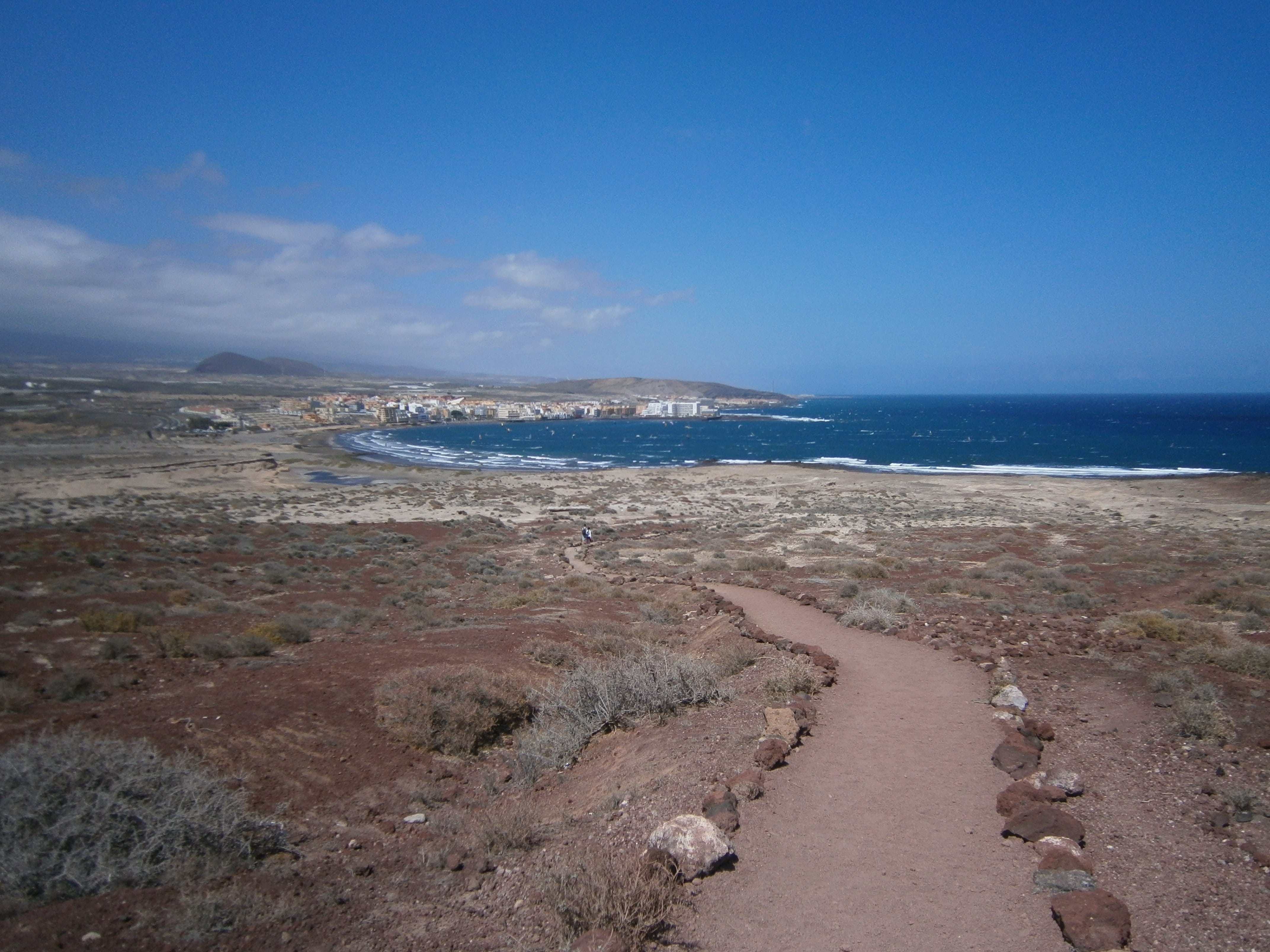
For a handcrafted Tenerife route, I would build surf around season, swell, your base, and whether anyone in your group needs cafes, easy parking, or a non-surf escape route. Surfing is more fun when the rest of the day still works.
Planning rule: if the ocean says no, Tenerife still has Teide, old towns, beaches, food, and viewpoints. Do not let one forecast own the whole day.
FAQ
Is Tenerife good for surfing?
Yes. Tenerife is good for surfing if you match the spot to your level. It is especially useful for beginners taking lessons in Las Americas, intermediates who can move with conditions, and advanced surfers who respect reef and local line-ups.
What is the best place for beginner surfing in Tenerife?
For most visitors, Playa de Las Americas is the best beginner choice because schools, softboards, wetsuits, rentals, cafes, transport, and several surf peaks sit close together. The wave choice should still be made by an instructor.
When is the best season for surfing in Tenerife?
Autumn and winter are usually best for consistent swell, especially around Las Americas and the Atlantic-facing coasts. Shoulder seasons can be very good. Summer is possible but less reliable and more spot-specific.
Can complete beginners surf in Tenerife?
Yes, but complete beginners should take a lesson and avoid going alone. Many Tenerife spots have reef, rocks, current, or shorebreak. A school makes the first session safer and less embarrassing in the productive way.
Is Las Americas good for surfing?
Yes, Las Americas is the practical surf hub for visitors. It has several named peaks, many schools, and easy logistics. It is also reefy and crowded, so beginners should not treat the whole area as a soft beach break.
Is El Socorro good for beginners?
Sometimes, with the right conditions and guidance, but it is not my default beginner recommendation. El Socorro is a powerful north-coast beach that can be beautiful, strong, and chaotic, especially in winter swell.
Can you surf in El Medano?
You can on some days, but El Medano is much more famous for kitesurfing and windsurfing. For regular board surfing, Las Americas is usually the better visitor choice. El Medano can be useful for very first soft-board feelings in the right conditions.
Do I need a wetsuit for surfing in Tenerife?
Usually yes, especially for lessons, winter, windy days, or longer sessions. Water is mild by European standards, but comfort matters when you are repeatedly falling, paddling, and waiting between sets.
Should I rent a surfboard or book a school?
Book a school if you are a beginner or unsure about spot choice. Rent only if you can read conditions, control the board, enter and exit safely, and understand line-up etiquette.
Can I surf in Tenerife without a car?
Yes, especially in Las Americas. For north-coast spots, Anaga, and mixed-island surf trips, a car or school transport makes life much easier. Carrying surfboards on public transport is not the holiday romance people imagine.
Where can non-surfers watch surfing in Tenerife?
Las Americas promenade is the easiest. Puerto de la Cruz and Martianez can work well, and El Socorro is beautiful from safe viewing areas. Avoid standing on rocks, piers, or natural pools during swell.
Is surfing in Tenerife safe?
It can be safe when you choose suitable conditions, use a school if needed, follow flags and local signs, respect reef and rocks, and stay out during coastal alerts. It is not safe if you ignore conditions because the water looks pretty.


