

Yes, you can see a lunar eclipse in Tenerife. For the next one visible from the island, on 28 August 2026, the Moon is high enough for a proper night watch before it drops toward the western horizon.
Teide can be brilliant for it, but it is not automatically the best answer. The best answer is the place with clear sky, a legal place to stop, a sensible return drive, and enough warm layers to stop pretending Tenerife is only beach weather.
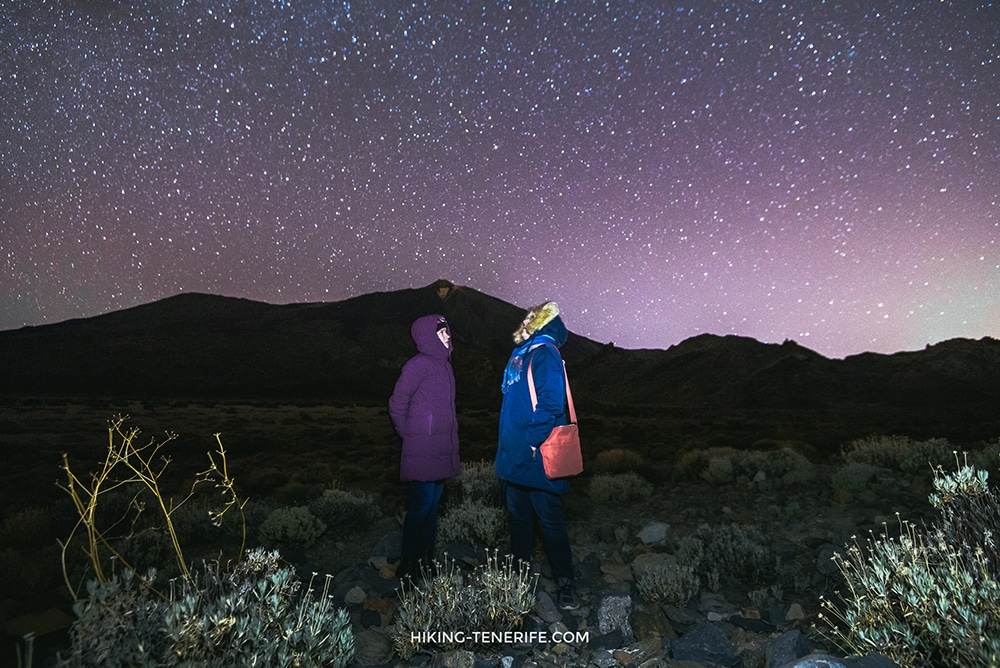
I learned that during one real lunar eclipse night under mountain Teide. We expected a quiet photo stop. We found traffic, full viewpoints, tourist buses, a bright Orotava Valley and, somehow, an even better reason to look up.

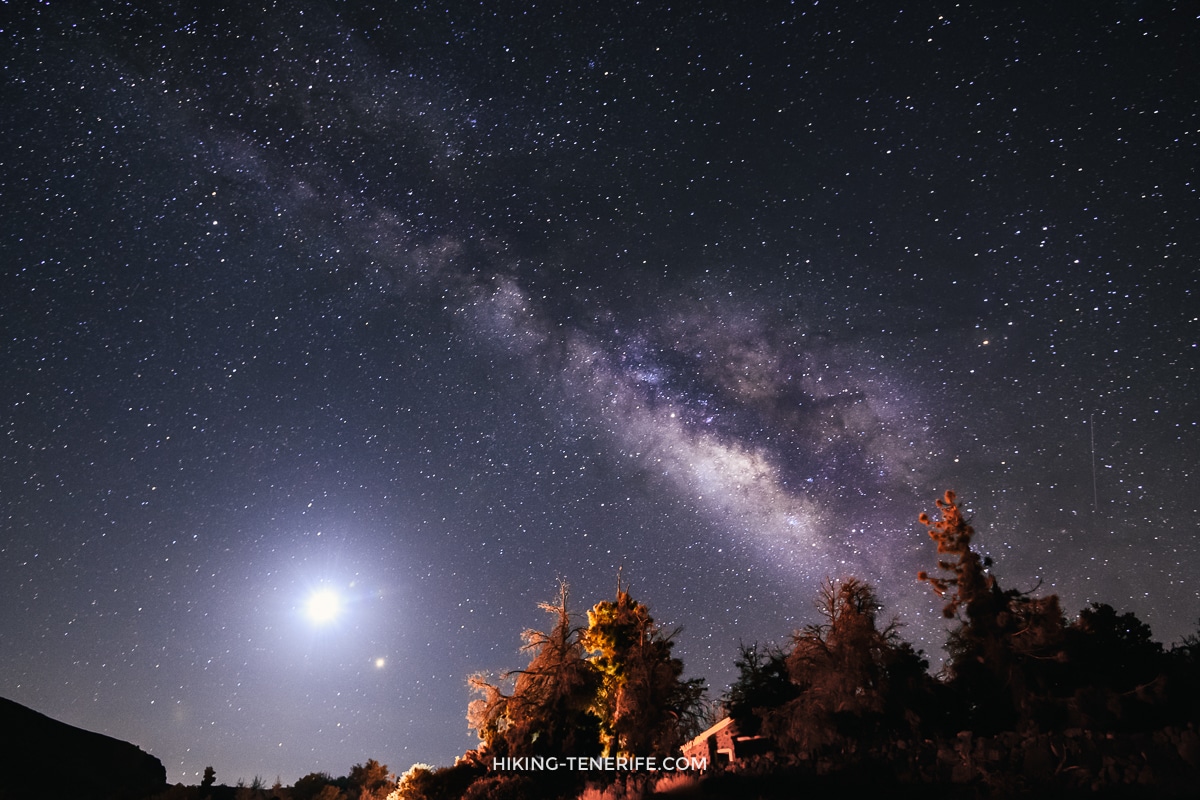
Lunar eclipse Tenerife: quick answer
For the 28 August 2026 partial lunar eclipse, Tenerife has a good viewing window: the partial phase starts at 03:33, maximum is at 05:12, and the partial phase ends at 06:51 local time. The Moon sets at 07:50, so do not build your plan around the faint final penumbral stage.
For a big Moon event, I would choose a legal, signed viewpoint in or near Las Canadas only if the mountain forecast, road status and driver all look good. A south-coast balcony can still be the smarter choice when clouds, wind, kids, tiredness, or no-car logistics make Teide a bad bet.
My short answer: Teide is worth it for the atmosphere and wider sky, not because a lunar eclipse needs high altitude. The Moon will be visible from much of Tenerife. The mountain only wins when you can get there and back calmly.
- Best Teide version: a legal pull-off or signed mirador with a clear southern-to-western view, warm clothes and no rush home.
- Best coast version: a quiet south-facing or west-facing open view when the mountains are cloudy or the group is not mountain-ready.
- Not a solar eclipse: you do not need eclipse glasses to look at a lunar eclipse.
- Do not promise a blood moon: the 2026 event is partial, not total.
One real night under Teide
One evening in July 2018, we were in the mountains near La Esperanza. Like everyone else, we had heard the noise: social media, newspapers and television were all shouting about a rare lunar eclipse.
We thought we would pop up to Teide, take a few night photos, and have the usual silence to ourselves. That was a sweet little fantasy.
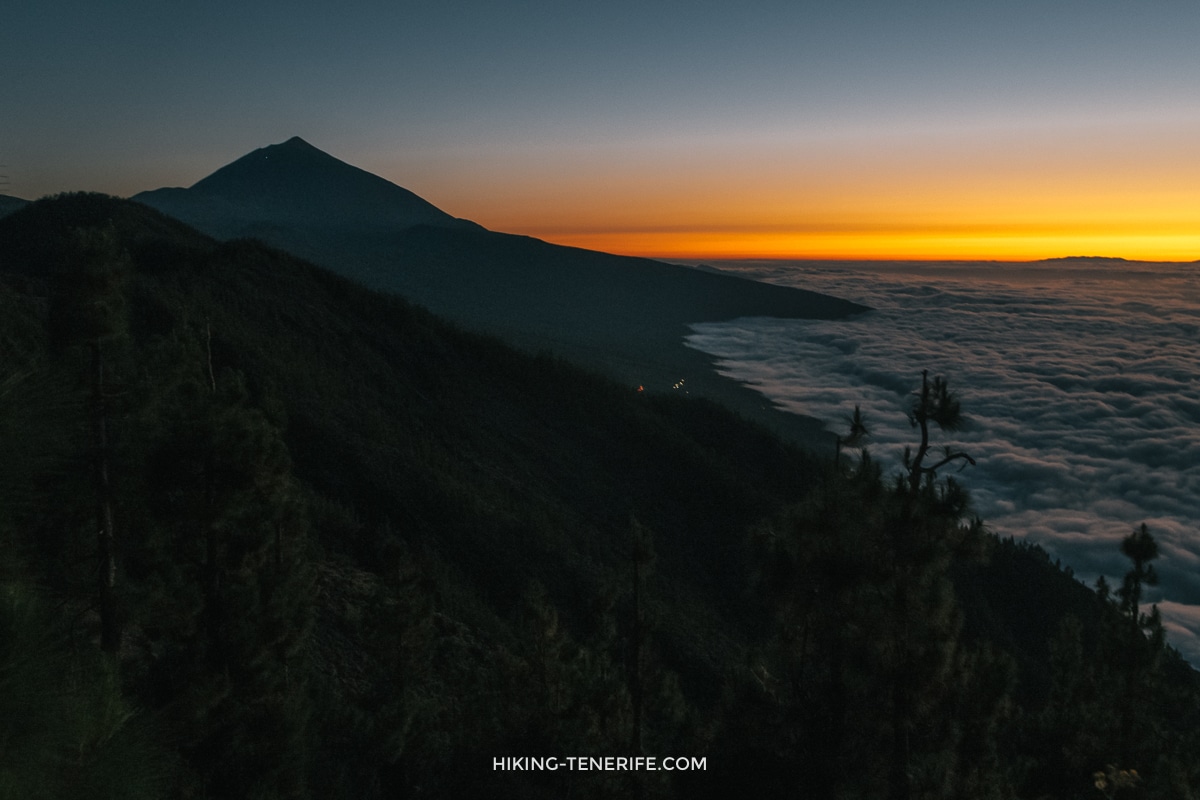
People came in numbers I did not expect. Local cars, rental cars, buses. The national park road turned into a slow line of headlights because everyone wanted the best point for the eclipse.
Viewpoints and shoulders filled up. The sensible lesson is boring but useful: a famous sky event does not make a narrow mountain road wider, and it does not create extra parking.
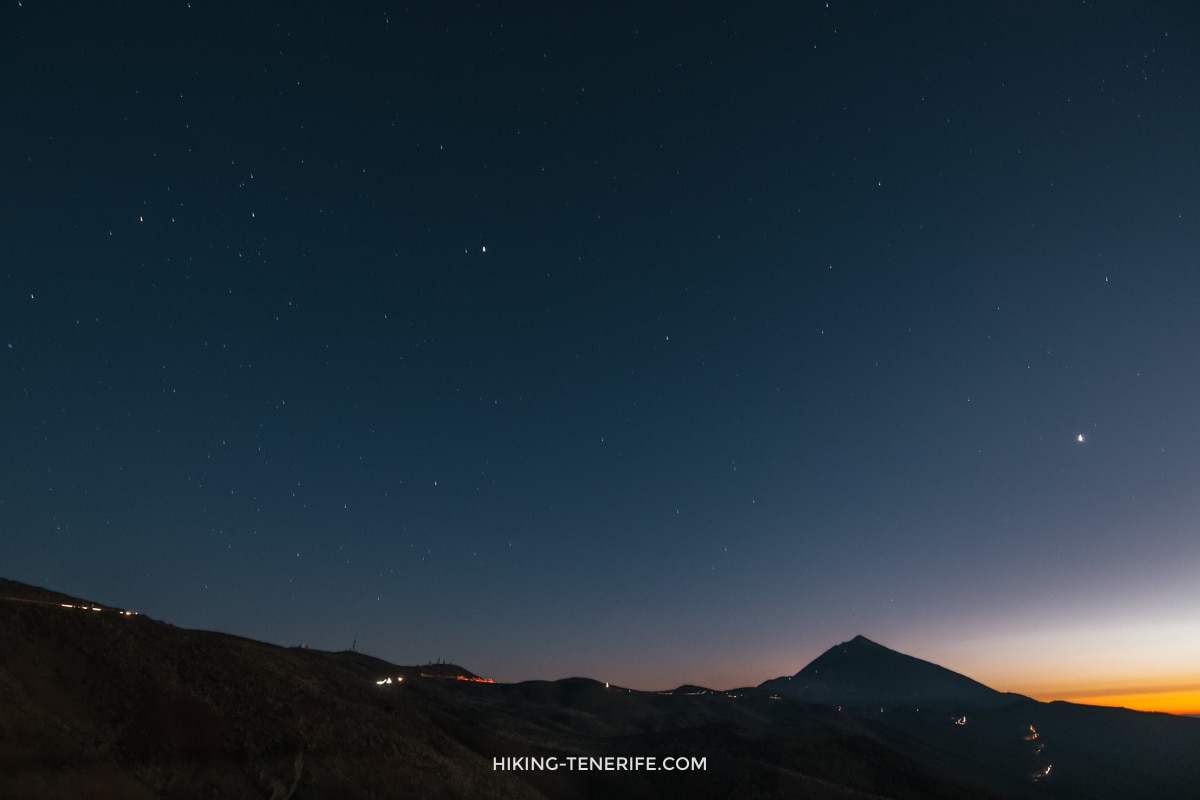
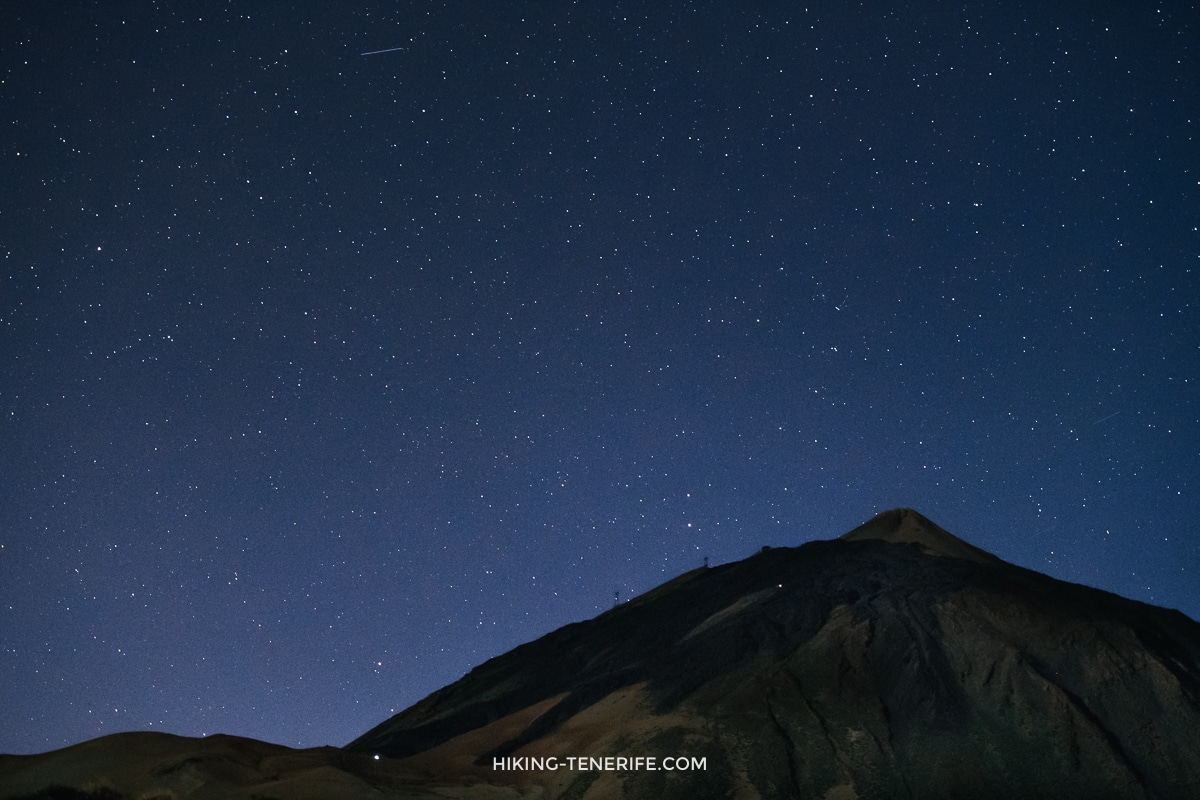
Still, the sunset did not care about our traffic problem. The Orotava Valley glittered below while Teide disappeared into night and began throwing stars across the sky.
That is the part I keep from the night. A crowd can make the logistics worse, but it cannot completely ruin the island when the light is doing something special.
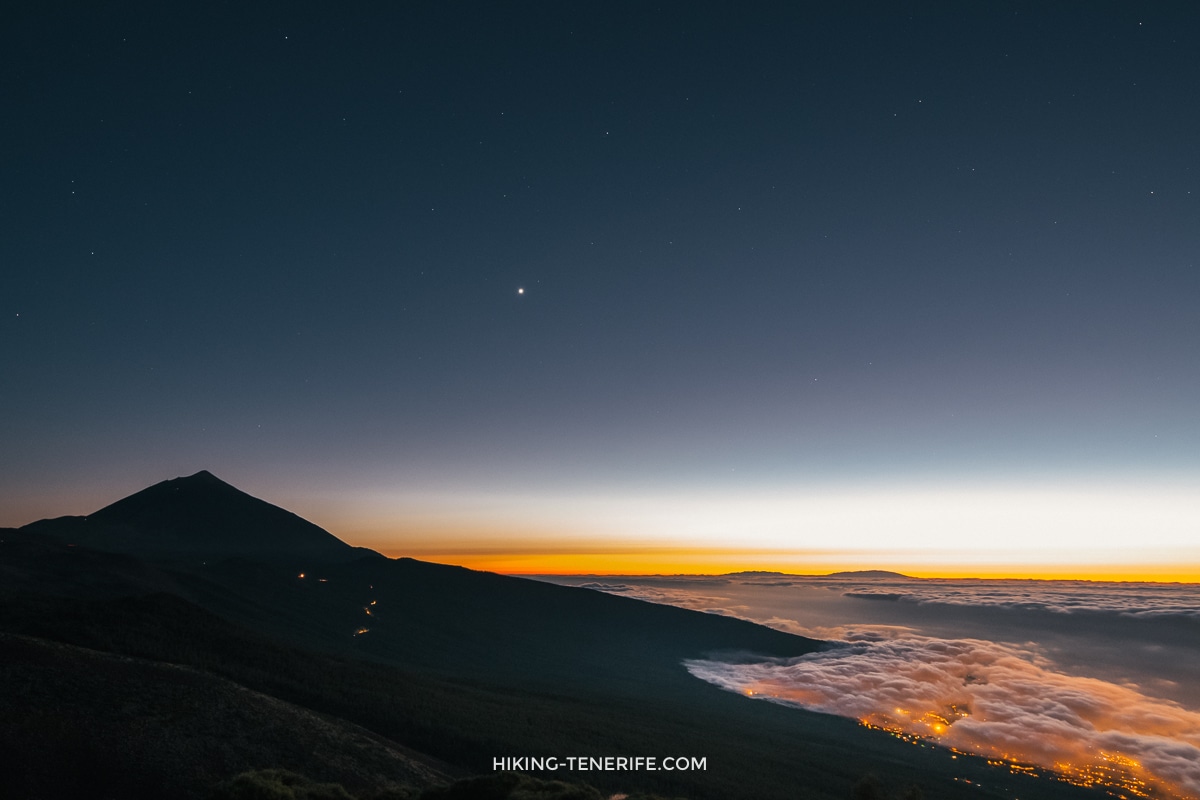
Then came the obvious question: fine, but what does the Moon actually look like? The answer was not cinematic every second. It was a slow change, a shadow moving across a familiar object, and a lot of people checking their phones instead of letting their eyes adjust.
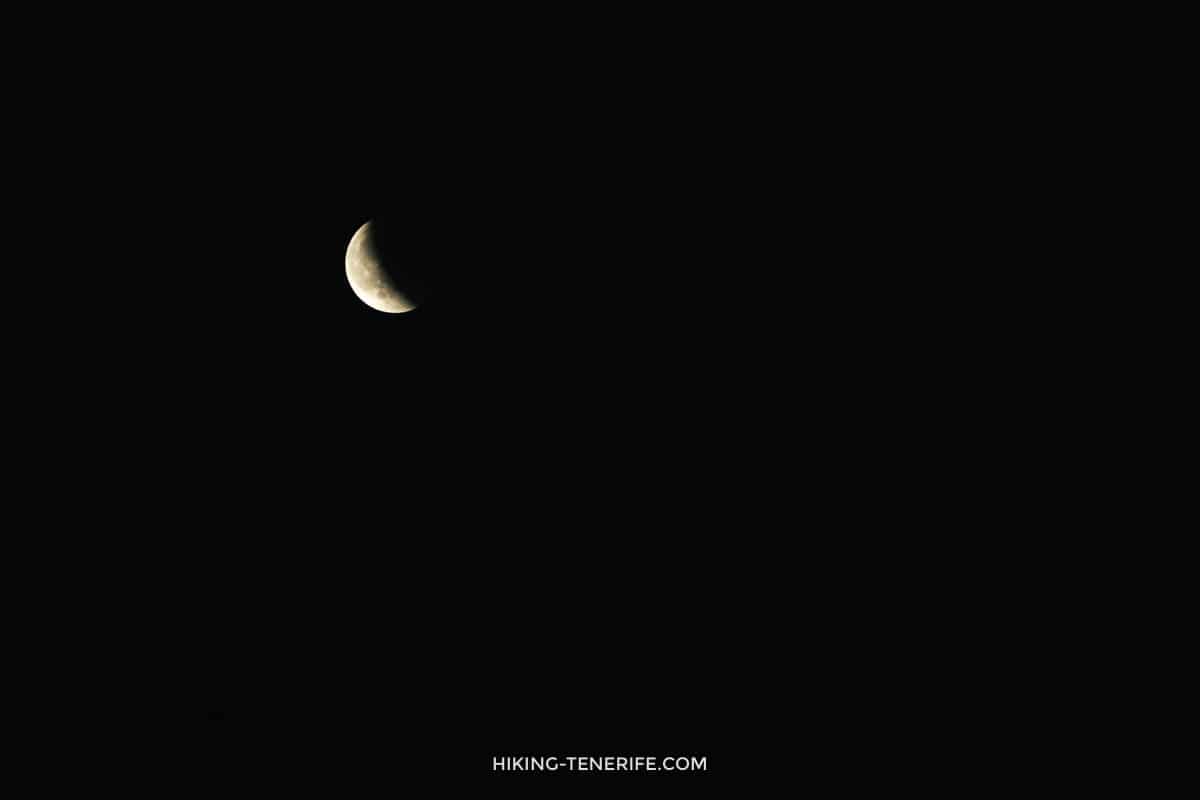
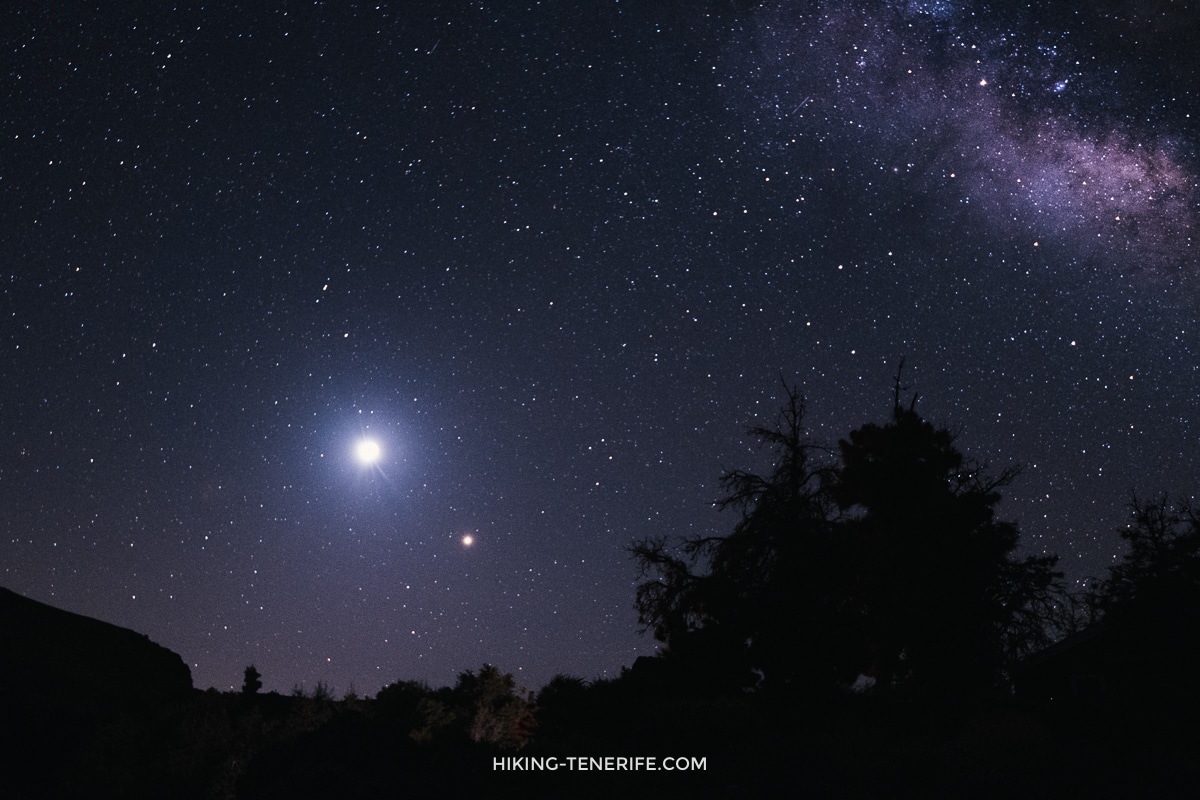
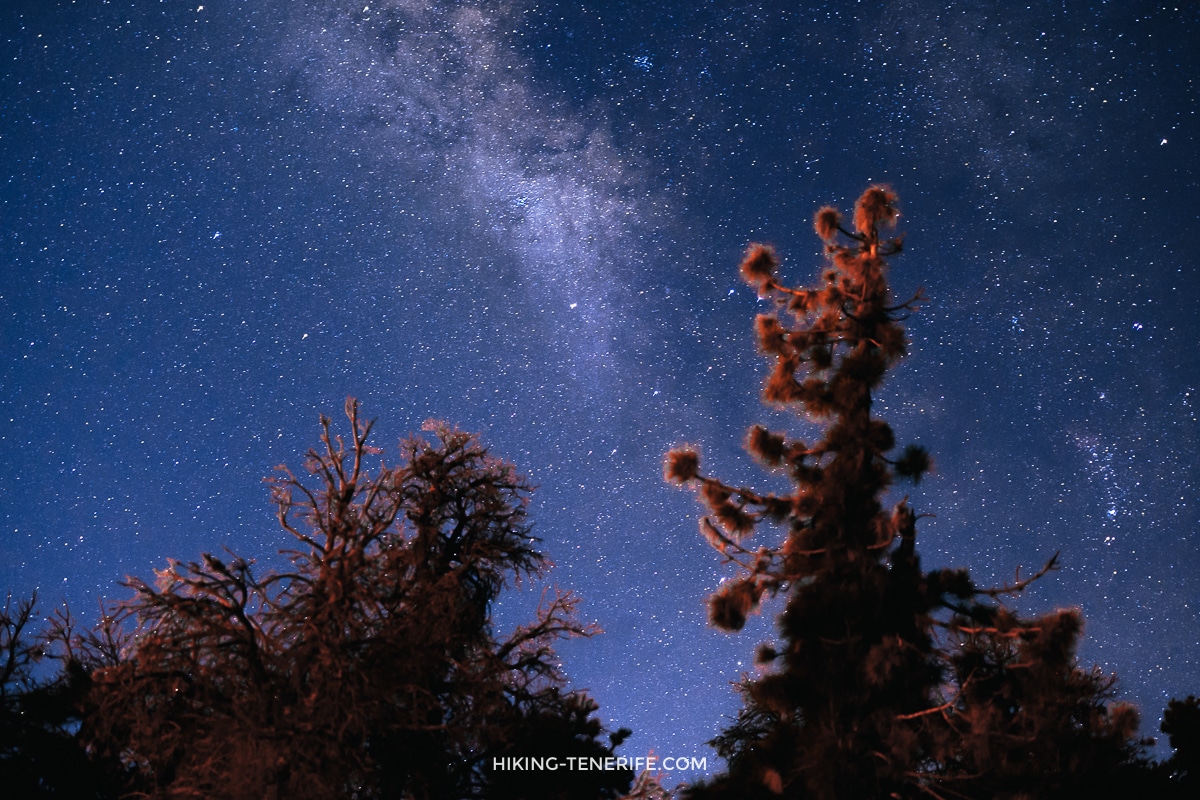
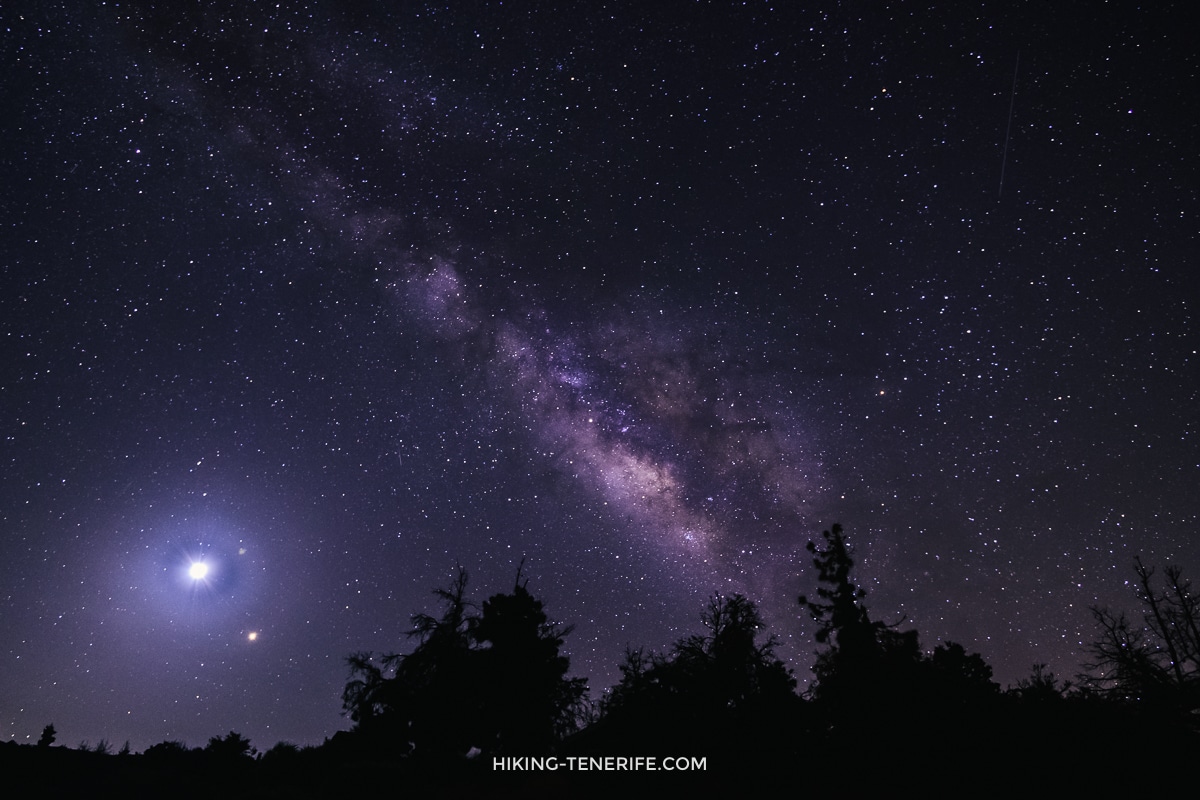
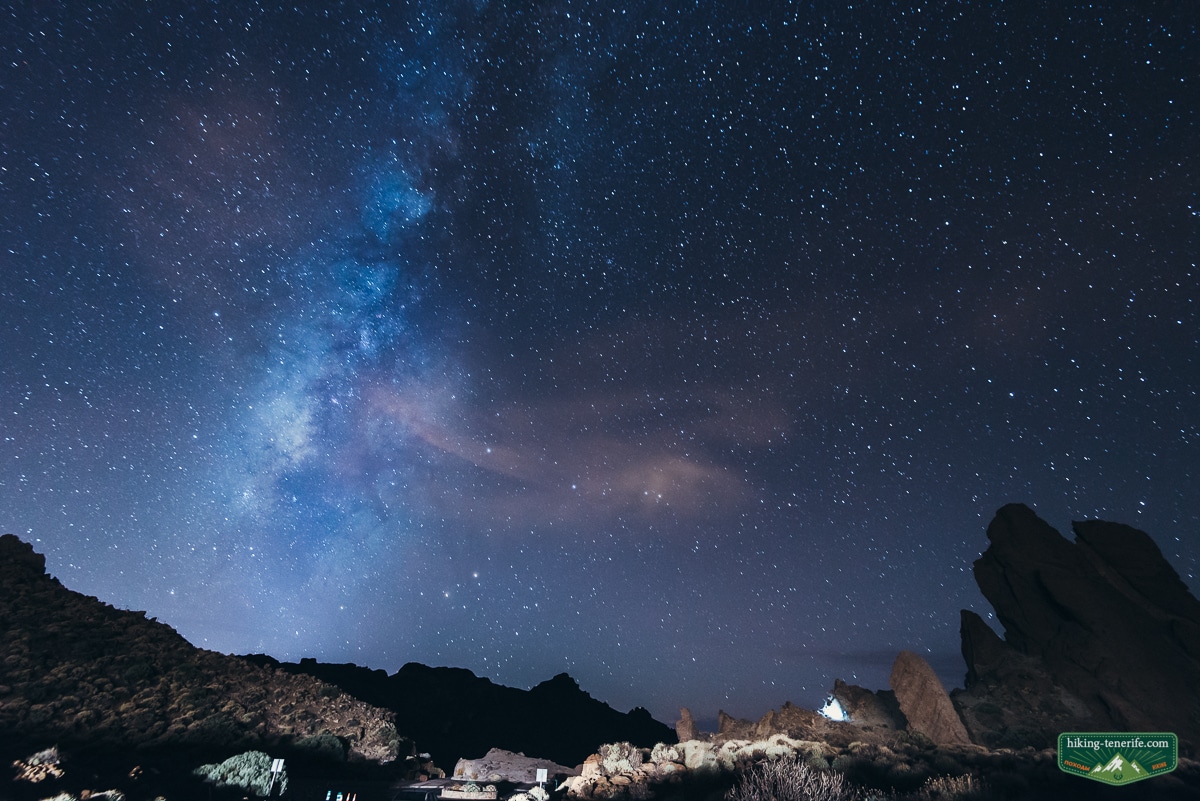
And then the real surprise: the Milky Way impressed us more than the headline event. People hurry to see what television has advertised, then ignore the daily sky above their heads. Tenerife can be very good at quietly correcting that habit.
What you will actually see
A lunar eclipse happens when the Earth sits between the Sun and the full Moon. The Moon moves through the Earth’s shadow. Unlike a solar eclipse, it is safe to watch with normal eyes.
A total lunar eclipse can turn the whole Moon copper or red, which is where the blood-moon nickname comes from. A partial lunar eclipse only puts part of the Moon into the dark central shadow. A penumbral eclipse is subtler and can look like a slightly dirty shade has passed over the Moon.
| Type | What it feels like | Planning consequence |
|---|---|---|
| Total | Whole Moon can darken and redden | Worth a longer drive if conditions are good |
| Partial | A clear bite of shadow moves across it | Watch the exact maximum and moonset |
| Penumbral | Subtle dimming, sometimes easy to miss | Do not expect a dramatic show |
Local verdict: do not book your whole holiday around the phrase “blood moon.” Check whether the event is total, partial or penumbral, then decide whether it deserves a mountain night.
28 August 2026: exact Tenerife timing
For Santa Cruz de Tenerife, Timeanddate’s local eclipse schedule gives these times in WEST. They are the useful planning clock for the whole island, although local hills and buildings can still block your own view.
- 02:23: penumbral phase begins. Do not expect drama yet.
- 03:33: partial eclipse begins. The real shadow becomes obvious.
- 05:12: maximum, with 0.930 magnitude. The Moon is west-southwest at about 30 degrees high.
- 06:51: partial phase ends, with the Moon already low.
- 07:50: moonset. The penumbral end happens after it has gone below the horizon.
This is a partial eclipse, not a total one. It can still be a strong sight, but it is a late-night plan with a western horizon problem at the end. Check the exact page again before you leave because astronomy is stable; your location, cloud, road and sleep level are not.
Where to watch a lunar eclipse in Tenerife
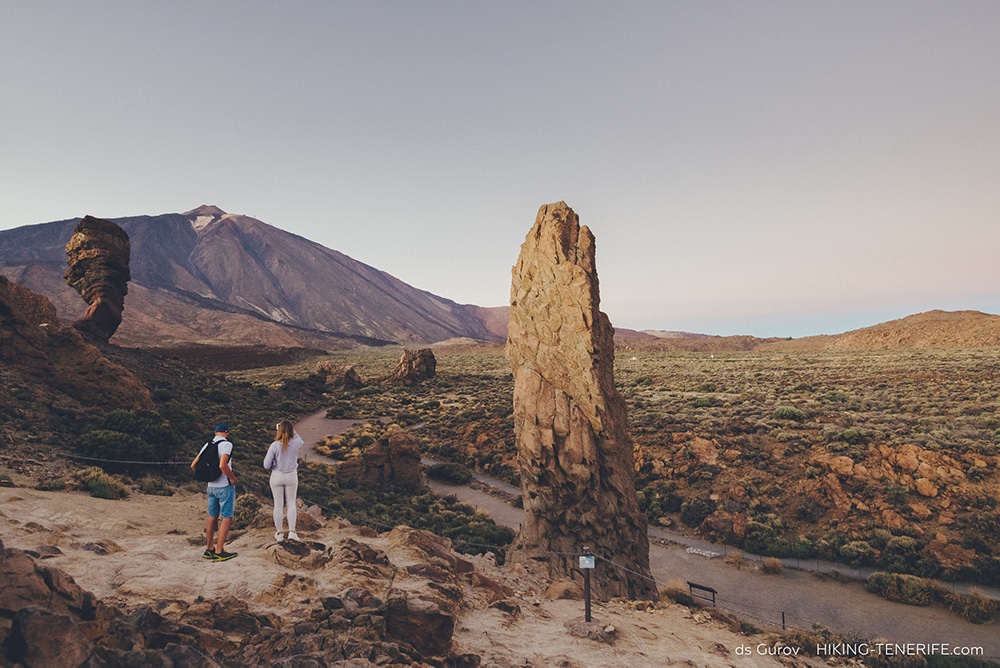
You do not need the summit, the cable car or an observatory to watch a lunar eclipse. You need an open view of the Moon, sensible weather, and a place where your car and body are not causing trouble.
For 28 August 2026, start with a southern view for the partial phase, then make sure you can still see west-southwest as the Moon lowers. A view that is perfect for moonrise can be hopeless before dawn.
| Option | Good for | Reality check |
|---|---|---|
| Las Canadas and signed Teide miradors | Big sky, dark landscape, the full Teide night feeling | Cold, wind, crowding and a serious return drive |
| South coast or a clear coastal mirador | Warmer, easier exit, family or no-mountain groups | More light pollution and no guarantee of a clear horizon |
| North coast | Good only when forecast and horizon cooperate | Cloud can make the whole plan disappear |
| Hotel balcony | A simple, low-stress watch | Useful if it faces the right sky; not a substitute for a horizon |
| Guided stargazing tour | No-driver groups who want equipment and sky context | Confirm the event plan, pickup, warmth and weather policy |

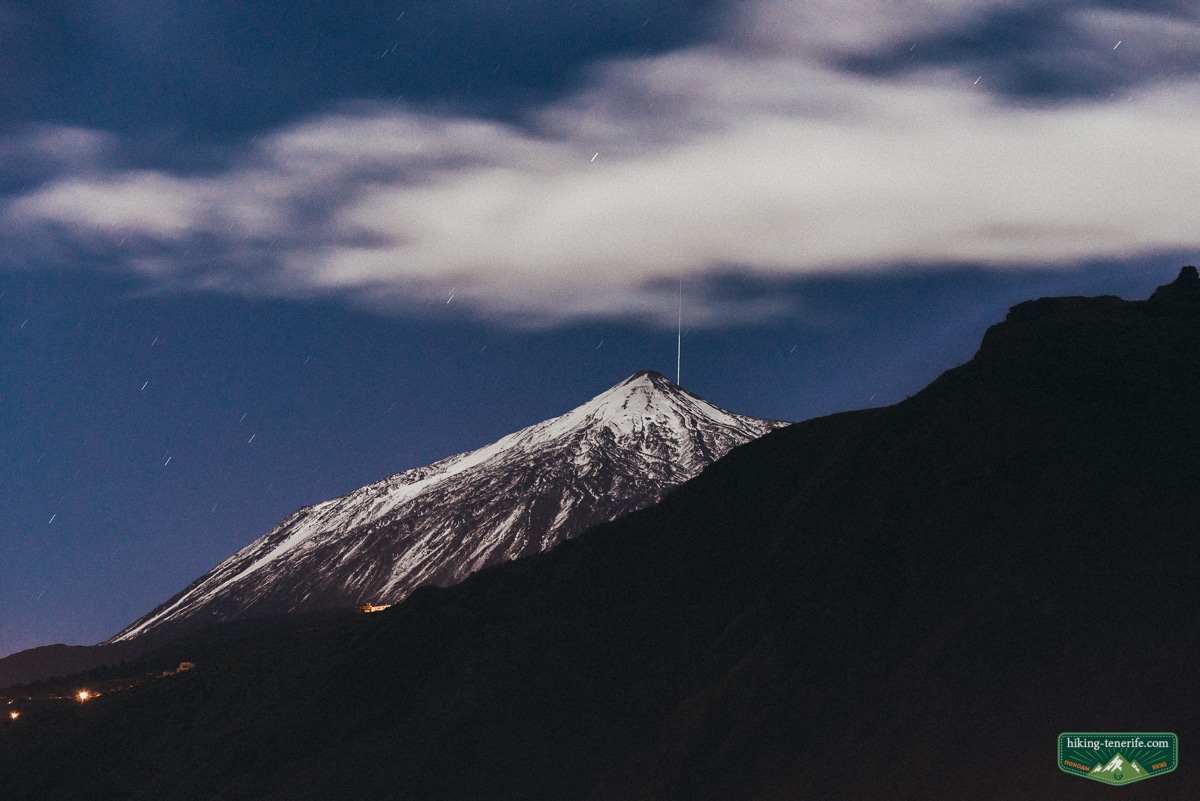
Inside Teide National Park, use actual signed parking and viewpoints. Do not create your own mirador on a shoulder because the angle looks excellent. The official park rules prohibit driving off public roads, leaving rubbish, lighting fires and free camping.
Common mistake: checking only the weather in Costa Adeje or Puerto de la Cruz. The coast can be clear while Teide is windy or cloudy, and Teide can be clear above a north-side cloud inversion. Check both your hotel base and the mountain.
Is Teide worth it for stargazing?
Yes, on a good night. The high island, dry air and chance of being above low cloud are why Tenerife has serious astronomy history. The IAC’s Teide Observatory sits at 2,390 metres and describes the quality of the sky as a reason for the site’s astronomical work.
But do not turn that into a permit to wander around the observatory. It is a working research site, not a casual night viewpoint. Its visitor and amateur-observer access has its own reservation rules.
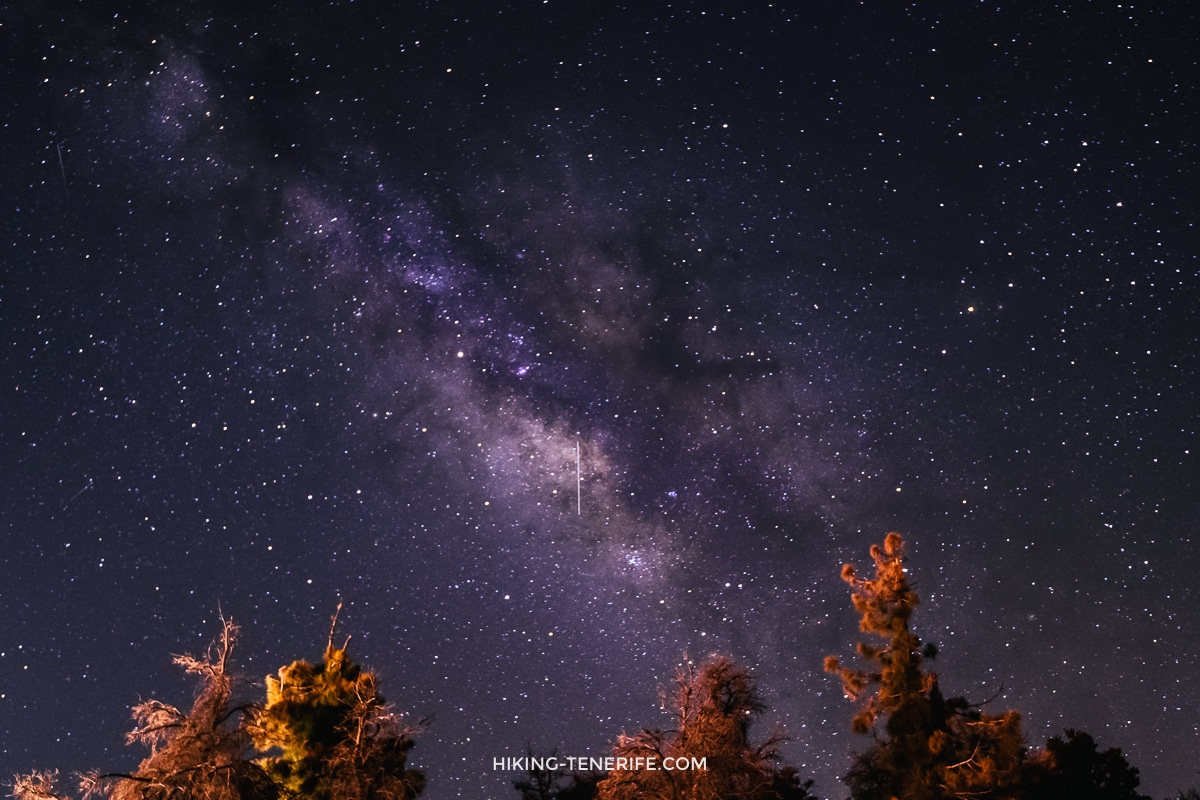
A full Moon usually makes faint stars and the Milky Way harder to see. An eclipse can reduce that glare, but do not expect the 2026 partial event to recreate every dramatic night photograph you have seen. Moon brightness, cloud, dust, your eyes and camera all get a vote.
That is why I separate the two plans. A lunar-eclipse night is about the Moon and exact timing. A Milky Way night is about darkness, season, moon phase and patience. Occasionally they overlap beautifully. More often, trying to make one night do both creates a tired driver.
Want the route, timing and local sky logic without trying to reinvent it after dinner? Our Teide and stargazing guide is the useful next step for a self-drive or small-group night.
A simple one-night plan
For the August 2026 eclipse, do the dull preparation before sunset. Fuel the car, download the route, choose a legal parking fallback, charge the phone, and agree on a leaving time before everyone is cold.
- Late afternoon: check the local eclipse page, the AEMET Teide mountain forecast and the Cabildo road information.
- Evening: eat, fuel, add a fleece or insulated layer, pack water and snacks, then drive before the best viewpoints fill.
- Before 03:33: park legally, switch off unnecessary lights, find the Moon and set up without blocking anyone.
- 03:33 to 05:12: watch the partial phase become more obvious. Take short photo attempts, then put the screen away.
- After maximum: leave when your group is still warm and awake. You do not win a badge for finishing the faintest final phase.
Bad-weather backup: if Teide is cloudy or dangerously windy, stay lower and choose the clearest safe horizon you can reach. If the island is cloudy, accept the loss. Chasing a lunar eclipse through mountain roads at 04:00 is not local knowledge; it is how a nice plan becomes a bad night.
Weather, roads and protected landscape rules
At more than 2,000 metres, Teide is high mountain, not a slightly cooler resort. The official park advice is to bring proper clothing because conditions change fast. Even in summer, wind can make a pleasant forecast feel very different at a viewpoint.
Road access can also change with ice, wind, incidents, fire risk or management measures. The Cabildo’s road page links to real-time traffic information. Check it on the actual day, not from a tour listing or a message somebody posted last month.
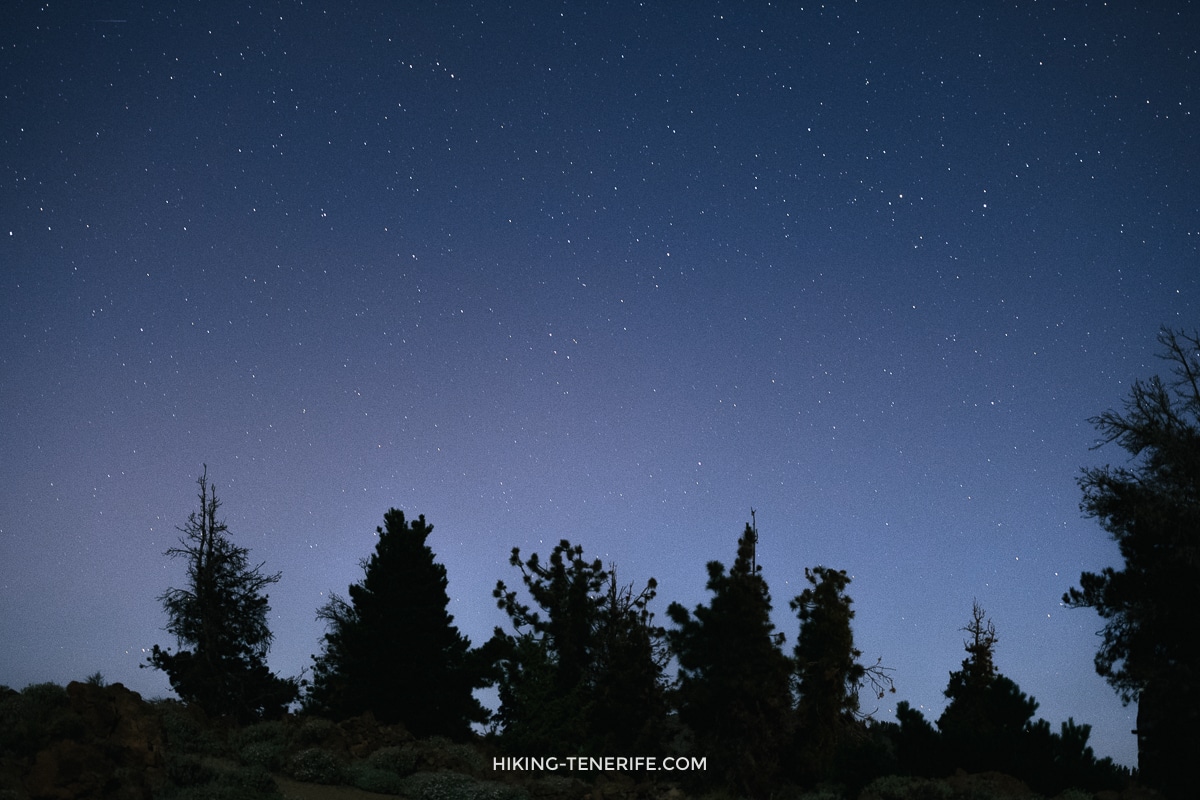
Smoking is not allowed anywhere in Teide National Park. Leave no rubbish, stay on the legal surface, do not light fires, and keep music and bright lights out of other people’s sky.
Safety rule: no roadside photo is worth stopping where you cannot fully park. Keep people out of the carriageway, use a red-light headlamp if you need one, and let the tiredest person in the car decide the return timing.
Families, tours and no-car reality
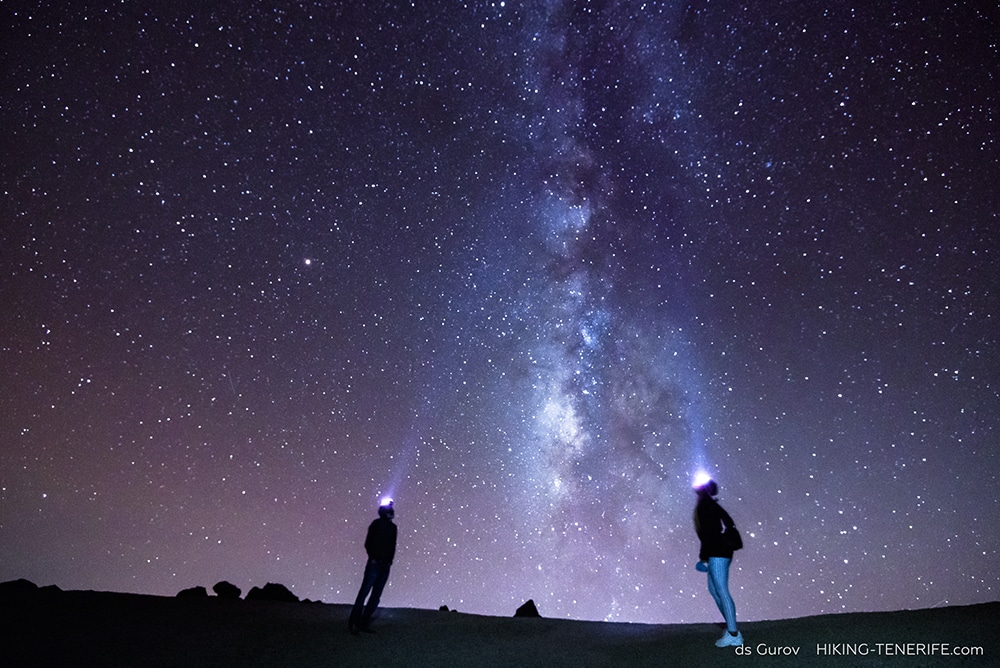
Older kids can love a late Teide sky if they are warm, fed, and not being dragged through an adult photography mission. Small children and car seats make 03:00 much less romantic. Plan for the child who gets cold first, not the parent who wants one more long exposure.

For wider family planning, use our Tenerife with kids guide. It gives the Teide day its proper place in a holiday instead of pretending the entire family trip should revolve around one dawn eclipse.
Without a car, a guided stargazing trip is usually more realistic than trying to assemble taxis, late buses and a dark road return. Ask the operator where they watch, whether a lunar eclipse changes the itinerary, which warm layers are supplied, and what happens if cloud closes the view.
Base matters: choose the coast that suits the rest of your holiday first. Our Tenerife North or South guide is more useful for that decision than sacrificing your whole stay to one night sky plan.
Phone and camera tips without fantasy
A modern phone can record the atmosphere, the dark landscape and the fact that you were there. It will not reliably make the eclipsed Moon look like a giant red planet unless it uses digital trickery. Let it be a memory, not a competition with NASA.
- Phone: brace it on a wall or small tripod, reduce screen brightness, tap the Moon and lower exposure if it turns into a white blob.
- Camera: use a tripod, manual focus, a short test sequence and different exposures for the Moon and landscape.
- Tripod: keep it out of paths, parking bays and road edges. A beautiful photo does not excuse a small obstacle in darkness.
- Lights: use a dim red light for gear, never a full white beam across other people’s lenses.
Mistakes I would avoid next time
- Trusting beach weather and never checking Teide cloud or wind.
- Arriving just before maximum and discovering every legal space is full.
- Parking on a shoulder because a photo angle feels urgent.
- Bringing one thin hoodie for a high, windy night.
- Expecting a perfect phone photo and missing the actual eclipse.
- Not checking moon direction, moonset and the exact local schedule.
- Confusing a lunar eclipse with a solar eclipse and asking for the wrong equipment.
- Driving down tired with no food, water, fuel or agreed destination.
The better plan is not the highest plan. It is the one you can enjoy, photograph a little, and drive home from safely.
Lunar eclipse Tenerife FAQ
Can you see a lunar eclipse from Tenerife?
Yes, when the Moon is above your horizon and cloud allows. On 28 August 2026, Tenerife sees the partial phase from 03:33 to 06:51 local time, with maximum at 05:12.
Is Teide the best place to watch?
Teide can be excellent for a dark, high-mountain atmosphere. It is not automatically best if roads, wind, cloud, crowding, children, or your return drive make the mountain a poor decision.
Do I need special glasses for a lunar eclipse?
No. Lunar eclipses are safe to watch with normal eyes. Never reuse that advice for a solar eclipse, which needs proper eye protection.
Will the 2026 eclipse be a blood moon?
No. The 28 August 2026 event is partial, so part of the Moon moves into Earth’s darker shadow. A fully red Moon is associated with a total lunar eclipse.
Can I see the Milky Way during a lunar eclipse?
Sometimes an eclipse reduces moonlight enough to reveal more stars, as it did on our 2018 night. But a partial eclipse is not a guaranteed Milky Way session. Treat the eclipse and dark-sky photography as related but different plans.
Is a Teide eclipse night suitable for kids?
It can be for older children who are warm and comfortable with a late night. For very young children, a balcony or coast watch is often more enjoyable than a cold pre-dawn mountain drive.
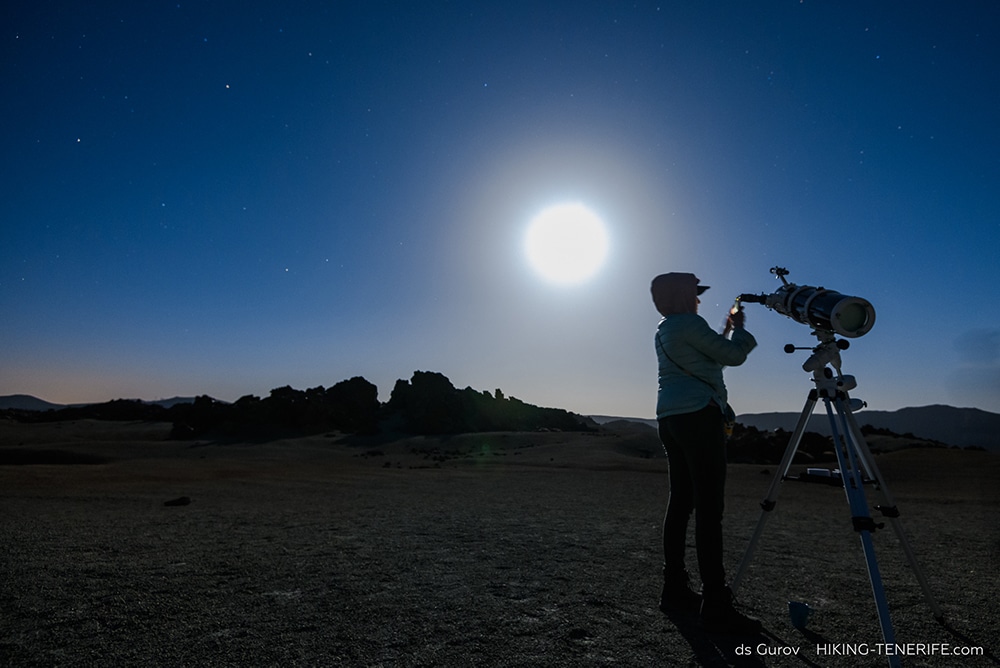
Final verdict: go for the night, not just the headline
My old night at Teide began with the media event and ended with the ordinary magic people nearly miss: stars, the valley lights, the shape of the volcano, and that strange feeling of driving down through layers of Tenerife before dawn.
For the 2026 lunar eclipse, make the plan simple. Check the exact clock, the mountain forecast and road status. Park legally. Bring warm layers. Leave before everyone is exhausted. Then let the Moon do its slow work above the island.
For the rest of the trip, start with our Things To Do in Tenerife guide, use the detailed Teide National Park guide for the daytime mountain logic, and read the August weather guide or September weather guide for the conditions around your stay.


