

The first thing I notice most mornings is not the view. It is the sound of a knife on the board.
Anastasia is usually in the kitchen before the island has decided what kind of weather it wants to give us, cutting fruit, herbs or tomatoes while the kettle works in the background.

Some mornings are calm. Other mornings begin with a message, a deadline, a shopping problem, or the wind pushing salt against the windows.
Slow living did not remove those things from our life. It changed what we do next.
We turn the phone face down. We finish the small task in front of us.
We cook something healthy and genuinely enjoyable. If there is time, we eat at the table.
If there is not, we make a smaller version and refuse to call the day a failure.
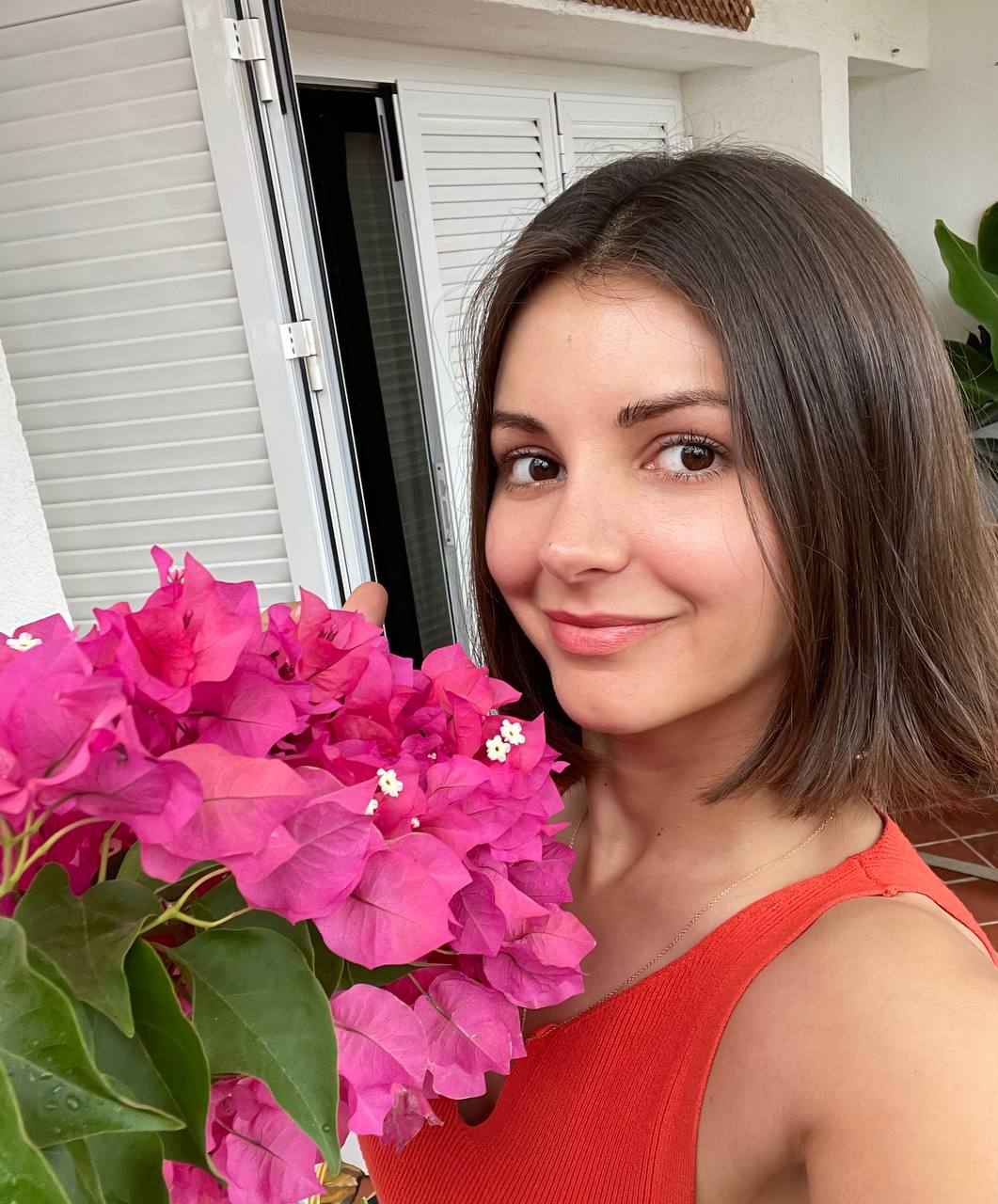
Short answer: slow living means choosing a more attentive, deliberate pace for the parts of life that matter to you. It is not doing every task slowly or escaping responsibility.
It is making time, attention, food, relationships and rest feel less accidental.
Before we go further, watch this quiet letter from Anastasia. Notice the repeated acts rather than the aesthetic: a temporary kitchen, ordinary food, movement, waiting and care.
That is the part of slow living I trust. Home is made by returning to something, even while life is still unsettled.
We live together on Tenerife, in the Mediterranean region. Anastasia is my wife, the founder of Greeny App, a healthy chef and the person in our home who will happily spend an unreasonable amount of time making a simple meal taste right.
She is also drawn to cottagecore, countryside simplicity, affirmations and the quiet mechanics of a day that feels nourishing rather than merely completed.
I am writing this as her husband and as somebody who has lived on the island for years. Tenerife gives us ocean air, markets, volcanic light, green northern hills and long outdoor evenings.
It also gives us admin, traffic, laundry, work, wind, tired bodies and the occasional dinner assembled from whatever is still possible at nine at night.

This is not a generic slow lifestyle checklist and it is not a suggestion that you need an island, a cottage or a new wardrobe.
It is my step-by-step guide to embracing slow living inside an ordinary life, with the useful terms people actually search for and the friction that beautiful articles usually leave out.

What is slow living, really?
The simplest slow living definition is this: you stop treating speed as the automatic measure of a good life. You give more care to how something is experienced, not only how quickly it is finished.
That is the slow living meaning I have found useful. It does not ask me to make every part of the day leisurely.
It asks me to notice where rushing has become a habit, where convenience has become disconnection, and where I am spending attention on things I did not choose.
Slow living is a mindset, a lifestyle choice and a practical way of arranging ordinary decisions. The slow living movement can include slow food, simple living, mindful living, sustainable choices, creative work, time outdoors, community and resistance to the idea that faster and more always equal better.
| Question | Slow-living answer | What it does not require |
|---|---|---|
| What does slow living mean? | Giving pace, presence and quality a deliberate place in daily life. | Moving slowly through every task. |
| Is it a slow lifestyle? | A way to choose rituals, commitments and consumption with more awareness. | A fixed visual identity or expensive home. |
| Is it simple living? | They overlap when simplicity protects attention and energy. | Owning as little as possible. |
| Is it minimalism? | Minimalism can remove some noise when it serves your values. | Decluttering your whole life or refusing useful things. |
Slow living is not a slower costume. It is a more conscious relationship with the life you already have.
The distinction matters because the internet can turn slow living into another performance. You can buy the mug, arrange the linen, photograph the bread and still eat every meal while answering messages.
The objects are not bad. They are simply not the practice.

You can live slowly in a city flat, a shared house, a demanding workplace, a student room, a family home or a temporary rental.
You can be ambitious, have goals, care for children, work shifts, use technology and still choose one part of the day to be less automatic.
The goal is not to become a person who never hurries. Some things are urgent.
Some seasons are intense. The goal is to know the difference between a real demand and the old reflex to fill every empty space.

Why we wanted a slower life in Tenerife
Living on an island can make slow living look effortless from a distance. There is ocean, sunlight, local produce, a market, a mountain and a table outside.
A photograph can make the whole life appear to exhale.
The real day is more mixed. The north can be grey while the south is bright.
The wind can change an outdoor plan in ten minutes. A simple errand can take longer than expected.
Work does not disappear because the Atlantic is visible from the road. A beautiful place still needs groceries, repairs, planning and patience.
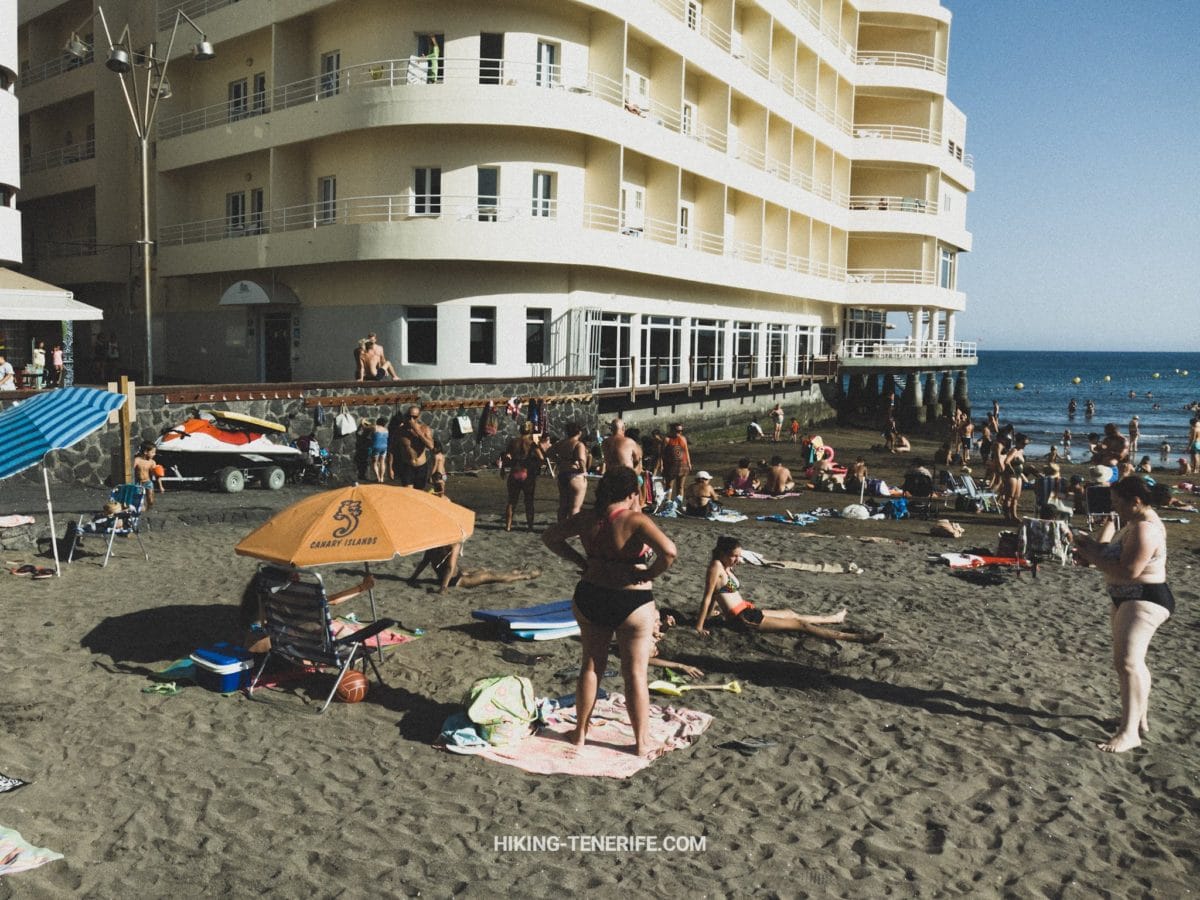
That is why Tenerife became evidence for us rather than an answer. The landscape reminds us to look up, but it does not make us attentive.
The market gives us ingredients, but it does not cook dinner. The island offers a rhythm we can cooperate with, not a life we can consume as a backdrop.
Our Mediterranean version of slow living is quite practical: buy food with the week in mind, cook meals that are healthy without becoming punishment, walk when the body needs movement, spend time outdoors without collecting proof, sit with another person, and leave some gaps unfilled.
We respect Mediterranean and blue-zone-inspired techniques as habits rather than guarantees. Natural movement, simple food, social connection, time outside, purpose, rest and belonging can make a day more humane.
They are not medical treatment, a promise of longevity or a substitute for professional care.
Anastasia brings the food centre of our life. She cooks authentic Mediterranean meals from here, experiments with healthy ingredients, plans recipes and cares about the small details that make nourishing food feel like pleasure.
I bring the local attention: weather, walking, photography, streets, the coast and the knowledge that some days the best slow-living choice is to stay home.
If you want a related explanation of values, rituals and intentional choices, read Real Intentional Living: What Is It? This guide is narrower and more practical: how to put slow living into the next ordinary hour.
My step-by-step guide to embracing slow living
You do not have to do these steps in order. They are a path for a person who wants to live slower but does not want another impossible routine.
Each step starts with a value, turns it into something observable, names the friction and creates a way back.
1. Find the real reason you want to slow down
Start with your own why, not the reason a lifestyle video gives you. Do you want more attention, rest, creativity, nourishment, connection, privacy, time outdoors or room to think?
“I want a slow life” is a good beginning, but it is too broad to guide a Tuesday.
Write one sentence: “I want more of ___, and too much of my life is currently going to ___.” Fill the blanks with something real. More shared meals and less distracted eating. More quiet and less automatic scrolling. More creative making and fewer evenings spent recovering from the day.
This is the difference between a slow living aspiration and an intentional life. The aspiration describes a mood.
The intention tells you what deserves protection.
- If you want more calm, identify the transition that currently carries the most noise.
- If you want more nourishment, identify the meal that most often becomes an afterthought.
- If you want more connection, identify the person or relationship that receives only leftover attention.
- If you want more creativity, identify the first place your free time disappears.
- If you want more nature, identify a small outdoor or sensory pause your body can actually repeat.
Do not choose ten values. Two are enough for a season.
Intentional living becomes kinder when it is specific. You can always review it later.
2. Audit where speed has become automatic
For one day, do not improve anything. Notice.
When do you rush? When do you check the phone without deciding to?
Which meals happen standing up? Which conversations are interrupted?
Which obligations create urgency without creating much value?
This is not a productivity audit. You are not looking for more minutes to optimise.
You are looking for the moments where your attention leaves before you have chosen where it should go.
| Notice | Ask | Possible small change |
|---|---|---|
| Phone at breakfast | What am I expecting to find? | Keep it out of reach until the first few bites are finished. |
| Full calendar | Which commitment is only urgent by habit? | Decline, shorten or renegotiate one thing. |
| Rushed cooking | What decision exhausts me? | Prepare one ingredient or repeat one dependable meal. |
| Empty evening | Why do I fill every gap? | Leave twenty minutes deliberately unassigned. |
| Constant audio | Can I hear my own thoughts? | Take one short walk or kitchen task without a podcast. |
Reddit communities often describe this moment in plain language: rest feels guilty, empty time feels unproductive, and even cooking becomes another stream of content. Those are not signs that you are bad at slow living.
They are clues about what needs a gentler boundary.
3. Remove one unnecessary demand
The fastest way to embrace slow living is sometimes subtraction. Look at the next week and choose one obligation, notification, subscription, errand or social expectation that can be reduced, delayed, shared or removed.
Do not confuse “unnecessary” with “easy to remove.” A job, a caring responsibility, a medical appointment or a financial task may be difficult and still necessary. Start with the demand that is mostly maintained by guilt, habit or the fear of disappointing someone.
Try a sentence such as: “I cannot do that this week, but I can do it next Tuesday.” Or: “I will reply by email rather than in real time.” Or: “I am keeping one evening without plans.” A slower pace often requires a boundary another person can understand.
You do not need to say no to everything. You need to stop saying yes to every version of urgency.
If a full removal is impossible, reduce the dose. Shorten the meeting.
Mute the group. Batch the errand.
Ask for help. Put the task on a day where it will not collide with the rest of your capacity.
4. Slow one transition, not your whole life
Choose a doorway between two parts of the day: waking and work, work and home, shopping and cooking, dinner and sleep. A transition is powerful because it is already repeated.
You do not need to invent another habit; you need to change the quality of one you already have.

In our home, one version is putting the phone away while breakfast is being made. Another is washing and cutting ingredients before the pan is hot.
Sometimes it is a short walk after work. Sometimes it is sitting in the car for three minutes before going inside because the body needs to arrive before the next demand begins.
A slow transition can be five minutes. The measure is not duration.
It is whether you cross the threshold with awareness instead of carrying the whole previous task into the next one.
- Before work: open a window, drink water and write the one task that matters first.
- After work: change clothes, wash your hands and take a short pause before opening messages.
- Before cooking: choose the recipe, clear one surface and put the phone somewhere inconvenient.
- Before sleep: dim the room, finish one small reset and read a few pages instead of collecting more input.
When the full transition is impossible, use the smallest signal. One breath.
One glass of water. One song.
One hand on the table. The point is to tell the nervous system that a new part of the day has started.
5. Take your attention back from the phone
Slow living does not require deleting the internet or pretending that your phone is only a tool. It asks you to notice when the device is making decisions for you. The useful question is not “Can I be completely offline?” It is “Where do I want my attention to belong for the next ten minutes?”
Start with a physical boundary. No phone for the first part of breakfast.
One meal with it in another room. One walk without a podcast.
One conversation where it is out of reach. Move one distracting app away from the home screen or turn off a notification that creates false urgency.
Watch Anastasia’s phone story with one practical idea in mind: the point is not purity. She is not trying to become unreachable or morally superior to people who scroll.
She is making room for cooking, books, hobbies, boredom and real presence by taking back small pieces of time.
The first few quiet minutes may feel strange. That does not mean the boundary is wrong.
It means the old stimulation was filling a space before you had the chance to notice it.
If you work from your phone or care for somebody who may need you, design a different rule. Keep emergency access.
Tell people when you will respond. Use a shared device or a visible timer.
Slow living should make attention more available to your real responsibilities, not create a new kind of anxiety.
6. Make food a daily practice of attention
Food is where our version of slow living becomes visible most often because it returns every day. The aim is not to cook an elaborate meal every night.
It is to make nourishment less accidental and less lonely when circumstances allow.
Anastasia is almost obsessively attentive to healthy food, but she is not interested in turning dinner into a moral test. She wants ingredients to be good, meals to be satisfying and the process to fit an actual life.
A simple Mediterranean plate with beans, vegetables, eggs, fish, grains, herbs, bread or fruit can be more useful than an ambitious recipe that creates resentment.

Begin with a weekly food question: what will make it easier for us to eat well when we are tired? Maybe it is washing greens, cooking a grain, keeping a dependable soup, buying seasonal produce, planning two dinners or putting breakfast where it can be seen.
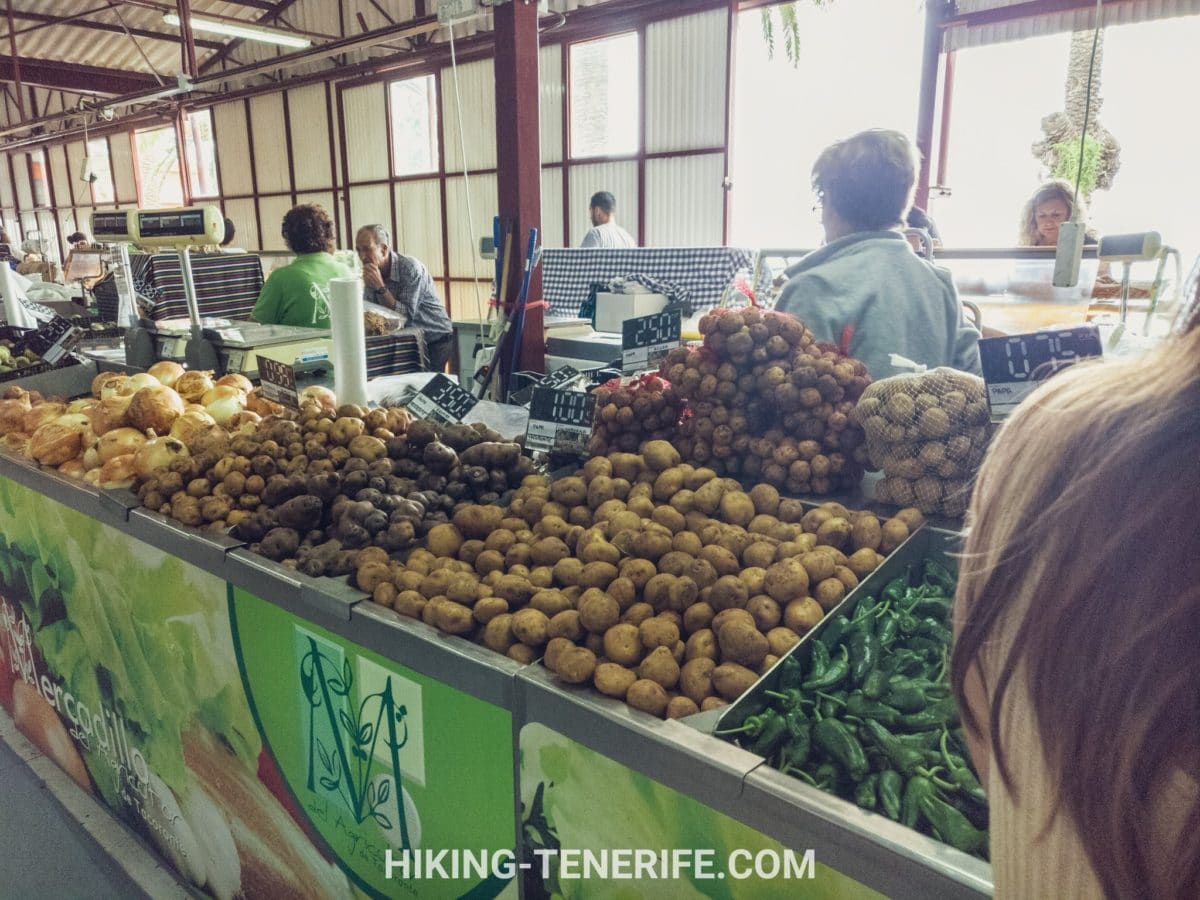
The market can become part of the rhythm. Walk without rushing.
Notice what is in season. Buy a small amount you will actually use.
Ask what can become two meals. This is not a performance of local living; it is a way to reduce decisions and let food carry some of the week.
When cooking, try one period without adding more information. A radio station, silence or conversation may feel slower than a podcast because you are no longer consuming while you prepare.
Listen to the knife, the pan, the water and the people in the room.

When we cook paella, there is a point when the stock is in and the pan needs attention but not constant interference. The person cooking can breathe.
The rest of us can set the table. The dish is not only food; it is a shared reason to stop moving for a while.

If there is no time, the smaller version still counts: eggs and greens, bread and tomatoes, yoghurt and fruit, leftovers on a real plate, or a meal prepared by someone else that you eat sitting down.
Slow living is not the same as making yourself work harder for the privilege of eating.
Get Anastasia's Mediterranean slow-living secrets by email
Anastasia writes from our Tenerife kitchen about healthy Mediterranean meals, calm cooking rituals, simple weekly food ideas, affirmations and the small choices that make an ordinary life feel more nourishing. Join the letters for useful details you can try without buying a new identity.
- Healthy Mediterranean meals
- Calm kitchen rituals
- Simple weekly ideas
Free to join. No noise, just practical letters from our home in Tenerife.
The email guide is a continuation of this kitchen, not a replacement for it. The reader should receive practical recipes and mechanics, not a demand to become a different kind of person.

7. Define enough before the internet defines it for you
A slower life needs space, and space is difficult to protect if every desire is treated as an instruction. This is where slow living overlaps with minimalism and intentional lifestyle choices, but it does not reduce them to empty rooms.
Ask what enough means for this season. Enough clothes to dress without stress.
Enough food to make dinner. Enough commitments to remain present.
Enough money for a considered purchase. Enough quiet to hear what you actually want.
Anastasia’s minimalism story is useful because it does not present less as deprivation. Having enough can protect time, energy, attention, rest, connection and the ability to use what you already own.
Cooking with limited equipment can be capability, not scarcity.
There are seasons when more is necessary. A new baby, a move, illness, a growing family, work equipment, books, clothes, a bigger room or help at home may all be reasonable.
Intentional living is not a competition to own less. It is asking what a thing, plan or upgrade costs in money, maintenance and attention.
Before buying the item that promises a slower life, wait one day. Ask whether it supports an existing ritual or is trying to create an identity from the outside.
Sometimes the purchase is right. Sometimes the answer is to use the good plate, repair the tool or move the book you already own somewhere visible.
8. Make home through repetition, not perfection
A home is not a finished image. It is the place where repeated care becomes recognizable.
This matters when you rent, move often, share a space, live with unfinished plans or cannot afford to make the room look like a slow-living catalogue.
Choose one small home ritual: open the curtains, water a plant, set the table, light a candle, make bread, sweep one corner, put music on while cooking or wash the cup you want to use tomorrow.
The ritual becomes an anchor because it happens again, not because it is impressive.
Some of Anastasia’s letters return to this idea of making a home while life is changing. A temporary kitchen can still hold care.
A small space can still hold a meal. A body in transition can still deserve gentleness.
The ritual does not solve uncertainty, housing, grief or exhaustion. It gives one part of the day a reliable shape.
If the home is shared, do not quietly turn your partner into a project. Tell us what you are trying to protect and ask what the other person needs.
One person may want silence in the morning. Another may feel alive while making noise, starting a creative project or meeting friends.
Slow living includes negotiation.
9. Protect unstructured time and creative boredom
One of the hardest things to embrace is empty time. We have learned to call it wasted unless it produces an outcome.
But a slow life needs some minutes that are not immediately assigned to learning, earning, cleaning, improving or documenting.
Leave twenty minutes unplanned and notice what appears. You may read, make something, look out of the window, water a plant, call somebody, listen to music or do nothing.
The first few attempts can feel boring because your attention is still waiting for instructions.

Making is especially useful because time becomes physical. Dough rises.
Clay dries. A garden waits.
A drawing can be bad and still be worth making. A handmade gift, a repaired object, a pot of food or a page written badly can return satisfaction to the process rather than only to the result.
Do not monetise every hobby. Do not make every creative practice into a portfolio.
The internet is very good at turning joy into a funnel. Sometimes the valuable thing is that your hands were occupied and your mind stopped asking for the next instruction.
10. Use nature and the body as a return to the present
Walking, swimming, gentle movement, gardening, breathwork, sunlight and ocean air can return attention to the body. They are not cures, mandatory wellness routines or proof that you are disciplined.
They are options for contact.
On Tenerife, I might walk through an ordinary street, photograph the coast, take a longer route to the market or go into the north when the energy and weather make sense.
A green trail can be beautiful, but it also has steep sections, heat, wind, uneven ground and protected landscapes. A slow life includes judgement.

Choose the version that respects your body. A walk around the block, a balcony, rain on the window, sitting under a tree, stretching beside the bed or noticing the temperature of the air can all be sensory pauses.
The purpose is not to earn the view.

When we go into nature, we carry water, suitable clothing and enough time. We stay on paths, take rubbish with us, do not disturb animals and do not turn fragile places into props.
Nature-respectful slow living means the place is allowed to remain a place, not only an experience for us.
Sometimes the slowest choice is not to go. Wind, heat, illness, fatigue or a crowded route may make staying home the wiser way to care for the body and the landscape.

11. Make relationships part of the practice
A life can look slow and still be lonely. It can include beautiful food and be organised entirely around work.
It can have a view of the ocean and no protected time to ask another person how they actually are.
Try one relationship ritual: a phone-free meal, a weekly walk, a proper question, a call that is not squeezed between tasks, a shared breakfast or an evening when nobody has to perform an interesting story. Connection does not need to be grand.
It needs to be available enough to repeat.
Slower communication may also be a boundary. Tell people when you will reply.
Use email when a message does not need instant response. Let a conversation have pauses.
If somebody needs immediate support, remain reachable in a way that is realistic for your responsibilities.
Do not assume everybody in your life wants the same pace. Slow living is not a demand that your partner, friend, child or colleague adopt your routine.
It is a conversation about what each person needs protected.
12. Keep ambition, work and responsibility in the picture
Slow living is not laziness and it is not a ban on ambition. Sometimes an intentional choice is focused work, a difficult study period, caring for a relative, building a business or finishing something that matters.
The question is what the work is serving and what it is consuming. Can you define when the workday ends?
Can you stop one task before starting three others? Can you protect a meal, a sleep window, a relationship or a walk even when your goals are real?
A slower pace can make work more deliberate because it reduces the background noise of unnecessary decisions. It can also show you that a goal is borrowed, that a schedule is unsustainable or that a success would cost more of your life than you want to pay.
We work. Anastasia creates recipes, meal plans and content.
I write, photograph and maintain projects. Our slow living is not a permanent holiday.
It is the attempt to keep work inside a life rather than letting it become the only evidence that the life is valuable.
The practical system: value, ritual, friction, return
This is the framework I would keep if I could only give you one. It turns the slow living lifestyle from a collection of pretty ideas into a design you can test.
| Part | Question | Tenerife-kitchen example |
|---|---|---|
| Value | What do I want this part of life to protect? | Nourishment and connection. |
| Ritual | What repeatable action expresses it? | One shared meal each week. |
| Friction | What is likely to interrupt it? | Late work, money, fatigue or weather. |
| Return | What smaller version brings me back? | Eggs, greens, bread and ten quiet minutes. |
Start with the value, not the habit. m.
because the internet called it a slow morning, ask what you actually want. It may be quiet, and quiet might be possible at lunch, in the car before collecting a child or beside an open window for three minutes.
Make the ritual visible. “Be more present” is too vague.
“Put the phone in another room for the first ten minutes of breakfast” gives attention somewhere to live.
Name the friction before it arrives. Work, money, weather, health, parenting, travel, another person’s schedule and your own tiredness are not proof that you lack discipline.
They are the conditions the practice must respect.
Create the return. If the ideal ritual is a long walk, the return may be standing outside.
If dinner is meant to be paella with friends, the return may be soup at the table. If creativity is pottery, the return may be ten minutes of shaping clay or cleaning the tools.
A return is not a loophole. It is the minimum version that keeps the relationship alive.
The goal is not an unbroken streak. It is reducing the distance between drifting and coming back.
- Attention: one phone-free meal; friction is urgent work; return is five quiet bites before checking anything.
- Nature: a weekly walk; friction is rain or low energy; return is the balcony, a window or standing under the sky.
- Creativity: one making session; friction is care work; return is keeping materials visible for ten minutes.
- Connection: a shared evening; friction is exhaustion; return is a voice note or a properly asked question.
- Enough: buy for actual meals; friction is comparison; return is waiting twenty-four hours before a convenience purchase.
Write one value, one ritual, one friction and one return on paper. Test it for a week.
You will learn more from the interruption than from the perfect day.
Anastasia’s video is worth watching here because it gathers many small practices without pretending that consistency means perfection. Slow mornings, movement, breathwork, journaling, affirmations, breakfast, reading, walking, ocean time, gardening and shared meals are invitations.
Keep the ideas that fit your season; release the rest.

A flexible seven-day slow-living experiment
Do not redesign your whole life this weekend. Use seven days to collect evidence.
This is not a test of whether you can become a calm, organised person. It is a way to see what gives attention back and what needs a more honest design.
| Day | Small experiment | Question to ask |
|---|---|---|
| 1 | Observe one ordinary day without fixing it | Where did attention actually go? |
| 2 | Choose two values for this season | What do I want the week to make visible? |
| 3 | Remove or renegotiate one demand | What steals energy without earning it? |
| 4 | Cook or assemble one simple meal | What would make care easier to repeat? |
| 5 | Take a sensory pause without recording it | What do I notice when I collect no proof? |
| 6 | Give one person undivided attention | Which relationship needs a reliable ritual? |
| 7 | Review without scoring yourself | What felt like me, and what was borrowed? |
On day one, notice when you reach for the phone, skip food, rush a conversation, work beyond your capacity or feel most like yourself. Observation is already intentional because it replaces vague self-criticism with evidence.
On day two, choose two values rather than ten. One might be attention and one nourishment.
One might be belonging and one creativity. Let the season decide.
On day three, remove one friction. Put the book on the pillow.
Move the app. Buy the ingredients.
Tell a person you cannot attend. Leave the shoes near the door.
Slow living is often less about willpower than about arranging the next choice.
On day four, cook or assemble food from what you have. If the day becomes takeaway, record the lesson without drama.
Maybe your plan needs a freezer option, a cheaper ingredient or one less decision.
On day five, go outside in a way your body can manage. Notice temperature, sound, light and the surface beneath your feet.
If the weather is bad, let rain on the window count.
On day six, give one person your full attention. Ask a question and do not prepare your answer while they speak.
If you are alone, write the message you have been postponing or sit with yourself without filling the whole space.
On day seven, review without asking whether you succeeded. Ask what made care easier, what interrupted you, what you enjoyed, what cost too much and what small return you want to keep.
A routine that learns is more valuable than a routine that looks perfect for three days.
At the end, keep one practice, adapt one practice and release one practice. This is how a slow living routine becomes yours instead of becoming another borrowed plan.
How to practise slow living in difficult real-life conditions
Advice about living slower becomes unhelpful when it assumes free time, money, privacy, good health and a quiet home. The practice has to survive the conditions in which people actually live.
If you work full-time or in shifts
Protect one transition rather than designing a perfect morning. A meal without the screen, a short walk after work, a boundary around messages or a prepared breakfast can be enough to make the day less automatic.
If you are a parent or caregiver
Expect interruption and create a minimum version. A shared snack, three breaths, a short walk, a phone-free question or five minutes of rest can express care.
If your old routine disappears, redesign it for the season instead of calling yourself inconsistent.
If you have little money
Do not buy a lifestyle. Use what is available: beans, rice, eggs, seasonal vegetables, bread, a library book, a local walk, a repaired garment, music you already have, a phone boundary and a shared conversation.
The value is not in the price of the ritual.
If you have limited energy
Remove the idea that a practice must be physically demanding to count. Rest can be intentional.
A quiet room, a shower, a meal eaten slowly, a message postponed until tomorrow or a decision not to cross the island may protect your life better than a heroic routine.
Make the boundary portable. Use headphones less often for one walk, find a bench, cook one familiar meal, put a plant near the sink, visit a market, make a corner of the room calm or let one window be enough.
You do not need a countryside setting to practise attention.
If your partner or family wants a different pace
Do not impose your version of slow living. Explain the value you are trying to protect and ask what the other person needs protected.
You may share a meal but not a morning routine. You may negotiate phone-free time while keeping emergency access.
Small does not mean meaningless when the margin is small. It means the practice can travel.
Common mistakes that make slow living feel fake
- Turning slow living into an aesthetic: candles, linen and ceramics can support a ritual but cannot create one.
- Changing everything at once: one repeatable practice teaches you more than a weekend overhaul.
- Treating rest as a productivity tool: rest does not need to earn its place by making you more efficient.
- Confusing slow with passive: meaningful work, ambition and difficult conversations can belong in a slower life.
- Using food control as virtue: healthy food is nourishment, not punishment or a test of character.
- Waiting for perfect conditions: make the low-energy version before you need it.
- Buying the answer: objects can support a practice, but they cannot decide what matters.
- Forcing other people into your pace: relationships need negotiation, not quiet superiority.
- Using nature as content: leave some walks private and care for the places you visit.
- Measuring every quiet moment: a tracker can become another source of noise.
The most common mistake is making slow living another productivity project. You start tracking screen-free meals, optimising your morning, scoring your routines and feeling behind when the day becomes difficult.
The practice has reproduced the same pressure in softer colours.
A slower life is allowed to be messy. A child wakes.
The weather changes. A deadline arrives.
You become ill. A relationship needs attention.
Dinner is late. Returning matters more than preserving the image of uninterrupted calm.
The other mistake is privilege blindness. A person with a quiet home, flexible work and money for organic ingredients has options that another person may not.
Good slow-living advice names its limits and offers portable alternatives. It does not turn resources into moral superiority.
Finally, do not use a beautiful ritual to avoid a necessary decision. Slow living should help you hear what is true: a boundary you need, support you should ask for, a job that is unsustainable, a relationship conversation, a health appointment or a budget that needs attention.
A candle cannot do that work for you.
The purpose of slowing down is not to hide from reality. It is to meet reality with more of yourself present.
Slow living examples you can try today
These are not commandments. Choose one that answers the friction you actually noticed.
A slow living example is useful only if it gives attention somewhere practical.
- Eat the first five minutes of one meal without a screen.
- Put one frequently used app in a folder or remove one notification.
- Make tea, coffee or breakfast before opening the news.
- Walk to a nearby errand without recording the walk.
- Cook with music or radio instead of another stream of information.
- Buy three ingredients for a meal you know you will make.
- Use a good plate on an ordinary day.
- Leave twenty minutes empty and let it stay empty.
- Ask somebody a question and listen without preparing your reply.
- Write tomorrow’s first task on paper before bed.
- Repair, borrow, reuse or finish one thing before buying another.
- Take a weather-shaped walk or pause beside a window.
- Keep one evening free from optimisation, errands and self-improvement.
- Tell a friend when you will reply instead of answering under pressure.
- Make a smaller version of one ritual for difficult days.
If you want to live a slow life, begin with a slow choice that is close enough to repeat. You do not need to announce it.
The quiet repetition is the evidence.
Our own examples are ordinary: market food, a Mediterranean meal, a walk, a table, a phone put away, an evening with no plan, a photograph made for no immediate use, a cloudy coast and the decision not to fill every gap.
Sometimes slow living is living slower. Sometimes it is doing one difficult thing properly instead of doing five things in a distracted way.
Sometimes it is saying no. Sometimes it is saying yes to the people and practices that make the life feel like yours.
The practice becomes visible after a while. Not as a perfect routine, but as a pattern of returning.
Slow living and intentional living FAQ
Here are the direct answers behind the longer story. The terms overlap, but they are not interchangeable.
What is slow living in simple words?
Slow living means choosing more attention, presence and care in the parts of daily life that matter to you. It does not mean moving slowly through every task or avoiding responsibility.
What is the slow living meaning?
The meaning of slow living is a deliberate relationship with pace, quality and experience rather than treating speed and productivity as automatic proof of a good life.
What does slow living mean for a busy person?
It means choosing one small transition, meal, boundary or period of attention that is realistic inside your existing responsibilities. A ten-minute ritual can be more useful than a routine you cannot sustain.
Is slow living the same as simple living?
They overlap, especially when simplicity protects time and attention. Simple living often focuses on reducing complexity or consumption; slow living focuses on pace, presence and the quality of experience.
Neither requires a particular aesthetic.
Is slow living the same as minimalism?
No. Minimalism can be one tool for reducing distraction, possessions or commitments, but slow living is broader.
It includes food, relationships, work, nature, creativity, rest, boundaries and attention.
What is intentional living?
Intentional living means making repeated choices that reflect your values instead of operating mainly on autopilot, comparison, pressure or distraction. It is a practice of alignment, not a perfect lifestyle.
How is intentional living different from slow living?
Slow living focuses on pace, presence and the quality of experience. Intentional living focuses on whether your choices match what matters to you.
They often support each other, but an intentional choice can sometimes be fast, focused work.
How do I live intentionally without making it another project?
Choose one value, one small ritual, one likely friction and one return version. Test it for a week without scoring yourself.
Keep what creates more contact with your real life and release what only creates another performance.
Do I need to quit my job or move to the countryside?
No. You can practise slow living in a city, a flat, a shared home or a demanding job.
A major change may be right for some people, but it is not the definition and it should not be presented as a universal solution.
How can I practise slow living with children or care work?
Expect interruption and use a minimum version: a shared snack, three breaths, a short walk, a phone-free question or five minutes of rest. A routine that changes during caregiving needs redesign, not guilt.
Can I practise slow living on a budget?
Yes. Use what you have: seasonal staples, a library book, a local walk, music, a repaired object, a good cup, a shared meal and a boundary around notifications.
The value of a ritual is not its price.
What are the benefits of slow living?
People often use slow living to create more attention, rest, connection, sensory pleasure, creative space and clarity about their priorities. These are possible personal benefits, not medical guarantees, and they depend on a person’s circumstances.
How do I start slow living today?
Notice one rushed part of the day, choose a small change that takes less than twenty minutes, name the likely friction and create a fallback. Then try it once without making it a test of your character.
Can slow living become avoidance?
Yes, if a calm aesthetic is used to avoid a necessary conversation, health appointment, financial decision or source of support. Slowing down should help you meet reality more directly, not hide from it.
How do you practise slow living in Tenerife?
We build ordinary rhythms around markets, cooking, healthy Mediterranean food, walking, nature, focused work, relationships and enough empty space. We also accept weather, traffic, fatigue, paperwork and days that do not look like a postcard.
What is the simplest slow living routine?
Choose one morning pause, one phone boundary, one meal eaten with attention, one relationship ritual and one return version for difficult days. The routine is simple when it remains possible during an ordinary week.
You do not need to solve your whole life tonight. Put one value somewhere visible.
Make one smaller choice. Notice one ordinary thing.
Then return tomorrow.
Receive Anastasia's Mediterranean slow-living letters
Get practical notes from our Tenerife home: healthy Mediterranean meals, calm kitchen rituals, simple weekly ideas, affirmations, cottagecore-inspired countryside details and the gentle mechanics of making a real life feel good to be inside.
- Mediterranean food
- Slow-living mechanics
- Letters from Tenerife
Free to join. Come for useful details and stay for the quiet encouragement.

