

This morning, Anastasia was standing at the kitchen counter with a half-finished idea and a knife in her hand. She was cutting tomatoes for a healthy Mediterranean breakfast while a message kept lighting up the phone beside the chopping board.
The idea was not grand. It was a small change to a recipe, a possible video, and a note she wanted to write before the day became noisy.
Still, she hesitated. We have both had that feeling: the internet is full of people who appear endlessly inventive, and our own beginning suddenly looks too ordinary to count.
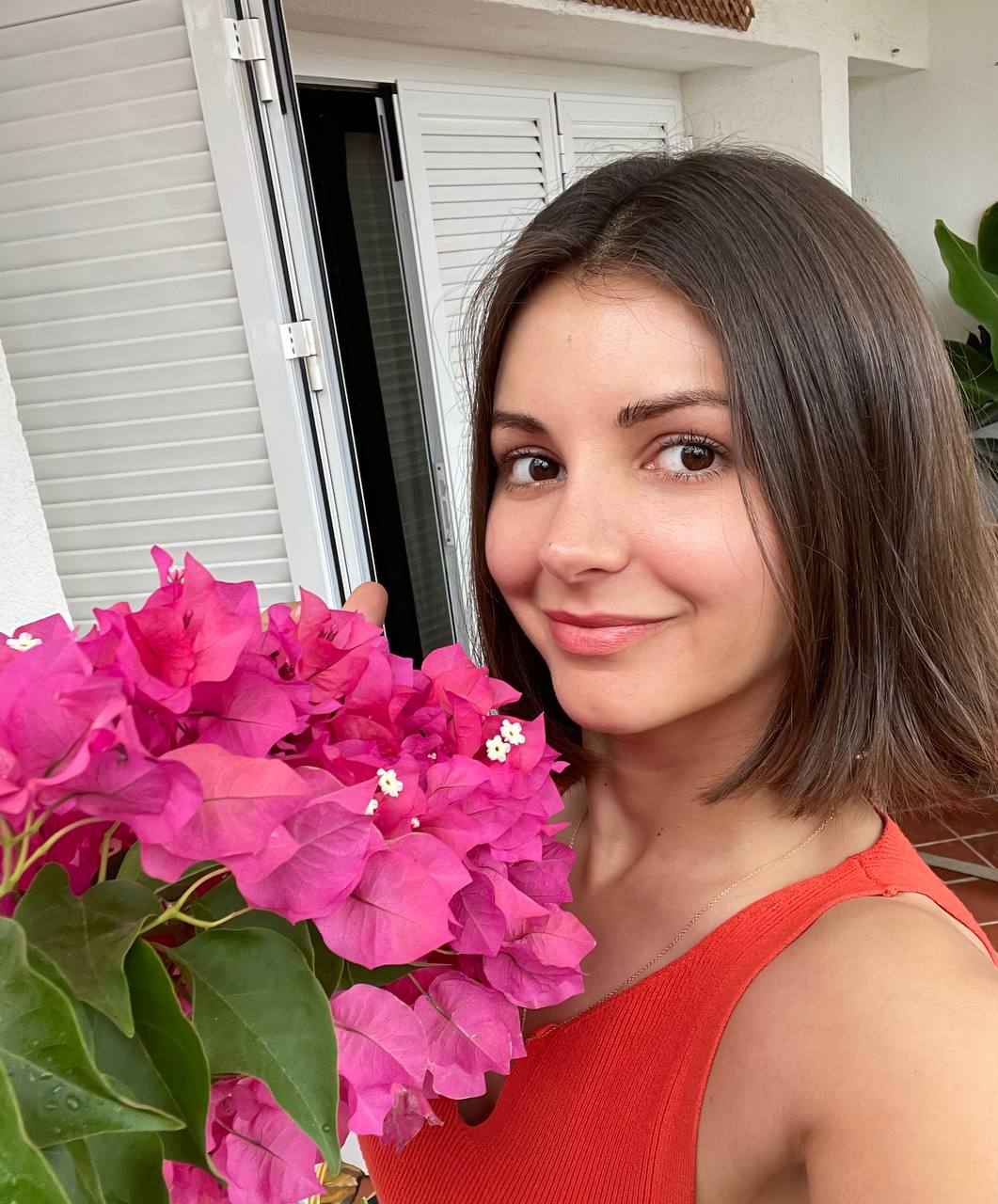
If you are wondering how to be creative, here is the answer I would give you from our home in Tenerife: do not wait to feel creative. Creativity is not a private club for geniuses.
It is something you practise by noticing, combining, trying, finishing and returning.
And if the phrase “creative genius” already makes you feel disqualified, watch Anastasia’s video before reading further. She turns the problem around: sometimes the first creative act is refusing to perform brilliance for other people.
Watch for the quiet problem underneath the title. You do not need a more impressive identity before you begin.
You need a little less comparison and one real thing in front of you.
Anastasia is my wife, the founder of Greeny App, a healthy chef, and the person who can make a simple Mediterranean meal feel like an event without making it precious.
She works with recipes, meal plans, affirmations, cottagecore details, countryside simplicity and the practical mechanics of a day that feels good to be inside.
I am writing this as her husband and as someone who lives on Tenerife in the Mediterranean region. The island gives us ocean air, markets, volcanic light, green hills and long evenings.

It also gives us wind, work, traffic, laundry, admin and dinners assembled from whatever is still possible at nine o’clock.
This is not a generic list of things creative people do.
It is a long answer to the questions behind the search: can you become more creative, how do you get your creativity back, what should you create when you have no idea, and how can you make creativity part of ordinary life without turning it into another performance?
What does it mean to be creative?
Being creative means making a new connection, a new version, a new solution or a new expression from the material already around you. That material might be paint and paper.
It might also be leftover vegetables, a difficult conversation, a photograph of a familiar street, a work problem or a way of making a home feel more like yours.

A creative person is not necessarily the loudest person in a studio. Sometimes it is the person who notices a pattern, asks a better question, changes one ingredient, finds a kinder way to explain something, or makes a useful object from what is already available.
| Question | Practical answer | A more useful first step |
|---|---|---|
| What is being creative? | Turning attention into something made, changed, solved or shared. | Choose one small thing and alter one part of it. |
| Can you learn to be creative? | Yes. Practice makes beginning less frightening and noticing more available. | Repeat a ten-minute exercise before judging the result. |
| Is creativity only art? | No. Cooking, planning, repairing, teaching and problem-solving all contain creative choices. | Name one creative decision you already make. |
| What makes someone creative? | Curiosity, practice, tolerance for imperfect drafts and the courage to look again. | Make a version before asking whether it is good. |
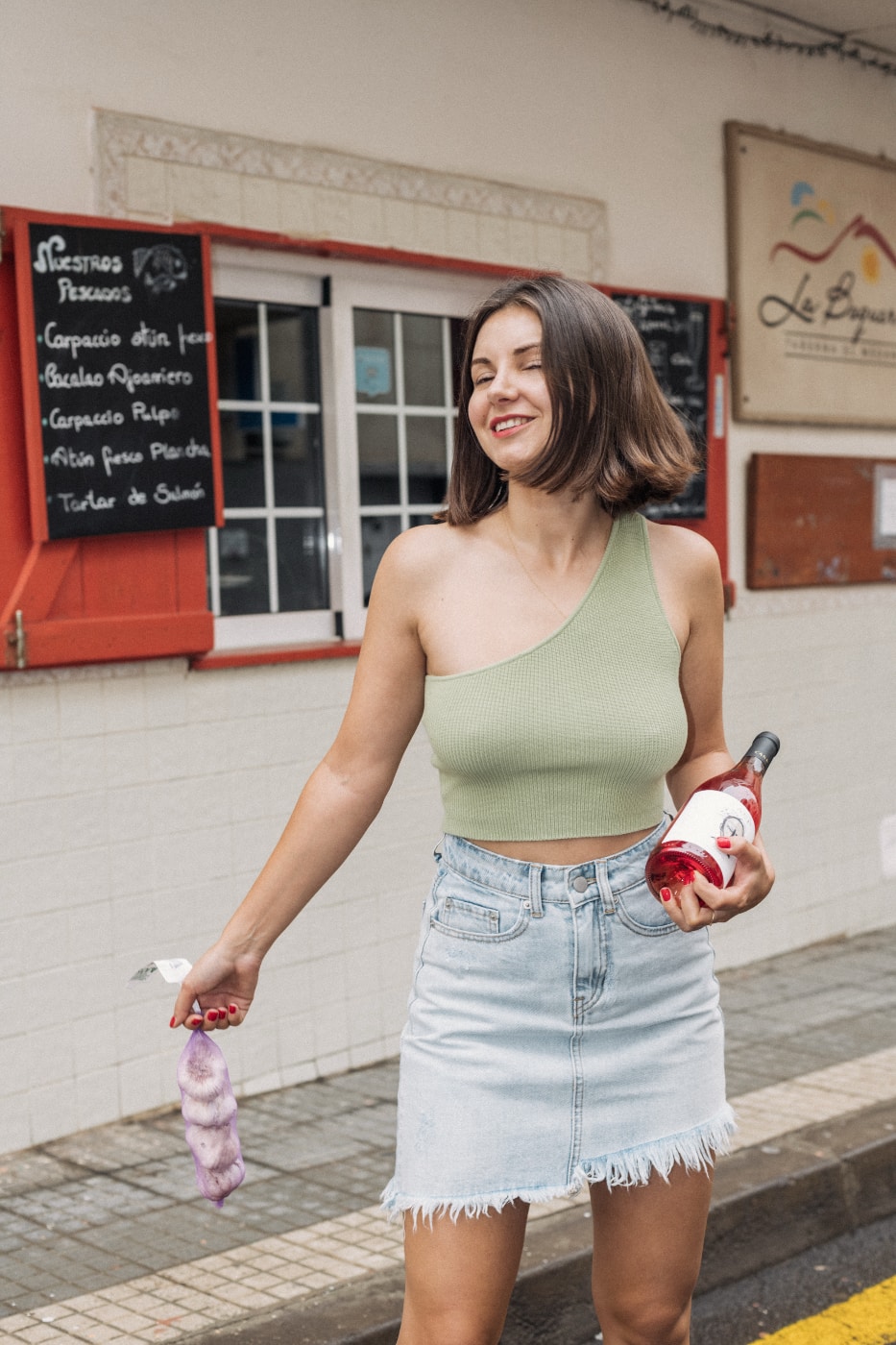
When Anastasia changes a recipe, she is not trying to prove that she is a genius. She is listening to the ingredients, the season, the people who will eat, and the tools we actually have in the kitchen.
That is creativity without being artistic in the narrow sense.
The same is true when you rearrange a room so a tired person can move through it more easily, find a better way to explain an idea at work, or take a different photograph of a place you have seen a hundred times.
Creativity examples in real life are usually less theatrical than the internet suggests.

You do not have to become a different kind of person. You have to give the person you already are one honest chance to make something.
This is why I do not like the sentence “I am not a creative person.” It closes a door that might only need a smaller handle. You can be a creative person in one part of life before you believe the label in all of it.
Why do adults lose touch with creativity?
Most people do not lose creativity in one dramatic moment. They lose the conditions that let it appear.
Work becomes crowded, the phone fills every pause, comparison becomes a background noise, and a tired brain starts choosing the familiar because the familiar costs less.
Then the first attempt looks bad. We interpret that as evidence about our character instead of evidence that we are rusty, distracted, learning or trying something difficult.

The search language is honest here: people want to know how to become creative again, how to get creativity back, and what to do when they want to be creative but do not know how.
Underneath those phrases is often grief for an earlier self who drew, wrote, built, danced, cooked, played or explored without asking whether the result would be impressive.
A child does not usually call a cardboard box a failed piece of architecture. An adult sees the gap between the box and a polished example online, then decides not to begin.
The gap is not a verdict. It is simply where practice would have started.
There is also the problem of consumption. Reading, watching, saving and collecting inspiration can feel like progress because your mind is full.
But at some point, inspiration has to become material: a sentence, a sketch, a meal, a photograph, a question or a small finished object.
If your phone is taking every empty minute, the first creative exercise may be putting it somewhere you cannot reach while you eat. Anastasia made a video about this because she recognised that the device was not only stealing time.
It was making the quiet parts of the day feel unavailable.
You do not need to disappear from the internet. You need a place where your own mind can finish a thought.
Start with one meal, one walk or ten minutes before opening the next feed.
This is not a moral lecture about screens. Some people use a phone for work, care, safety and connection.
The practical question is simpler: where can you recover one small piece of attention for making?

How to be creative: the ten-minute Just Start method
When people ask me how to be more creative, they often expect an idea. I would rather give them a container.
A small container removes enough pressure for the first movement to happen.
Use this method at home, at work, in art, in a kitchen, on a walk or in a notebook. The medium matters less than the sequence.
- Choose one medium: write, cook, draw, photograph, sing, move, garden, arrange, repair or solve.
- Choose one tiny outcome: five lines, one plate, one rough sketch, one photograph, one melody or one changed sentence.
- Add one constraint: one colour, three ingredients, one object, one angle, twenty words or ten minutes.
- Set a timer and begin before researching, buying equipment or asking for permission.
- Make the first version without evaluating it while you are still inside the ten minutes.
- Keep one detail worth returning to tomorrow. It can be a colour, phrase, taste, shape, question or mistake.
The constraint is not a punishment. It is a way to stop the question “What should I create?” from becoming larger than the work. If you only have three ingredients, the pan gives you a direction. If you only have one colour, your eye starts looking for texture.
For creative ideas at home, try photographing shadows on the kitchen wall, writing a short description of the breakfast you usually ignore, making a table arrangement from what is already in the room, or changing one element of a familiar meal.
For how to be more creative at work, take a familiar problem and write three explanations for it: one for a child, one for a busy colleague and one for someone who disagrees with you. The exercise changes the angle before it changes the answer.
For how to be more creative in art, make three deliberately different versions before deciding which one is good. One can be too simple, one too strange and one close to the original idea.

The useful version often appears because the first version had company.
For something creative to do when you are tired, choose the smallest possible act: one sentence, one ingredient, one photograph, one line of a song, one repaired button or one object moved to a kinder place.
The goal is not to create a masterpiece in ten minutes. The goal is to prove that you can cross the distance between wanting and doing.
That distance gets shorter when you cross it often.
Get Anastasia's creative slow-living secrets by email
Anastasia writes from our Tenerife kitchen about healthy Mediterranean meals, calm cooking rituals, practical affirmations, creative attention and the small choices that make an ordinary life feel more alive. Join the letters for useful ideas you can try without buying a new identity.
- Mediterranean recipes
- Creative kitchen rituals
- Practical slow-living ideas
Free to join. No noise, just useful letters from our home in Tenerife.
A small email invitation belongs here because you have already received a method. The letters are not a substitute for making.

They are a quiet continuation from the kitchen, with recipes, rituals, affirmations and practical ways to notice more.
How to get creative ideas without drowning in content
Creative ideas rarely arrive from staring at the word “idea.” They arrive when attention has something specific to touch. Gather material from books, conversations, markets, weather, music, work, old memories, mistakes and ordinary objects.
Read outside your usual subject. If you normally read productivity advice, try a cookbook, a memoir, a gardening book, a history of design or a novel from another place.
If you draw, study how a chef layers flavour. If you write, watch how a photographer frames distance.
This is not about becoming an expert in everything. It is about giving your mind different pieces to combine.
A creative thinker needs material before the mind can make new connections from it.
Take a walk without turning it into a performance. Notice five things: one sound, one colour, one texture, one movement and one thing that seems out of place.
Write them down or keep them in your head. The point is to let the world become more detailed again.
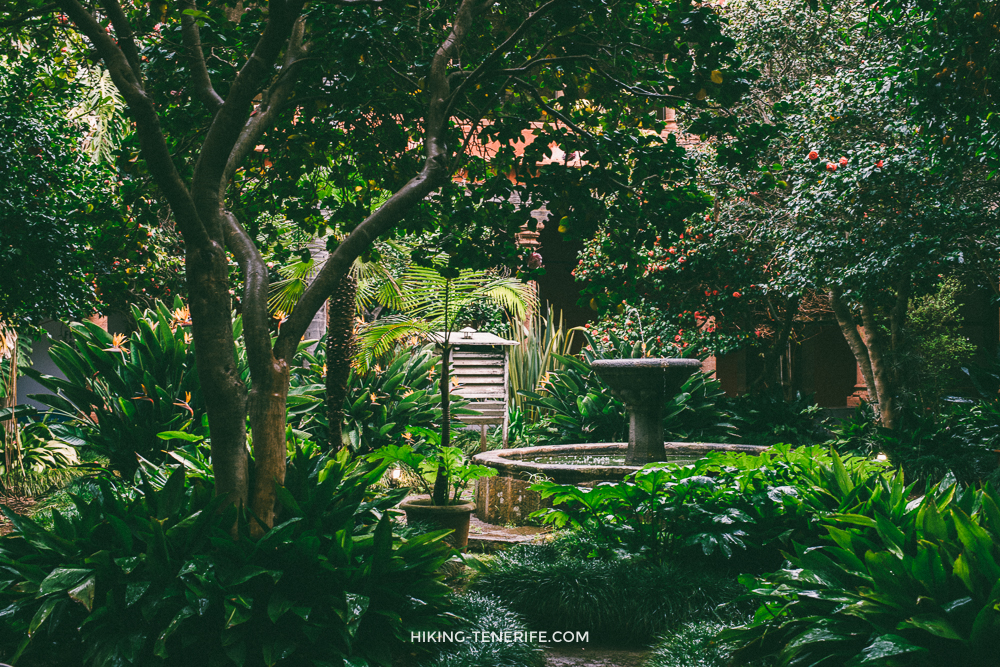
The same street can be a different place when you walk it with a question. What repeats here?
Where does the light stop? What would this sound like in a story?
What could be cooked from the colours in this market? Questions are small doors for imagination.
You can also embrace boredom to become more creative, but do not turn boredom into another challenge badge. Leave a few minutes unfilled and notice the reflex to reach for stimulation.
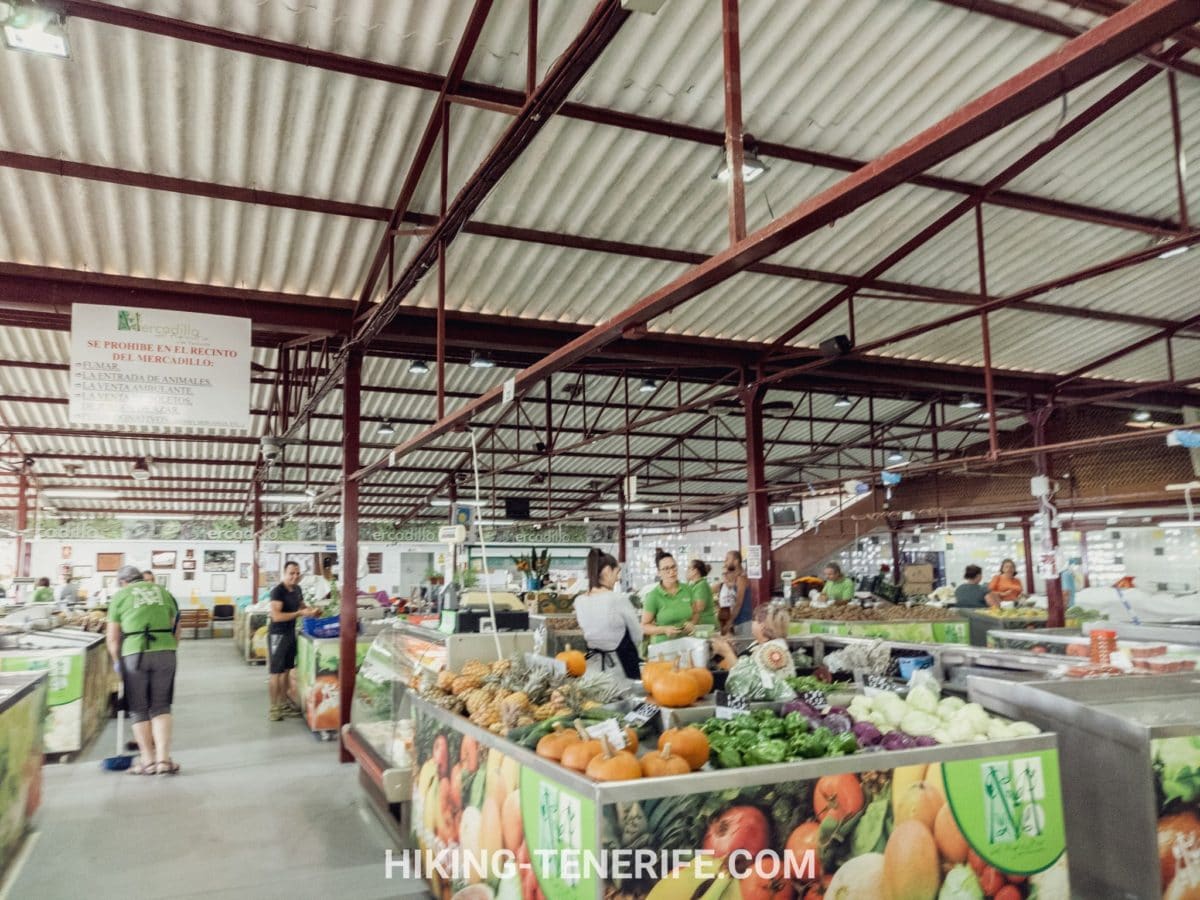
The first feeling may be restlessness. After that, a quieter thought may have somewhere to land.
Nature can help because it changes the amount and type of information around you. On Tenerife, the wind, volcanic slopes, Atlantic light and laurel forests give us a different sensory field from a screen.
This does not guarantee inspiration. It simply gives attention more honest material.

When do you feel most creative? For many people, it is while walking, showering, cooking, commuting, making something with their hands or talking with someone they trust.
Do not treat that moment as mysterious. Ask what conditions are present: less judgment, more movement, a clear constraint, enough quiet or a different view.
Keep a small note called “ordinary sparks.” Put down a phrase, a colour, a food combination, a problem, a question, a conversation or an image. Do not demand that every note become a project. A garden is not failing because every seed has not become dinner.
Creativity in our Tenerife kitchen
Anastasia’s creativity is easiest to see when she is cooking, but even that sentence needs a caveat. She is not creating because every meal is elaborate.

She is creating because she pays attention to what is available, what will nourish us, what the day can hold and what small change will make the food feel like ours.
A Mediterranean kitchen gives you a useful relationship with limits. Tomatoes, herbs, garlic, olive oil, grains, beans, fish, vegetables and whatever is in season can become many different meals.
The ingredients do not need to be exotic for the combinations to be personal.
Sometimes Anastasia starts with a recipe. Sometimes she starts with an ingredient that needs using.
Sometimes she starts with the mood of the evening and the fact that neither of us has the energy for a complicated project. Creativity is not only expansion.
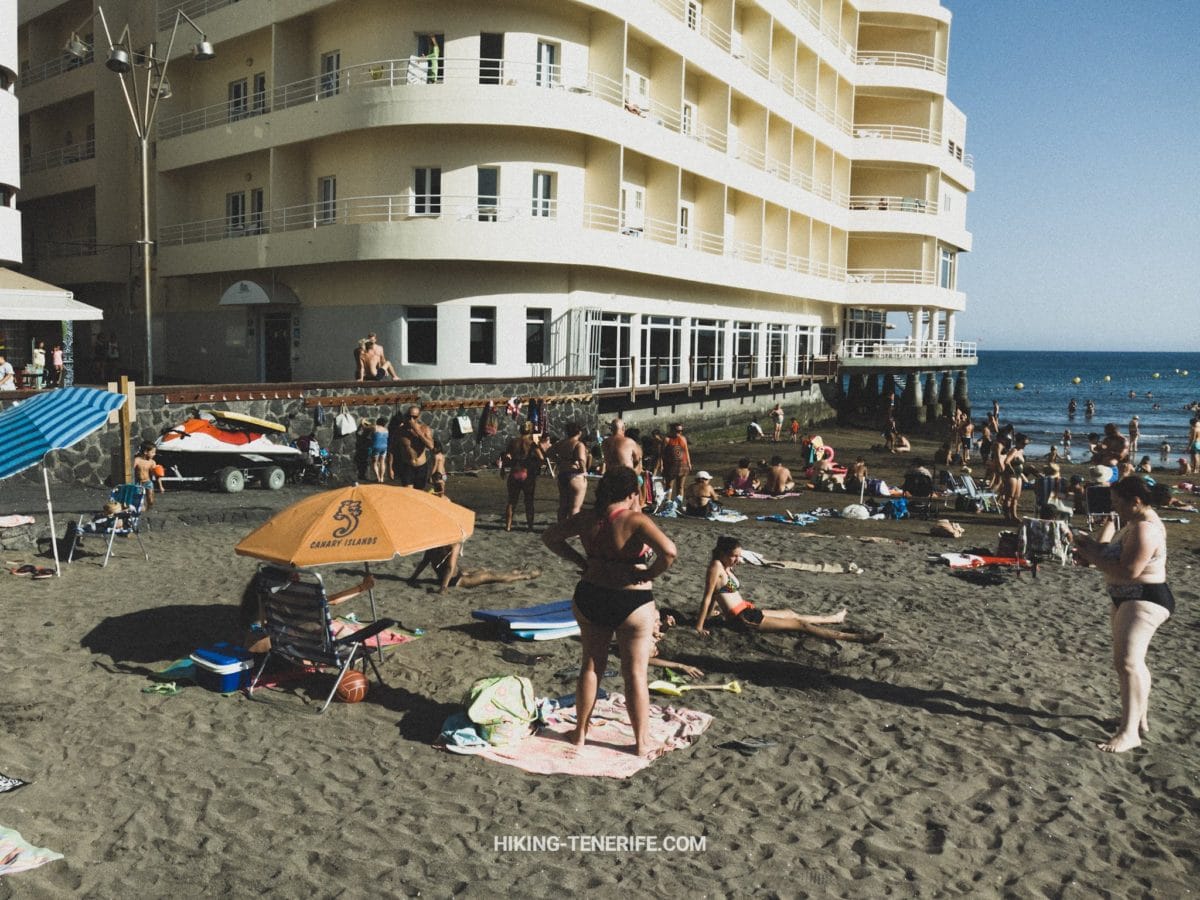
It is choosing well inside the real conditions.
This is why cooking is such a good answer to “what is something creative?” You taste, adjust, compare, remember, improvise and decide. Then the result can be shared. A meal is not a sketch that must stay private. It enters another person’s day.
In this video, notice how home is made through repeated ordinary rituals. That is also how creative confidence grows.
You return to the counter, the notebook, the camera, the garden or the instrument often enough that beginning stops feeling like an announcement.
Our version of slow living is not separate from creative life. Chopping vegetables slows the hands enough to notice.
Setting the table changes the feeling of the meal. A shared dinner gives two people a place to exchange ideas that might never appear in a rushed message.
If you want to make a creative practice from food, keep it gentle: choose one ingredient, learn one technique, change one element, write down what worked, and cook it again. You do not need a new kitchen, a perfect pantry or a paid course to begin.
Healthy food should stay concrete here. We care about nourishment and pleasure.
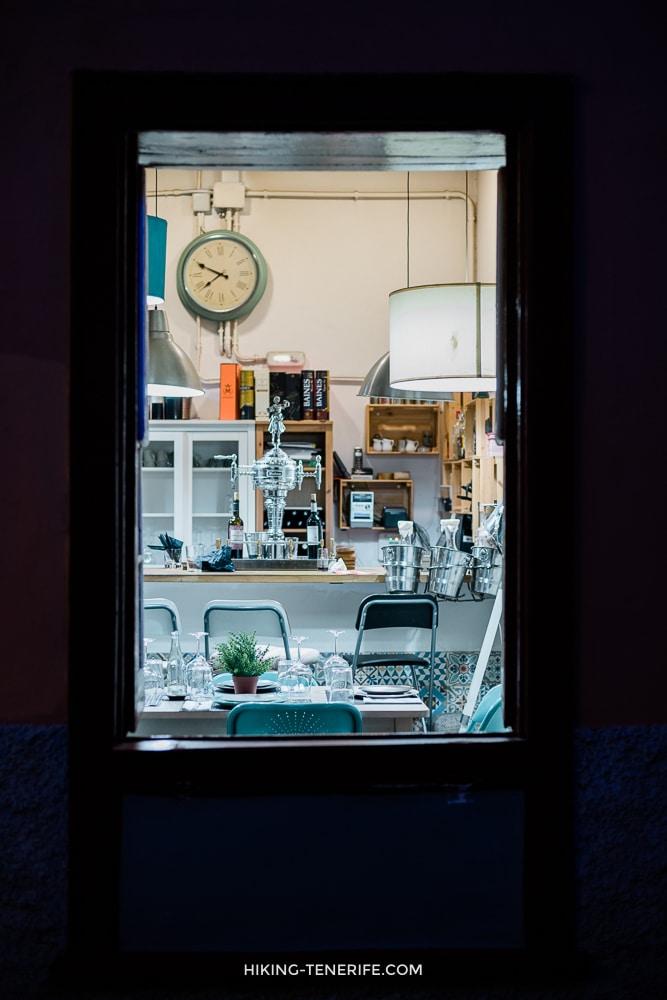
We are not promising detox, treatment, weight loss, perfect digestion or a guaranteed mood. A meal can be good because it is warm, shared, satisfying and possible on the day you are having.
Ways to be creative without being artistic
If you think creativity belongs to painters, writers and musicians, borrow a wider definition for one week. Creative expression can be quiet, useful, relational, domestic, technical or playful.
| Area | A creative choice you can make today |
|---|---|
| At home | Rearrange one corner for the way you actually rest, read or cook. |
| With food | Use what is available and change one flavour, texture or presentation. |
| At work | Explain a stuck problem from three different points of view. |
| In a relationship | Ask a better question instead of repeating the usual conversation. |
| On a walk | Photograph one overlooked detail rather than the famous view. |
| With money | Repair, borrow, swap or repurpose before buying a new solution. |
| For your body | Choose movement that makes you curious rather than punishing. |
| Using creativity for good | Make something that helps another person feel seen, informed or less alone. |
These are examples of being creative because they change the relationship between you and the material in front of you. The final object may be small.
The attention is not.
To show creativity does not always mean publishing it. You can show it to one trusted person, put it on the fridge, serve it at the table, use it at work or keep it in a notebook.
Sharing can create useful feedback, but exposure is not a moral requirement.
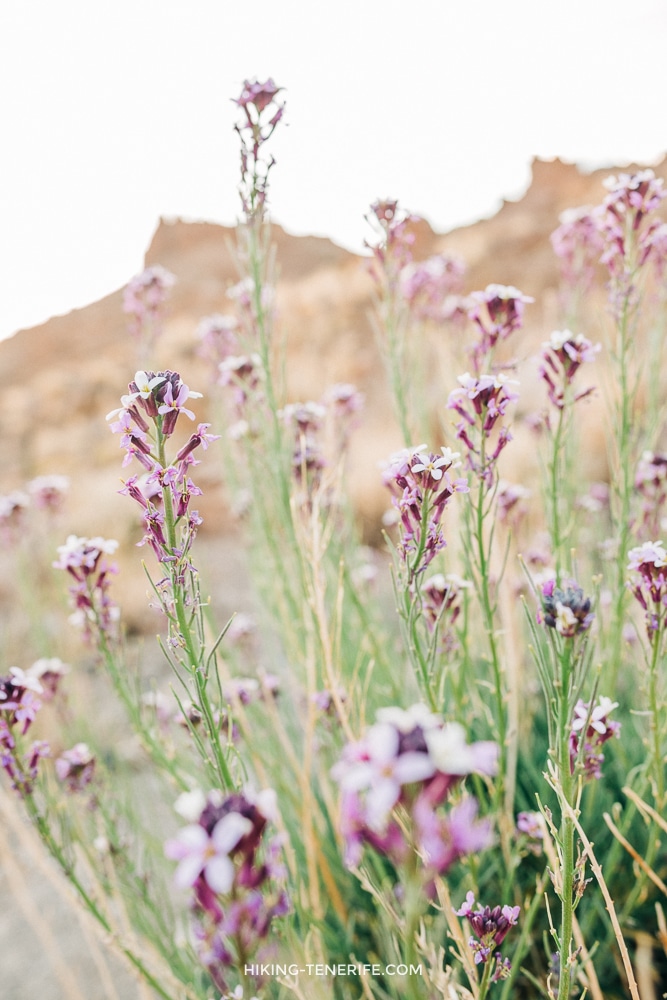
When a reader asks how to be more creative in life, I would include the way you speak to people. A thoughtful message, a remembered detail, a handmade gift or a conversation that makes space for another person is not less creative because it is not displayed.
There is also creativity in choosing what not to add. A simpler dinner, an empty afternoon, a repaired chair or a familiar route can be a deliberate decision.
More options do not always create more freedom. Sometimes they scatter attention before the work begins.
Being unique is not the same as trying to look unlike everyone else. It can mean allowing your real circumstances, memories, tastes, limitations and relationships to shape what you make.
The result becomes yours because your life touched it.

Use constraints instead of waiting for confidence
A blank page is not always freedom. Often it is an enormous question.
Constraints make the beginning smaller, and a smaller beginning gives the mind something to push against.
Try one of these creative tips: cook with one seasonal ingredient, write five lines about one sound, take photographs only of shadows, use three colours, make a meal from what is already in the kitchen, or create three versions before choosing one.
If you want to become more imaginative, change the rule rather than demanding a more imaginative brain. Ask what would happen if the object were tiny, the meal were made for a child, the photograph had no landmark, or the story began at the end.
Copying can also be useful when you are learning. Copy a structure, a rhythm, a technique or a composition to understand how it works.
Then change the material, intention, audience or point of view. Copying without transforming stays an exercise.
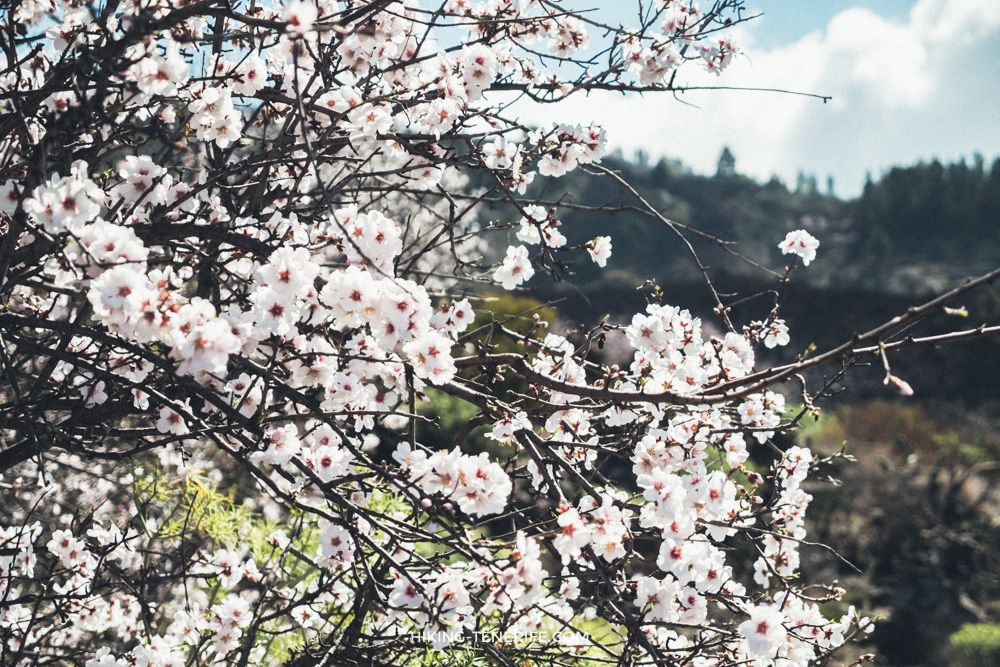
Copying that teaches you how to choose becomes a bridge to your own work.
Anastasia’s letter about owning less is useful here because creativity does not need a shopping spree. A smaller set of tools can make you more attentive to what each tool can do.
The point is not deprivation. It is freedom from believing the next purchase will finally permit you to start.
You can make something from leftovers, use a notebook you already own, photograph with the phone you already have, write with the pen in the drawer or learn from an object before replacing it. This is a practical form of enough.
A constraint also protects you from perfectionism. If the exercise is “one pan, three ingredients and twenty minutes,” you cannot pretend that a year of research was required. You have to make a decision and see what happens.
The first result may be ordinary. That is fine.
The work is teaching you what the next version needs. Improvement is easier when there is a version to improve.
Make space for ideas without making life rigid
James Clear’s practical lesson is that creativity grows when you show up, finish small things, stop judging too early and return. I agree with the direction, but I would soften the language for ordinary life: a creative practice needs a reliable doorway, not a punishing schedule.

Choose a repeatable time if that helps. Ten minutes after coffee, before the school run, on a lunch break, after dinner or during a weekly market trip can become a cue.
But do not turn a missed Tuesday into proof that you have failed.
There are seasons when work, care, illness, travel, parenting, money or grief take the available space. The question then becomes: what is the minimum version that keeps the relationship alive?
- Full version: thirty minutes of making, followed by a note about what you learned.
- Normal version: ten minutes and one small outcome.
- Difficult-day version: two minutes of noticing, one sentence, one ingredient changed or one photograph.
- Return version: open the unfinished thing and touch it again without explaining the gap.
Quiet can help. So can walking, reading, sleep, conversation, movement and time away from automatic input.
None of these is a guaranteed creativity hack or a treatment for anxiety, burnout or any health condition. They are simply conditions that many people find more hospitable to attention.
A creative mindset is not constant excitement. It can be patient, curious, bored, uncertain, amused or slightly annoyed.
You can create while feeling flat. You can also feel inspired and still need to do the work.
This is where slow living helps us. It gives the mind a little less pressure to turn every moment into output.
A sunset can be a sunset. A walk can be a walk.
An idea can stay unfinished for one night without becoming a failure.
If you want to know when you feel most creative, ask what you were doing just before the idea arrived. Then recreate only one condition.
Do not copy an entire morning routine from someone online. Borrow the part that made attention possible.
How to get your creativity back after a long pause
Do not restart with your most important project. Restart with a low-stakes one.
The point of returning is to rebuild trust between your intention and your hands.
Choose a hobby you abandoned and make a deliberately unambitious version. Bake the simplest thing.
Draw the object on the table. Write one paragraph.
Take one photograph. Play one scale.
Grow one herb. The first task is not to recover your old identity.
It is to make contact again.
If you are blocked by comparison, remove the audience for a while. Work privately or show one trusted person.
If you are blocked by too many ideas, use a constraint. If you are blocked by not knowing what to create, copy a structure and change the subject.
If you are blocked by exhaustion, believe the exhaustion. A tired body is not a character flaw.
Try the two-minute version, or let rest be the thing you chose intentionally that day.
When the weather changes on Tenerife, we do not always force the outdoor plan. Sometimes the creative choice is staying in, making soup, editing one photograph, reading a few pages or arranging the kitchen so tomorrow is kinder.
Getting creative again is less like finding a lost object and more like returning to a path. The first walk may feel unfamiliar.
It becomes familiar because you take another one.
A bad first attempt is not a reliable description of your future. It is only the first piece of evidence that you began.
A seven-day Just Start experiment
If you want a concrete way to become more creative, try this seven-day experiment. Keep it small enough to survive a normal week.
You can use writing, cooking, photography, drawing, music, gardening, design, craft or problem-solving.
- Day 1 — Notice: record five ordinary details: a sound, colour, texture, movement and question.
- Day 2 — Gather: collect three pieces of material from a book, conversation, market, walk or memory.
- Day 3 — Borrow: copy a structure or technique from something you admire, without pretending it is finished work.
- Day 4 — Change: alter three elements. Change the order, scale, ingredient, colour, voice or setting.
- Day 5 — Constrain: make one small thing with a timer, a limited toolset or a fixed number of parts.
- Day 6 — Finish: stop researching and complete a version. Share it privately if feedback would help.
- Day 7 — Return: write down what felt alive, what felt heavy and what smallest ritual you want to repeat.
Do not measure the week by how impressive the outcomes look. Measure it by whether you noticed more, made more decisions, finished something and came back after an awkward attempt.
You may discover that you feel most creative in the kitchen, on a walk, while writing to someone, solving a work problem or arranging a room. Let the answer be specific.
Creativity is not a personality test you pass. It is a relationship you learn to recognise.
This is why I wanted Anastasia’s “life you do not need to escape from” video near the experiment. A creative life cannot be built only from special retreats. It needs ordinary places to return to: the kitchen, the table, the street, the notebook, the person beside you and the quiet after the phone is put away.
If you miss a day, continue with the next day. The experiment is not a new way to measure yourself.
It is a way to make one small act easier to repeat.
Common mistakes that make creativity harder
The internet can turn a useful practice into a polished identity. Here are the mistakes I would watch for.
- Waiting for inspiration before starting. Inspiration often becomes clearer after the hands have begun.
- Calling yourself uncreative. Replace the label with a concrete description: rusty, tired, distracted, learning or unsure what to make.
- Comparing a first attempt with someone’s public best work. You are comparing a beginning with an edited result.
- Consuming tutorials instead of making. Set a ratio: one piece of input, then one small output.
- Buying equipment as a form of postponement. Use what you have until a real limitation appears.
- Copying without changing anything. Borrow structure, then let your own life enter the work.
- Judging the first version as the final verdict. Finish, rest, return and revise.
- Making every day productive. Some days creativity is noticing, resting, listening or protecting attention.
- Treating slow living as an aesthetic performance. The mug, linen, cottagecore detail or beautiful meal is not the practice by itself.
- Expecting nature, meditation, sleep or a new routine to guarantee a breakthrough. They may support attention; they cannot promise an outcome.

The most dangerous mistake is turning creativity into another way to dislike yourself. We already have enough systems for that. The useful question is not “Why am I not brilliant yet?” It is “What is the smallest honest thing I can make today?”
On a good day, make more. On a difficult day, make less.
The practice stays yours because it can bend without breaking.
Creativity questions people ask
Can anyone become more creative?
Most people can improve their creative habits. You do not need to become equally skilled in every medium.
Start by practising attention, making small versions, using constraints, finishing and returning.
What if I have no creative ideas?
Give yourself material and a smaller question. Walk, read, cook, notice, copy a structure, combine two unrelated things or change one familiar object. “What should I create?” is often too large; “What can I change in ten minutes?” is more useful.
Is creativity only for artists?
No. Creativity appears in cooking, problem-solving, relationships, teaching, gardening, planning, repairing, photography, writing, movement and the way you make an ordinary day feel personal.
How do I become creative when I have no time?
Use a minimum version: one sentence, one photograph, one changed ingredient, one sketch or two minutes of noticing. A small practice that survives your real life is more useful than a perfect routine you cannot repeat.
How do I stop judging my work?
Separate making from reviewing. Set a timer, finish the first version and wait before deciding what it means.
Use kind, specific feedback: what is working, what is unclear and what could change next?
Is copying useful for learning creativity?
Yes, when you use copying to understand a structure or technique and then transform it. Change the subject, purpose, audience, ingredients, voice or point of view so your own experience enters the work.
Does walking in nature really make you more creative?
Walking and nature can give attention different sensory material and a break from automatic input. They do not guarantee an idea.
Go because the walk is useful in itself, and let any creative benefit be a welcome result.
How do I get creative again after abandoning a hobby?
Return through a low-stakes version. Make the simplest thing, work privately, use a constraint and stop before the activity becomes punishment.
You are rebuilding contact, not proving that you are the person you were years ago.
How can creativity help my life?
It can help you see more options, solve problems, express care, make useful things, notice beauty and participate in your own life rather than only consuming other people’s work. The benefit is practical and personal, not a guarantee of health or success.
What can I do on a tired or stressful day?
Choose the smallest return: put the phone away for one meal, notice one detail, change one ingredient, write one sentence, repair one thing or rest without calling it failure.
Receive Anastasia's Mediterranean creative letters
Join Anastasia from our Tenerife home for healthy Mediterranean recipes, calm kitchen rituals, practical slow-living mechanics, meal plans, affirmations, cottagecore details and gentle encouragement to make something real.
- Healthy Mediterranean food
- Creative attention
- Letters from Tenerife
Free to join. Come for one useful idea and stay for the quiet company.
You do not need to leave Tenerife, buy a cottage, become an artist or wait for a better version of yourself. Put one ordinary thing in front of you.
Notice it. Change one part.
Finish a small version. Then come back tomorrow.
That is how to be creative, as far as I understand it from our kitchen and this island. Just start.
The genius can arrive later, or not. The making is already enough to begin.

