

Short answer: surfing near Taganana means Playa de Almáciga, not the village itself. This is a powerful, open-ocean beach on the Anaga coast for surfers who can make a conservative live decision; it is not a romantic first-lesson shortcut.
Taganana is one of the most beautiful corners of Tenerife: steep mountains, black sand, big Atlantic water and a road that makes the island suddenly feel much larger.
Local detail: the surf part of the story happens at Playa de Almáciga, the nearby beach beneath the Anaga slopes. Taganana is the village and route reference.
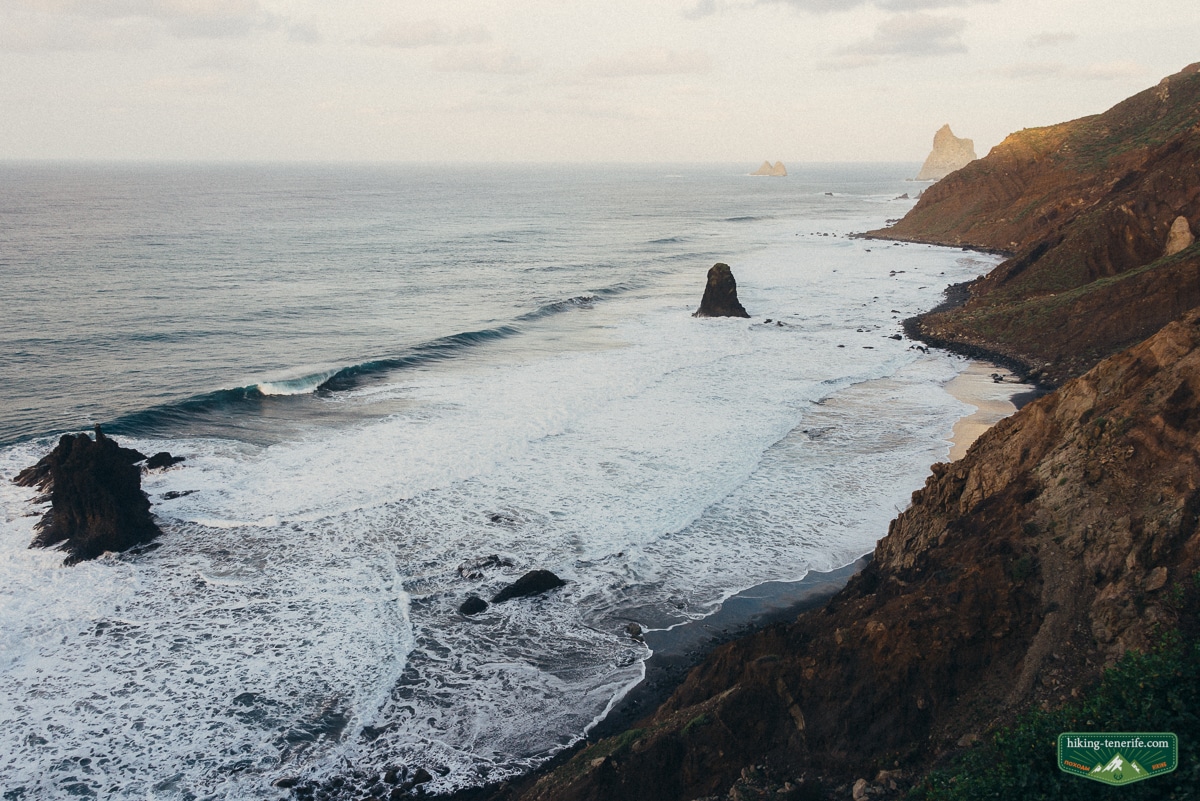
I still love combining this coast with a walk or a long lunch. But I would never treat the waves as an extra activity to tick off because the photo looked dramatic. Here, the sea gets the final vote.
Quick Verdict
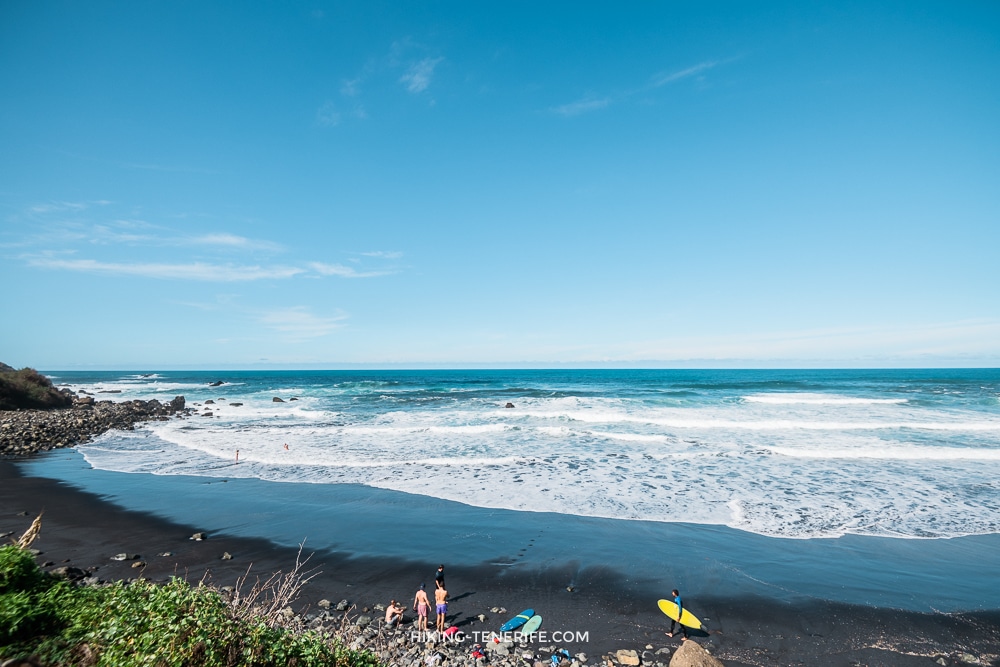
Almáciga is an exposed black-sand beach with stone and gravel sections, strong surf and changing currents. The big draw is obvious. The practical catch is just as obvious once you stand there.
| Consider it if | You are already capable of assessing an exposed beach break with local input and a real exit plan. |
| Leave it alone if | The shorebreak, current, wind, flags, forecast or your own confidence makes the answer anything but clear. |
| Not the answer for | A casual beginner session, solo experimentation, a fixed timetable, or a no-car day with no return plan. |
| Use the name correctly | Taganana is the village; the beach discussed here is Playa de Almáciga, near Benijo on the Anaga coast. |
Local verdict: this is surfing north Tenerife at its most beautiful and least forgiving. If you need the article to persuade you that today is a good day, it probably is not.
“The sea gets the final vote here.”
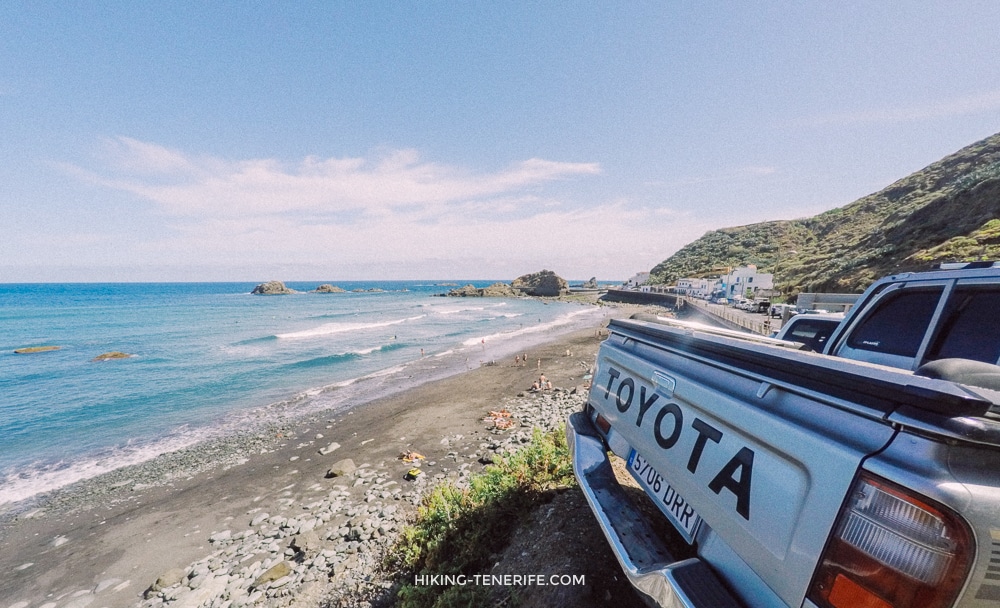
Where The Surf Actually Is
Use Taganana as the wider place name, not as a promise that the village has one simple surf spot. The beach in this article is Playa de Almáciga, on the north-east Anaga coast.
Benijo and Roque de las Bodegas are separate nearby beaches with their own tide space and exposure. They are orientation points, not interchangeable surf entries.
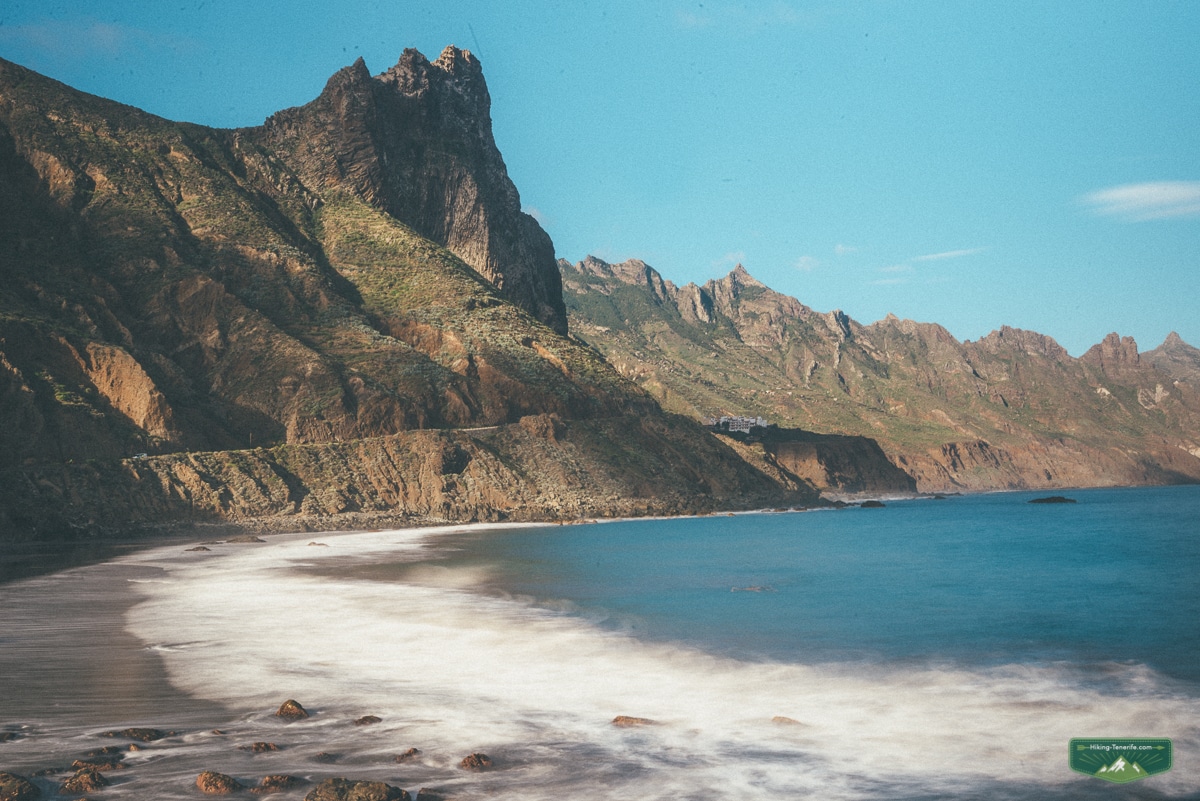
Almáciga is open to the ocean. It has dark volcanic sand, but also rock and gravel areas. The cliffs and Roques de Anaga make it feel cinematic; they do not make the entry, current or exit easier.
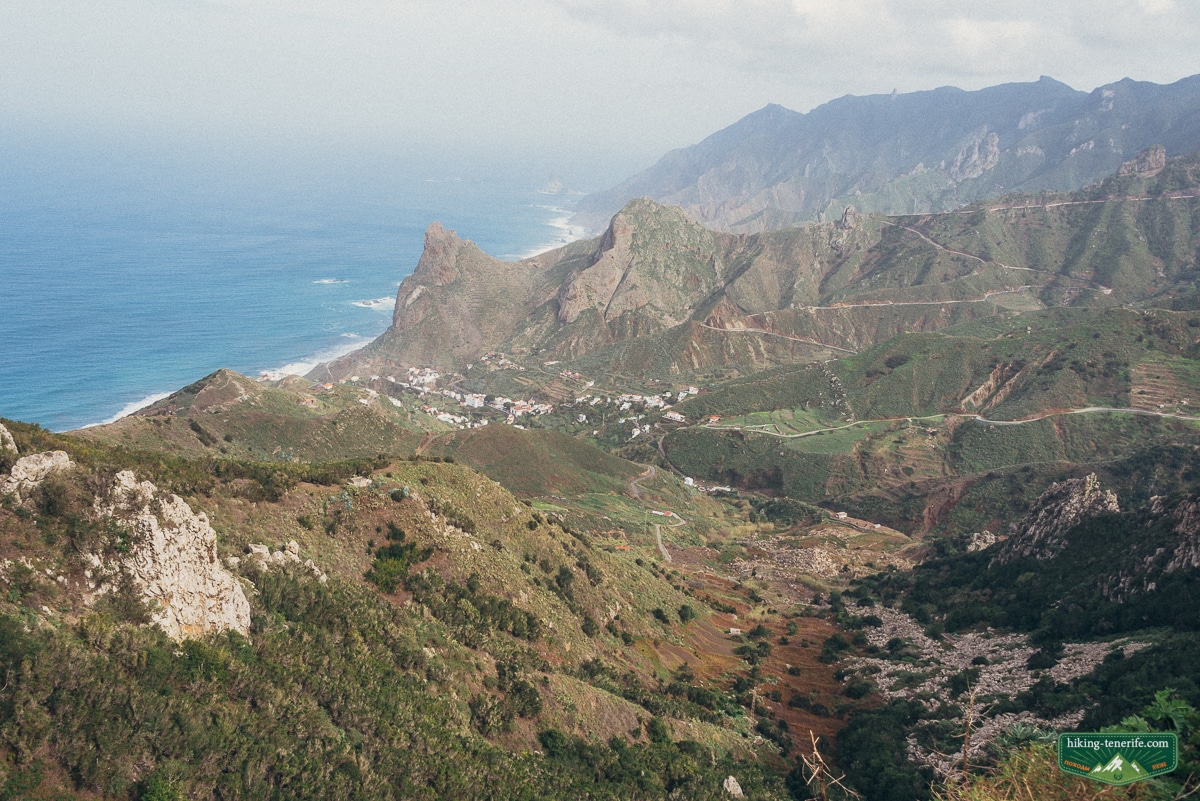
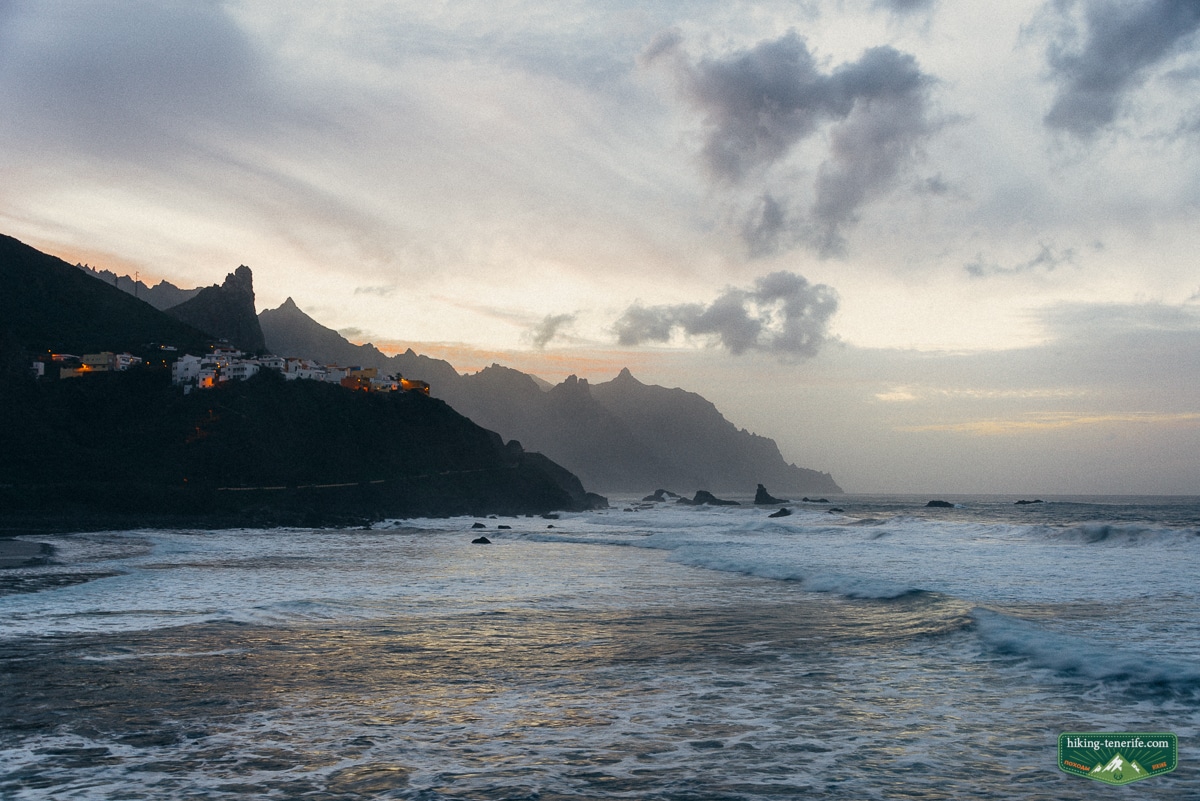
Map note: search for Playa de Almáciga, not only “Taganana surf.” Use the exact beach for the forecast, route and transport check, then judge the actual shore before deciding anything. For wider context, see my guide to black-sand beaches in Tenerife.
The Live Decision Gate
There is no dependable “best season” that makes Almáciga suitable by calendar. Swell, wind, tide, current and the beach itself can make any day the wrong day for you.
Seasonal rescue cover is not a surf-season recommendation. Use current official information and make the decision again at the shore.
- Check the AEMET coastal forecast and warnings and Puertos del Estado ocean information before leaving your base.
- Check the municipal beach information, flags, notices and the sea you can actually see on arrival.
- Watch several wave sets, visible current, people already in the water and their exit before carrying a board down.
- If a lifeguard, experienced local or professional says no, that is the plan. Do not negotiate with the Atlantic.
Safety rule: a favourable forecast is only a screening check. At Almáciga, official flags, visible current, changing waves, local judgement and your ability to exit safely matter more than a saved forecast screenshot.
“If the answer is not clear, the answer is no.”
Do not make a solo session the default on a remote coast. Keep a charged phone, tell someone your plan, know that 112 is the emergency number, and do not rely on a seasonal rescue service to turn a marginal decision into a sensible one.
Santa Cruz municipal beach information lists rescue and lifeguard service from 1 June to 30 September, 09:00 to 20:00. Do not assume coverage outside those dates or hours.
A lifeguard service is not a reason to enter. Follow flags and rescue instructions, and leave the water when conditions change.
Access, Road, Parking And No-Car Reality
You reach Almáciga on the Anaga road network, including TF-134. It is a real mountain-and-coast drive, not a quick beach detour from the resort south.
Check current Tenerife road information after bad weather, warnings or works before starting the descent.
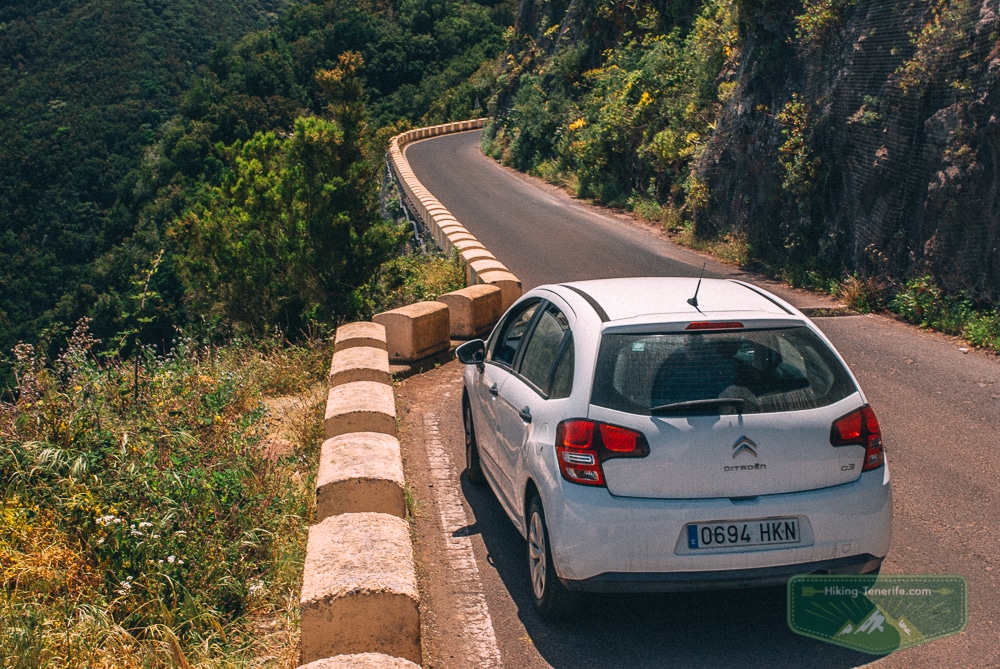
Parking is limited, and official measures are intended to keep road shoulders, bus turns and residential access clear. Use only a legal marked space.
Do not block access or turn a bend into a loading bay. If there is no legal space, continue with another plan.
Parking mistake: if the only place for your car would narrow the road or a resident’s access, it is not a parking place.
Without a car, TITSA line 946 links Santa Cruz, San Andrés, Taganana and Almáciga. Read the live outward and return timetable before committing to the coast.
The free line 948 may run between Azanos, Almáciga and Benijo during selected high-demand periods, but it is seasonal rather than a guaranteed daily service. Keep enough daylight and margin for the confirmed service you will actually use.
Plan like this: treat a no-car Almáciga day as a coast-and-walk day first. If the sea says no, you still have Anaga scenery and a safe way home instead of a stranded surf mission.
“Remote coast means flexible plans. Keep the good day even when you skip the water.”
Who Should Go Elsewhere
Beginners and less confident surfers should not use Almáciga as a casual initiation just because its sand can look forgiving in a photograph.
My honest answer: the changing current, exposed sea, remote access and hard-to-predict exit make another beach the better first lesson.
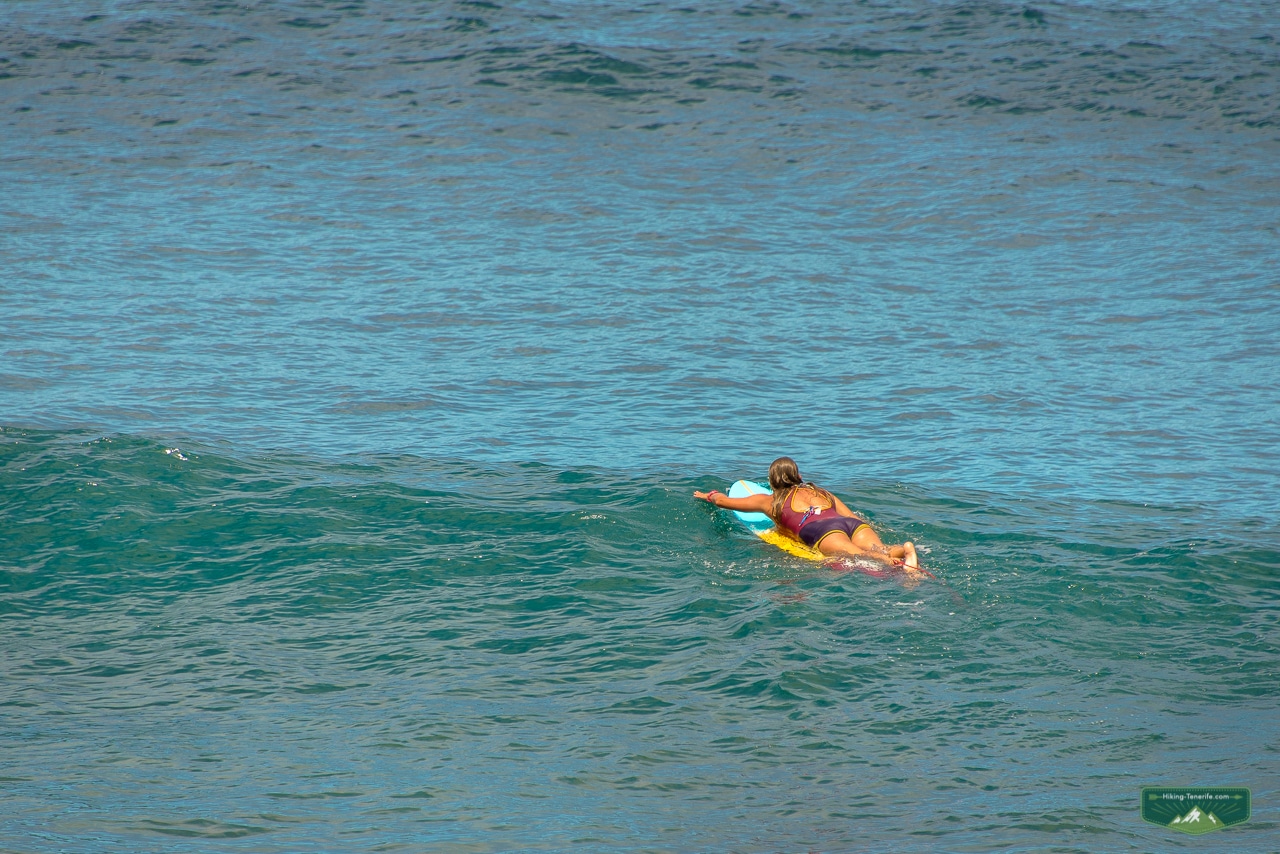
For a first proper session, choose supervised instruction and let the instructor select the beach for that day.
A more accessible teaching setup is the safer conversation to have. Every Tenerife surf area still has its own rocks, currents, crowds and local rules.
Use my full Tenerife surfing guide to compare the regular surf options honestly. It keeps Almáciga in its proper place: a specific Anaga-coast decision, not a substitute for every surfer or every level.
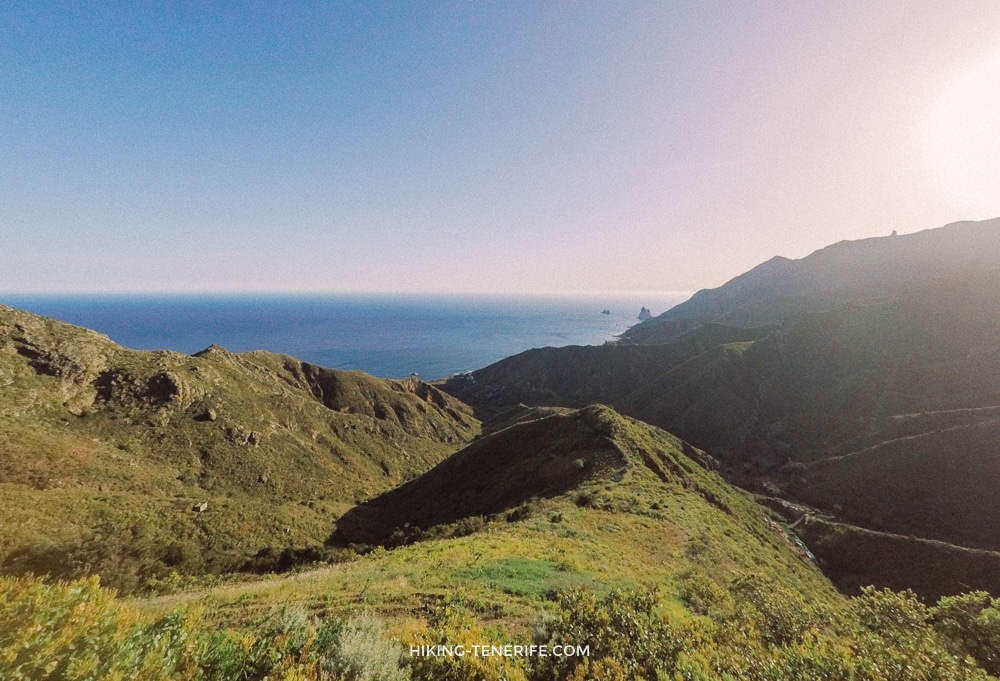
Common mistake: calling Almáciga “good for beginners” because you saw foam and a sand patch. Foam is not a lesson plan. If the conditions or access feel complicated, make it a beach-and-viewpoint day instead.
Make It A Respectful Anaga Day
Taganana, Almáciga and Benijo are worth visiting even when you do not surf. Join one coastal stop with a short, sensible walk.
Give the mountains and sea enough time instead of forcing five Anaga pins into one afternoon.
Bring water and food rather than depending on one café being open at the exact moment you need it. Keep paths, driveways and beach access clear.
Camping is prohibited on and around Almáciga. Take every bit of rubbish home, and do not climb cliffs or shortcut closed land for a better angle. The Anaga Biosphere Reserve beach guidance is the current official orientation.
If you want to understand the wider roads, walks and coast rather than treating this beach as an isolated pin, read the Anaga Rural Park guide. It is the better companion for the landscape; this page is deliberately about the narrow surf decision.
Planning tip: the north-coast road is slow by design. Leave a buffer for viewpoints, buses, weather and a no-surf decision. My north Tenerife guide helps build that wider day.
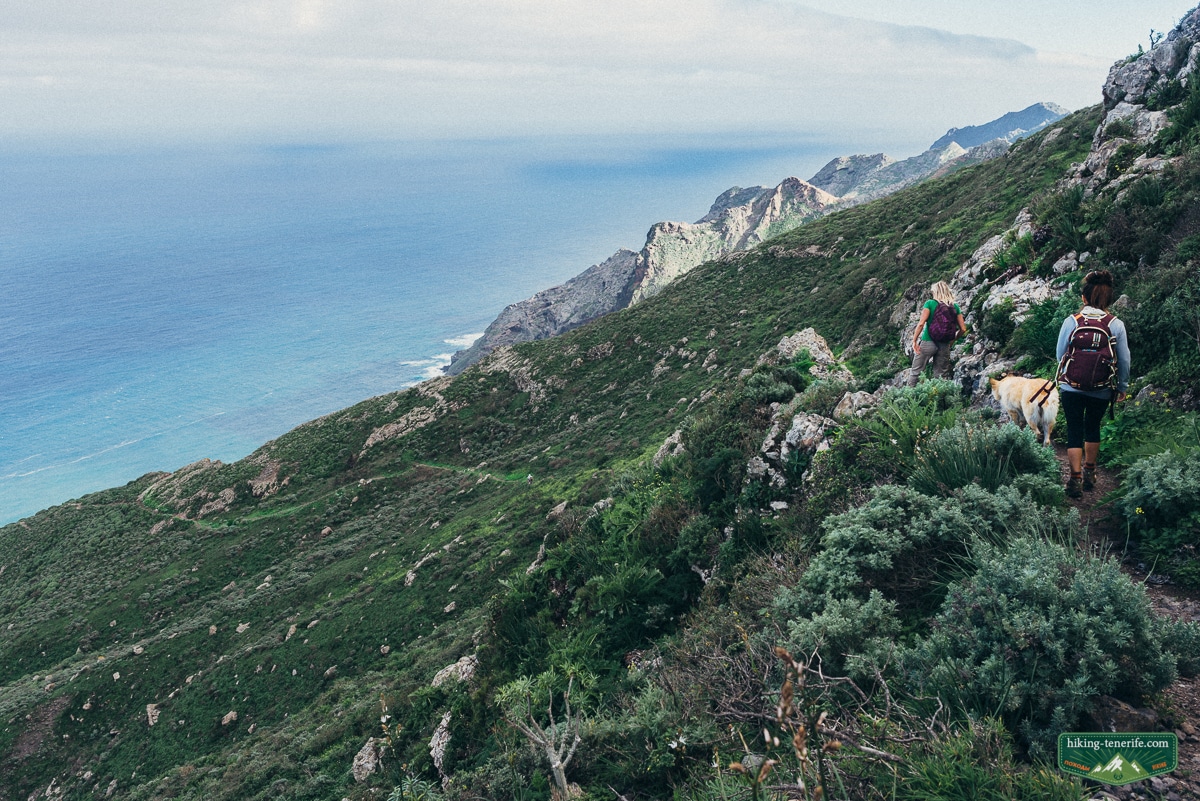
“Leave the mountains and the residents a little more space than you found them.”
Planning a careful Anaga day? Use the free English Tenerife map to place Taganana, Almáciga and the wider north-coast guides before road conditions, parking and daylight shape your route.
FAQ
These are the stable planning answers. They do not replace the live check you need on the actual day.
Is Taganana the surf spot?
Taganana is the mountain village and route reference. The beach this article means is Playa de Almáciga, on the Anaga coast near Taganana and Benijo. Name the actual beach when checking the forecast, flags or transport.
Is Almáciga good for beginner surfing?
I would not use Almáciga as a casual first-surf beach. It is open to the ocean, has strong surf and changing currents, and the access is remote. A supervised, accessible teaching session elsewhere is the better first decision.
Can I reach Almáciga without a car?
Yes, line 946 links Santa Cruz, San Andrés, Taganana and Almáciga, but it is a timetable decision rather than a flexible surf shuttle. Check the current return service before committing to the beach, especially when daylight or conditions may change your plan.

