

People ask me about jellyfish, sharks, snakes and mosquitoes before they ask about currents, heat or mountain weather. I understand. A blue float on the sand looks more dramatic than a yellow flag. But Tenerife is not a wildlife-thriller holiday. The risks that actually change a good day are usually the ordinary ones: sea conditions, sun, wind, uneven ground, a road taken too late, and a plan that refuses to change.
This guide answers the real questions visitors ask before a trip: what is normal, what deserves care, and when to stop trying to solve it yourself and get help. Start with the wider island picture in my Things to Do in Tenerife guide if you are still choosing a first-week plan.
Planning note: build the holiday around choices, not guarantees. Keep one easy town or food plan in reserve. Tenerife becomes much simpler when a beach, trail or road can be postponed without drama.
Short answer: Tenerife is a sensible place to travel when you use a supervised beach for swimming, respect flags and lifeguards, protect yourself from sun and heat, check weather before hikes or mountain drives, and leave wildlife alone. I would spend less energy worrying about sharks and more energy deciding whether today is actually a swimming day.
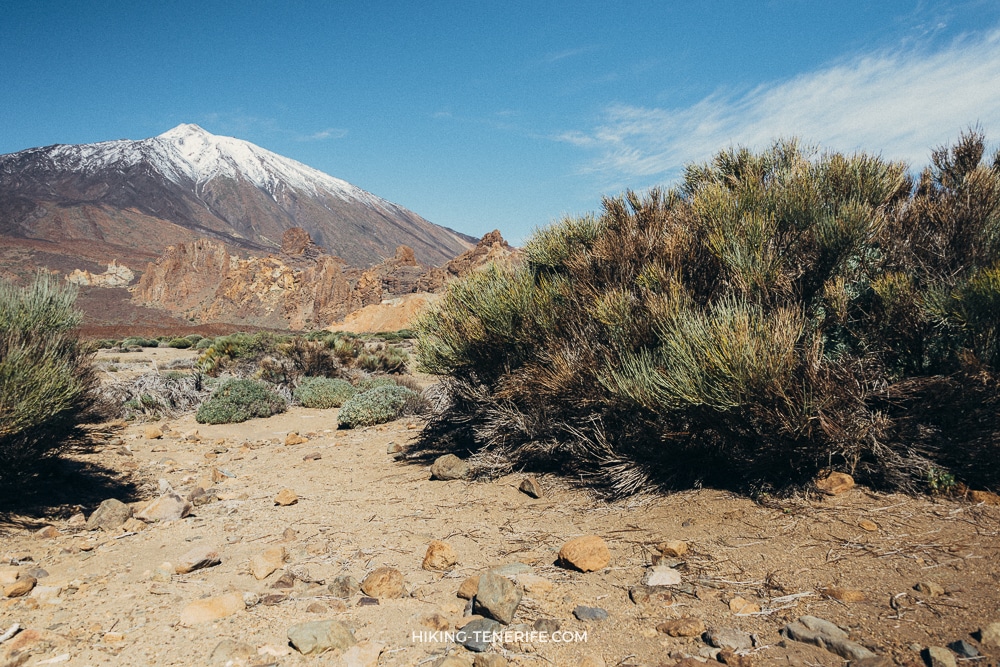
What Visitors Actually Need To Worry About
The useful answer is not one dramatic warning. It is a small set of decisions repeated through the week. The ocean can be beautiful and unsuitable at the same time. The coast can feel easy while Teide, Anaga or a north-road day needs warm layers, daylight and another forecast. A calm holiday gets safer when you let each place be what it is.
| Situation | Normal | Take care | Get help |
|---|---|---|---|
| Wildlife | See lizards, fish or a mosquito and leave them alone. | Jellyfish reports, rocky entries or an unfamiliar animal mean more distance, not closer photographs. | Urgent or worsening symptoms after a sting or bite need local medical assessment. |
| Beach | Green flag and lifeguard guidance still require common sense. | Yellow flag, waves, currents, wind, jellyfish signage or no lifeguard change the plan. | Someone in trouble in the water: alert a lifeguard, call 112 and do not become a second casualty. |
| Heat and walking | Short shaded walks, water and a simple route are normal. | Heat, calima, wind, wet rock, low cloud or a late start mean shorten or swap plans. | A fall, serious illness or a lost person in unsafe conditions needs emergency help. |
| Driving | Slow mountain roads can be a lovely part of the day. | Darkness, fatigue, wind, poor visibility and rushing make them a bad shortcut. | After a crash or serious road emergency, call 112. |
Local verdict: Tenerife rewards the traveller who changes one plan. Skipping a swim, moving lunch inland or leaving Teide for tomorrow is not losing a holiday day. It is usually how you keep the good part of it.
Beach Flags, Waves And Currents: The Main Water Decision
If swimming matters to your holiday, choose a beach with lifeguards and read the beach before you read your hotel brochure. The current Canary Islands bathing guidance is simple: green does not remove the need for judgment, yellow means caution, and red means do not enter. If you are not a strong swimmer or you have children with you, yellow is a good reason to choose a different plan.
Do not stand on rocks, breakwaters or piers for a closer wave photo. Do not let an inflatable decide how far you drift. And do not assume the south is automatically calm or the north automatically impossible: exposure, swell and wind change the exact beach. Ask the lifeguard, watch the water for a few minutes, then choose.
Safety rule: a beautiful wild beach is often a walk, a photograph or a picnic stop. It becomes a swimming beach only when the sea, signs and your ability agree on that day.
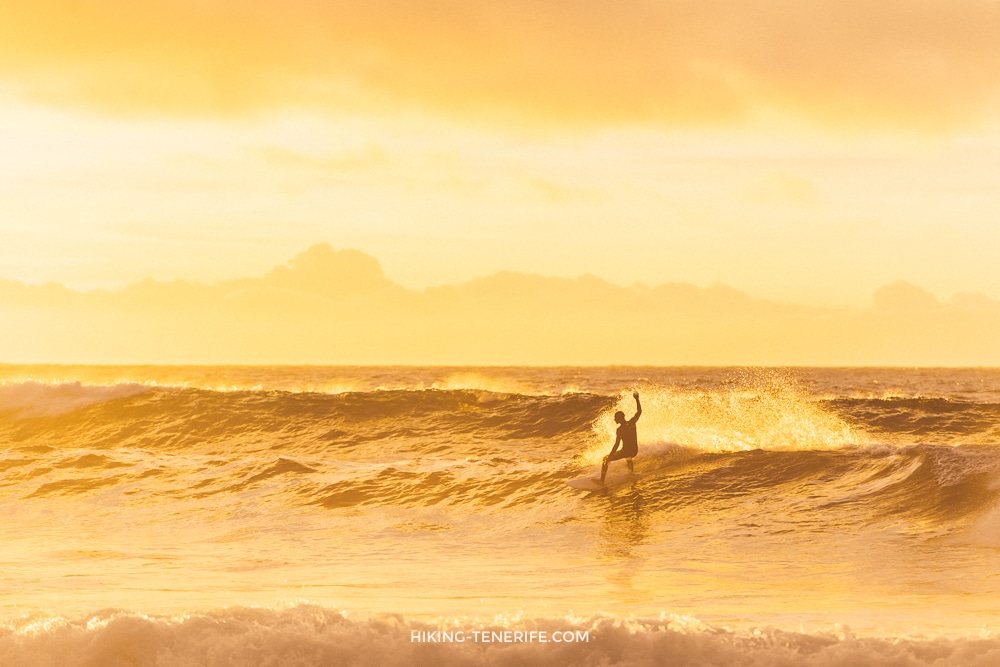
For an easier first beach base, read my guides to Los Cristianos and South Tenerife. For a wilder north-east day, use the Anaga guide as a route-and-weather decision, not a promise of easy swimming.
Jellyfish In Tenerife: Real, But Not A Reason To Panic
Jellyfish and Portuguese man o’ war can reach Tenerife beaches. They are not a permanent feature of every bay, and their presence is not something a holiday website can predict weeks ahead. Wind, swell and local conditions decide the answer. That is why the flag, sign and lifeguard matter more than a species quiz on your phone.
A jellyfish flag, or a yellow or red flag used because of jellyfish, means do not improvise. Avoid swimming and do not make a shore game of stranded tentacles. The Canary Islands sting guidance also warns that tentacle fragments can remain active, especially around rocks and barriers.
Portuguese Man O’ War
The bright blue or purple float is the one visitors remember. It is a striking thing to see on a Tenerife beach and a poor reason to get closer. Treat it as a no-swim and no-touch signal. Keep children away from it, give other people a heads-up, and let beach staff handle the situation.
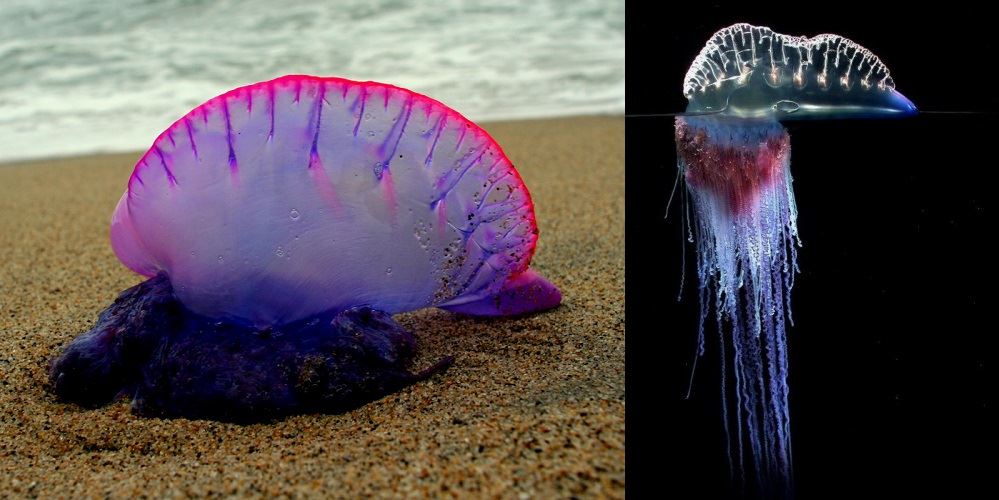
The important part is not whether you can name it perfectly. The safe decision is the same: do not enter water where jellyfish are reported or visible, and do not touch stranded animals or loose tentacles.
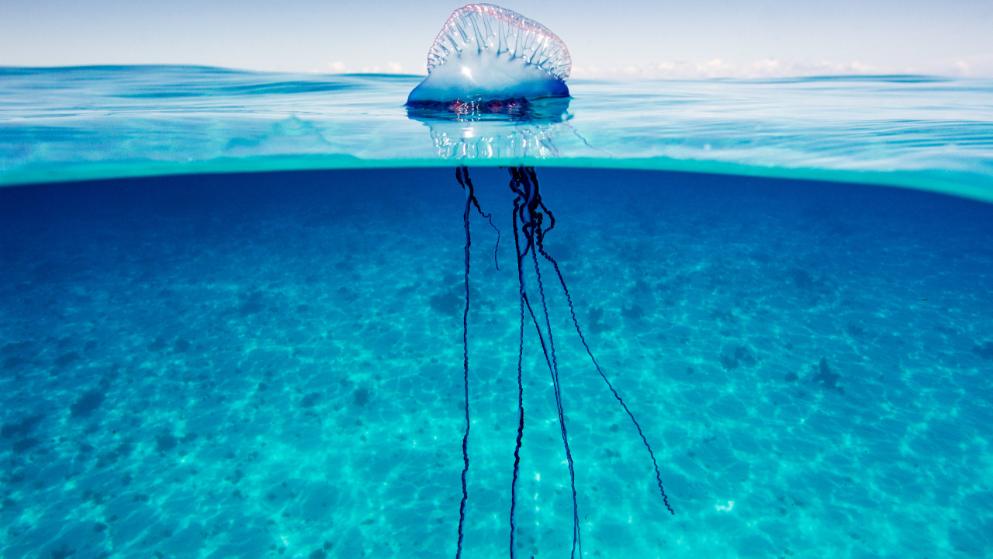
Pelagia And Other Stinging Jellyfish
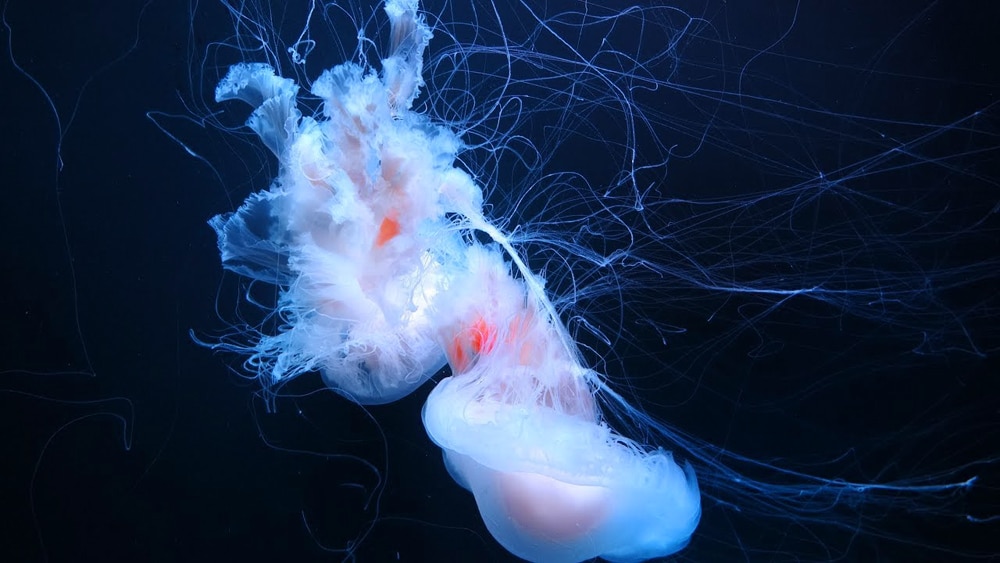
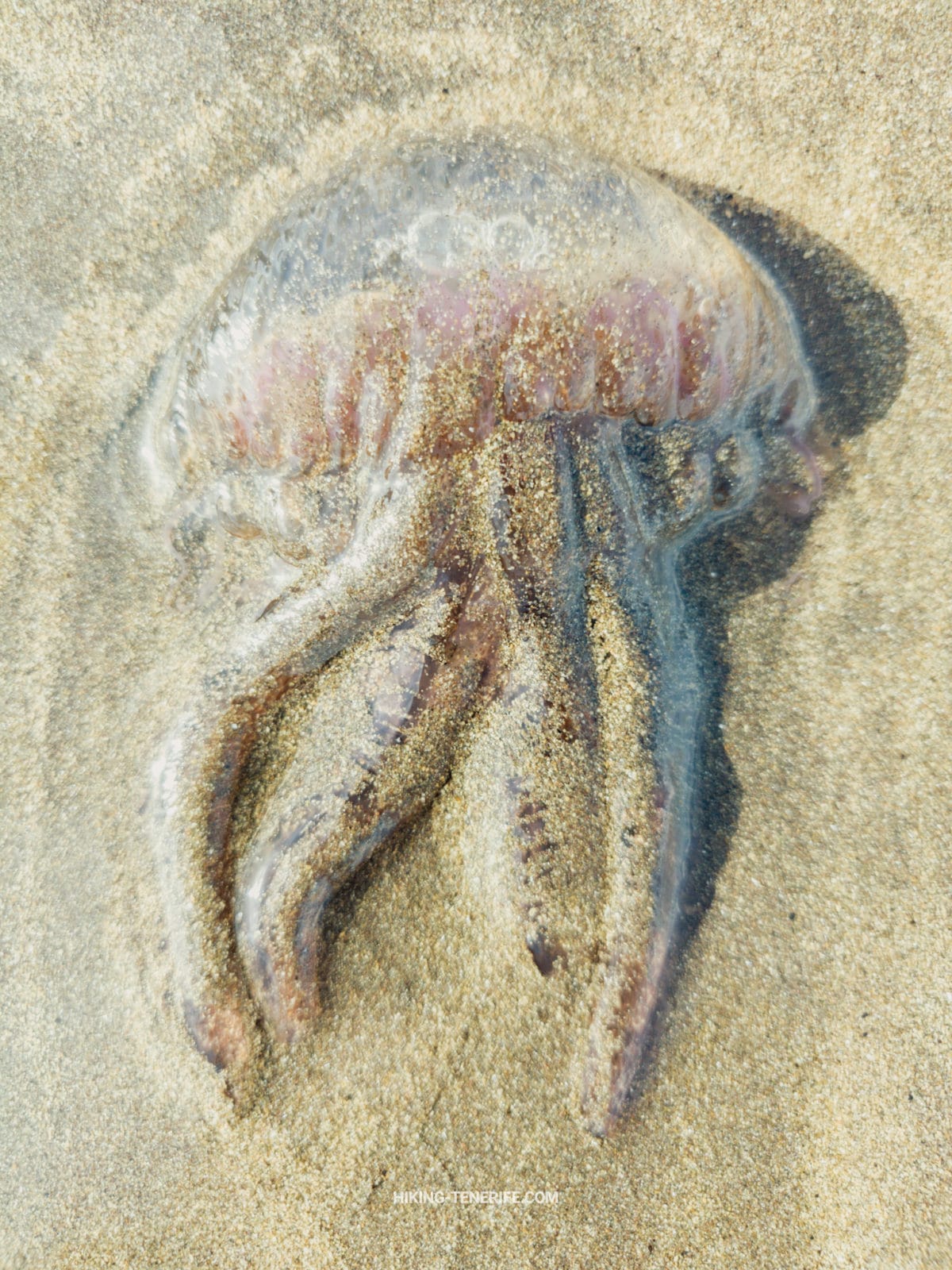
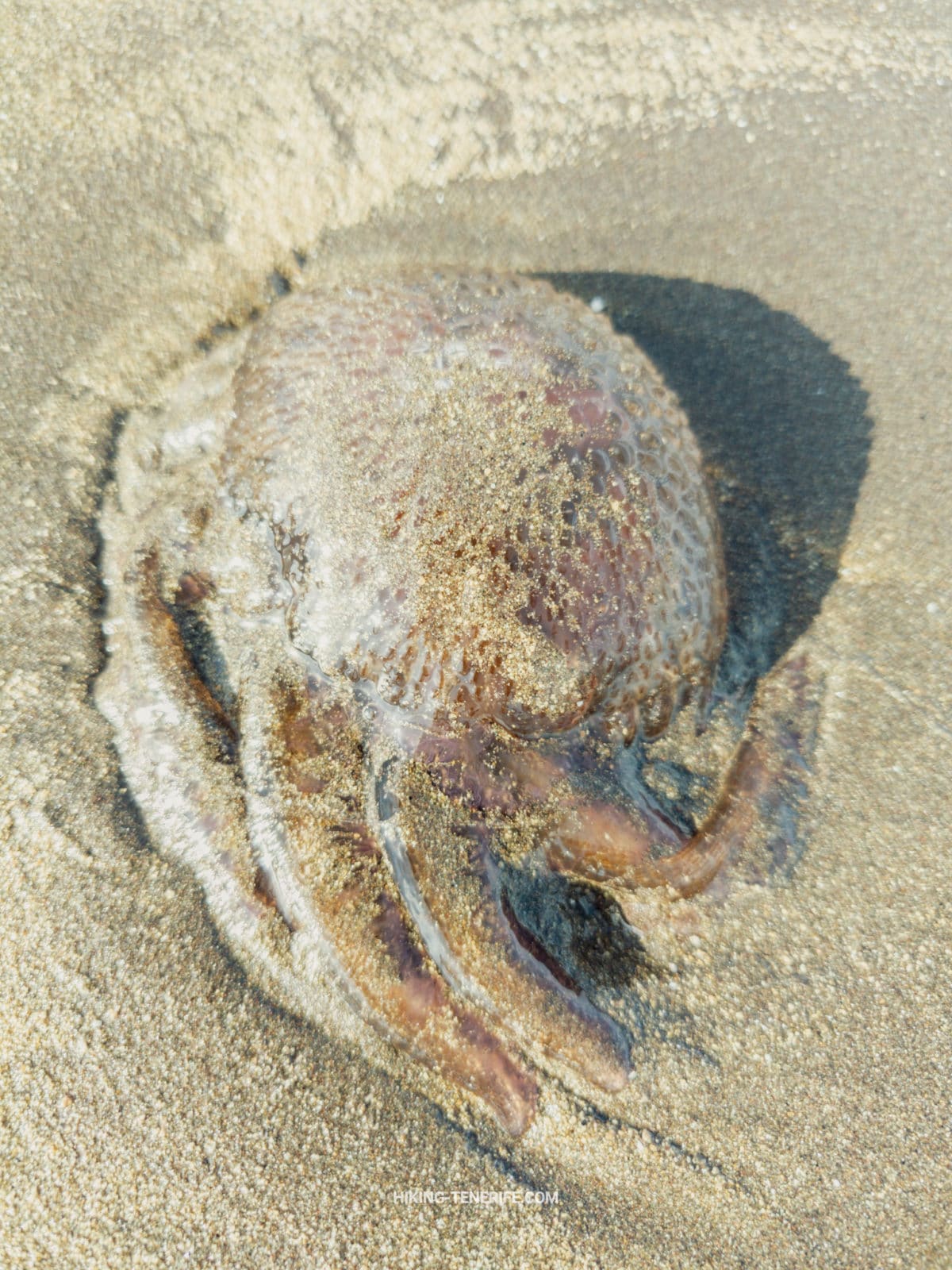
These close local photographs show the kind of thing people genuinely notice at the shore. Use them as a reason to keep distance, not as a field guide that asks you to identify a species with absolute confidence.
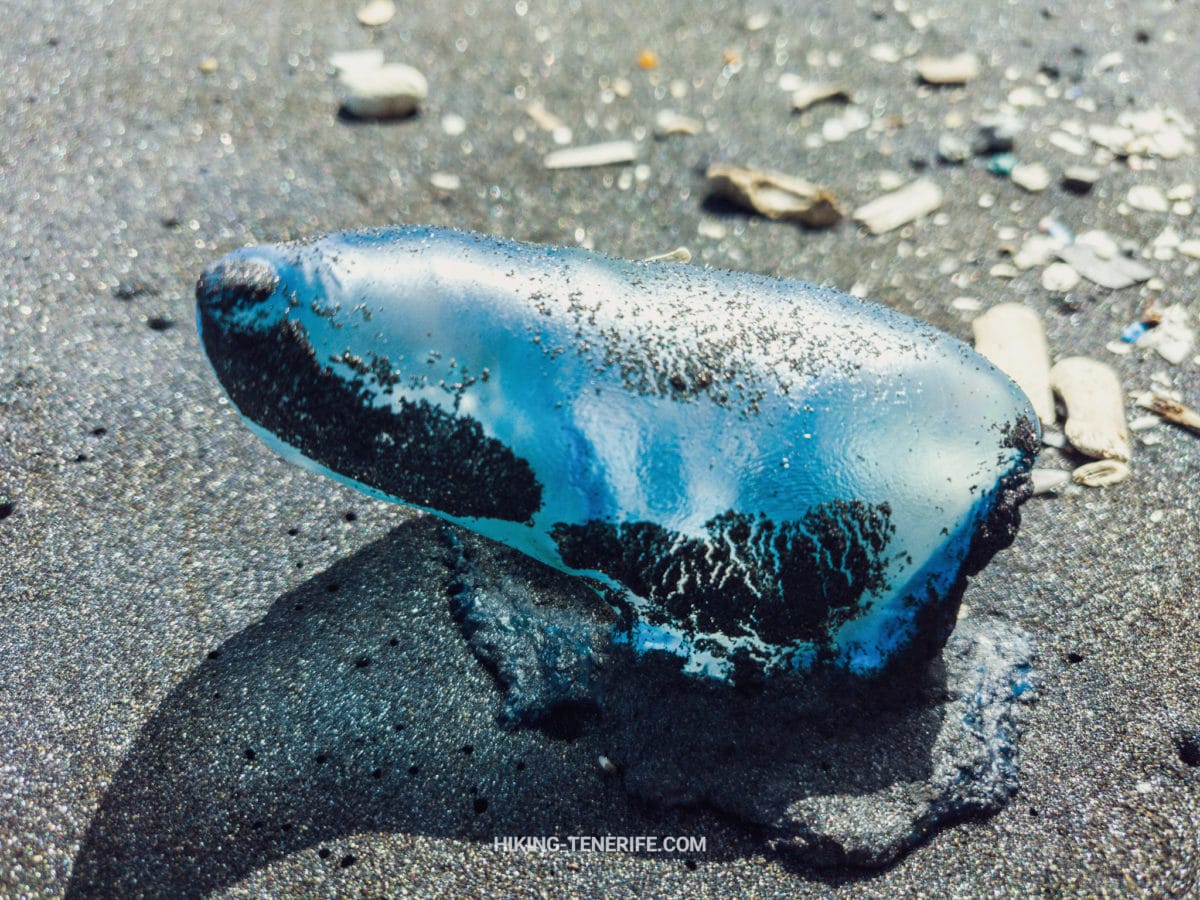
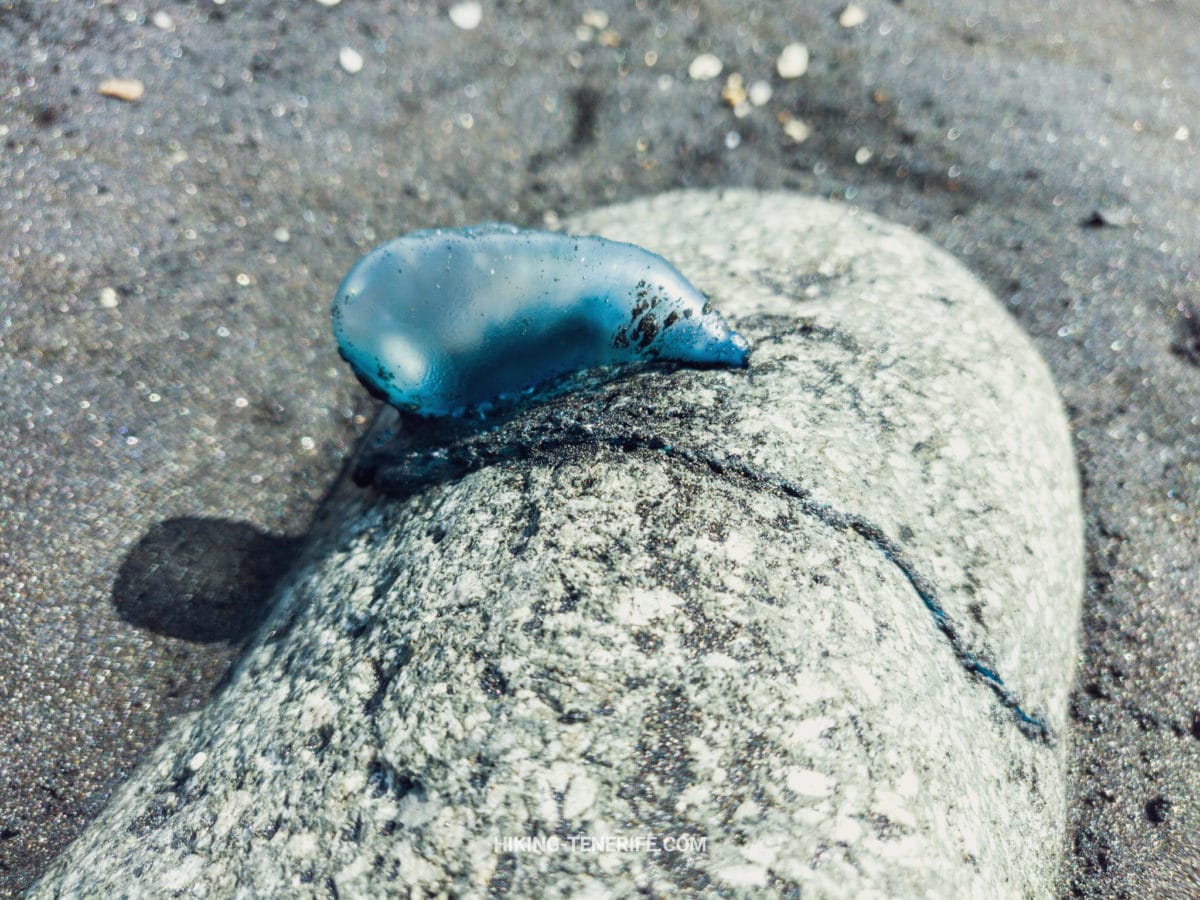
If you are stung, get out of the water, tell the lifeguard and follow their direction. The local health guidance says not to rub the skin, not to use fresh water, and not to remove visible tentacle pieces with bare hands. It advises seawater or saline for rinsing and a cold pack wrapped in plastic for 15 minutes; go to the lifeguard post or medical help if problems continue.

Get help: call 112 for an urgent emergency, including serious or rapidly worsening symptoms, trouble breathing, collapse, or someone in danger in the water. Do not try to diagnose the reaction on the beach.
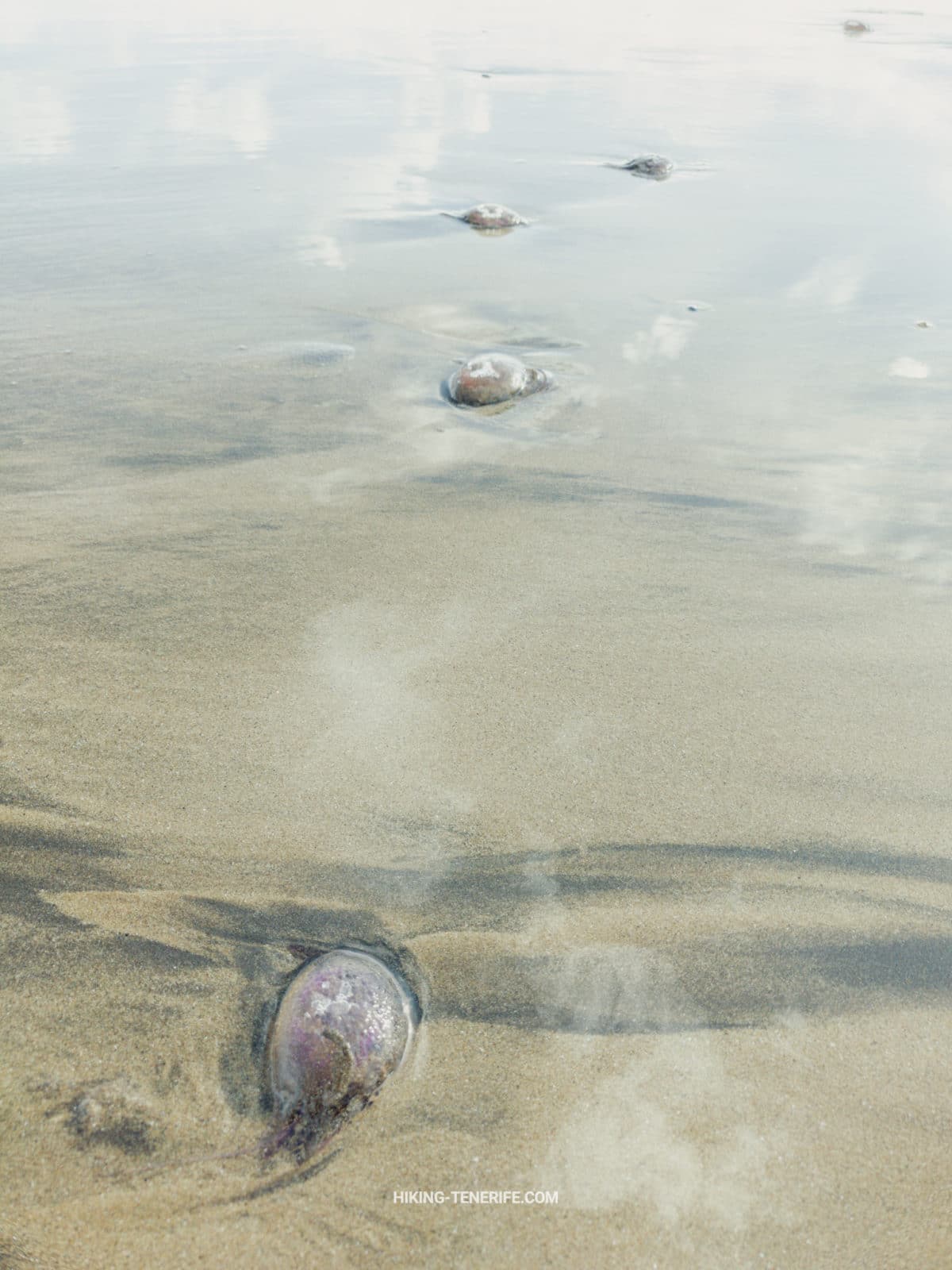
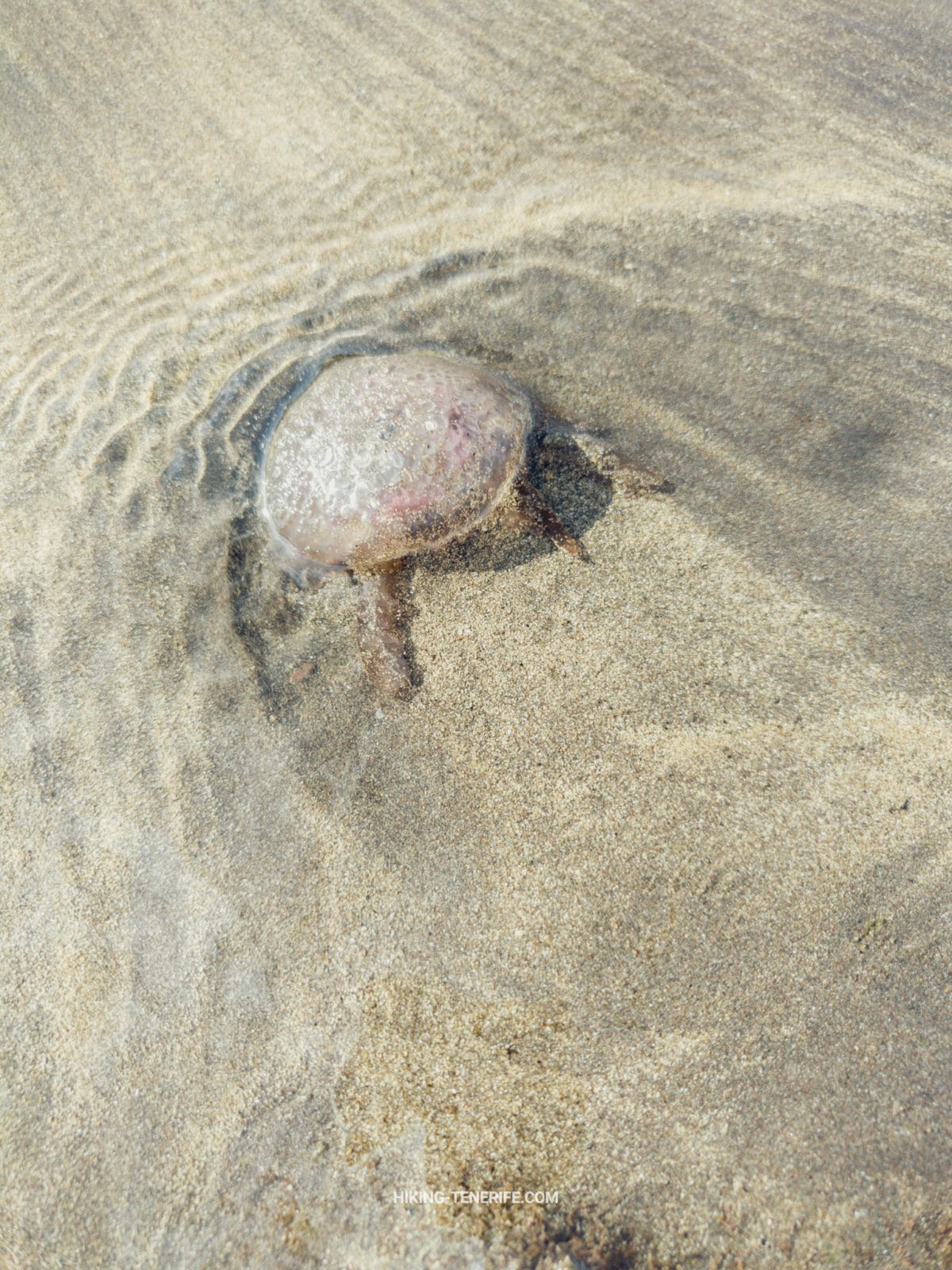
Real Tenerife shore photographs are more useful than a generic scary image. They are a reminder to look at the actual water and listen to the person in the lifeguard chair.
Sharks, Snakes And Mosquitoes: Keep The Scale Right
Sharks In Tenerife
Sharks are part of Canarian marine life, including protected species such as the angel shark. That is a conservation fact, not a sensible reason to stay out of a managed beach. The Canary Islands fisheries information is useful for respecting marine life; your immediate swimming decision still comes from flags, currents, waves and lifeguard advice.
Do not touch, chase, feed or turn marine wildlife into a holiday attraction. If you want a sea day, choose it by conditions. If you want wildlife, give it space. Those two rules survive every social-media rumour.
Are There Snakes In Tenerife?
Visitors do not normally encounter snakes in Tenerife. A rustle in the bushes is far more likely to be a lizard.
Short answer: Tenerife is not a snake-anxiety destination for hikers or families. The California kingsnake is an invasive-species concern on nearby islands. It is not a normal Tenerife holiday encounter. Leave any unfamiliar animal alone rather than trying to identify or handle it.
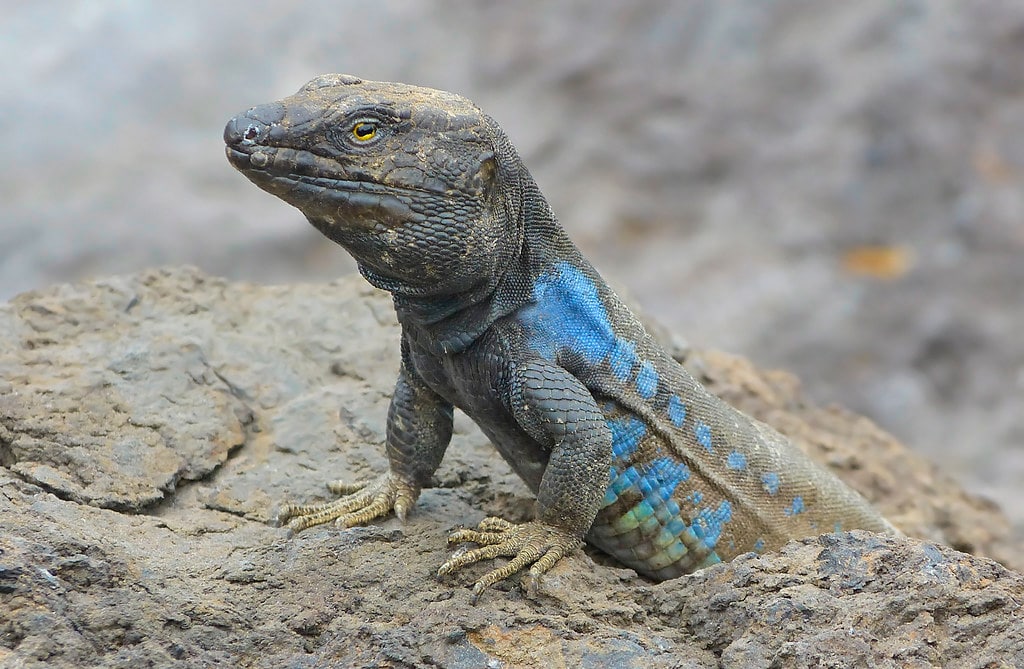
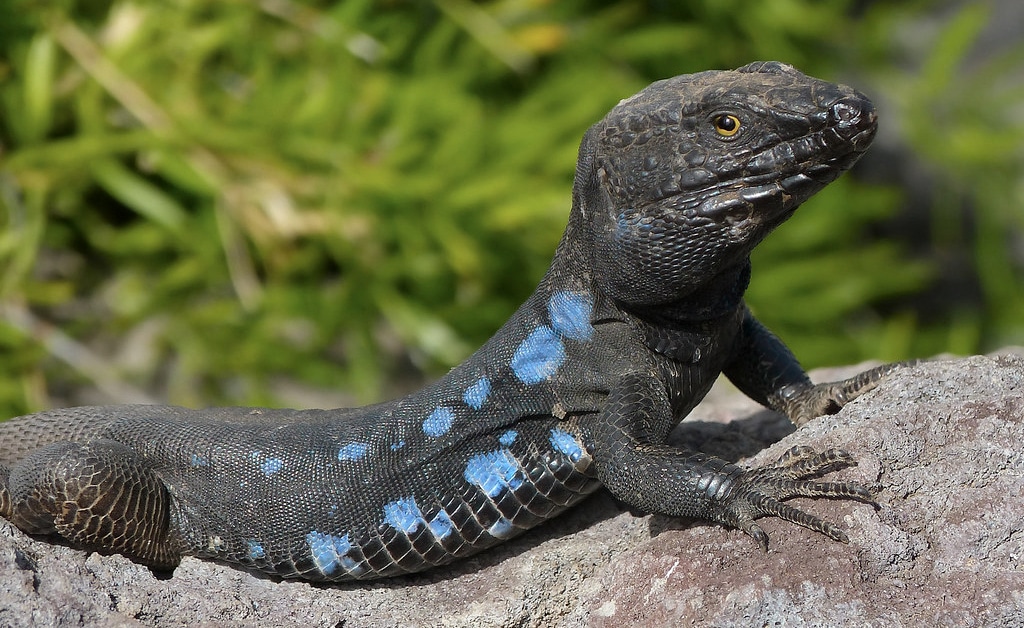
The animals most visitors notice on Tenerife are lizards. Tenerife lizards are not dangerous to visitors.
Watch them from a respectful distance. Do not feed them bananas or try to make them part of the picnic. The island is kinder when its wild residents do not have to negotiate with your lunch.
Mosquitoes In Tenerife
Some travellers get bitten; others barely notice mosquitoes. Treat them as a nuisance that can change by place, weather and accommodation, not as a reason for health folklore. The local public-health advice suggests simple prevention such as window screens where available, clothing that covers skin when useful, and avoiding untreated standing water.
Bring the prevention that suits you, especially if bites spoil your sleep. For unusual or urgent symptoms, get local medical advice rather than relying on a travel forum. Calm preparation beats a dramatic conclusion.
Sun, Heat, Hiking And Weather: The Bigger Island Risks
The coast can make Tenerife feel effortless. Then a road climbs, the shade disappears, wind arrives or calima turns the air unpleasant. Before a hike, beach walk or Teide day, check AEMET weather warnings and the current Tenerife emergency guidance. If a warning changes the day, change the day.
For Teide, Anaga and longer walks around the north, match the route to the least confident person in the group. Use closed shoes with grip, water, sun protection, a charged phone and an offline route.
Stay on marked trails. Tell someone where you are going. Leave enough daylight to come back without rushing. A route that looks short on a map can feel very different in heat, cloud or wind.
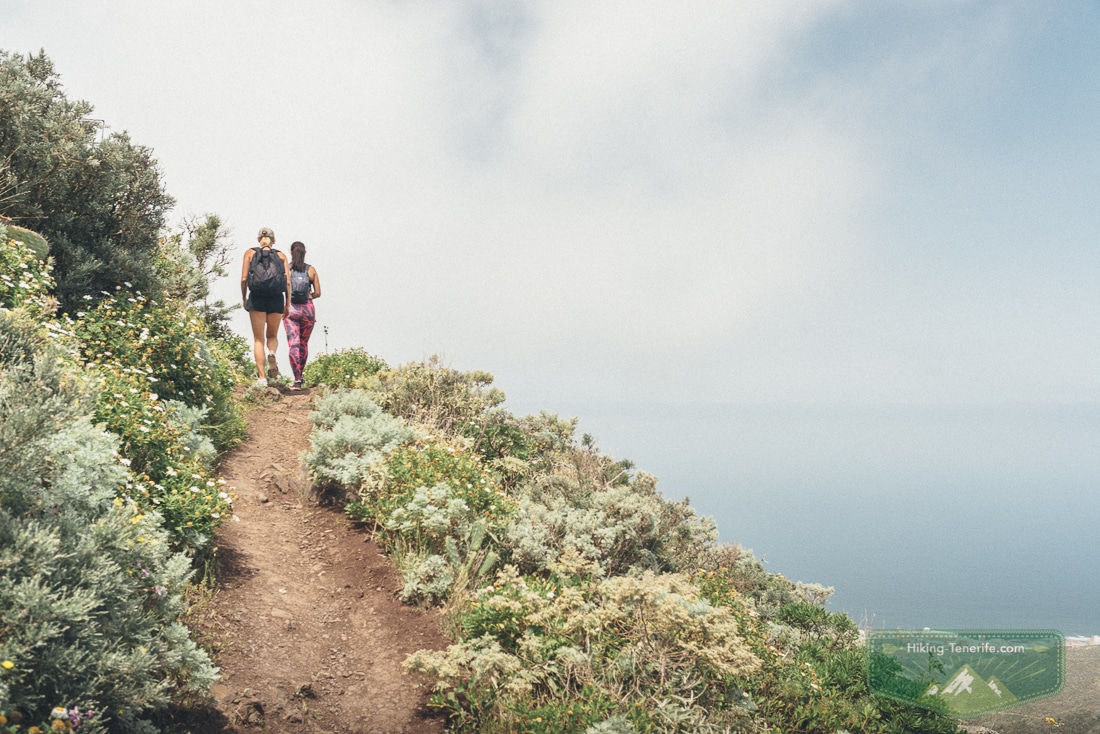
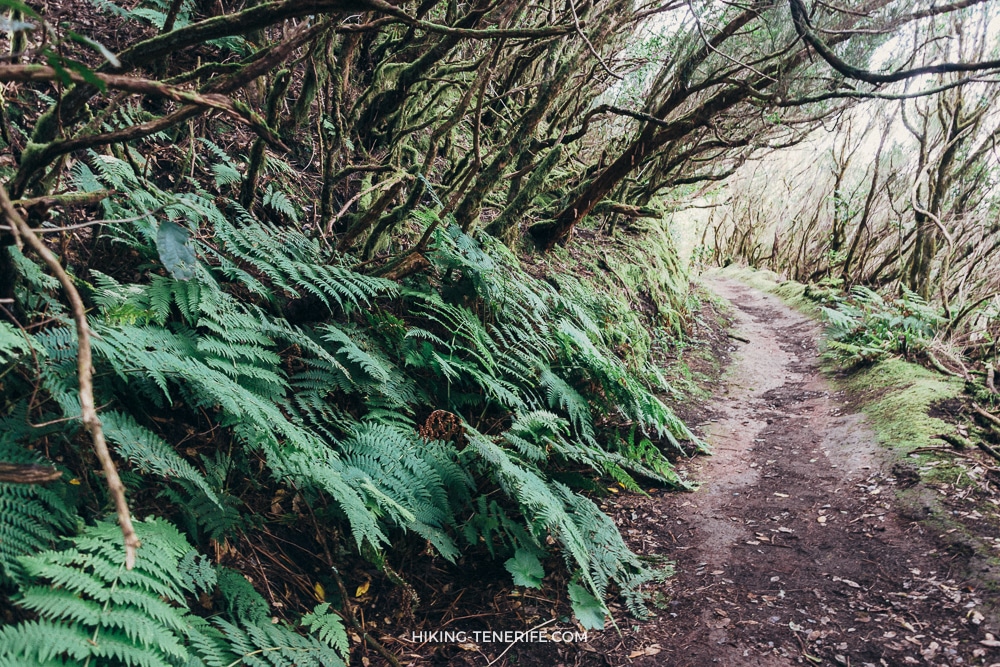
Safety rule: the warm coast is not a forecast for the mountain. A Tenerife hike becomes safer when you have a shorter exit plan before you need one.
If you want a town day when the weather is less cooperative, La Laguna and La Orotava give you a much kinder alternative than forcing a wet ridge walk. This is also why I would not build a first holiday entirely around one exposed beach or one big mountain day.
Plan the Teide day properly
If Teide is the day you are building around, use my local guide for route order, timing, weather and the quiet stops that make the mountain day feel less rushed.
Wind, Water Sports And El Médano
Wind is not an inconvenience you can wish away on the east and south-east side. In El Médano, it is part of the character and part of the sport. Kites, sails and boards are a sign to use the right area, the right school and the right skill level, not to treat the whole bay as a casual swimming pool.
If wind sports are the point, start with my kitesurfing and windsurfing in El Médano guide. If a relaxed swim is the point, be prepared to move beach or turn the day into a walk, lunch and a different coast. Wind changes the plan; it does not ruin it.
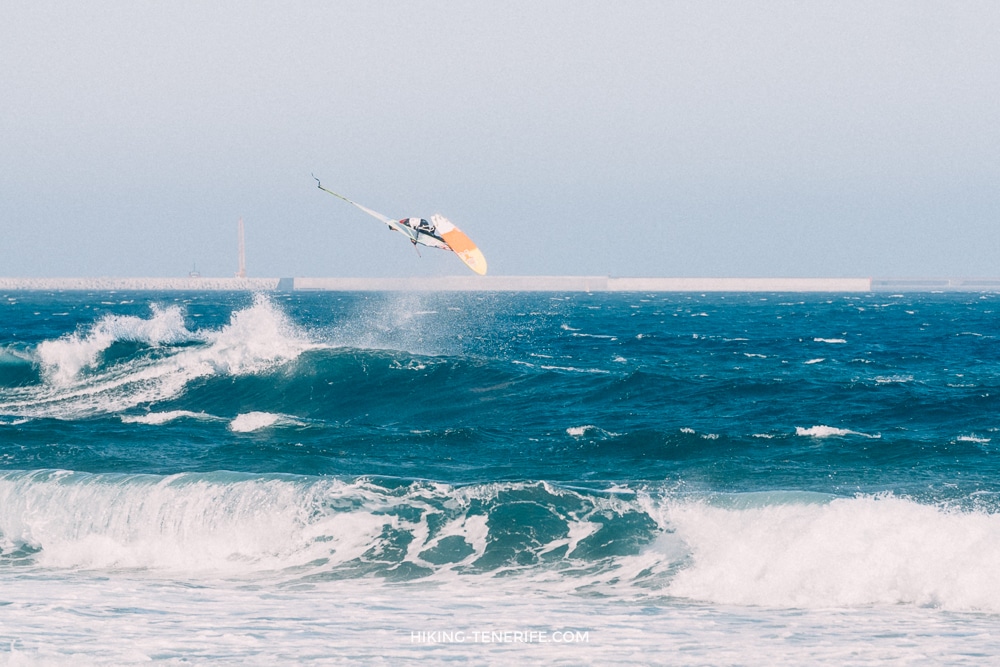
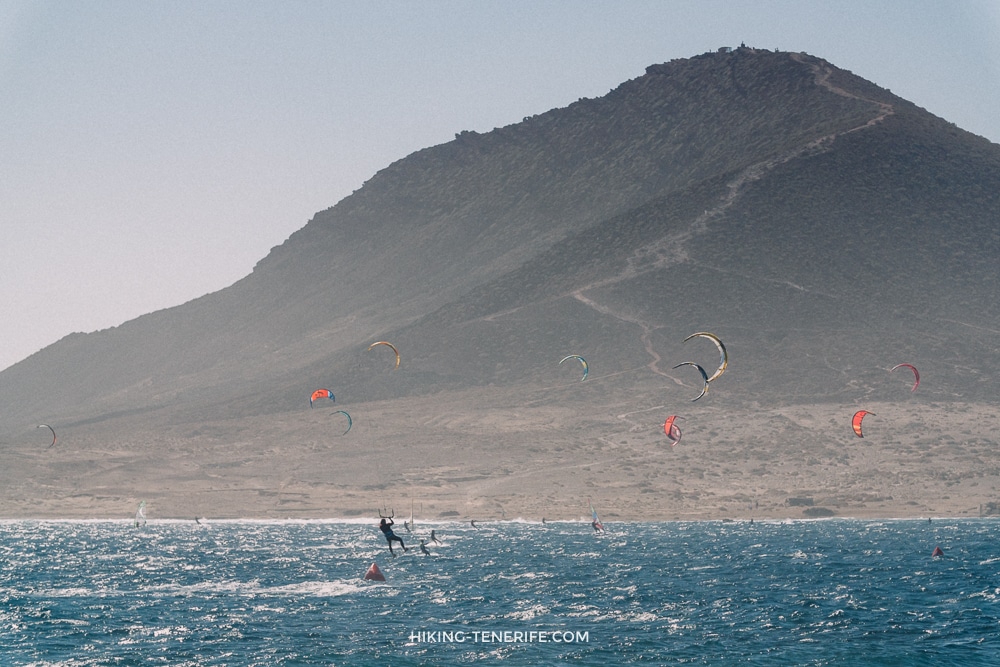
Planning tip: families, no-car visitors and first-time swimmers should choose a managed beach and keep the sporty coast as a separate outing. Trying to make one beach serve every traveller is how a simple afternoon becomes complicated.
Driving, Roads And Choosing A Sensible Base
Tenerife roads are not dangerous by default, but they do punish overstuffed itineraries. Mountain bends, fog, wind, darkness and the temptation to add just one more viewpoint make a small island feel larger. Drive to see one landscape well, not to prove you visited every point on a map.

For a first trip, the south is usually easier for managed beaches, restaurants and no-car logistics. Playa de las Américas adds surf energy and nightlife; Los Cristianos is gentler; the north gives you a different island of towns, green slopes and slower weather.
Use my best beaches in Tenerife guide to compare swimming choices by conditions and access. Read Things to Do in North Tenerife before treating the north as a quick beach detour.
Local detail: the south, north and mountain can have completely different conditions on the same day. That is not Tenerife being difficult. It is the reason a flexible base and one honest daily plan work so well.
Crime, Scams And Areas To Avoid In Tenerife
Most visitors do not need a blacklist of Tenerife resorts. They need normal holiday awareness in busy places.
Street theft and distraction scams can happen around airports, luggage, car hire, nightlife and crowded tourist areas. Keep your phone and wallet secure. Do not leave a passport, camera or bag visible in a parked hire car.
Common mistake: searching for one dangerous area, then relaxing everywhere else. A quiet viewpoint with valuables in the car can be a worse choice than a busy resort street where you are paying attention.
My local rule: I would not tell a visitor to avoid an entire Tenerife town. I would avoid an empty shortcut at night, an unlicensed ride, an unattended drink and anyone creating urgency around money, tickets or your wallet.
If a stranger claims there is a problem with your hire car, stop only in a well-lit public place. Genuine police may ask for identification. They do not need you to hand over your wallet.
Spain’s official AlertCops app lets you contact the National Police or Civil Guard and share your location. Use 112 when the situation is urgent.
Nightlife safety: stay with people you trust, keep your drink in sight and save your accommodation in your phone before going out. If a place or person feels wrong, leave early. You do not owe the evening a second chance.
Security advice can change. Before travelling, check the current official advice for Spain from your own government. Follow local police instructions and move away from demonstrations or any disorder.
A Small Tenerife Safety Plan Before You Go
Save 112 before you need it. The Canary Islands CECOES 112 service is the emergency route for urgent medical, rescue, fire and safety situations; it is free, works around the clock and helps visitors in English. For an emergency, give your location, what happened and follow the operator’s directions.
- Choose a supervised beach for the swimming day that matters most.
- Check flags, lifeguards and the sea before entering; red means no swimming.
- Check AEMET and local alerts before Teide, Anaga, exposed coasts or a long drive.
- Carry water, sun protection, a charged phone and an offline route for walks.
- Keep one town, food or museum-style backup for wind, heat, cloud or swell.
- Leave wildlife, rocks, breakwaters and stranded jellyfish alone.
- Keep valuables out of sight in hire cars and keep drinks in sight at night.
Common mistake: treating Tenerife safety as a list of frightening animals. The real local skill is smaller and more useful: read conditions, respect signs, choose the easier option when they change, and ask for help early when something is genuinely wrong.
Tenerife Safety FAQ
These are the questions worth answering before a beach, hike or road day.
Is Tenerife safe for a holiday?
Yes, if you treat it as an Atlantic island rather than a resort brochure. For most visitors the useful checks are beach flags, sea state, sun and heat, wind, terrain, road conditions and current weather alerts.
Are there jellyfish in Tenerife?
They can occur. Do not guess from a photograph or a warm day: follow beach flags, signs and lifeguard instructions, and skip both swimming and shore play when jellyfish are present.
Are sharks dangerous in Tenerife?
Sharks are part of Canarian marine life, including protected species. For a beach visitor, flags, currents, waves and lifeguard advice are the practical safety decision; do not turn a wildlife fact into a reason to ignore the sea.
Are mosquitoes a problem in Tenerife?
Some travellers get bites, especially where conditions suit mosquitoes. Simple prevention helps: use screens when available, cover up when useful and avoid untreated standing water. Seek medical help for urgent symptoms rather than diagnosing them yourself.
Is Tenerife safe for hiking?
It can be, with a route matched to the weather, daylight and your actual fitness. Stay on marked trails, carry water and a charged phone, check alerts and closures, and turn around when conditions stop making sense.
What number should I call in an emergency in Tenerife?
Call 112 for urgent medical, rescue, fire or safety emergencies. It is free, operates around the clock and is available to visitors in English as well as other languages.
Tenerife is generous with good days. Let the weather, sea and people who work on the beach have a vote in yours.

